Books and Arts

Liberation is a witty, genuine snapshot of second-wave feminism

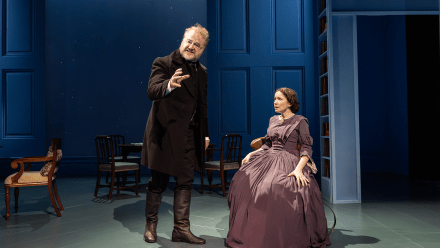
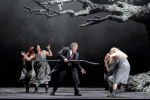
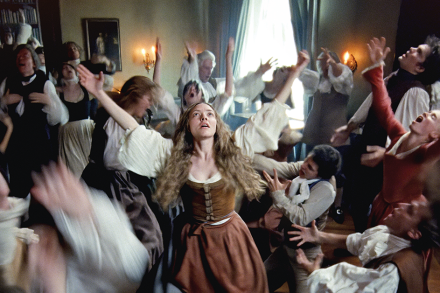
In the second act of Liberation the main cast quietly, and without fuss, starts to undress. By the time the lights go up, all six women are naked. In this masterful play by Bess Wohl, the moment does not feel shocking or gratuitous but somehow comforting. In 1970s Ohio, a group of women meet weekly to fight for equality through “consciousness-raising.” Mostly that consists of free-ranging conversation, of which the women have a lot and which is always smart, funny, vulnerable and eye-opening. But after reading an article about body positivity in Ms. magazine, they meet in the nude.

liberation
tom stoppard

Stoppard, Sappho and me

Many years ago, and well retired, I was working in my study at home when the phone rang and a voice said, “This is Tom Stoppard. David West put me onto you.” David was the professor of Latin at Newcastle University and it emerged that Tom used him when he had queries about Latin, but now had a question about the ancient Greeks. When he couldn’t answer it, David suggested that Tom should call me. I felt a vast chasm of ignorance opening in front of me and have no memory of what the question was – but my reply must have satisfied him because he continued to throw the odd leg-break my way. To give some idea of his range of interests, on one occasion he became interested in the Greek perfect tense. Don’t ask me why, but that was at least something I could do.

anthony bourdain

The Anthony Bourdain Reader leaves a reader hungry

Charismatic, handsome and with a great white shark’s feral cool, Anthony Bourdain was someone that everyone wanted to be. The chef, writer and TV presenter described the premise of his award-winning shows, No Reservations and Parts Unknown, as “I travel around the world, eat a lot of shit and basically do whatever the fuck I want.” They cemented his image as a gadabouting, kamikaze gourmand. Bourdain scarfed down andouillette and warthog anus, drank sun-bear bile and polished off the still-beating heart of a cobra, plonked into a shooter of Vietnamese firewater. He showed Barack Obama the correct way to slurp bún chả noodles on a steamy Hanoi side street, and he and his team watched from their hotel pool as Israeli jets strafed downtown Beirut during the 2006 invasion.

Margaret Atwood’s autobiography reveals a steely self-possession

The problem with the contemporary literary life, most of its observers usually agree, is that nobody at large in it does anything much except write. A century ago, your specimen male novelist could be found fighting in wars or traveling to places from which the reportage he brought back had genuine novelty. These days, alas, our man just sits at a desk and every so often looks out of the window at the teeming world beyond. The trajectory of the 21st-century novelist is as familiar – and as unavoidable – as a portrait of Taylor Swift. You grow up, you show an aptitude for literature, you start writing books and, unless something very unusual happens, you go on writing them.

Margaret Atwood

It feels as if Michael McFaul’s audience has long since left

Since the end of the Cold War, politicians and commentators have been searching for a new paradigm through which to understand international relations. Notwithstanding Francis Fukuyama’s oft-misunderstood The End of History, we have tried various patterns to classify the world order, of which George W. Bush’s “Axis of Evil,” first used in 2002, was among the more enduring. In Autocrats vs. Democrats: China, Russia, America, and the New Global Disorder, Michael McFaul acknowledges the widespread if nebulous consensus that the challenge presented by Russia and China is a kind of second Cold War – historian Niall Ferguson has labeled America’s relations with China “Cold War II.

Michael McFaul

Sir Anthony Hopkins, outsider actor

Yes, Sir Anthony Hopkins did have a life before The Silence of the Lambs. And after it, too. But most casual moviegoers would be hard pressed to add too many other entries to his filmography. Like his most famous screen creation, the cannibalistic serial killer Hannibal Lecter, Hopkins has always been something of a study in contrasts. As an actor, he sits in the middle of the Venn diagram where the mainstream and the fringe overlap, seemingly as happy to mug his way through the Transformers franchise as to direct and star in a project like 1996’s August, a drily worthy adaptation of Uncle Vanya that barely registered on the sordidly commercial level.

Anthony Hopkins

Cameron Crowe’s cringe magic

Cameron Crowe’s long-awaited memoir The Uncool can be read intertextually as the real Almost Famous. The Uncool is also about lush California summers, grief, the unwavering support of a mother, cool big sisters, and Almost Famous: The Musical, but when you peel back the pages like it's a vintage magazine, there’s an elegiac aroma. This is a crinkled love letter to a deceased paramour; in this case, the beating heart of rock journalism. Crowe treats writers such as Lester Bangs (“my heart was almost all Lester Bangs”) and Danny Sugerman with devotional reverence that is as uncool or “problematic” in 2025 as learning about sex from your mom in a laundromat and writing about it. Crowe’s lack of cool thus becomes the book’s artistic frame.

uncool
Truth

Is there such a thing as right-wing art?

This has been adapted from a speech titled “The Myth-Maker as Nation-Builder,” which was delivered by Jonathan Keeperman, who runs publishing house Passage Press, at the National Conservatism Conference 2025. As W.B. Yeats once said: “There is no great literature without nationality. There is no great nationality without literature.” People often ask me whether it is possible to produce right-wing art, or otherwise to use art to engineer a more nationalist politics. But this strikes me as backward thinking. Culture is the field in which a people encounters the shared symbols and language that make political life possible. Art, done well, discloses the deeper truths a people already carry within themselves. Art therefore does not produce the nation; it reveals the nation.

Surrealism

Reconciling dreams with reality

Should you be waiting in line at the Philadelphia Museum of Art to see the exhibition Dreamworld: Surrealism at 100, don’t be put off by “Tête” (1974), a sculpture by Joan Miró that is big and ugly and plopped down directly at the entrance. Be aware that Miró’s true métier was painting; “Tête” was cranked out long past his prime. You can’t blame an old man for cashing in on his reputation, particularly when his formative years were burdened by poverty. You can blame a curator for including a flagrant piece of product as a how-do-you-do to a centennial celebration.

The contingent talent of Emily Sargent

When your brother is one of the most successful artists of his time, you might feel reluctant to pick up a paintbrush. Yet, the works of Emily Sargent, in the Metropolitan Museum of Art’s Portrait of a Family, prove that she was an artist in her own right. Sargent (1857-1936) was not in her brother’s shadow, although she was undoubtedly in his debt. John, Emily and their sister Violet were the children of FitzWilliam Sargent, a successful Philadelphia physician, and the artist Mary Newbold Sargent. By the 1850s, the Sargent family were living a nomadic existence in Europe – John and Emily were both born in Florence. Encouraged by their spirited mother, the Sargent children were instructed that no matter how many sketches were begun in a day, at least one must be finished.

Monet

Monet’s Venetian moment

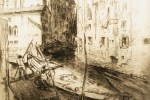
If you crave art that will envelop you, book a ticket, pronto, to Monet and Venice at the Brooklyn Museum. Enveloppe was the term the French impressionist artist Claude Monet (1840-1926) used to describe the “beauty of the air around” the objects and landscapes he painted. “Other painters paint a bridge, a house, a boat… I want to paint the air in which the bridge, the house, and the boat are to be found – the beauty of the air around them, and that is nothing less than the impossible,” he said.

train dreams

Portrait of a frontier life

Death falls from the sky in Denis Johnson’s 116-page novella Train Dreams (2011) in the form of “widowmakers,” broken tree limbs that can strike heedless loggers. Death burns through forests and arrests the heart of a young man hauling sacks of cornmeal; it rots through the wounded leg of a pedophile; it takes Robert Grainier in his sleep in November of 1968: “He lay dead in his cabin through the rest of the fall, and through the winter, and was never missed.” But Train Dreams, often hailed as a “miniature masterpiece,” is not a story of defeat: it is an elegiac love letter to the unobserved life of the American frontier worker who, though left behind by the steady march of progress, endures with quiet grace.

Inside Jim Harrison’s life of excess

Todd Goddard opens his biography of Jim Harrison, the first since the poet’s death in 2016, with an account of a 37-course meal Harrison once consumed in France, over the course of 11 hours. Harrison composed a comic recital of the event, “A Really Big Lunch” for the New Yorker. He loved gourmet dining to the point of gout and revered alcohol as well, guzzling potent vintages in quantity. “Eat the world” was the phrase Harrison lived by, Goddard tells us, which alludes to an appetite for all existence. The cumulative effect of such global consumption is evident on the cover of Devouring Time: Jim Harrison, a Writer’s Life.

jim harrison
mcnamara

Did Robert McNamara know Vietnam was unwinnable?

Former US defense secretary Robert McNamara was known in Washington as a relentless, humorless taskmaster or even “a computer on legs.” Then on February 9, 1962, a little over a year after taking office, McNamara made headlines when he danced the twist with Jackie Kennedy at a White House party. A few days later, the then-first lady sent by hand to McNamara a lighthearted Valentine collage she had made from the news coverage of their dance. After her husband’s assassination, their friendship deepened. Jackie’s opposition to the Vietnam War grew, as did her conviction that McNamara secretly opposed it.

1929 crash

Andrew Ross Sorkin reconstructs the 1929 crash

During the great financial panic of 1907, the banker J.P. Morgan locked the titans of the financial world in his lavish private study to determine which banks to rescue and which to let fail. This intervention saved the banking system, restoring public confidence. But trust in Wall Street was shaken to its core. Six years later, Congress passed the Federal Reserve Act, which sought to stabilize the American financial system by establishing a central bank to regulate credit and serve as lender of last resort. By the mid-1920s, the very mechanisms that were designed to promote stability had fueled a surge in stock market speculation.

Another collection of Harper Lee’s writings arises

Harper Lee’s To Kill a Mockingbird hardly needs an introduction, as I expect everyone in the world has read it, or has seen the film starring Gregory Peck. (If you haven’t read it, perhaps you should.) Lee, incidentally, went to visit the film set, and had this to say about Peck: “an inspired performance. In some mysterious way, Gregory Peck’s Atticus Finch transcended illusion.” If that seems a tad clichéd and not especially insightful, then I’m afraid to say that this is the general tenor of the nonfiction pieces in The Land of Sweet Forever, alongside eight previously unseen short stories. Go Set a Watchman, a novel which was largely viewed as To Kill a Mockingbird in embryo, appeared ten years ago, to not much acclaim.

nazi

South America is flush with Nazi-looted art

This summer, a niche story from the art world caught fire: an Old Master painting, stolen by the Nazis from a Dutch-Jewish art dealer, surfaced in Mar del Plata, Argentina. Remarkably, journalists from a Dutch newspaper spotted it on the wall of a house in a promotional photo that was part of a “for sale” real-estate listing. It turned out that one of the sellers of the house was the daughter of a Nazi official who worked for Reichsmarschall Hermann Göring, a notorious art plunderer. When the stolen painting was recognized, the daughter allegedly removed it from the wall, replacing it with another artwork – a tapestry. Argentine authorities then arrested her and her husband and charged them with concealing a crime.

Rauschenberg is a bore

Pity the security guard at the Guggenheim who must patrol the gallery in which Robert Rauschenberg: Life Can’t Be Stopped is installed. Mounted in commemoration of the artist’s centennial – Rauschenberg was born in Port Arthur, Texas, in October 1925 – Life Can’t Be Stopped includes “Revolver II” (1967), a set of plexiglass discs with images overlaid. A cord leads from the back of this contraption to a pedestal on which there is a control panel – a set of buttons placed in proximity to the viewer. These switches set the plexiglass discs in motion, and they beg to be pushed. On my trip to the museum, visitor after visitor was shushed away from “Revolver II” with the age-old plaint: “Please don’t touch the art.