Art Tavana

Cameron Crowe’s cringe magic

Cameron Crowe’s long-awaited memoir The Uncool can be read intertextually as the real Almost Famous. The Uncool is also about lush California summers, grief, the unwavering support of a mother, cool big sisters, and Almost Famous: The Musical, but when you peel back the pages like it's a vintage magazine, there’s an elegiac aroma. This is a crinkled love letter to a deceased paramour; in this case, the beating heart of rock journalism. Crowe treats writers such as Lester Bangs (“my heart was almost all Lester Bangs”) and Danny Sugerman with devotional reverence that is as uncool or “problematic” in 2025 as learning about sex from your mom in a laundromat and writing about it. Crowe’s lack of cool thus becomes the book’s artistic frame.
uncool

Vince McMahon: the modern-day P.T. Barnum who changed America

Book reviews should be like Car & Driver: flip over the page to a concrete, plainly written piece — no writerly words or literary drivel — by someone who’s test-driven the book and punched up a nuts-and-bolts guide. The reader should get a look under the hood: polished steel and chrome cylinders. Does it hum? Vroom, we’re off the races. I say this because I’m reporting on a prototype I’m afraid of driving: an advance reader’s edition, uncorrected, not for sale or quotation. I can’t rev this baby for you, or even kick the tires, but here goes.

ringmaster

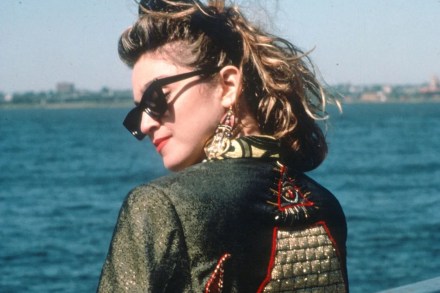
What’s the latest on the Madonna biopic?

"I’ve had an extraordinary life, I must make an extraordinary film," Madonna told Variety in July, as she described her decision to helm her own biopic as a "preemptive strike" against the men who wanted to tell her story. That was last summer, when there were reports of a months-long "Madonna bootcamp" led by casting director Carmen Cuba, which included eleven-hour choreography sessions, where everyone from Florence Pugh, Alexa Demie, Bebe Rexha, Odessa Young and Sky Ferreira auditioned to play the "Material Girl." Madonna said she wanted the role to go to someone who could "convey the incredible journey that life has taken me on as an artist, a musician, a dancer...the focus of this film will always be music.

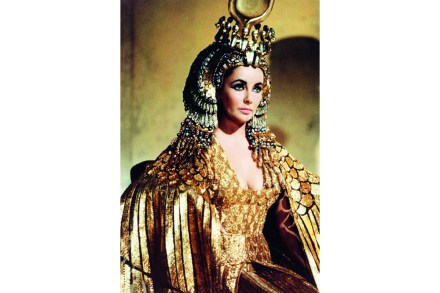
Cleopatra still dazzles sixty years later

It’s a dazzlingly staged event that evokes the ancient theater, Italian operas, elaborately choreographed Busby Berkeley films and an open-air spectacle on par with WrestleMania at Caesar’s Palace. I’ve watched it knowing that as a small boy, I tugged on my mother’s blue jeans and asked a question informed purely by cinema: “Is Cleopatra the most beautifulest woman in history?” “No,” replied mother, with a cigarette stuck between her clenched teeth. “Elizabeth Taylor is.” I was, of course, picturing Elizabeth Taylor as Cleopatra. The event I’m referring to isn’t mere cinematic overindulgence; it is a monumental moment — six decades after moviegoers first saw it — which transforms a movie star into a deity.

Cleopatra

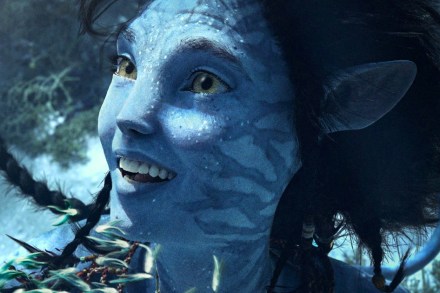
Could Avatar 2 flop at the box office?

“Who asked for this?” asked the New York Times in November of the coming Avatar sequel, The Way of Water. Not me. I’m not the audience for this film. I did not contribute to Avatar's $2.92 billion global box office. I don’t, for example, post in the "Tree of Souls" forum, which has 2,093 members (a tiny number). Does Avatar have an army of fanatics waiting to be unleashed at the box office? I don't know anyone obsessed with Avatar, do you? Is it as meme-friendly as Minions: The Rise of Gru? No. Will it draw as many teens as an MCU movie? Probably not. Avatar does not have the built-in fanbase you need to carry a franchise. It requires a global audience — it needs mainstream buzz. It needs the press raving that it's a "visual masterpiece." But is that enough?

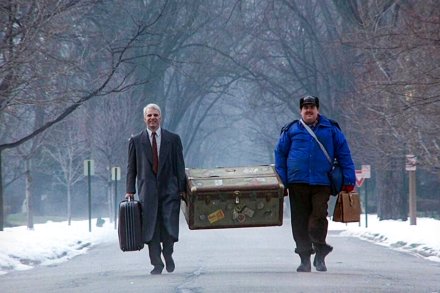
Thirty-five years of crying to Planes, Trains and Automobiles

No piece of art has ever affected me quite like John Candy’s face in Planes, Trains and Automobiles. It has made me cry for thirty-five years, rivulets of tears. It has shown me that nothing evokes loneliness like a face. John Candy's face simultaneously reveals warmth and fatalism (it's the face of a man who always feared he'd die young — and did). His unibrow is childlike and genuine. His smile is never fake. But Candy’s shower curtain ring peddler Del Griffith is smiling through pain. He’s hiding behind the mask of a gregarious family man and "best in the world" salesman (with a bowtie and bristly mustache). His smile hides a secret: Del Griffith is a grieving widower, and his home is inside an old trunk he carries around like luggage.

The shock value of Lena Dunham

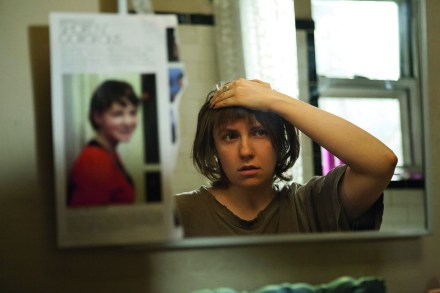
I'm watching Girls. Hannah (Lena Dunham) is tweeting in her bedroom: “My life has been a lie, my ex-boyfriend dates a guy.” She deletes this and types: “All adventurous women do.” She stands up, shakes her hair, swings her tattooed arms and dances to Robyn’s “Dancing on My Own.” I was this person once, I think to myself, as another girl (Marnie) walks into the room and laughs maniacally as the two discuss the shocking reveal that Hannah’s boyfriend, Elijah, is gay (“he seemed gay”). They dance together like white girls on Ellen. I tweet the video: “White girls with tote bags.” I realize that what felt relatable in 2012 now comes off like a camp-cringe spectacle that’s oblivious and dumb. It’s shocking. It’s perversely millennial.

Dunham

Taylor Swift is one of America’s great storytellers

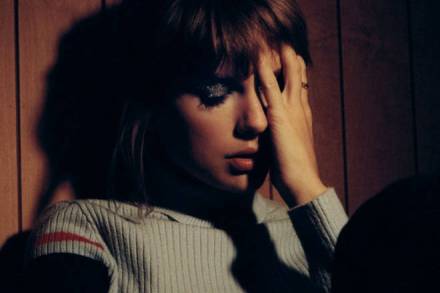
"Every single song is like a road map to what that relationship stood for, with little markers that maybe everyone won't know, but there are things that were little nuances of the relationship, little hints,” Taylor Swift told Yahoo! Music in 2010. A decade of songwriting turned those “little hints” into complicated numerology, a scarf metaphor at the centerpiece of her canon, coded song titles, storytelling scattered with cardigan sweaters, Shakespeare references, faded blue jeans, true crime, YA tropes (e.g., witches, cats, prom dresses, teen love triangles and evil alter-egos) and glitter-glue covered diary pages — sealed with red lips. Taylor Swift was fifteen when she began incorporating easter eggs and (wink-wink) secret messages into her work.

Blockbuster is the best argument in favor of That ’90s Show

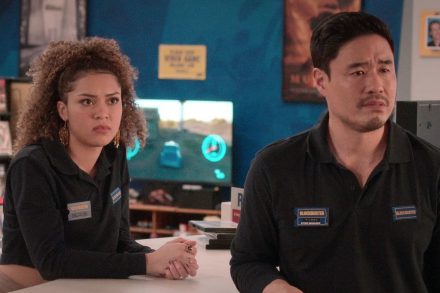
Blockbuster is a single-cam sitcom about the last Blockbuster (located inside a strip mall in Michigan). The set is dressed in authentic signage, fluorescent lights, blue walls and an oddly prophetic Howard the Duck poster. The employees have real Blockbuster name tags and uniforms (the producer, John Fox, acquired the rights and handed it over to established showrunner Vanessa Ramos: I have the rights to Blockbuster. Would you like to develop a workplace?). Every episode is packed with movie references and checkout-counter humor. The transitions between scenes are scored to hip-hop beats that sound like something you’d hear on Nickelodeon in the Nineties. You’re inside a Blockbuster for the first time since Carol Danvers fell through its roof in Captain Marvel.

blockbuster

Does Rihanna have a method to her madness?

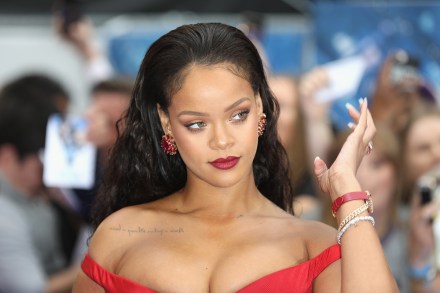
The scaffolding TMZ headline became a tower of terror for Rihanna fans: “Johnny Depp. Savage X Fenty Guess Appearance. In Rihanna’s show!!!” Variety confirmed that, yes, Johnny Depp would appear in Rihanna’s Savage X Fenty Vol.4 on Wednesday, streamed exclusively on Amazon Prime. Depp is the first male celebrity to be a featured guest at one of Rihanna’s Savage X Fenty shows (even though he isn’t mentioned in the press release, which means he was supposed to be a surprise). Past celebrity guests have included Cindy Crawford and Erykah Badu. Savage X Fenty is Rihanna’s global lingerie brand. Its brand ID is built around “diversity and inclusion in sizing, access,” wrote Forbes, “and marketing can lead to an even greater goal, equity in feeling sexy.

rihanna
romcoms ticket to paradise

The romcom’s ‘Ticket to Paradise’? Women 

Why did Bros bomb? The paltry $4.8 million opening weekend of the “first gay romantic comedy from a major studio featuring an entirely LGBTQ principal cast” — quite the mouthful — was as predictable as its fawning critical response (88 percent on Rotten Tomatoes). The film also cost $22 million to produce, not including its marketing budget, which somehow failed to publicize the fact that this is a rom-com from Judd Apatow. When the film’s lead, Billy Eichner, announced that Bros flopped because straight people “just didn’t show up,” he was right — but it wasn’t just straight men; it was women who seemed as excited for Bros as they were the next sweaty and dim Rambo movie. Also, who titled this film? What was the logic?

Apple Music cynically exploits Kanye West by deplatforming him

Apple Music has “quietly” removed two of Kanye West’s playlists from its platform. This news was leaked to the music press quietly, of course, and has (thus far) produced tons of free media impressions for the streamer. The move was presumably a shrewd public relations stunt, or maybe a rogue employee with coding skills. Who knows? But the media framed it as Apple Music taking a stand, quietly, of course, as the streamer repositions itself in the headlines after it announced last week that it was raising subscription prices. “De-platforming” Kanye West is messaging they’d like to piggyback, for obvious reasons, as it appeals to a swath of bored subscribers who could end up tweeting Apple Music for not being on the “right side of history.

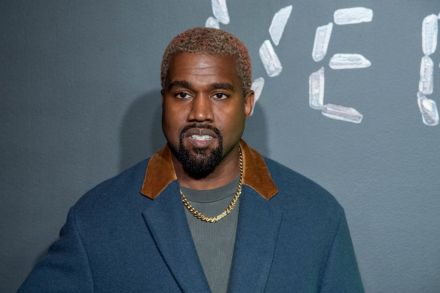
Kanye West just can’t shut up 

Here are the facts: Kanye West should be in a psychiatric hospital. Instead, he’s speaking his mind, or what’s left of it. For what it’s worth, Kanye West should not be tweeting or going on podcasts. Unlike the side effects of a prescription drug, the results don’t vary. No, the outcome is usually the same, in one form or another: career suicide. Kanye West’s artistic legacy is undergoing seppuku. We've seen this movie before. Remember Roseanne? After a racist tweet in 2018, ABC immediately canceled her show (it was going to be her comeback). Hulu followed up by removing every season of Roseanne from their streaming service.

kanye west

How Netflix saved comedy

Comedy has been absorbed into Twitter’s zeitgeist tornado: a whirling panopticon inhabited by 23 percent of the most humorless and opinionated denizens of the internet (and the top 25 percent of them produce almost all the tweets, according to a study by Pew Research Center). Twitter’s superusers are journalists who have never left the eye of the storm; Twitter has become their “ultimate editor.” It has what the New York Times calls an “outsized role in shaping narratives around the world.” But what kind of comedy clicks for these dopamine-addicted trend chasers?

Netflix

Vince McMahon’s final act

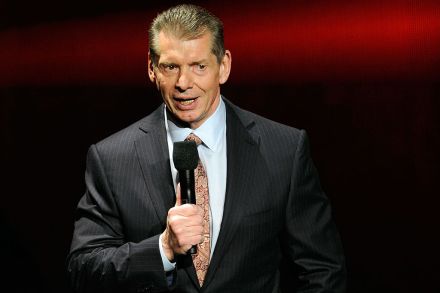
Vince McMahon displays a T-Rex skull in his office. It is mounted against blood-colored walls. But is it real? It doesn’t matter, as it’s authentically Vince McMahon to mount such a garish display of masculine bravado on his wall. It’s the kind of over-the-top centerpiece you’d expect from the mogul who built World Wrestling Entertainment into the behemoth it is today. A giant of a man, McMahon has spent four decades laughing maniacally as he feasted on the flesh of his puny competition. “It’s on my wall and symbolic of my voracious appetite for life,” he tweeted. There’s also prophetic symbolism to the dead-dinosaur skull. In June, the Wall Street Journal reported that the WWE board was investigating a “secret $3 million hush pact by CEO Vince McMahon.

McMahon
tarantino hollywood

Tarantino’s male fantasy rejects your hypothesis

Once Upon a Time...in Hollywood is Quentin Tarantino’s most pleasurable film since the first installment of Kill Bill. It’s delightful pop esoterica, blending the sensational disposability of a pulp novel with an antique edition of Playboy filled with crackling cigarette ads you can practically inhale off the page. The film is a visual banquet with a daft machismo that puts Tarantino out of step with the marketing plans of today's priggish e-cigarette smoking snoots. Ultimately, Once Upon a Time... is a stylish fairytale where the two anti-heroes are a neurotic leather-clad TV cowboy named Rick Dalton (Leonardo Di Caprio in his funniest performance) and Cliff Booth, a sadistic and square-jawed drunk who feeds his dog canned slop, played by Brad Pitt.

The tale of Laura Loomer

Laura Elizabeth Loomer enters a diner in Burbank with a designer bag slung over her shoulder, wearing glammed-up eyeshadow, her Fox News-blonde hair dyed Transylvanian-black like her eyebrows. She orders black coffee and crispy bacon. She looks she’s attending her own funeral. Coffee with Laura is a cardinal sin in today’s interbred media clubhouse. The young woman from Arizona’s suburbs, at 25, has ripped a hole through the internet and fallen right through it. She’s now banned from Facebook, Instagram, Twitter, Uber, Lyft, Venmo, PayPal, GoFundMe, Medium, Teespring and — for harassing other journalists — the annual Conservative Political Action Conference (CPAC). I ask her if she can ever again be normal.

laura loomer

Jordan Peele’s political failure

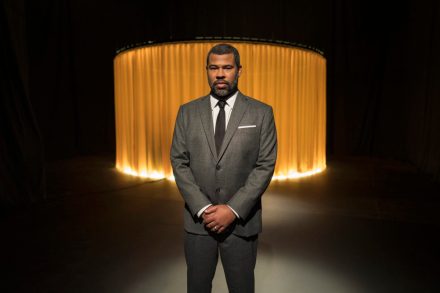
Watching Rod Serling’s Twilight Zone was like a narcotic experience. The poetical monologue took you into a dimly-lit room, on the crackling leather of a worn couch, into thick plumes of cigarette smoke. Smartly suited, Serling introduced a flaw in the human condition in a rhythmic, jazzy voice, as if he were about to whip out a horn and blow the smoke away to reveal a moral, a twist, or riddle. Through 156 episodes, The Twilight Zone was as much a literary as a celluloid achievement. Remember ‘The Monsters Are Due on Maple Street’ from 1960? A parable of McCarthyism, and a mowing of the lawns of suburban paranoia. ‘The tools of conquest do not necessarily come with bombs, and explosions, and fallout,’ Serling intoned.

jordan peele twilight zone