Television

Acid reign

You won’t believe me when I tell you this but I swear it’s the truth: until this week, I had never watched Downton Abbey(Sunday, ITV). Some old-fashioned notion about not respecting myself the morning after? A curious primness preventing me from just gritting my teeth and getting it over with? Yes to both — and yes to a touch of anti-bandwagon mulishness (which has, no doubt, kept me from so many of life’s little treats). My lack of experience might have counted against my enjoyment of Sunday night’s episode — the first of a third series — were it not for the skill of Julian Fellowes who, like the perfect host, makes it his business to welcome one and all to the party at whatever inconvenient time they might turn up expecting to be entertained.

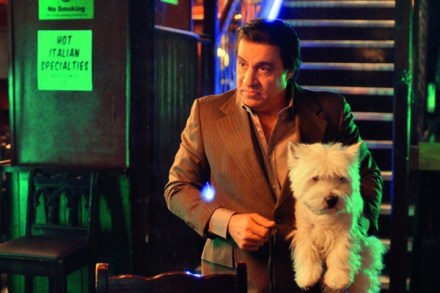
Identity crisis | 13 September 2012

The greatest moment in the history of television — and one which will surely remain unsurpassed for ever — was the final episode of The Sopranos. Part of its genius was to reward all of us who had stuck with it so loyally for the previous 85 episodes by allowing us to make up our own minds how it ended. Did Tony get wasted by those hitmen-like figures we saw entering the restaurant where he was having the rapprochement dinner with Carmela? Well, maybe. Or did the Feds finally get their wiretaps and informants properly organised and put Tony away for ever? Or did he — as I prefer not to stop believing — waste all the people who’d come to kill him and then get off, on a technicality, whatever charges the Feds threw at him.

That’s entertainment

Comparisons may be odious but sometimes they are irresistible — and, frankly, more fool the BBC for screening Treasures of Ancient Rome on the same night as The Shock of the New (Monday, BBC4). Here is Alastair Sooke on the spread of the Roman Empire: ‘Rome’s generals romped around the Med, sacking cities willy-nilly...

Conduct becoming

Every so often a programme appears which can be recommended even to people who hate television. Parade’s End (Friday, BBC1) is such a work. The awkward — one might think impossible — problem of shortening Ford Madox Ford’s 800-page masterpiece into five hours of television, without violating the spirit of the book or seeming to cram a quart into a pint pot, has been solved by getting Tom Stoppard to write the script. Stoppard’s less is not exactly more, but there is a certain liberation in being able to leave things out. Ford’s wit, penetration and eloquence are distilled into the five acts of a play, and some of his best lines echo all the clearer for being spoken in relative isolation.

Faustian pact

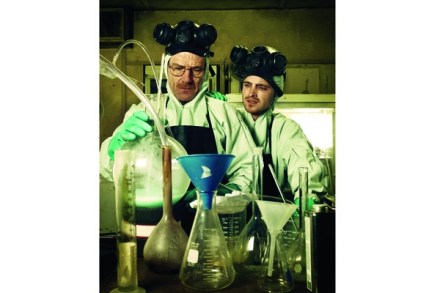
When my kids grow up, I want them to go to university and read chemistry. That way they will have the skills to manufacture high-class crystal meth (or similar), make lots and lots of money and keep their father in the style to which of late he has become unaccustomed. I got the idea for this, some of you will have guessed, from Breaking Bad — probably the most brilliant series to come out of the US (or anywhere else) since The Sopranos.

Please release me

I am writing this at teatime on Sunday — day nine of the Olympics. So far: 34 medals, we’ve all gone completely bananas, and the Great British mood has improved by what commentators call 110 per cent. Andy Murray has just won gold, beating Roger Federer in straight sets, and by the time I finish writing he may have won another gold in the mixed doubles’ final. To write about this week’s television and not mention the Olympics would be peculiar, but to write about nothing but the Olympics would be foolish because what I write today will be old hat by the time you read it. Today the Games are the most important thing on television; by the end of the week they might not be — they might have turned from buttered crumpets to stale buns.

Danny’s super sop

Almost the best thing about Danny Boyle’s Olympic Opening Ceremony was the running Twitter commentary. From Marcus Stead: ‘Ah, here we go, NHS worship. One of the most overrated things about Britain. Expensive, unreliable, regularly lets patients down.’ From Miss Annesley: ‘I think “Voldemort runs the NHS” is the moral of this story.’ And from Mr Ranty: ‘Stafford Hospital is second from the left, the one with 450 dead patients.’ Not getting into the spirit of things is something we British do well. It’s instilled in us from an early age — usually during our first visit to the pantomime where the nasty, scary bully man on stage insists we join in with cries of ‘Behind you!’ and ‘Oh, no you didn’t!

Trouble ahead

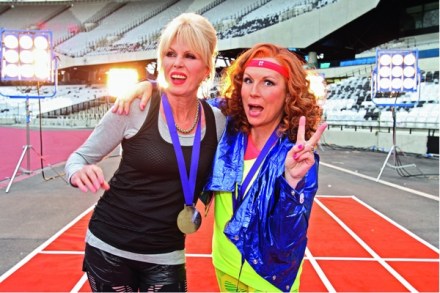
Must we? All of us? This is the perfect storm, the tempest, the ultimate crisis for non-sport fans. But TV, with all its kaleidoscopic variety, was invented for just such an eventuality, surely? And together with some assistance from our faithful old friends, the tinnies in the fridge, the next few weeks might pass quite pleasantly, no? Fssssst. Sip. Hmmm. See? Happily, in terms of drinking and smoking, Patsy and Edina in Absolutely Fabulous (BBC1, Monday) seemed to be in agreement about what we in the East End refer to as ‘The Limpics’.

Back to the future

I wonder how the 2012 Olympics will look, when re-imagined by a BBC docu-drama 64 years hence. If it’s anything like next week’s charming but not exactly unclichéd account of the 1948 Men’s Double Scull — Bert & Dickie (BBC1, Wednesday 25 July) — something like this, I expect, with all sorts of imaginary obstacles thrown in the way to make our hero’s struggle more movie-friendly. Int. London Olympic Velodrome. 2012 Men’s Keirin final. An elderly man in brightly coloured skintight gear shuffles with the help of a Zimmer frame towards his shiny, high-tech bicycle. Jaunty Cockney: Bleedin’ ’eck. That old geezer looks like he’d be more comfortable on a penny farving. Cockney’s mate: You may larf.

Relaxing with the ignoble

Unless I have slept through another of the year’s once-in-a-lifetime experiences — which is rather more likely than possible — the days since the Wimbledon final have passed without call for bunting, cheering, spangling or any other kind of cross-gartered preparedness. We seem to occupy a lacuna; to have swum into the eye of the 2012 Events’ Cyclone. Here we are invited, until the Games begin, to rest our flag-waving arms, uncross our patriotic fingers and reacquaint our senses with something other than Pride-and-Glory. With immaculate timing — while Centre Court was still being put to bed — Wallander returned to BBC1 (Sunday).

Not much cop

Among the many reasons I shall miss Simon Hoggart’s presence as my Spectator co-TV critic is that I used to rely on him to take the heat off me. Since landing this gig all those years ago, I’ve always felt something of an imposter owing to my extreme reluctance to sit down and watch any more TV than I absolutely, strictly have to watch. Simon, on the other hand, was so conscientious he’d often review three or four programmes in a week. If this were the second world war, I’d be the equivalent of some Cairo desk wallah, while Simon would be a Soviet punishment battalion. But just because Simon’s gone doesn’t mean I’m going to change tack.

Power failure

You wouldn’t necessarily use the word subtle to describe a programme in which a well-dressed, well-spoken woman describes a speech that’s been altered as ‘pencil-fucked, completely’ but Veep (Monday, Sky Atlantic) is subtle, sinuously subtle. In his way Armando Iannucci is as creative with the English language as James Joyce. He is proof that doing an English degree at Oxford is not necessarily, to adapt another of his phrases, ‘like using a croissant as a dildo — it doesn’t do the job and it leaves a lot of mess’. His neologism in The Thick of It — ‘omnishambles’ — is now as much a part of our political vocabulary as ‘white paper’ or ‘liar!

Hallucinogenic dream

One of the great things about working in a collapsing industry is the cornucopia of possibilities that begins to open up of all the stuff you could do instead. In the past 18 months I have toyed with becoming: a speechwriter, a radio shock jock, a YouTube cult, a think tank senior visiting fellow, a TV star, a corporate communications director, an internet entrepreneur, a self-help book author, a Buteyko guru, a truck driver at an Australian mine, a gold bug, a fixer, an after-dinner speaker, a stand-up comic, an MEP. Some of it might actually happen. So I think I have a pretty good idea what David Bowie was going through in 1972 in the run-up to recording Ziggy Stardust — whose 40th anniversary was celebrated by Jarvis Cocker and friends in a BBC4 documentary this week (Friday).

Setting the tone

The BBC has been heavily criticised for its coverage of the Jubilee flotilla, and the tone was incredibly annoying. All those smiley celebrities pretending to enjoy themselves! The tabloids, those for whom the Beeb can never do anything right, would have been just as mean if the treatment had been sombre and serious. ‘And we see a boat, followed by a barge, and next to that, another boat. And Her Majesty is waving, now to the crowds on the embankment, now to the next boat…’ The queue of vessels was a feeble idea, the rain made it worse and there was nothing anyone could have done. Bagehot himself would have been reduced to burbling about souvenir sick bags.

Royal watch

This is the week we almost drowned in Jubilee programmes. Sadly, many of these were unavailable to reviewers, possibly because to criticise such a programme would itself amount to lèse-majesté, or perhaps they just hadn’t finished the edit. But I doubt we’ve missed much. This weekend BBC1 (Friday) was running A Jubilee Tribute to the Queen, presented by Prince Charles. Maybe he’s said that it’s all very well banging on about her sense of duty, but it didn’t do much for family life, and he still can’t get over how, after six months touring the Commonwealth, she famously didn’t kiss her little boy but shook his hand. I doubt it.

Frontier dreams

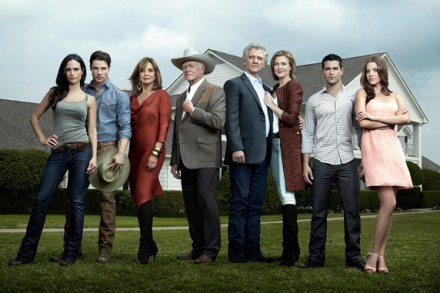
When I was growing up, the Dallas theme tune was like a call to prayer. As the Copland-esque trumpets rang out, we ran to the television set. A hushed silence descended as cattle stampeded beneath the snazzy gold title credits. To watch the glamorous travails of the Ewing family from a sofa somewhere near Coventry in the 1980s was to experience the very promise of the age. Escapism, certainly. But Dallas was also about dreams. Frontier dreams. That there was a place on earth where oil men in Stetsons plotted each other’s downfall while slurping bourbon was too fabulous. That these men were married to women with shoulder pads bigger than Darth Vader’s was beyond inspiring if you were a kid growing up not in Midland, Texas, but in The Midlands, UK.

Failing Britain

For my holiday reading in Australia I chose Max Hastings’s brilliant but exceedingly depressing Finest Years: Churchill as Warlord 1940–45. Once you’ve read it, it’s impossible to take any pleasure from second world war history ever again. Basically, runs Hastings’s persuasively argued thesis, we were rubbish at pretty much everything. Our generals were useless, our citizen soldiers lacked dash and folded at the first opportunity, our tanks were ill-protected and undergunned. Apart, maybe, from Bletchley, we contributed nothing major whatsoever to the Allied war effort: the Soviets doing all the killing and dying for us and the Yanks providing all the materiel.

Fond farewell | 19 May 2012

Now and again a sitcom gag lodges in the public mind. In 1974, Ronnie Barker, in Porridge, was reminiscing about Top of the Pops and its all-girl dance troupe, Pan’s People. ‘There’s one special one — Beautiful Babs,’ he says. Beat. ‘Dunno what her name is.’ Her name was Babs Lord. She attracted the attention of a young actor called Robert Powell, then in a long-forgotten thriller called Doomwatch, so he met up with her in the celebrated and notorious BBC Club at Television Centre; after 36 years they are still married. She also became an explorer, described as the only housewife to have visited both the North and South Poles, which is an impressive feat, though a patronising title, since it sounds as if someone felt they needed tidying.

Opportunity knocks | 12 May 2012

I should have thought about this more carefully — the timing of it, I mean. This is Crucible time, and in the normal scheme of things I would be watching almost nothing but snooker. Yes, dear readers, I am that sad and pathetic thing known as a snooker addict, and a red-button one at that. But I eschew the green baize and march purposefully into the world of television previews — and what a challenging world it is. Not, I suppose, as challenging as the task that faces The Town Taking on China (BBC2, Tuesday), one of those programmes that reassuringly does exactly what it says on the tin.

Talking head

‘There’s no point in being a liberal if you’re just a furry little herbivore on the edges of British politics,’ declared Paddy Ashdown on Sunday on Private Passions (Radio 3). It was a revealing comment. The programme went out last weekend after the LibDem’s disastrous results in the local elections, but it would have been recorded much earlier. Ashdown was meant to be talking about his favourite music, and why he had chosen it, but he could not resist telling us what he thought of the Con-Lib Coalition. ‘This [being in government] is not going to deliver a dividend for the LibDems until a little before the next [general] election,’ he said. Might he not have avoided the topic, knowing that he was not yet sure what would happen on 3 May?