Television

Television review: The Returned is the finest, purest heroin

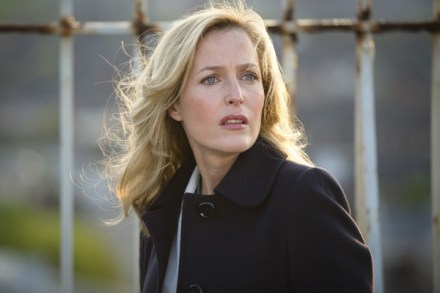
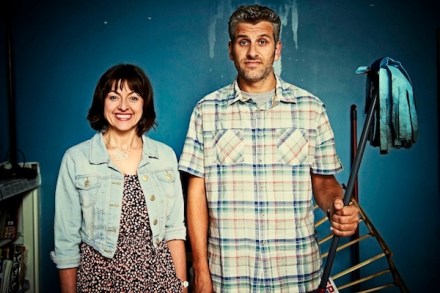
With the possible exception of Game of Thrones, The Returned (Channel 4, Sunday) is the best series you will see on TV all year. I caught some early previews about a month ago when I was on The Review Show (BBC4). Normally the reviewers don’t agree on much but on this we were unanimous: we all felt like newly made addicts who’d been introduced to the finest, purest heroin — only to be suddenly denied our next fix. When was the rest of the series going to be broadcast? When? WHEN? Well, now, finally it has made it on to Channel 4 and I hope you’ll all be as hooked as I am. It has been variously billed as a zombie thriller and a successor to Twin Peaks, but neither does justice to its intelligence, subtlety and eerie beauty.

Sex! Soap! Starkey! The Tudor invasion of British television

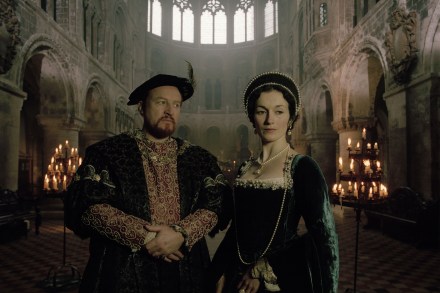
The Tudors have invaded television. Everywhere you look, it’s Henry VIII this, Henry VII that, Anne Boleyn this, Anne of Cleves that. On BBC2 is the continuing drama series The Tudors, whose Henry VIII looks like the lead singer in a boy band who’s stumbled on to the wrong film set. At any moment, you expect him to announce the execution of Anne Boleyn with those jabbing-the-air hand gestures that boy-band members use to semaphore emotion. Lushly soap operatic, The Tudors depicts the royal court not so much as a place of high political intrigue but as a hearth for dynastic family troubles where improbably good-looking people have lots of sex.

Why watching Britain’s Got Talent is like giving yourself a lobotomy

The kids are back for half-term so we’re having to watch absolute crap again on TV. Monday night, I wanted to watch The Fall (BBC1). But I couldn’t, obviously, because Britain’s Got Talent (ITV1) was on. ‘Dad! Dad! You’ve got to see this!’ So I come in to see what I’ve got to see and it’s a man called Aaron Crow whose unique and remarkable skills are that he never speaks, he has an interesting haircut, and he does mildly scary magic tricks which aren’t quite as good as Dynamo’s. Also he pronounces his name ‘Aran’ — as in sweater. Is this some other annoying new trend I didn’t know about?

‘Bankers’ was not a documentary. It was a BBC hit job

I like bankers. They’re an honest lot. All of us like money, but only they are upfront about it. I once witnessed a conversation between three financiers that started with them comparing their cars, then their houses, then their helicopters. None of the shilly-shallying you find at a society cocktail party, where people slyly suss out your income on the basis of your profession, your postcode, your accent and the school you went to — these bankers went straight to unvarnished one-upmanship. Such frankness can be refreshing. I like bankers because, these days, somebody has to. The second episode of Bankers (Wednesday), the BBC2 three-part documentary that’s just ended, started off in such a mean-spirited way I actually felt sorry for financial traders.

The Fall, Culture Show Special — Not Like Any Other Love: The Smiths

The serial killer on The Fall (BBC1, Monday) is no ordinary serial killer. He has a unique and terrifying modus operandi — or ‘signature’, as we serial-killer experts call it. What this serial killer does is to predate ruthlessly and single-mindedly on those young, attractive women unfortunate enough to be in the precise target-audience demographic of glossy-grimy five-part, prime-time BBC thrillers about serial killers. His thoroughness is chilling. First he checks out what they do for a living: architects and lawyers are ideal because then people at opinion-forming, BBC executive-frequented Islington dinner parties will definitely be talking about it, whereas they might not if it were just smelly prostitutes.

Will the internet save television?

Forget The Apprentice. A ‘reality TV’ show where you have no say, and where you can only watch as Sir Alan Sugar does all the hiring and firing? That is so last decade. Forget, too, quaint programmes such as The X Factor, where you pick the contestants you like and the ones you don’t — a format that’s been kicking around since Eurovision. No, imagine if your power as a viewer extended way beyond deciding which participant stays and which goes: instead, you get to choose whether an entire TV series deserves to be born. ‘Out!’ you can say after watching a single episode of a wannabe series, and finding it wanting. ‘Cut! Next!’ Or, if you like a particular pilot episode, you could decree: ‘Fabulous.

TV: I would surely die if I watched more than five minutes of Ben Elton’s The Wright Way; Rupert Murdoch: Battle With Britain

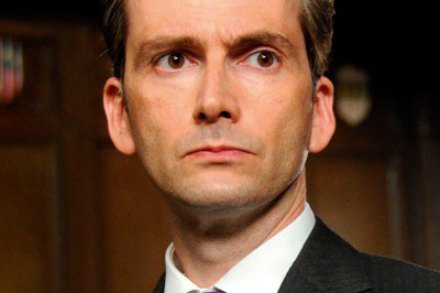
The controversial counterintuitive piece I was going to write concerned Ben Elton’s new sitcom The Wright Way (BBC1, Tuesday). You may have noticed it has been panned by all the critics, but the main focus has been on Elton’s shift from darling of the Eighties alternative comedy left to bourgeois sell-out. So what I was going to do was note that, whatever you think of Elton, he doesn’t half know how to capture the zeitgeist, and that this beautifully acted send-up of Elf n Safety gone mad starring the great David Haig is a bourgeois gem to rank with My Family and Outnumbered. But then I made the mistake of watching it. I lasted all of five minutes.

Television: The United States of Television; The Politician’s Husband

There are two American Dreams — the one that happens in real life and is experienced by people such as Barack Obama, and the one that happens on screens, both silver and small, shared by millions across the world. BBC2’s The United States of Television: America in Primetime (Saturday) traces the history of the latter, focusing on the TV series shown during those magical hours when Americans sit down to dinner after a hard day’s work chasing the former. Only the fittest, finest programmes survive in this slot, where Nielsen ratings mercilessly track the tastes of 300 million people as they chow down and chill out.

Television: Margaret: Death of a Revolutionary

In Margaret: Death of a Revolutionary (Channel 4, Saturday) — Martin Durkin’s superb tribute to our greatest prime minister — there was some footage of Harold Macmillan giving his ‘selling the family silver’ speech that made me quite sick. What nauseated me first was the sycophantic laughter from his black-tie Tory Reform Group audience oozing entitlement at some smoky St James’s club; and, second, the noisome cultural assumptions behind Mac’s ineffably grand remark. According to Mac’s Weltanschauung, it was not only right that people of his class should always keep hold of their silver, their Canalettos and Rembrandts, but that everyone else, a notch or two below, should also applaud them for doing so.

TV review: The Secrets of Britain’s Sharia Courts; The Sex Clinic

Sometimes a television programme raises far bigger questions than it actually gives a platform for, which is the case with Panorama’s The Secrets of Britain’s Sharia Courts (BBC1, Monday). Wedged in this half-hour slot are explosive issues such as the sovereignty of British law, the role of religion in arbitrating on marital disputes, and the place of women in Islam. The show adopts a feisty, no-holds-barred approach in this piece of investigative journalism presented by Jane Corbin, yet has strange ellipses at certain points that leave huge questions dangling. At one juncture, Corbin says, ‘The previous government gave up on its attempt to investigate sharia councils. They couldn’t get proper access to them.’ Eh?

Lara Pulver interview: ‘People in LA were desperate to meet Irene Adler’

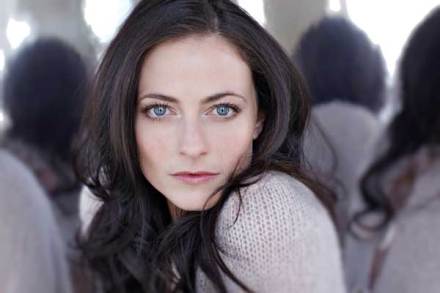
Not many actors have made a name for themselves with quite the same force as Lara Pulver. In January last year more than eight million people tuned in to BBC1 and watched her star as Irene Adler in ‘A Scandal in Belgravia’, the opening episode in the second series of Sherlock. I’m not saying that Pulver’s appearance in one of the early scenes wearing nothing more than a pair of high heels (albeit with some clever camera angles preserving her modesty) was the only reason for the vast amount of attention the episode received. It’s surely no coincidence, however, that her name was almost immediately trending on Twitter and that this particular Sherlock adventure quickly became one of iPlayer’s most watched programmes.

The Village

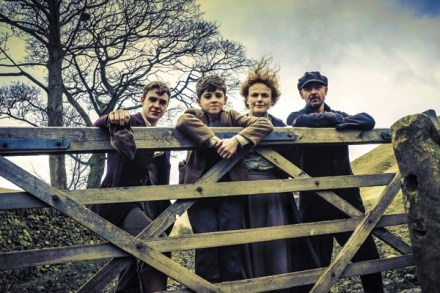
Everyone’s loving BBC1’s new, Sunday-night period mega-drama The Village (32 episodes long if writer Peter Moffat has his way). It’s taut, spare, grown-up, accomplished, dark, strange and poetic, according to the critics, which I think are all euphemisms for ‘not like Downton Abbey’. And it definitely isn’t like Downton Abbey. There’s a lot more brooding, the dialogue’s more Pinteresque (which is to say it’s more often there to evoke mood or the banality of existence than to carry the plot, amuse you or illuminate character), its view of the past (a Derbyshire village on the eve of the first world war) is much less rosy. But is this necessarily a good thing? Personally, I’m not so sure.

Dr Who: there’s something in the wi-fi; How to be a Lady; The Mystery of Mary Magdalene

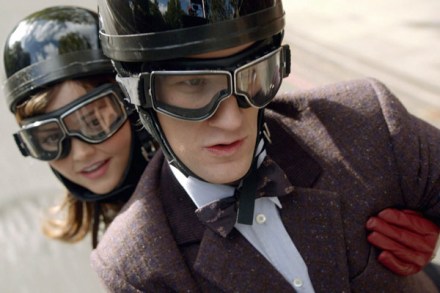
It used to be that when an arch-villain wanted to decimate a community, he’d put something in the water. Now, it’s something in the wi-fi. In the new Dr Who, the Time Lord battles a baddie who runs a group called the Spoonheads, whose mission is to upload and download stuff from the wireless internet. A bit like what I do all day, then. But wait — the Spoonheads are uploading people’s minds, to access all of human intelligence. Then they download them again, for their own evil purposes, while their victims languish in a mindless warp. The episode is called ‘The Bells of Saint John’ (BBC1, Saturday) and plays cleverly on our fascination at and fears about a technology that we cannot touch or see but is all around us.

Bankers: I like them — somebody has to

I like bankers. They’re an honest lot. All of us like money, but only they are upfront about it. I once witnessed a conversation between three financiers that started with them comparing their cars, then their houses, then their helicopters. None of the shilly-shallying you find at a society cocktail party, where people slyly suss out your income on the basis of your profession, your postcode, your accent and the school you went to — these bankers went straight to unvarnished one-upmanship. Such frankness can be refreshing. I like bankers because, these days, somebody has to. The second episode of Bankers (Wednesday), the BBC2 three-part documentary that’s just ended, started off in such a mean-spirited way I actually felt sorry for financial traders.

Lost in space | 21 March 2013

On 28 January 1986 the Challenger space shuttle exploded shortly after launch, killing all seven crew. What made it worse was that one of the victims, Christa McAuliffe, was a teacher, so of course all the children in her class were watching it live on TV. I remember it well. For the first few seconds after the shuttle blew up, you weren’t quite sure whether or not what you’d just seen was meant to happen: perhaps all those swirls of white vapour were jettisoned boosters or something. Then, you heard the gasps and groans from the crowds standing at the launch site and finally you knew. Up until 9/11 I think it was the most shocking event most of us had ever witnessed on TV. What I hadn’t been properly aware of, till The Challenger (BBC2, Monday), was the back story.

The future of arts broadcasting

Under the stewardship of John Reith, the BBC was godlier than it is today. In fact, when Broadcasting House was first opened in central London, Director General Reith made sure to dedicate the whole thing to Him up there. An inscription was chiselled into the wall of the building’s foyer, which began: ‘To Almighty God, this shrine of the arts, music and literature is dedicated by the first Governors in the year of our Lord 1931’. The words that followed included ‘decency’, ‘peace’ and ‘good harvest’. It’s not really the sort of epigraph that Auntie would put her name to now. But, reading that inscription again, it’s not so much the G-word that stands out as the A-, M- and L-words: arts, music and literature.

Mimics, pagans and pilgrims on TV

What would you do if you had a quite extraordinary talent in impersonating everyone, from Al Pacino to Barack Obama to just any random Irish bloke? In TV land, you are probably rather baffled by it all, and unsure what to do about it as you languish in an unfulfilling half-life, until a Series of Events comes along to show you what a gift you have. This is what happens to The Mimic’s Martin Hurdle, whom we first encounter in his car stuck in traffic, entertaining himself by putting on the voice of Terry Wogan, true to it in texture and timbre, if not in spirit (‘It’s mornings like this, that I wish I was back in Phuket, bouncing a ladyboy on each knee!’).

Bluestone 42: Dad’s Army it isn’t

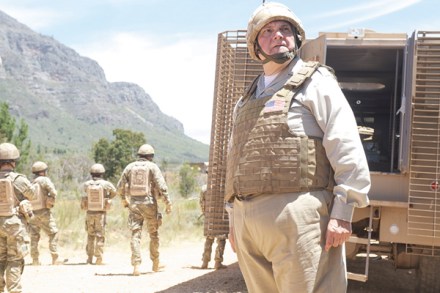
The thing that always used to bother me about M*A*S*H as a child was the lack of combat. You’d see the realistic film of choppers at the beginning and, obviously, the plotline would quite often include casualties coming in from recent scenes of action. But the exciting stuff always seemed to happen offstage, a bit like in Shakespeare where some character strides on and tells you what a terrible battle there’s just been and you’re going, ‘Wait a second. Did we just skip past the most exciting bit?’ This clearly isn’t going to be a problem, though, with BBC3’s new sitcom about a bomb disposal unit in Afghanistan, Bluestone 42 (Tuesday).

ITV’s Food Glorious Food is under the curse of Simon Cowell

I sometimes worry that ITV — the middle child — doesn’t get enough of my attention and so this week I have decided to redress the balance: I devoted myself to episode one of Food Glorious Food (Wednesday, ITV). It’s a nine-part quest, hosted by Carol Vorderman, which aims to discover ‘Britain’s best-loved recipe’. O jubilate deo! This is how it goes: treasured family recipes are cooked up at regional events and tasted by one of four judges who choose a favourite and submit it to be tasted by the other three. The judges are Loyd Grossman (smooth), Anne Harrison (stern), Stacie Stewart (bubbly) or Tom Parker Bowles (apologetic).

New word order | 21 February 2013

‘Don’t be evil.’ Google’s unofficial motto. ‘Evil men don’t get up in the morning saying, “I’m going to do evil.” They say, “I’m going to make the world a better place.”’ Christopher Booker. Meanwhile — while you were distracted by other things like tax bills and school fees and somehow scraping by — Google and Amazon and Apple took over the world. This, of course, is what novels by the likes of William Gibson, films such as Blade Runner and comic strips like Judge Dredd have been telling us for some time: that one day, the world will be ruled not by governments but by giant corporations.