Television

Schoenberg in shorts

For anyone who missed The Sound and the Fury (Tuesday, BBC4) here is a reason — one of many — to catch it on your iPlayer: footage of a fierce, frowning and elderly Stravinsky, sitting in the empty stalls of the Théâtre des Champs Elysées and recalling the ‘near-riot’ which greeted the first performance of The Rite of Spring in 1913. ‘It was full — ’ (he gestured crossly around him) ‘ — of very noisy public. Very ’ostile public. I went up — when I heard all this noise — and I said, “Go to hell! Excuse me, Messieurs et Dames, and goodbye!
Old school joy

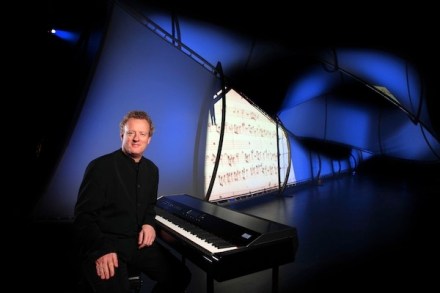
Let’s not beat about the bush: Howard Goodall’s Story of Music (BBC2, Saturday) is landmark television, a documentary series that deserves to rank with such unimpeachable classics as Kenneth Clark’s Civilisation and which, if you haven’t seen it yet, you absolutely must for it will answer so many of the questions that have been bugging you all your life. Questions like: ‘Bach — was he really as good as I think he was?’ ‘So what did music sound like in Roman times?’ and ‘Where did Lurpak butter get its name?’ Of course that last one is a fake question. I’d hazard a fortune you’ve never once asked it — but the answer’s interesting all the same.

Ordinary people | 31 January 2013

There was little reason to be curious about David or Jackie Siegel at the beginning of Queen of Versailles (Monday, BBC4): he is the King of Timeshare and she is his Beauty Queen; they are building a palace in Florida, and modelling it on Versailles; it will be the biggest private home in America, when it is finished, and the Siegels will squeeze into it with their colossal fortune, their fleet of staff, their eight children and their bouquet of powder-puff dogs. ‘My husband deserves this house,’ says Jackie. ‘It’ll be like a lifetime achievement.’ There didn’t seem a whole lot more to find out. But then, after 30 minutes of screen time, came the crash: September 2008.

The hard sell

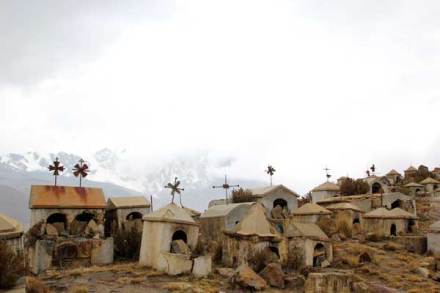
`The older I get, the less tolerant I become of being treated by television like a child with Attention Deficit Hyperactivity Disorder. No offence meant to Dr Jago Cooper but, if I’m going to consider spending a valuable hour of my fast-diminishing lifespan watching a documentary about Lost Kingdoms of South America, the very last thing that’s going to persuade me is being importuned in the manner of those men with microphones at street markets trying to persuade me to buy an amazing labour-saving device I never knew I needed, the Radish-o-Chop.

Wodehouse to the rescue

I knew this would happen: I’ve been watching season five of Mad Men on DVD and it’s spoiled me for normal telly. If you notice increased levels of toxicity — dissatisfaction and disgruntlement — in the following grumblings, then Mad Men is the reason.  Nothing pleases me so much, you see, and I am likely to remain crabby and sniffy until the effects of that 13-episode pleasure-binge wear off. Where to go from Madison Avenue in 1966? Which to choose of these bracing alternatives: the cuckoo-land of Mr Selfridge (Sunday, ITV), the dismal wastes of Utopia (Wednesday, Channel 4) or the company of those dashing, anxious, well-dressed Spies of Warsaw (Wednesday, BBC4)?

Death watch | 10 January 2013

Some people say TV is a bad thing for families but I say don’t knock it. It was thanks to TV this school holidays that I almost got vaguely, slightly, accepted by Boy. Fathers of young teenage males will know exactly what I’m on about here. There comes a point — quite often bang on your son’s 13th birthday — when he suddenly decides that you’re the lamest, dumbest, uncoolest Dad in the entire history of fatherhood. And you spend many anxious months wondering how on earth you’re ever going to win him back. Well, in my case TV has been the answer.

What the doctor ordered

I don’t know whose idea it was to put New Year at the beginning of January, but it seems like an odd one. Why not begin each new year on, let’s say, the first of April or May? It might bring at least a dash of new dawn-ishness — a flicker of sunlight, scampering clouds, hello birds and a hey nonny no — to New Year’s Day. There’s no spring in the step of 1 January. She has neither the time nor the inclination for good cheer. She is as tired, headachey and whey-faced as if she had stayed up half the night dancing to ‘Yes Sir, I Can Boogie’ with 31 December and had woken to find him — Oh God! Not again! — snoring in her bed.

On the bias

It must be ten years now since I risked life and limb to brave the Cresta Run, go fox hunting and be driven round a racetrack by Lord Brocket in a Ferrari for a Channel 4 documentary on the British Upper Class. In the heady few minutes following its first transmission I thought it would mark the beginning of a glorious TV career. But TV never happened for me and oftentimes since I’ve wondered why. The short and obvious answer is that I’m crap — which may be true, but that never stopped a thousand and one other TV C-listers you could name. What I think it really boils down to is something far more insidious and pernicious: the institutional bias right across the board against almost anyone of a vaguely right-wing persuasion.

Food, glorious food

Despite a wet summer, the recent crop of food programmes has been prodigious: six episodes of Nigellissima, eight of Nigel Slater’s Dish Of The Day, six of Lorraine Pascale’s Fast, Fresh and Easy Food, 40 of Jamie’s 15-Minute Meals and 25 of Hugh’s Three Good Things — truly a basket of plenty. Two cooking competitions (The Great British Bake Off and Masterchef: The Professionals) have dished up a total of 34 episodes; Heston Blumenthal has hand-reared seven bloated and inedible turkeys (Heston’s Fantastical Food), and Yotam Ottolenghi (Ottolenghi’s Mediterranean Feast) has concocted, in the kitchens of Morocco, Istanbul, Tunisia and Israel, four unexpectedly delicious treats.

I love Michel Roux Jr

For the past month I have been glued to the BBC’s Why Poverty? season — ‘part of an unprecedented collaboration between public service media in which 37 EBU members have been dedicating multiplatform programming on the theme of poverty’. No, I jest. What I’ve actually been watching is MasterChef. Served with a MasterChef reduction, a smear of MasterChef purée, MasterChef shavings, MasterChef pickles and MasterChef tapenade and pommes, style Masterchef. With more MasterChef for pud, obviously. Does this make me a bad person? Well, possibly. But it also makes me a normal person.

Fame and fortune

Having planned to devote every one of this week’s 800 words to Sir David Attenborough’s 60 Years in the Wild (Friday, BBC2), I was distracted by fame, fortune and the politics of influence: Give Us the Money (Sunday, BBC4) and Park Avenue: Money, Power and the American Dream (Tuesday, BBC4). Both these programmes I watched with interest but absolutely no enjoyment whatsoever; their combined effect was a feeling of overall grubbiness, as if I had sat too close to a wrestling match on a wet afternoon in a swamp. ‘Give us the money!’ was the instruction given by Bob Geldof to the public at Live Aid in 1985. The public reached into their pockets and did as he asked, and a new kind of charity was born.

Top of their game

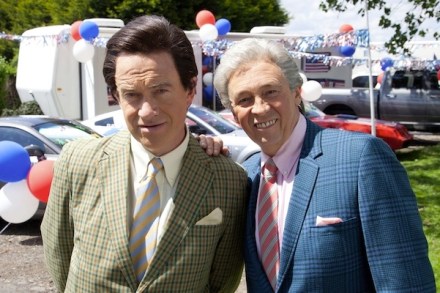
God, I’m jealous of Michael Gove. Not for being a cabinet minister in the same coalition as Nick Clegg and Vince Cable, obviously, but for being outed as a queer in the new series of Harry & Paul (BBC2, Sunday). Now that’s what I call fame. Harry & Paul has had mixed reviews. Some of the sketches — the ‘I’m a cop’ one; the US car salesmen — simply aren’t funny. But so what? Even at its best The Fast Show, arguably the funniest-ever broken-sketch comedy series, contained some sketches that weren’t funny. It goes with the territory. Unfunny sketches are the equivalent of the ‘darlings’ that William Faulkner advised authors they should kill.

Time trials

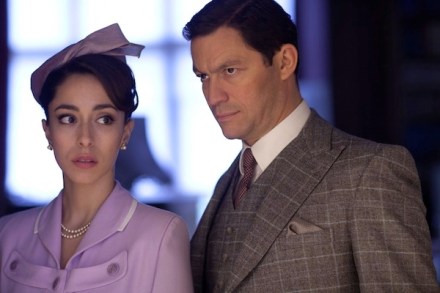
It’s amazing what can be squeezed into an hour of The Hour (Wednesday, BBC2): smutty photos, gang violence, bent coppers, illegal gambling, fascism, racism, a political cover-up, a media exposé, leaked documents, seduction, abuse, neglect, the corrupting temptations of celebrity, the corrupting temptations of complicated dessert recipes, a dog in space, the threat to the nation of nuclear war, the threat to the BBC of commercial television and the threat to an English bluestocking of a sexy, bare-legged French girl with a carving knife, a wedding ring and a gamine haircut. The poor old kitchen sink, left out like Cinderella, must have had a dull time sitting at home by itself.

Zombie hell

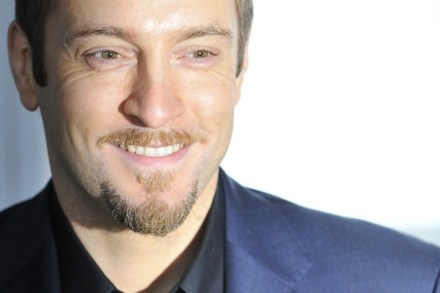
Derren Brown is a great big cheating liar. Or so my old mucker Rod Liddle reckoned last week in his Spectator blog. Derren Brown’s Apocalypse was ‘clearly, demonstrably, faked’, declared Rod. Well, I guess that settles it then. Or does it? First some background for those of you who missed it. (Though my advice for those of you who did is: stop reading now and watch both episodes immediately on Channel 4’s 4oD catch-up site.) Derren Brown’s Apocalypse (Channel 4, last Friday) was — or, pace Rod, purported to be — an extraordinarily bold TV experiment.

The American way | 1 November 2012

To the Americas this week, and first to the land of the free and the home of the brave: Gay to Straight (Monday, BBC3) examined the practice of ‘gay conversion therapy’; Unreported World (Friday, Channel 4) investigated the political power of unregulated talk radio; and Inventing the Indians (Sunday, BBC4) explored the appropriation of the Native American Indian by American popular culture. Gay to Straight was presented by someone called Stacey Dooley (no, me neither) on a channel called BBC3 (yes, but not very often). Dooley is a sympathetic, friendly, kindhearted soul, and even the most reticent of teenage boys would be willing to tell her his secrets.

BBC goes for it

Which is the worse crime, would you say: eavesdropping on celebrities’ answerphones? Or hosting and covering up for a ruthless predatory paedophile ring — led by your biggest, most heavily promoted star — over a period of four decades? Mm, me too. In fact, I’d say the Savile affair is as close as we’ll ever get to proving that God really hates the BBC. I mean, the timing is far too perfect to be coincidental, isn’t it? First we get Leveson — essentially a stitch-up by the BBC and the Guardian to entrench the power of the bien-pensant establishment, increase regulation and destroy the free market (especially Rupert Murdoch). Then, just when the tofu-eating turbine-huggers think they’ve won — zing!

Falling about and apart

One of the many pleasures of television is that it allows us to forget our manners: we can treat it with an impolite offhandedness that would not be considered sociable — or sensible — in the run of everyday life. This isn’t a vicarious enjoyment of bad behaviour that we see on screen, but an actual enjoyment in loosening our own collars: when I watch television I can be fickle (a one-night stand with Downton Abbey), greedy (a Simpsons triple-bill), blunt (‘That sweater is repulsive’), or lazy (Nigel Slater’s Dish of the Day instead of the real thing) without guilt or consequence.

All-pervading PC

Do not read this review if you haven’t seen the first series of Homeland. Because I’m a lazy bastard I have recently taken to farming out my TV criticism responsibilities to Twitter. The other day, for example, I Tweeted the vexed question: ‘Should I get Homeland series one box set — or is it meh?’ ‘Meh’, by the way — for those of you unfamiliar with modern yoofspeak — is the current fashionable term for ‘bland’, ‘so-so’, ‘so what?’, ‘neither here nor there’, ‘can’t be bothered’. Well, I say ‘fashionable’, though in fact it has been around since at least 1992 when Lisa first deployed it on an episode of The Simpsons.

Spy class

Hunted (Thursday, BBC1) made a terrific start, but whether the first episode has set the standard for the next seven is another matter — a thriller, after all, has a duty to overwhelm, seduce and deceive with its opening gambit. This series was not conceived by fluke: anyone with half an eye on Bond, Bourne, Spooks or The Girl with the Dragon Tattoo can see its pedigree, but that is no bad thing, and if its look reminds us of last year’s Scandinavian hits then so much the better. The territory is familiar — international espionage — but we never tire of spies, and these are not the double ‘O’ kind (who save the world every week) but private intelligence ‘operatives’ (who choose which side to play for).

Artificial life

I was that desperate for something to watch on TV the other night that I actually sat through half an episode of Outnumbered. This is the highly rated comedy series, now in its umpteenth season, in which children say implausibly clever, sassy things much to the bemusement of their hard-pressed parents. Why do I not share in the general adulation of this comedy? First, to misquote Homer Simpson, it isn’t funny because it isn’t true. I say this with confidence having personally bred and raised two of the most brilliant, witty and incisive children ever created. Maybe once or twice in their entire lives have they said anything as clever as the kind of one-liners those smartarse — and supposedly typical — brats on Outnumbered come up with every two seconds.