Television

If BBC3 was allowed to keep its hits, perhaps it wouldn’t be getting booted online

So BBC3 will be online-only from next autumn. If the Beeb had presented this news as the channel being the first one to take the daring step of migrating to the internet, instead of it being booted out to save the likes of BBC4, perhaps BBC3 fans would be feeling less aggrieved. After all, as companies like Netflix demonstrate, the future of TV is probably on the web. Linear channels are just so, well, linear and old-fashioned. The Beeb says the move is part of its cost-cutting, and will result in £30 million more for BBC1 (presumably enough to replenish Sherlock’s coat supply). I had hoped that, as a consequence, our licence fees would also be cut, but apparently not. Instead, the BBC is now proposing that its fee be pegged to inflation.

Is True Detective worth sticking with? The jury’s out

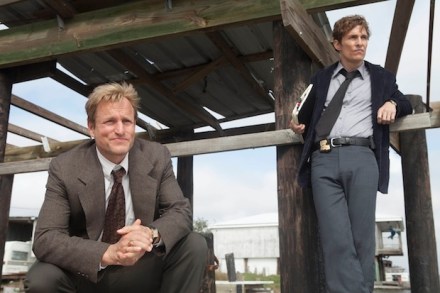
I’ve got this brilliant idea for a major new cop series. It’s called Chalk and Cheese and, though you won’t have guessed this from the title, it’s about these detective partners who couldn’t be more different. Why, they’re like two incredibly dissimilar things, one, maybe an edible, milk-based product, the other some manner of mineral that you use to write with. Chocolate and Graphite: that’s another possible title, then. So, anyway, what I thought is that one of the characters would be a normal, sensible family-man type. And the other, by way of humorous and dramatic contrast, would be completely out there.

A quietly stunning quest for Bonnie Prince Charlie

What if Bonnie Prince Charlie, as he swept down from Scotland towards London to lay claim to the throne, hadn’t lost his nerve at Derbyshire but had instead pressed on — and won? What would Britain be like today? In the year that the Scots vote on whether to stay in the UK, the art world has discovered a painting from that other time when the union was in jeopardy. It’s a marvellous portrait of Charles, painted in Holyrood Palace by the famous Scottish artist Allan Ramsay, when both men were at the peak of their ambition. The only known portrait of Bonnie Prince Charlie from this heroic phase of his life, it dates from around 1745, when he led the Jacobite rebellion. The discovery was made by the art detective Bendor Grosvenor, of Fake or Fortune fame.

The TV shows my children allow me to watch at half-term

Half-term again, so naturally all my TV viewing plans have gone out of the window. In some households — my bearded Victorian brother Dick’s, for example — parents still cleave to the old-fashioned values whereby a sofa-blocking child in front of the TV is instantly ejected should its father or mother wish to watch something else. But I’d never dream of doing it to ours. When they’re teenagers and when they’re away so much of the time at boarding school, you’re pathetically grateful for whatever crumbs of companionship they are prepared to offer you.

So long, Scandinavia. Bonjour, Benelux! 

So long, Scandinavia. Bonjour, Benelux! BBC4, your subtitle-friendly channel, has filled the hole left by Nordic-noir The Bridge with Belgian crime drama Salamander (Saturday). At first, I thought this might involve a series of murder mysteries set in Flemish country houses, all solved by a dapper English detective called Horace Parrot. Not to be. Salamander is a 12-parter that kicks off with a break-in at the very heart of evil, a private bank in Brussels. The robbery eventually lands incorruptible police investigator Paul Gerardi (Filip Peeters) in the midst of a dangerous conspiracy, as he is chased by all manner of crooks keen to protect secrets they’d kept in their safe-deposit boxes. Salamander, like its amphibian namesake, is a creation at once sleek and slow-moving.

How did Colonel Gaddafi get away with such evil for so long?

What a vile piece of work Colonel Gaddafi was. For some of you, perhaps, this will be a statement of the glaringly obvious. But I suspect there will be many others for whom, like me, this week’s Storyville documentary on the barbarity of his regime — Mad Dog: Gaddafi’s Secret World (BBC4, Monday) — was something of a revelation. Sure, we’d all heard about the funny stuff: the time John Simpson went to see him and he farted noisily (Gaddafi, not Simpson) through the interview; the ridiculous outfits; the bullet-proof Bedouin-style tent that he insisted on bringing on his last world tour, complete with live camels to graze decoratively outside.

Jeremy Paxman’s Great War is great. But is 2,500 hours of WW1 programming too much?

Why are we so fascinated by the first world war? As its 100th anniversary approaches, we’re already mired in arguments about whether for Britain it was a ‘just war’ or a ‘pointless sacrifice’ of millions of lives. I don’t see why it has to be one or the other. Surely this huge and horrific event held elements of both, and more. If ever there was a time when glory ran alongside absurdity, when courage marched lockstep with catastrophe, this was it. We’re looking back at the Great War as if it were a mental exercise — should it or shouldn’t it have happened? But maybe our fascination is emotional as well as intellectual.

The Three Musketeers is a triumph – because, like Game of Thrones, no one is safe

‘Pshaw!’ That was my first reaction to news of the BBC’s new ten-part Sunday night adaptation of The Three Musketeers. After all, wasn’t it about a fortnight ago I was in the Gaumont in Redditch watching the classic 1973 movie version that had just come out with Michael York (and Oliver Reed and Roy Kinnear...)? And wasn’t it roughly the day before yesterday that I remember tut-tutting and refusing point-blank to go to see the 1993 Hollywood bratpack travesty with those upstarts Charlie Sheen and Kiefer Sutherland? This is what happens when you get old: time compresses; there’s nothing new under the sun; everything people younger than you do seems somehow to be a damned impertinence.

After Sherlock, TV will never be the same again

You know the holiday season is over when, instead of being torn between The X Factor and Strictly Come Dancing on a Saturday night, you have to choose between The Voice and Splash!. The good news for The Voice is that pint-sized superstar Kylie Minogue has joined its judging panel. In the season opener, competition hopeful Leo Ihenacho (formerly of the band The Streets) picked Kylie to be his mentor, as he used to fantasise about her when he was a boy. The premise of The Voice is that the judges, who have their backs turned to the stage, aren’t influenced by the aspirants’ looks, age or dress. In return, contestants seem to choose as their coach the judge they think is most, well, hot. Anyway, I’m afraid the amateur-diving platform Splash!

Is Sherlock starting to suffer from ADD?

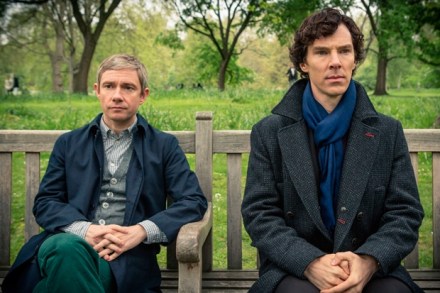
Sherlock’s not dead. A good thing, since on New Year’s Day BBC1 launched its third series of Sherlock, and it’d be inconvenient if the three episodes didn’t have Sherlock. Last season, Benedict Cumberbatch’s Holmes stood on a building rooftop, dramatic coat flapping, a tweedy caped crusader. Then he jumped to his death. Only he didn’t. He’s still alive. The Cumberbatch comeback! Hooray. Of course, the detective had some explaining to do. Not only to sidekick John Watson (Martin Freeman) — who grew a moustache as part of the grieving process — but also to the many Sherlock fans who’d taken to the internet in the past two years to post their survival theories.

Jeremy Clarkson brings Yuletide joy to the Delingpole household

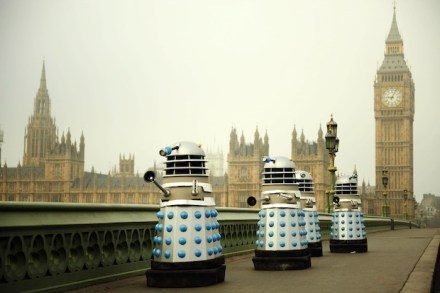
So I’m looking at the seasonal TV schedules trying to find something — anything — to watch. Britain and the Sea? Probably very well done, but David Dimbleby is such a dangerously feline, OE-manqué, Flashmanesque, living-embodiment-of-the-BBC closet pinko that reviewing it would feel wrong, somehow, like chipping into a fund to buy Chris Huhne an eighth home. The Doctor Who Christmas Special? But it always makes me want to kill myself. I hate the idea that a Dalek garlanded in tinsel might burst into the Cratchit household with a fat goose dangling from its exterminator gun while the White Witch’s frozen heart melts and all the crippled children are released from the snowy mountain — or whatever mawkish crap they’ve got planned for us this year.

Is this the real First Lady of ‘Borgen’?

I meet Birgitte Hjort Sorensen in a plain office near the Donmar Warehouse in the West End. She’s warm, sharp and engaging, and her fast-flowing English is adorned with the odd Eurotrash platitude. Her American twang owes itself to the global language school of television. ‘I watched a lot of American and English TV growing up. We have it subtitled, not dubbed. Denmark is such a small country and nobody’s going to speak Danish outside of Denmark.We kind of have to learn.’ She’s about to appear as Virgilia in Coriolanus at the Donmar. How does she find playing the wife of a tyrannical anti-hero? ‘Interesting in that she doesn’t talk a lot compared to some of the other characters, who talk quite a lot.

Are events in Last Tango in Halifax too bad to be true? 

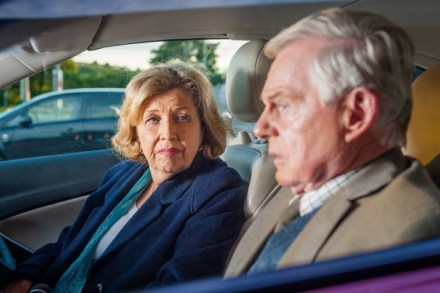
Does love run out when life runs out? Or does it intensify, touching and changing all around it? Two series now on our screens make a strong case for the latter —  one is about love striking in old age, the other about young lovers struck by Aids. Both pack a wallop. Since its Bafta-winning first series last year, Last Tango in Halifax (BBC1, Tuesdays) — about a widower and widow, Alan and Celia (wonderfully played by Derek Jacobi and Anne Reid), who reignite their teenage romance by getting engaged in their seventies — has been lauded for its celebration of love among the over-35s. But pensioner passion is not the only surprise this show offers — indeed, as the weeks go by, you realise that’s the least surprising thing about it.

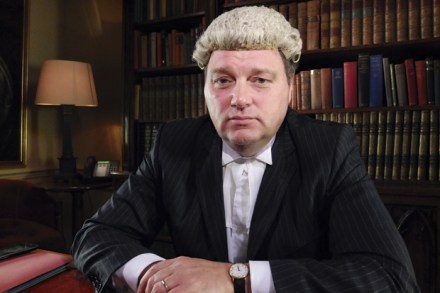
Gary Bell is the real rudest man in Britain – and he’s on your side

Gary Bell is the rudest man in Britain. I have known the bastard for years and no one —move over, lightweight Starkey — comes even close to matching his bluntness, his tastelessness, his heroic urge to offend at all costs regardless of how much collateral damage he causes his friends, his family or indeed his own reputation and career as a brilliant QC. But Gary has a dark secret: underneath that elephantine carapace of intellectual arrogance, gratuitous cruelty, and room-clearing crassness beats a heart so warm and tender it makes Princess Diana look like Hannibal Lecter. If a mate were in serious trouble, Gary would be the first to rush to the rescue. Well, wobble to the rescue because, as Gary would be the first to acknowledge, he is exceedingly fat.

Why doesn’t Doctor Who travel far from Britain? 

If I could go back in time, I’d watch Doctor Who from the very first episode. I wasn’t born in Britain, and with the 50th anniversary of the series hurtling towards us like an Earth-bound Tardis, I’m wondering if I might understand this cultural touchstone better if I’d grown up in the country, along with the show. But Doctor Who neophytes are in luck, because there’s a tiny loop in the time-space continuum whereby we can quickly catch up on Time Lord lore. To celebrate the 50th, the BBC has commissioned a host of programmes, many setting out to explain Doctor Who’s place as a British icon. This week there’s An Adventure in Space and Time (BBC2, Thursday) and The Ultimate Guide to Doctor Who (BBC3, Monday). Whoosh! Off we go then.

James Delingpole: Is the fight against environmentalism the new Cold War?

Gosh it isn’t half irksome when someone who went to the same school as you but is considerably younger than you ends up doing dramatically better than you. But hats off to Dominic Sandbrook: his new series Cold War Britain (BBC2, Tuesday) is an absolute delight. Sandbrook has that rare gift of making things you thought you knew pretty well already seem startling and fresh. Take Churchill’s Fulton, Missouri speech. ‘Ah,’ I said expertly to the Fawn, a good five minutes before the programme reproduced the famous recording, ‘From Stettin in the Baltic...’ But what Sandbrook does is both put it in context and give it a human dimension that brings the whole business alive.

Come to the Spectator office, Gareth Malone, and hear our ‘Carmina Burana’

They’re now televising proceedings from the Court of Appeal. Great. As if I didn’t have enough to do already, keeping tabs on Strictly Come Dancing and EastEnders, I now have to monitor what’s happening within the hallowed judicial temples of the land. The broadcasting of court cases has been much debated, with people fussing about whether it will influence the meting out of Justice, and the implications for Law and Order once these are exercised in front of the cameras, and other high-minded issues. My own worry is about my job scope. Everything is televised these days, which means everything can be reviewed.

James Delingpole: All students need a ‘sense of entitlement’ — ask my fundie friend Rupert 

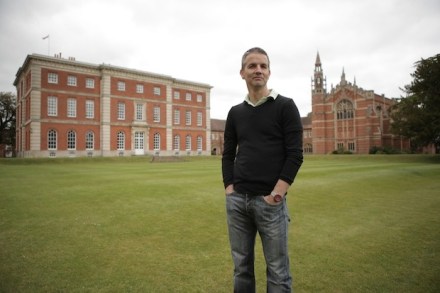
‘Life is what happens to you while you’re busy making other plans,’ said John Lennon. Quite apposite from a man who — presumably — meant to spend a ripe old age staging increasingly embarrassing art happenings with Yoko Ono, rather than be shot dead by a nutcase. It also applies to the two things that most grabbed me on TV this week: A Very English Education (BBC2, Sunday) and the Red Wedding episode of Game of Thrones (available via Blinkbox). The first, a follow up to Public School — the BBC’s 1979 fly-on-the-wall series about Radley — sought to find out what had become of its various stars. One of them, Rupert Gather, is now a very successful fund manager. Rupert is an old friend from way back.

Will the women of The X Factor stop perving?

Will the women on ITV’s The X Factor (Saturday) stop perving? I suppose there are two ways to tackle the issue of gender equality — one is to dictate that nobody mention sexuality at all; the other is to make females slobber over the males the way men purportedly slobber over women all the time. The women judges of The X Factor are lurching towards the latter. ‘I’ve got my eye on you,’ Sharon Osbourne winked at a contestant, Nicholas McDonald. He is 15. She made him repeat the words ‘nearly sixteen’, because he pronounced it ‘sex-teen’. Young Nicholas is being sexualised before our eyes.