Radio and podcasts

The podcast that makes the world strange, mysterious and compelling again

It’s interesting that we have decided shaming and yelling are the easiest ways to change people’s minds. Which is not to say I do not think there are people in this world who deserve to be shamed and yelled at: people who use the term ‘cancel culture’ sincerely, people who are deeply invested in the marriage and divorce cycles of celebrities, Meryl Streep. But do I think yelling at Ms Streep will accomplish what I fervently wish for, which is for her to stop ruining perfectly fine movies with her barely adequate performances? No. Every issue in our cultural lives is politicised right now.

Insane and fascinating: BBC World Service’s Lazarus Heist reviewed

The narrative podcast remains a form in search of a genre. The template set by the hit show Serial — enterprising American journalists with janky piano theme tune shed new light on tantalising murder — still predominates seven years on. To this we can add the format pioneered by S-Town (initial murder investigation subsides into rich human detail) and, more recently, the excellent Wind of Change (intriguing what-if maps cultural and macropolitical shifts, with bonus CIA window-dressing). I remain sceptical about the form’s usefulness as a way of breaking hard news. Caliphate, the New York Times jaw-dropper on the Islamic State, is less gripping now its key source has been revealed as a fraud.

Seldom less than gripping: Banged Up podcast reviewed

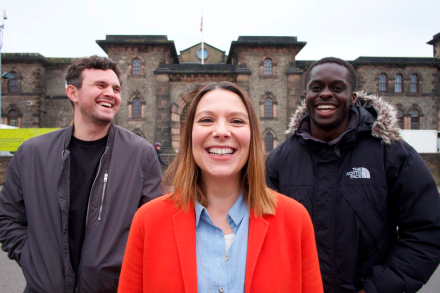
Prison-based podcast Banged Up, now in its second series, is far more uplifting — and less soapy — than its name suggests. It begins with the tacit assumption that, if you haven’t personally been incarcerated, you probably have at least a dozen questions you’d want to ask someone who had. Is the food really awful? How likely are you to be beaten up? Is there a lending library? (I’d start with the last.) Banged Up has the answers to plenty more besides. The podcast is hosted by a prison lawyer named Claire Salama and two ex-inmates, a former footballer, Mike Boateng, known as ‘Boats’, and university-educated Rob Morrison, who describes himself as ‘probably not their [prisons’] target market’.

This is the golden age of the grifter – and there’s a podcast for every con

Truly we are living in the golden age of the grifter. From Fyre Fest to the WeWork empire to Theranos to the personal development cult NXIVM, we see a charismatic person promising us endless growth, pleasure or wealth and we give them all our money. The con-man economy doesn’t just stop at the men and women leading these frauds and profiting wildly from them. (Some of them go to jail, yes, but WeWork leader/charlatan Adam Neumann was paid many millions of dollars just to go away.) There is also now a podcast, usually sponsored by a security system, for every con.

It’s almost touching that the NFT world sees itself as radical

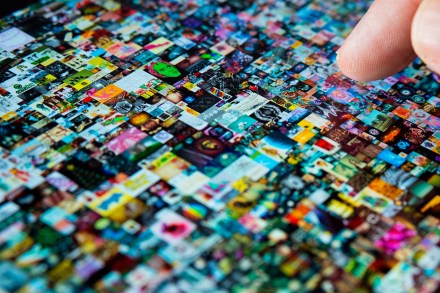
Some things are explained so many times that they become unexplainable: we can only relate to them as something complicated that needs to be explained. The global financial crisis was like this. Crypto-currencies were like this too. The newest thing that exists to be explained is the world of non-fungible tokens, or NFTs. NFTs are collectible digital objects. They are created with a technology called the blockchain, which unalterably and uniquely records their provenance. This means that if I mint an NFT of an image — a cartoon of Donald Trump, say, sitting naked astride the Capitol — I can prove definitive ownership of the image, no matter how many copies exist. In other words, NFTs can be authenticated, which means they can be sold.

Refreshingly unfettered: LRB Podcast’s Close Readings on Patricia Highsmith

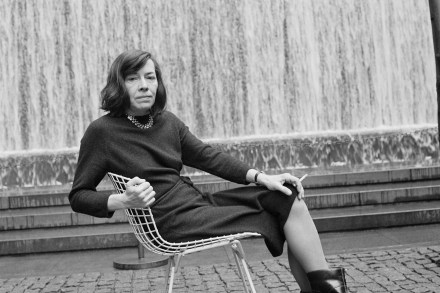
I’d forgotten what a rich and deep and characterful voice John le Carré had. Listening to author and lawyer Philippe Sands’s Archive on 4 programme on him last week, I was struck by how much more engaging it was than almost every other male voice on the radio these days. Le Carré’s weren’t simply the measured tones of a mid--century public schoolboy. There was a real spirit in his voice, something melodic, which, in a world of Nick Grimshaws and Greg Jameses, stopped me in my tracks. Le Carré’s voice was undoubtedly part of the armoury that enabled him to win people over, even ‘to manipulate crowds’.

My favourite failed podcasts

The promise of the internet was supposed to be thus: you could be your own bizarre, inappropriate self, and you would find a community of the likewise bizarre and inappropriate. You put yourself out there, and you will find what you consider unique or intolerable to be mundane and perfectly within the bounds of acceptable behaviour. But look, some of us went online, we said our things, and the internet responded: what the hell is your problem, truly why would you say something like that? There are a lot of reasons online projects fail, from lack of funds to real life intruding on your time to realising you just don’t care that much any more. But let’s not forget the power of realising you actually are a total weirdo in tracking the demise of creative endeavours.

Why In Our Time remains the best thing on radio

In Our Time is the best thing on Radio 4, possibly the best thing on the radio full stop. It is broadcast regularly from a parallel universe where everyone is interesting, everything is worth knowing and anyone can know it if they want to. It gets the best out of its medium by being somewhat contemptuous of it. It understands that the overproduced trimmings of modern radio are entirely extraneous. There will be no sound effects, no music and no catchphrases. All that we need by way of introduction is the word ‘hello’. After that, there’s no telling what will follow. ‘Hello. In 541 AD, in the realm of Justinian, there was a plague in which the whole human race came near to being destroyed.’ ‘Hello.

Barack Obama will make you cringe: Renegades: Born in the USA reviewed

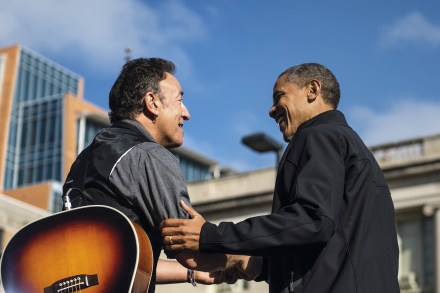
Barack Obama wants the world to know how much he loves singing. In his new podcast, which takes the form of a series of conversations with Bruce Springsteen, he’s rarely without a tune on his lips. ‘Further on up the road…/ you been laughing, pretty baby…’ A shower-singer, a bedroom warbler, an Air Force One air guitarist with an okay voice, the former president is proof that you really can be embarrassing without feeling an ounce of embarrassment. Oh, to have seen his daughters’ faces when he broke into ‘Let’s Stay Together’ in front of Al Green. The sound team at the fundraiser in Harlem urged him to do it, he tells Springsteen, but no one’s buying it.

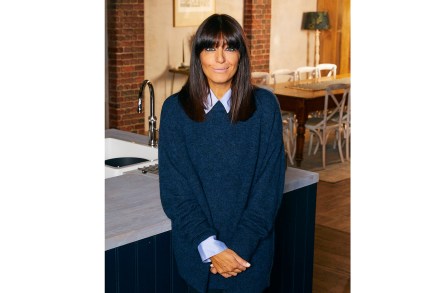
Claudia Winkleman’s new Radio 2 show gets off to a brainless start

Last Saturday on Radio 2 Claudia Winkleman was inaugurated as the host of what was formerly Graham Norton’s mid-morning spot. She announced her arrival by playing ‘Help!’ by the Beatles and offering a line-up comprised solely of fellow Saturday-night TV presenters. Here was Sir Tom Jones, calling in from ‘a terrace overlooking the Thames’ and repeating more or less the same interview he had delivered on Graham Norton’s TV show last month. Half an hour later came David Walliams, and to round things off Ant & Dec were prevailed upon to talk about their ‘jampacked’ ITV show later on that day. ‘How do you not unravel doing it?

Why I’m obsessed with this podcast’s merciless little romps: Browned Off reviewed

Everything is too long these days, isn’t it? Every series is at least two episodes too long, podcasts go on for hours, you have to scroll through pages of someone’s barely disguised eating disorder mania to get to the recipe on their blog, and every documentary on Netflix is four hours long, forcing me to go to Wikipedia halfway through just to finally find out what happened — and I cannot even slightly deal with Adam Curtis any more. Podcasts also now have these excruciating intros before they start talking about actual things.

The funniest current affairs show since Brass Eye: Into the Grey Zone reviewed

It was something a friend said to me about The Revenant, Leonardo diCaprio’s bloody-minded and brutal Oscar vehicle: ‘The problem with the film is once you start laughing, you can’t stop. And for me, that moment was the second time he fell off a cliff.’ I thought about this a lot listening to Into the Grey Zone, a new podcast hoping to educate its audience about the new forms of constant pseudo-warfare that modern states engage in. This is the world of nerve poisoning in Salisbury, airspace incursions over Taiwan, cyberattacks, mass disinformation and remote interference. None of these things can be considered open warfare but taken together, the podcast implies, they do not suggest we are in a state of perfect peace.

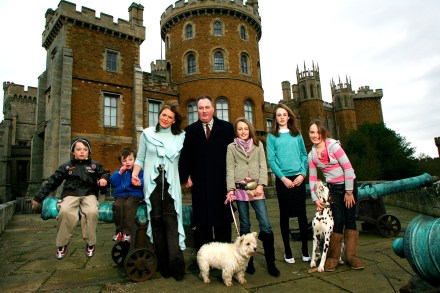
It’s not easy running a stately home: Duchess podcast reviewed

The Duchess of Rutland, Emma Manners (née Watkins), grew up on a farm in the Welsh Borders before becoming proprietress of Belvoir Castle in Leicestershire. ‘On so many levels I was ill-equipped for the job,’ she reflects in her new podcast, Duchess. ‘I so remember opening a door and hearing the butlers downstairs saying: “Have we broken her yet?”… I felt like a ball they were bouncing.’ Thirty years after coming to Belvoir — pronounced ‘Beaver’ — the Duchess is ready to talk candidly about the difficulties she and other women have faced as custodians of stately homes.

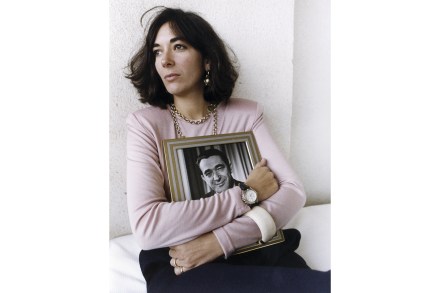
Enjoyably tasteless: Power – The Maxwells reviewed

This year marks three decades since Robert Maxwell fell naked to his death from the deck of his yacht, The Lady Ghislaine. Power: The Maxwells is the latest contribution to the never-ending autopsy of Maxwell’s character and the circumstances of his death. It follows a now well-established formula, juxtaposing the lives of Ghislaine and her father, marvelling at how against seemingly unbeatable odds she can have managed to disgrace the good name of Maxwell, and throwing in the occasional Trump soundbite as a garnish of relevance.

Is the hottest new podcast, The Apology Line, worth sticking with?

With the arts world still largely in hibernation, the launch of a big podcast is as close as we get to a big cultural event these days. Such is the case with The Apology Line, the latest serial podcast from Amazon-owned Wondery, which shot to the top of the ‘most downloaded’ charts last week and has sat there comfortably since. The Apology Line tells the story of a 1980s experimental art project in which a Manhattan-based provocateur, Allan Bridge, issued an open invitation to the city’s criminals (‘amateurs, professionals, white collar, blue collar’) to record their anonymised confessions to an unmanned phone line.

Pleasant, cheerful and a little exhausting: Graham Norton on Virgin Radio reviewed

In my parents’ house, the radio is always tuned to one of two stations: Magic FM and LBC. When Magic is playing, it wafts through the kitchen like an over-scented camomile candle. LBC, by contrast, hits you like a strong gust of Novichok: it is undiluted poison, carefully synthesised from the DNA of hysterical US shock jocks. At times, they feel like the two paths for modern radio: a draught of herbal tea or a fit of apoplexy; James O’Brien having kittens or ‘Broken Strings’ playing constantly, for ever. Where does that leave the chatty host, the one who natters cheerfully while you potter aimlessly, who rabbits on while you faff about doing nothing?

Englishness vs California dreaming: Meghan and Harry’s Archewell Audio reviewed

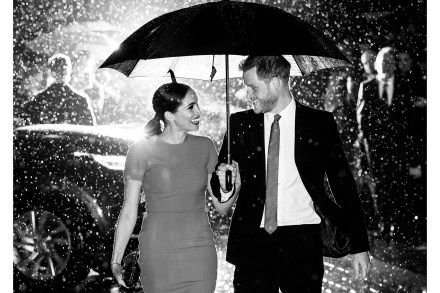
On Archewell Audio, Harry and Meghan’s new podcast, ‘love wins’, ‘change really is possible’, and ‘the courage and the creativity and the power and the possibility that’s been resting in our bones shakes loose and emerges as our new skin’. There’s no room for Christmas — the first episode dropped as a ‘Holiday Special’ — but there is for kindness, compassion and more than a few bromidic interjections of ‘So true!’ The podcast purports to ‘spotlight diverse perspectives and voices’ and ‘build community through shared experiences, powerful narratives, and universal values’.

A round-up of horror podcasts

Good evening! Come shivering on in through the garden side door, my friends, and distance yourselves in a semi-legal fashion around the flickering flames of my recently installed firepit while I guide you through the best horror listening for the depths of this December dark and drear. The Magnus Archives is an unslagoffably enthusiastic anthology series stuffed with monsters, ghouls and redundant adjectives. If you can get over the Alan Partridge touches (‘I didn’t move… I just stood there… sipping my tea… not even noticing it was still far too hot to drink comfortably’), this show features the scariest story I have heard this month, ‘Lost Johns’ Cave’.

The world’s greatest podcast: Dan Carlin’s Hardcore History reviewed

It’s well known that you should never meet your heroes because they will only disappoint you. Less commonly said, but equally true, is that you should never google your favourite podcast hosts, because their face will not match their voice. I have just finished looking at photos of Dan Carlin, the host and sole narrator of Hardcore History — the world’s greatest podcast — and I find myself disappointed. He’s a perfectly nice-looking man: bald, medium build, squarish of face. But he doesn’t look like I want him to. Why do we think we can imagine someone’s face just from the sound of their voice? It’s a mysterious but enduring illusion, like the image you have of a place before you visit, which you never quite forget.

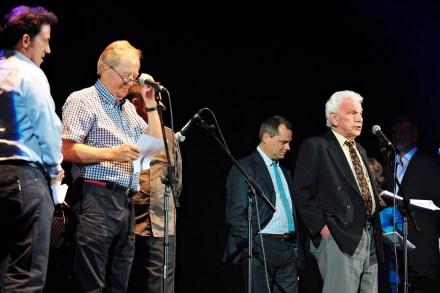
The genius of I’m Sorry I Haven’t a Clue

I’m Sorry I Haven’t a Clue has just been voted the greatest radio comedy of all time by Radio Times, ahead of Hancock’s Half Hour and the brilliant Round the Horne. The first two episodes of series 73 (can you believe it?) are also the last Tim Brooke-Taylor recorded before losing his life to coronavirus earlier this year. Brooke-Taylor was part of the original cast of the self-styled ‘antidote to panel games’, which first aired in 1972 with Bill Oddie, Jo Kendall and the show’s deviser Graeme Garden as fellow performers (Barry Cryer joined during the first series and Willie Rushton two years later).