No sacred cows

I’m back on the ‘public humiliation diet’ – thanks to my kids

I’m on holiday with my family in Turks and Caicos, and maintaining my current weight is proving difficult. Regular readers will recall that I lost about half a stone at the beginning of 2018, after an army of offence archeologists started sifting through everything I’d written, dating back more than 30 years, looking for evidence that I was an unsuitable person to be involved in education. Since then, this type of inquisition has become much more common — scarcely a day passes without someone being defenestrated from public life on account of having said or done something imprudent in the past — but 18 months ago it was sufficiently distressing to cause rapid weight loss.
Labour is shooting itself in the foot

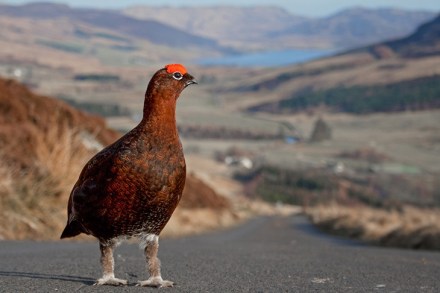
The Glorious Twelfth this year, signalling the start of the grouse-shooting season, was overshadowed by a Labour party press release demanding a ‘review’ into driven shooting. Labour’s shadow environment secretary Sue Hayman left people in little doubt as to what she expected this review to conclude. ‘The costs of grouse shooting on our environment and wildlife need to be properly weighed up against the benefit of landowners profiting from shooting parties,’ she said. ‘For too long the Tories have bent the knee to landowners, and it’s our environment and our people who pay the price.’ Needless to say, this is all virtue-signalling nonsense. For a start, the shooting industry imposes no ‘costs’ on the environment.

America’s shootings aren’t Trump’s fault

The BBC’s flagship news and current affairs programme wasn’t in any doubt about who to blame for America’s latest bout of mass shootings. Newsnight’s report began with footage of Donald Trump addressing the faithful at a rally. ‘This is an invasion,’ he warned, referring to the refugees massing on the Mexican border. ‘When you see these caravans starting out with 20,000 people, that’s an invasion.’ It then cut to Emily Maitlis in the studio. ‘That was in May,’ she said. ‘Today, Donald Trump called on Americans to condemn racism, bigotry and white supremacy.

The arresting truth about snowflakes

I was driving to Gunnersbury Park last Sunday for my weekly 10K run when I caught the tail end of Broadcasting House on Radio 4. The presenter Paddy O’Connell was interviewing George King, the 19-year-old who scampered up the Shard at the beginning of July without the aid of ropes or suction cups. As you’d expect, he was impressive. He first set eyes on Britain’s tallest building as a 13-year-old on a school trip and decided then and there that he wanted to climb it. He embarked on years of rigorous training, taking up boxing and running a 62-mile ultramarathon.

If you want a Boris backer, book me

The changing of the guard at 10 Downing Street always creates opportunities for the commentariat. I don’t just mean it gives them something to talk about for the next week or two; it also provides a chance for reinvention and renewal. Suppose you have been a relentless critic of Brexit for the past three years, convinced the British public made a catastrophic mistake. You’ve been pushing that line day in, day out, whether reviewing the papers for Marr or as a panellist on Politics Live. And let’s face it, you’re a little bit bored of hearing these same arguments coming out of your mouth. Well, the good news is, you can now change tack. You can join the Boris bandwagon and become a born-again Brexiteer.

I’m starting a trade union for intellectuals

I have just returned from Minneapolis after attending the annual conference of the International Society for Intelligence Research. That’s ‘intelligence’ in the sense of general cognitive ability rather than spooks. It’s the third time I’ve gone, having been asked by the society to give a lecture in 2017 (a different journalist is invited each year to talk about how to improve the public understanding of the field). There are a lot of myths floating around about intelligence, such as the belief that IQ isn’t real.

Boris and The Sextator farce

Fourteen years ago, almost to the day, Lloyd Evans and I received a note from Boris. It was the press night of Who’s The Daddy?, our play about the various sex scandals that had engulfed The Spectator in the previous 12 months, and we were terrified about how he’d react. As the editor of the magazine, he would have been within his rights to sack us, given how disloyal we’d been. We had portrayed him as a sex-mad buffoon with a portrait of Margaret Thatcher on his office wall that turned into a pull-down bed — in constant use throughout, needless to say. Not only that, but we’d sent up numerous other members of staff, including Kimberly Fortier, the publisher, Petronella Wyatt, the deputy editor, and Rod Liddle, the magazine’s star columnist.

The disastrous decline of Scottish and Welsh education

I’ve contributed a chapter to an education book published this week by the Institute of Economic Affairs. I was asked by the editors, Pauline Dixon and Steve Humble, to assess the impact of Britain’s education reforms, beginning with the introduction of the National Curriculum in 1988, extending through the creation of league tables in 1992 and culminating with the opening of academies and free schools from 2002. The first challenge was finding a reliable way to measure the effect of these initiatives. The introduction of the National Curriculum coincided with the replacement of O-levels and CSEs with GCSEs, making it difficult to compare before and after.

Britain is becoming more meritocratic, not less

You have to admire the Sutton Trust’s PR skills. For those who don’t know, the Sutton Trust is a social mobility thinktank that is constantly drawing attention to just how unmeritocratic contemporary Britain is. Every time it produces a report about the dominance of the privately educated Oxbridge elite, the media slavishly regurgitates it, even though the Trust has been churning out essentially the same report every year since it was founded in 1993, and even though, according to the Trust, 40 per cent of people in the media went to independent schools and 39 per cent to Oxbridge.

Cooking up offence comes at a price

Something rather wonderful happened last week for those of us who have been the victims of a public shaming — as I was at the beginning of 2018 when some people dug up some sophomoric tweets I’d sent ten years earlier. The jury delivered its verdict in a lawsuit that a bakery in Oberlin, Ohio had brought against the neighbouring liberal arts college for defamation, infliction of emotional distress and tortious interference. In brief, students and staff at Oberlin College engaged in a long campaign to brand the local business as ‘racist’, inflicting a terrible toll on its reputation, and the jury sided with the plaintiffs.

The BBC is having a laugh

If I were a pensioner, I’d be a bit miffed by the BBC’s decision to end the policy of giving free TV licences to the over-75s. At present, the cost is met by the government, but it was due to be picked up by the BBC from 1 June 2020. At least, that’s what I thought — and I had good reason. According to a report on the BBC News website dated 6 July 2015, the Beeb would ‘cover the cost of providing free television licences for over-75s’ and ‘in return… the licence fee will rise with inflation’. The story referred to this as a ‘deal’ made with the government in the run-up to the renewal of the BBC charter in 2017.

Budweiser flags up its new-found virtue signalling

Maurice Bowra, the flamboyant warden of Wadham College from 1938 to 1970, once argued against the legalisation of homosexuality on the grounds that it would take all the fun out of it. Without the risk of being picked up by the police, cruising up and down the Cowley Road at one in the morning would become rather tedious. He referred to the secret club of powerful homosexuals in the British establishment as the ‘homintern’ and prided himself on being a high-ranking officer. He liked the fact that there was something exotic and clandestine about his sexuality and dreaded the risk of embourgeoisement if the law was changed. Easy for Bowra to say, of course, protected as he was by wealth and privilege. And he may not have really meant it.

The fanatical thinking that’s on its way to Britain

For anyone who isn’t following the long march of racial self-flagellation through America’s institutions, last week’s revelations about the excesses of New York City’s education tsar will come as a shock. Schools chancellor Richard Carranza has introduced mandatory ‘anti-bias and equity training’ for the city’s 75,000 teachers at a cost of $23 million a year. During these ‘workshops’ the teachers are told that ‘worship of the written word’, ‘individualism’ and ‘objectivity’ are all hallmarks of ‘white supremacy culture’ and that it is better to focus on middle class black students than poor white ones.

Paranoid politics

The politics professor Matthew Goodwin made an interesting observation on Twitter this week. He pointed out that many of the characteristics of the ‘paranoid style’ in American politics — a phrase coined by Richard Hofstadter to describe right-wing populists such as Barry Goldwater — apply to left-wing anti-Brexit campaigners. They are convinced that the 2016 referendum result was due to the machinations of sinister data-mining companies, Kremlin bot factories and Vladimir Putin. I reread Hofstadter’s 1964 essay and the parallels are striking.

Enough grousing about grouse moors

I was surprised to read the article by Ben Macdonald in last week’s Spectator urging Britain’s grouse moor owners to ‘rewild’ their estates. It argued that these Tory toffs had spent the past 100 years ‘destroying our natural heritage’, that the UK land under shoot management is an ‘economic desert’ that is ‘destroying both jobs and wildlife’ and that the ‘acts of desecration’ involved in the creation of grouse moors is a ‘debt’ that has ‘never been repaid’. There was a big clue that Macdonald might not know what he’s talking about early on in the article.

This extinction warning just doesn’t add up

Anyone watching the BBC’s News at Ten on Monday would have been surprised to learn that economic growth poses a dire threat to the future of life on this planet. We’re used to hearing this from climate change campaigners, but I’ve always taken such claims with a pinch of salt, suspecting that the anti-capitalist left is distorting the evidence. Apparently not. ‘One million species at risk of imminent extinction according to a major UN report,’ intoned the BBC. ‘It says the Earth’s ecosystems are being destroyed by the relentless pursuit of economic growth.’ So does this mean the Extinction Rebellion protestors are right?

The hypocrisy of the Charity Commission

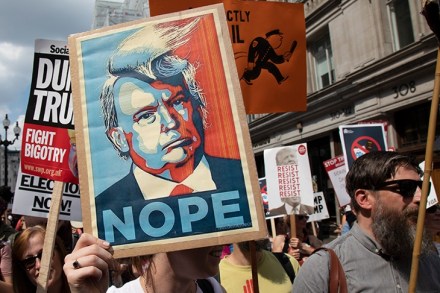
On Monday, I appeared on Good Morning Britain to debate President Trump’s forthcoming state visit with Asad Rehman, the executive director of War on Want. I was surprised to learn that War on Want, a charity in receipt of lottery funding, is a partner in the Stop Trump Coalition, the group behind the anti-Trump demonstration last year. It is hoping to organise an even bigger protest next month. The reason this came as a shock is because the Charity Commission issued an ‘official warning’ to the Institute of Economic Affairs in February for a report on how to create a prosperous post-Brexit UK that wasn’t sufficiently ‘balanced’ and ‘neutral’ and therefore fell afoul of the rules regarding ‘political activity’.

Who’s afraid of Jeremy Corbyn?

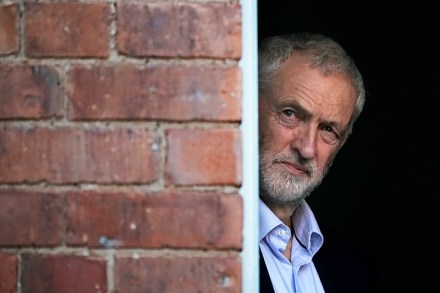
Until now, I haven’t been too worried about Jeremy Corbyn. True, he exceeded expectations two years ago, but that was because no one thought Labour would win. It was a protest vote, a way for Remainers to signal their disapproval of Theresa May’s approach to Brexit. If the good burghers of Kensington thought there was the slightest chance Labour would be elected they never would have returned a Labour MP. And since then the bloom has gone off the rose. It has finally dawned on Remainers that Corbyn has his own, hard-left reasons for wanting to leave the EU and that behind his ‘anti-Zionism’ lurks something more sinister. Not so much ‘magic grandpa’ as a relic of toxic, 20th-century ideology. But that was before the government committed hari-kari.

No, I’ve no idea what’s going on in Game of Thrones either

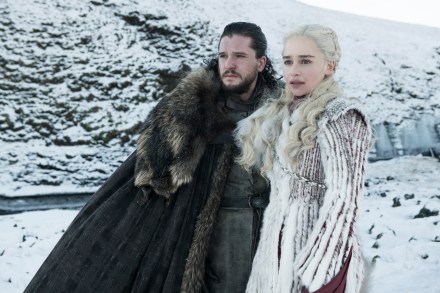
By the time you read this, James Delingpole and I will have made our first podcast in 596 days. That’s the length of time that elapsed between the last episode of Game of Thrones and the new one broadcast on Monday night. Yes, that’s right, we have our very own Thronecast in which we dissect every instalment of the long-running saga. This isn’t exactly original. Every self-respecting broadcaster has a Thronecast these days. There’s even a Thronecast Shopping Network where you can buy miniature iron thrones for your mantelpiece. Although why anyone would want to is a mystery. The era when the series enjoyed cult status is long gone. Last Sunday’s episode attracted a record-breaking 17.

The Tory tipping point

The news that 83 per cent of Conservative voters are over 45, compared to 53 per cent of Labour voters, is depressing. That was a finding of a poll carried out by Hanbury Strategy for Onward, a right-of-centre think tank that’s just produced a report called ‘Generation Why?’. More alarmingly, Hanbury discovered that the ‘tipping point age’ — the median age at which a person is more likely to vote Conservative than Labour — is 51. That’s up from 47 at the 2017 general election and 34 just beforehand. ‘Yikes!’ as Lynton Crosby might say.