No sacred cows

I like the idea of meritocracy as much as my father hated it

Last week I spoke at an event at Nottingham University to commemorate the 60th anniversary of The Rise of the Meritocracy, the book by my father that added a new word to the English language. A dystopian satire in the same mould as Nineteen Eighty-Four, it describes a nightmarish society of the future in which status is based on a combination of effort and intelligence rather than inherited privilege. That sounds like an improvement and, to my father’s annoyance, the word ‘meritocracy’ has come to stand for something politically desirable when he intended the book to be a warning.

Science is on the side of the trans activists

Some interesting scientific research on gender differences was published last week. Two social scientists studied the preferences of 80,000 people in 76 countries to determine whether there’s a link between the attitudes of men and women to risk-taking, patience, altruism, trust and so on, and how advanced a country is in terms of economic development and gender equality. If gender is a social construct, as many feminists claim, you’d expect men and women’s preferences to be more divergent in places like Pakistan, Malaysia and Nigeria, where gender roles are quite traditional and women have fewer economic opportunities, than in the Nordic countries. However, the opposite is true.

Why are faceless accusations allowed to end men’s careers?

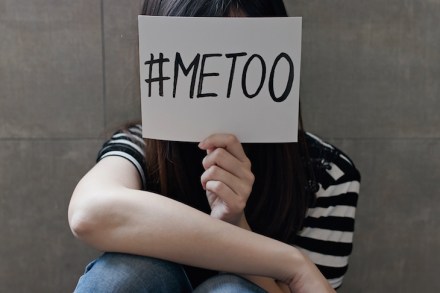
On 11 October 2017 an anonymous Google spreadsheet began doing the rounds of American newspapers and magazines — a document that would have far-reaching consequences for Stephen Elliott, a Los Angeles-based writer and editor. Called ‘Shitty Media Men’, the spreadsheet had been created by Moira Donegan, a former assistant editor at the New Republic, and named various men rumoured to be guilty of sexual misconduct. Donegan closed it down a few days later, but by that time it had been widely circulated and many names had been added, alongside a summary of their alleged crimes. The entry for Elliott read: ‘Rape accusations, sexual harassment, coercion, unsolicited invitations to his apartment, a dude who snuck into Binders???

The police should chase down theft, not thought crime

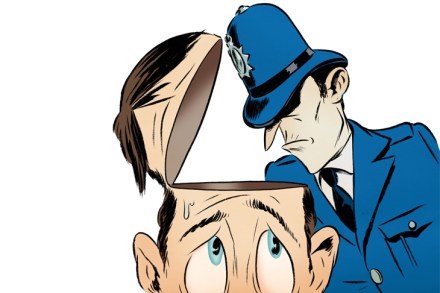
West Yorkshire Police hit the headlines twice this week. First we learned that the fourth-largest force in England and Wales has decided to ‘screen out’ 46.5 per cent of cases a year, i.e. not investigate them. And these aren’t minor crimes, but things like theft, assault and burglary. Apparently, West Yorkshire Police’s 5,671 officers will spend their time on ‘more complex’ offences instead. What do they mean by that?

Hey Alexa, let’s make Sean feel like a loser

My oldest friend Sean Langan came to lunch last Sunday and, rather disappointingly, he seemed more interested in playing with our Amazon Alexa than asking me what I’d been up to. Sean is a documentary filmmaker who spends a lot of time in war zones — he’s just back from Syria —and he often reminds me of that Japanese soldier stranded in the Philippines who didn’t realise the second world war was over until 29 years later. The technological changes that occur while he’s in some god-for-saken hellhole are a constant source of wonder to him. I half-expected him to stop dead in front of our TV in amazement: ‘You mean to tell me the pictures are actually in colour? Whatever will they come up with next!

Of course the young like socialism – they’re taught to

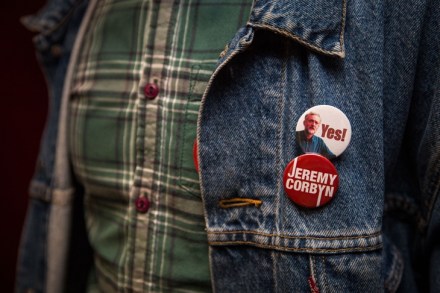
It beggars belief that Jeremy Corbyn can, with a straight face, announce that capitalism has failed and we’d all be better off under socialism. ‘The super-rich are on borrowed time,’ he said at the Labour party conference. He’s going to tax the rich until their pips squeak, overlooking the fact that the coalition government’s decision to lower the top rate of tax from 50 per cent to 45 per cent actually boosted tax revenues. The taxes paid by the top 1 per cent of income earners are now responsible for 28 per cent of the total tax take, higher than it ever was under Labour.

As I suspected, my defects can’t be cured

I’ve just finished making a one-hour documentary about character for Radio 4 that’s due to be broadcast on Saturday at 8 p.m. It starts with the premise that there’s been a decline in what we think of as British values — honesty, fortitude, duty, modesty, charity, hard work, good manners, a sense of fair play, etc. — and asks whether anything can be done to restore them. Should they be taught in schools? Do parenting classes help? Or is the younger generation doomed to sink into a morass of indolence and vice? I was originally commissioned to present it because I’ve written about character before, as well as helped set up some schools.

The better the wine, the less bad it is for you

I don’t hold out much hope for Drink Free Days, a new campaign launched by Public Health England and the alcohol industry to persuade people to abstain for two consecutive days a week. That was also the recommendation of the House of Commons Science and Technology Committee in 2012, as well as the advice of England’s Chief Medical Officer in 2016, but it doesn’t seem to have had much impact. According to a recent YouGov poll, more than 20 per cent of UK adults ignore the government’s drinking guidelines and are consuming more than 14 units a week. That may be an underestimate. A recent study published in the Lancet, which looked at alcohol use and its health effects in 195 countries, found that British men and women consume, on average, three drinks a day.

The neo-Marxist takeover of our universities

According to Greg Lukianoff and Jonathan Haidt, America’s universities have succumbed to ‘safetyism’, whereby students are protected from anything that might cause them anxiety or discomfort. In their book The Coddling of the American Mind, published this week, they attribute the spread of ‘trigger warnings’, ‘safe spaces’ and ‘bias hotlines’ on campus to a misplaced concern about the psychological fragility of students. In their view, millennials aren’t ‘snowflakes’, but imagine themselves to be on account of having been surrounded by over-protective parents and teachers.

The BBC’s anti-white rhetoric

Cassian Harrison, the editor of BBC Four, told the Edinburgh International Television Festival last week that no one wants to watch white men explaining stuff on TV any more. ‘There’s a mode of programming that involves a presenter, usually white, middle-aged and male, standing on a hill and “telling you like it is”,’ he said. ‘We all recognise the era of that has passed.’ I’ve been puzzling over this. Why would one of the Beeb’s most senior executives, himself a white, middle-aged man, say something likely to antagonise such a large number of the people who pay his £170,000 salary, i.e. licence payers? After all, 87.

Jerk rice – with a side serving of insanity

Earlier this week, the Labour MP Dawn Butler ‘called out’ Jamie Oliver for ‘appropriation’. His sin, according to the shadow minister for women and equalities, was to launch a product called Punchy Jerk Rice. ‘I’m just wondering do you know what #Jamaican #jerk actually is?’ she asked him on Twitter. ‘It’s not just a word you put before stuff to sell products… Your jerk rice is not OK. This appropriation from Jamaica needs to stop.’ The notion that it is problematic for white people to ‘appropriate’ the culture of other ethnic groups has become widespread on the left.

Vocational schools are not to be sneered at

When I was 16 I failed all my O-levels, bar a grade C in English Literature, and concluded I wasn’t academically bright. Instead of retaking my O--levels, doing some A-levels and trying to get a place at university, I decided to pursue a career as a tradesman and enrolled on a residential work experience course. It was a bit like a boarding school, except it offered students a technical and vocational education rather than an academic one. It was a miserable period of my life. The stench of failure hung over the institution like a toxic cloud and my fellow students and I were treated as if we were semi-delinquents who might at any moment go off the rails.

Thanks, Ryanair, for wrecking our holiday

The Young family’s annual summer holiday could not have got off to a poorer start, thanks to Ryanair. As veteran customers of the budget airline will know, you have to jump through an endless number of hoops beforehand to avoid having to pay punitive fees at the airport. In fact, the cost of failing to navigate the advance check-in website correctly is so high, ‘fees’ is the wrong word. Fines, more like. Fees are what you have to pony up in order to avoid paying the fines, since checking in is far from free. Anyway, Caroline got one thing wrong in spite of peering at Ryanair’s website for at least two hours the night before, debit card in hand. So we got hit with a hefty fine at Stansted airport for not having already checked in our second piece of baggage.

Joining the Twitchfork mob is not the answer

This summer has seen yet another group of thought criminals being mobbed on social media. Some of them are the people you’d expect, such as the American journalist Jesse Singal, who wrote a cover story for the July/August issue of the Atlantic about parents of transgendered teens agonising over whether to accept their children’s new identity or to try to talk them out of it. That dilemma is particularly acute when the teens in question are only 13 and pushing their parents to allow them to have surgery. Singal’s crime, in the eyes of trans activists, is that he interviewed several older teens who have changed their minds about transitioning and are now grateful to their parents for not letting them take that irreversible step.

War and monsters: my new favourite author

If you’re looking for a good beach read this summer, look no further. A few weeks ago I was reading the blog of an American anthropologist called Gregory Cochran when I came across a reference to an author I’d never heard of: Taylor Anderson. According to Cochran, he’d written science-fiction books about an American destroyer that heads into a storm to escape a Japanese battleship during the second world war and ends up in an alternative universe. It looks a lot like our world, except there was no massive asteroid strike 66 million years ago, which means no mass extinction event. As a result, dinosaurs still roam the Earth and the species at the top of the food chain are vicious, lizard-like creatures called the Grik that look a lot like velociraptors.

The rebirth of Radical Chic

Are we witnessing the rebirth of Radical Chic? That was the term coined by Tom Wolfe in his 1970 essay about the party given by Leonard and Felicia Bernstein for the Black Panthers at their 13-room penthouse apartment on Park Avenue. It described a weird trend, beginning in the late 1960s and peaking in the early 1970s, whereby the crème de la crème of New York’s moneyed elite embraced radical left-wing causes, such as the anti-war movement and black power. They did so without irony, seemingly oblivious to the absurdity of trying to ‘stick it to the man’ while living on trust funds established by their robber baron forefathers.

Fortnite’s fun, so it must be bad

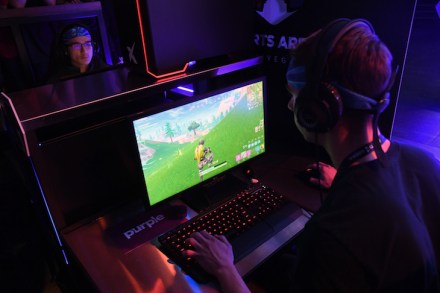
It was only a matter of time. The headteacher of a primary school in Ilfracombe in Devon has banned ‘Flossing’, the dance craze linked to the video game Fortnite, on the grounds that it’s being used to ‘intimidate’ other children. ‘Fortnite is about mass killing of other human beings and being rewarded by a dance of celebration if you are successful,’ she told the Telegraph. This is the latest example of the moral panic surrounding Fortnite, a video game in which up to 100 players compete against each other, either individually or in ‘squads’, to see who can be the last man standing.

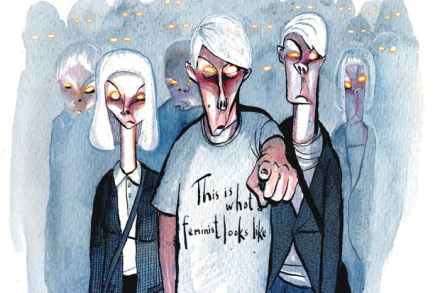
Oh, the insane world of identity politics

According to a poll of 538 experts on women’s issues, the United States is one of the ten most dangerous countries in the world for women. Admittedly, America is ranked tenth, but it’s still considered more dangerous than 183 other countries, including Iran, South Sudan, Sierra Leone, the Central African Republic, Bangladesh and Myanmar. That’s quite a claim when you bear in mind that Iranian women caught not wearing a full hijab are routinely sentenced to 74 lashes, that an estimated 94 per cent of women in Sierra Leone have had their genitals mutilated, and that thousands of Rohingya women and girls have been raped by Myanmar’s soldiers and militiamen in the past year. What can these so-called experts be thinking?

The problem with deciding things are ‘problematic’

A controversy has erupted in Folkestone over a forthcoming screening of Zulu, the classic British war film. A charity has arranged to show the film at the Silver Screen Cinema on Saturday to raise money for members of the armed forces and their families, but the event may have to be cancelled following a letter to the town’s mayor signed by 28 locals objecting to Zulu’s ‘racist overtones’. ‘The film glorifies the myth that was created in 1879 after the humiliation of the British military defeat at the battle of Isandlwana,’ they write. ‘The Battle of Rorke’s Drift was, in reality, little more than a footnote after a far more important and far more gory battle earlier in the day, 11 miles away at Isandlwana.

This junk study proves nothing about helicopter parenting

An academic paper by a group of child psychologists caused a stir earlier this week. ‘Helicopter parenting is bad for children,’ was how the Times reported it, and other news outlets summarised it in the same way. Here was proof, apparently, that wrapping your children in cotton wool and limiting their exposure to risk is bad for their emotional development and can lead to problems at school, as well as difficulties in later life. A few years ago, when I was in the first flush of fatherhood, I would have leapt on this study as confirmation that my laissez-faire attitude to parenting was more effective than the more hands-on approach of my peers.