No sacred cows

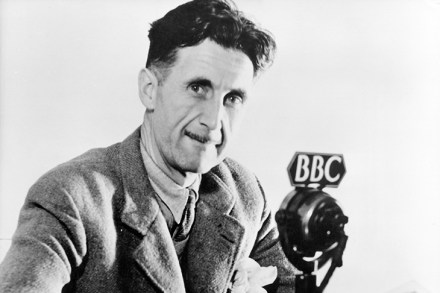
George Orwell would have been a Brexiteer

I’ve been reading a new biography of George Orwell that’s been published to coincide with the 70th anniversary of his death. Many books have been written about him, including at least six biographies, so there isn’t much new to say. Instead, author Richard Bradford focuses on what Orwell would have thought about the contemporary world and which aspects of it he would have disliked. Some of the items on Bradford’s list are predictable: China’s surveillance state, Donald Trump’s ‘-alternative facts’, Islamo-fascism. But the thing that would have really got Orwell’s goat, apparently, is our departure from the EU.

The delusion of the born-again Brexiteers

As 31 January looms, I’ve been thinking about how to bring the country back together again after we’ve left the EU. How can those who’ve spent the past three-and-a-half years fighting Brexit tooth and nail be persuaded to accept Britain’s new status? Bear in mind that many of them occupy highly influential positions — as Supreme Court judges, for instance. The last thing we want is for them to sabotage our post-Brexit future in an attempt to prove they were right all along. However, I had an encounter at a Christmas party with Lionel Barber, the outgoing editor of the Financial Times, that made me think a Truth and Reconciliation Commission may not be necessary.

I’ve found the perfect family film (eventually)

As a member of Bafta, I get sent about 75 ‘screeners’ during the awards season, which is always a treat at the end of the year. I was particularly excited about it this time because of the makeshift home cinema I’ve set up in our playroom. I had fantasies of sitting in there with Caroline and the four kids, munching popcorn as we worked our way through the Bafta hopefuls. However, getting everyone to agree on a film to watch is always tricky in the Young household. On Christmas Eve, my recommendation was a French animated feature called I Lost My Body, which charts the adventures of a hand that’s become separated from its owner.

Christmas with my brother

Ever since I was a child, I’ve associated Christmas with my mentally disabled brother Chris. Technically, he’s my half-brother — I have four half-siblings and a whole one — but to refer to him that way feels a bit mean-spirited, as if I’m trying to put some distance between us. Is ‘mentally disabled’ the right term to describe him? When I was growing up, the psychiatrists had him down as ‘schizophrenic’, but he was later reclassified as suffering from Asperger’s syndrome. After that particular diagnosis fell out of fashion, he became, simply, ‘autistic’, which is probably accurate, although too vague to convey much about him. Chris has been institutionalised since he was a teenager, either in hospitals or care homes.

How could any woman fail to be won over by my new cinema room?

As Christmas approaches, fighting has broken out in the Young household. No, I’m not talking about my three boys, aged 11, 12 and 14, who have taken to playing a no-holds-barred version of American football in the kitchen. Rather, it’s Caroline and me who have been going at it. My sin has been to assume responsibility for the decor of one of the rooms in our house. This has been Caroline’s domain until now. She chooses which colour to paint the walls, what furniture to buy at Ikea and how that furniture should be arranged. My role is confined to assembling desks and bookshelves and occasionally moving beds around.

Must try harder: Labour wants to reverse a decade of progress in education

If education rather than Brexit or the NHS was the biggest issue in this election campaign, the Tories would be coasting to victory. On Tuesday, the OECD’s Programme for International Student Assessment (Pisa) published its latest rankings, based on tests taken by 15-year-olds in 79 countries, and they show the UK climbing the international league tables. In reading, we’re now 14th (up eight places from 2015); in science, 14th (up a place); and in maths, 18th (up nine places). In other words, British schoolchildren are making huge strides compared to those in other countries. And over a period where money has been pretty tight. Why, then, would you want to overhaul our education system, as the Labour party is proposing to do?

Panto should be about escapism, not saving the planet

If you were hoping to escape the bilge that’s been pumped out by supposedly neutral organs of the state during this general election campaign — the BBC, schools, the NHS — I don’t recommend going to see a pantomime. Gramsci’s long march through the institutions has finally reached the last redoubt of political incorrectness. Say goodbye to bum-pinching, boob-squeezing and irreverent, smutty gags about holier-than-thou political figures; say hello to anti-austerity scripts, racially sensitive casting and three-hour lectures on climate change. You think I’m making it up? Oh no I’m not!

Prince Andrew should have married someone like my wife

Like many people, I watched Prince Andrew’s Newsnight meltdown with mounting disbelief. Why had he agreed to do it? It wasn’t as if the general public was clamouring for an answer about what he was doing on the night he’d been accused of having sex with a 17-year-old victim of Jeffrey Epstein. And if he was going to give a television interview, why choose Emily Maitlis? That’s like booking yourself into Sweeney Todd’s for a short back and sides. Emily asked me to do an interview last year when I was forced to resign from the Office for Students over some embarrassing old tweets and, after humming and hawing for a bit, I declined. Clearly, one of my more sensible decisions. But my feeling of smugness at having sidestepped that landmine was short-lived.

Why does someone keep sending me furniture?

When a new vacuum cleaner was delivered to my house last week I assumed it was a belated birthday present from my mother-in-law. A veiled reference to the fact that I’m a surrendered husband, perhaps? Not one to look a gift horse in the mouth, I removed the packaging, stuck it in the cupboard under the stairs and didn’t think any more about it. Then, a couple of days later, another ‘gift’ arrived: an industrial-strength mattress protector. Surely, that couldn’t be from my mother-in-law, too? I looked at the label and it was addressed to ‘Tobias Young’, rather than ‘Toby Young’, which was odd. It had been bought from a large furniture retailer called Wayfair.

40 years on, Life of Brian has made the world a darker place

I went to the Battle of Ideas at the Barbican last weekend, a free speech festival organised by the Brexit party MEP Claire Fox, and listened to an interesting discussion about Life of Brian. The Monty Python film is exactly 40 years old, having been released in the UK on 8 November 1979. The opinion of the panel, made up of comedians and intellectuals, was that its lampooning of rigid, orthodox thinking is more relevant today than ever, since we’re in the midst of a new wave of puritanism, albeit one inspired by left-wing identity politics rather than Christianity. After all, what is ‘hate speech’ if not a type of blasphemy?

Universities don’t need to be lectured about racism

I’ve been contacted by a professor at a leading Russell Group university who is worried about the spread of progressive dogma in the UK’s higher education sector. He highlighted last week’s report by the Equality and Human Rights Commission which claimed that around a quarter of students from ethnic minority backgrounds at Britain’s universities have experienced racial harassment. He fears that this will be used by left-wing activists on campus as ‘proof’ that the higher education sector is ‘systemically racist’ and lead to further calls to ‘decolonise the curriculum’.

The Intellectual Dark Web is more liberal than you’d think

In February last year, Spectator Life ran an article by Douglas Murray on the arrival of a new group of unorthodox thinkers who were challenging the dogmas of the authoritarian left. People who maintained, among other things, that there are fundamental biological differences between men and women, that free speech is under siege on campus and elsewhere, and that some aspects of western civilisation — in particular, the values of the Enlightenment — are worth defending. Murray’s list included Jordan Peterson, Ben Shapiro, Sam Harris, Christina Hoff Sommers: all members of what they jokingly referred to as the ‘intellectual dark web’ (IDW).

The real reason Nicola Sturgeon is campaigning against Brexit

Nicola Sturgeon, who claimed this week that ‘Scotland is rich enough, strong enough and big enough’ to take its place ‘among the proud, independent nations of the world’, is a slippery fish. She claims the case for Scottish independence will be strengthened by the UK’s departure from the European Union and yet she campaigned for Remain during the referendum and has done what she can to obstruct Brexit since. For instance, the 35 SNP MPs voted against Theresa May’s withdrawal bill three times. If they’d voted for it on the third occasion, it would have passed.

You have to laugh at Extinction Rebellion

I ventured out into Westminster earlier this week to take a look at the Extinction Rebellion protest and it reminded me of the Edinburgh Fringe. I don’t just mean the sheer number of people in fancy dress, such as the Red Rebels with their red robes and white face paint, or the men in gas masks. I mean it was like a huge piece of political street theatre written by a brilliant satirist. Wherever you looked there were little comic vignettes. At one point, having become slightly numb listening to one activist after another condemn ‘western consumerism’, I popped into Pret a Manger, only to be confronted by protestors politely queuing up to buy vegan baguettes.

Is it time to revive our play about Boris’s sex life?

I’m writing this from the Conservative party conference where Boris’s attempt to ram home the message that he’s the only party leader capable of getting Brexit done is being drowned out by the claim by Charlotte Edwardes, a Sunday Times columnist, that he squeezed her thigh under the table at a Spectator lunch 20 years ago. In the #MeToo era, this is a bigger news story than our imminent departure from the EU. Or perhaps just a blessed respite from the relentless Brexit coverage. I didn’t help by making a throwaway gag on Monday at a fringe meeting organised by the TaxPayers’ Alliance where I was a panellist.

Abolish private schools? Bring it on!

I cannot recall a week in which Britain’s private schools have received better PR. The Labour party has pledged to scrap them because of the huge advantages they confer on their pupils — including ‘lifelong networks for the powerful’, according to Owen Jones. Presumably that’s a reference to Jeremy Corbyn, who, thanks to his private school background, has risen to the top of the Labour party in spite of getting two Es at A-level. Laura Parker, the national coordinator for Momentum, welcomed Labour’s new policy on the grounds that ‘every child deserves a world-class education, not only those who are able to pay for it’. In other words, only private schools are able to provide a ‘world-class education’.

David Cameron is more authentic than Boris Johnson

I don’t recall exactly when I first met David Cameron, but it must have been in Oxford in 1985 shortly after the beginning of Michaelmas term. I was a third year at Brasenose studying PPE and he was a first year, also doing PPE. I remember him being friendly and down to earth and canny enough to keep his political views to himself. At the time, Brasenose was dominated by a group calling itself the ‘left caucus’ and while it wasn’t social suicide to be identified as a Tory, it was a bit infra dig. After Cameron twigged that we were both ‘in the closet’, so to speak, he confessed to me that he was a Thatcherite. ‘Dry as dust,’ he whispered.

How John Bercow saved me from Short Man Syndrome

I think my colleagues on the pro-Brexit side of the aisle have been a little unkind in their response to John Bercow’s announcement that he’ll be standing down as chief referee in the House of Commons. Yes, he’s clearly done everything in his power to make life as difficult as possible for those MPs who want to implement the result of the 2016 referendum. Yes, his attitude to parliamentary precedent has been completely inconsistent, citing obscure, supposedly binding conventions to obstruct Brexiters one minute, then casually disregarding longstanding constitutional conventions the next. And, yes, the language he uses to express his contempt for any Conservative MP who so much as grimaces at one of his nakedly partisan rulings is unparliamentary, to put it mildly.

The political pact that could save Brexit

If there is to be an election before we leave the European Union, some kind of non-aggression pact between the Tories and the Brexit party is essential. Without it, the risk is all too obvious: that pro-Brexit voters will be divided, allowing pro-Remain candidates to win, even in some constituencies where a clear majority are in favour of leaving. A case in point is Boris Johnson’s constituency. Uxbridge and South Ruislip is in the London borough of Hillingdon, where 56.37 per cent of votes cast in the 2016 referendum were for Leave. But his majority in 2017 was only 5,034, and if the Brexit party fields a candidate against him — particularly if some of the pro-Remain parties decide to stand down in favour of Labour — there’s a chance he’ll lose.

Must try harder: education is still a vote loser for the Tories

The reluctance of the Conservative party to take credit for the success of its education reforms is a source of increasing bewilderment to me. With each passing year, the A-level and GCSE results of free schools and academies provide yet more evidence that liberating state schools from the dead hand of local authority control has had a transformational effect — and 2019 is no exception. Free schools such as the London Academy of Excellence in Stratford and Michaela Community School in Wembley have chalked up some of the best results in the country, while academy chains such as the Harris Federation and the City of London Academies Trust have cemented their places at the top of the league table. Yet, incredibly, education is still a vote loser for the Tories.