No sacred cows

The unbearable consequences of a joke

I was surprised to learn that the novelist Milan Kundera celebrated his 90th birthday on Monday. I had no idea he was still alive. He has taken up residence in that old people’s home that many former luminaries of western culture now occupy — the one with the sign above the door saying ‘Forgotten, but not gone’. In Kundera’s case, his decline into obscurity is probably connected to the fall of the Berlin Wall. The Czech émigré was all the rage in the mid-1980s when he was a critic of his country’s brutal regime. Now that the Soviet Union and its satellite states are a distant memory, he seems less relevant. I think the time is ripe for a Kundera revival, although not for the obvious reason, which is that communism is back in vogue.
Mob rule at Cambridge

On Monday, the vice-chancellor of Cambridge university, Stephen Toope, issued a statement defending the decision of the divinity faculty to rescind its offer of a visiting fellowship to Jordan Peterson. The world-famous professor had been invited by the faculty to give a series of lectures on the Bible later this year, but was dis-invited after some academics and students objected. Not that the faculty had the courtesy to inform Peterson of this, mind you. He learned about it through the grapevine and then saw it on Twitter. He was left to work out what had prompted the volte-face by reading the various statements given to the media.

The Tories are in thrall to trans rights

On Monday, the government announced that Penny Mordaunt, the Minister for Women and Equalities as well as the Secretary of State for International Development, had appointed an advisory panel on LGBT health. Needless to say, it immediately attracted criticism on social media for being insufficiently diverse: the 12-person panel is 90 per cent white, 66 per cent male, etc. I don’t subscribe to the dogma that the composition of official panels, boards, committees and so on should exactly mirror the UK population, but even by that logic those criticisms miss their target. The UK is 87 per cent white and BAME people are less likely to identify as LGBT, so it’s perfectly possible that around 90 per cent of the UK’s LGBT population is white.

Angry women who lead charmed lives

Scarcely a week passes without a privately educated young woman with a successful career in journalism publishing a book about how ‘oppressed’ women are. Names that spring to mind are Laurie Penny (Brighton College), Zoe Williams (Godolphin and Latymer), Laura Bates (King’s College), Afua Hirsch (Wimbledon High School) and Grace Blakeley (Lord Wandsworth College). Indeed, you’d be forgiven for thinking that in order to qualify as an ‘intersectional feminist’ and present yourself as a victim of ‘systemic inequality’ you need to be a member of the ruling class.

Why the squeezed middle are poorer than their parents

It won’t be news to readers of The Spectator that one of the long-term effects of globalisation is the hollowing out of the middle class. In a study of wage growth in ten advanced economies published a few years ago, the Resolution Foundation found that median pay lagged behind growth in GDP, with the gap between the middle class and the highest-paid growing and the gap between them and the lowest-paid shrinking. The phenomenon is particularly pronounced in the US. There, the top 10 per cent of income earners have seen their share of national income increase since the 2007-08 recession, while the remaining 90 per cent have seen their share fall, with middle-income groups hit the hardest.

Four kids – what were we thinking?

You’d think the little buggers would be grateful. Caroline and I had just shelled out for our two middle children — Freddie, 11, and Ludo, 13 — to spend a week in Austria on the school’s half-term ski trip. It meant we couldn’t afford to leave the house for the whole of February, but we stupidly paid for their sister to go on the same trip last year so felt we had no choice. Yet as soon as they came back they wanted to know where we were going on holiday this summer. Ten years ago, they were more than happy to go to Cornwall, which suited me down to the ground. I would sit on the beach behind a windbreak, reading a James Ellroy novel, while the children pottered about in the sand.

Been there, done that | 21 February 2019

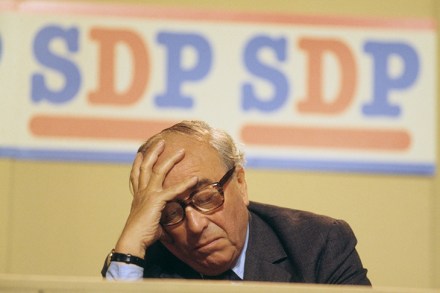
I was 17 when the Labour party last split, in January 1981, and for a variety of reasons got quite caught up in the moment. It was partly because my father, the author of the 1945 Labour manifesto, was close to the Gang of Four — the original band of defectors — and was one of a hundred people named as supporters of the breakaway group in a full-page ad in the Guardian. But really I was just swept up by the general enthusiasm for the new party that seemed to affect vast swaths of the middle classes. If you recoiled from the economic policies of the Conservative government, which prioritised reducing inflation over full employment, but were equally querulous about the leftward shift of the Labour party, the SDP was an appealing alternative.

All these striking kids want is a day off school

Thousands of schoolchildren are planning to go on ‘strike’ on Friday to protest about government inaction on climate change. Called the ‘Youth Strike 4 Climate’, it has been inspired by a 16-year-old Swedish schoolgirl called Greta Thunberg who has spent every Friday since August protesting outside the Swedish parliament and has encouraged others to follow her lead. To date, there have been strikes in Australia, Belgium and the Netherlands, among other countries, with up to 70,000 children taking part each week. From a school’s point of view, this kind of thing is a nightmare. Teachers are usually working to a detailed plan in which a syllabus is being taught in a particular sequence.

Tunnel vision

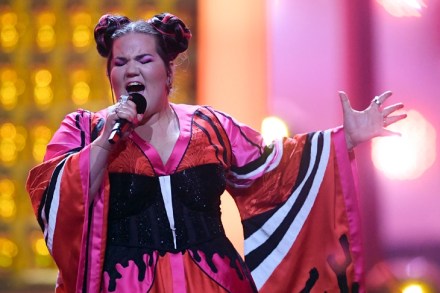
The Guardian last week published a ‘we, the undersigned’ letter from 50 ‘artists of conscience’ urging the BBC to boycott this year’s Eurovision Song Contest because it’s taking place in Israel. ‘Eurovision may be light entertainment,’ they wrote, ‘but it is not exempt from human rights considerations — and we cannot ignore Israel’s systematic violations of Palestinian human rights.’ The signatories included such luminaries as Julie Christie, Peter Gabriel, Roger Waters, Vivienne Westwood and Ken Loach. Ken’s inclusion will have come as a surprise to those Israelis who saw his film I, Daniel Blake in Tel Aviv a couple of years ago.

The problem with measuring progress

The Department for Education (DfE) published its finalised data on the 2018 GCSE results last week, revealing that, for the second year running, white pupils are doing worse in English secondary schools than any other ethnic group. According to the new Progress 8 measure, which assigns a score to GCSE entrants based on how much progress they’ve made between the ages of 11 and 16 relative to children of similar abilities, Chinese pupils do the best, with a score of 1.08, Asians are second (0.45), then blacks (0.12), mixed race (-0.02) and, bringing up the rear, whites (-0.10). What that score means is that on average white children are behind by a tenth of a grade in each of their best eight GCSEs compared to all English schoolchildren with the same grades at the age of 11.

The rush to judgment that belies the truth

Donald Trump is often criticised by liberal news organisations like CNN and the New York Times for resorting to the phrase ‘fake news’ whenever he’s asked an awkward question. This is evidence of his slipperiness, we’re told, as well as his arms-length relationship with the truth. What’s more, it’s irresponsible to repeat this charge endlessly because it undermines public trust in journalism. That’s not just bad for the fourth estate; it’s bad for democracy. There’s some truth to that, which is why it was so disheartening to see the liberal media go out of its way last weekend to confirm Trump’s cynicism.

I see no signs of civilisation crumbling

There’s a scene in Lord of the Flies, William Golding’s masterpiece about the collapse of western civilisation, in which a particularly sadistic boy named Roger starts to throw stones at a weaker, younger lad called Henry. Yet when he tries to hurt the boy, he finds he cannot do it. ‘Roger gathered a handful of stones and began to throw them,’ writes Golding. ‘Yet there was a space round Henry, perhaps six yards in diameter, into which he dare not throw. Here, invisible yet strong, was the taboo of the old life.’ Golding attributes this six-yard forcefield to civilisation. It’s the legacy of the various authorities Roger has been conditioned to respect — parents, school, policemen, the law, etc.

Save the male

For the first time in its history, the American Psychological Association (APA) has issued guidelines for mental health professionals working with men and boys. That may not sound like a momentous event, but the APA is a powerful body in the US. It has 117,500 members, including the vast majority of practising psychologists, and an annual budget of $115 million. Its guidance documents carry the imprimatur of scientific authority and are hugely influential when it comes to policies and behaviour in public institutions. This edict will be referred to by university administrators when policing sexual interactions on campus, by the courts when deciding who to award custody to in divorce hearings and by HR departments when assessing complaints about male employees.

The great awokening

Is the social justice movement that’s sweeping British and American universities a secular religion? The core beliefs of the members of this cult certainly seem to play the same psychological role as the central tenets of the world’s major religions. They furnish their adherents with rituals and blasphemy laws, a way of distinguishing between the sacred and the profane, a vision of what it is to be a good person and live in a good society, and they enable them to engage in tribal sorting, dividing people between members of the in-group and the out-group. No doubt the same could be said of most political ideologies, but there’s one aspect of left-wing identity politics in which it reveals itself as more cult-like than other belief systems.

How to lose more friends and alienate more people

This used to be the busiest time of the year for me. If you do anything in public life — even something minor like running a free schools charity — you get asked to do a lot of things at Christmas. More if you pop up on telly occasionally. Last year, I must have attended at least a dozen carol services, and did a reading at most of them. I spoke at Christmas parties, gave after--dinner speeches and opened fairs. And the nativity plays — don’t get me started on the nativity plays. I managed to limit myself to eight in 2017, but it’s usually more. I never cease to wonder at all the parents, up on their feet, filming the entire performance on their phones. Are they really going to inflict that on the grandparents on Christmas Day? All two hours?

Without prejudice

For months I’ve been looking forward to the Guardian’s much-heralded report on racism in Britain, which was unveiled this week. As a nation, we suffer from our fair share of divisions, with new fault lines opening up all the time, but our record when it comes to race relations is pretty good. Surely, a newspaper that prides itself on being guided by the evidence would reflect this? We’re often told by members of the identitarian left that Britain is more racist than most other countries, but I didn’t expect the Guardian to fall for that. When comparing different countries, one way of gauging the level of racism is to ask whether people in that country would object if a person of another race moved in next door.

Truth, lies and trans rights

On 21 November, a debate took place in the House of Commons about proposals to reform the Gender Recognition Act to make it easier for transgender people to self-identify as men or women. Among the public, this is a widely discussed issue, with most echoing the concerns of feminists about the risks of allowing biological males to enter women’s changing rooms, etc. But until last week the issue hadn’t been debated in the Commons, partly because MPs who have reservations about changing the law are afraid to speak out. Sure enough, nearly all the backbench MPs who contributed to the debate toed the line of the trans-rights activists.

A golden era has ended

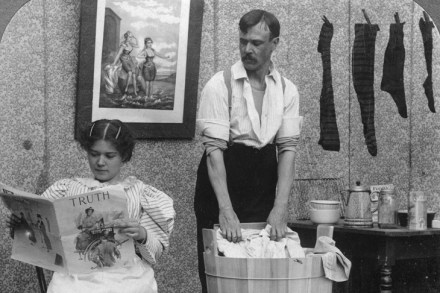
When I proposed to Caroline back in 2000, she was a trainee solicitor and I was a freelance journalist. In my mind’s eye, I pictured myself enjoying several years as a DINK — Double Income No Kids. Imagine my horror, then, when she got pregnant as soon as she qualified and showed no intention of returning to work. Three years later, I had become a SITCOM — Single Income Two Kids Oppressive Mortgage. So much for my dreams of eventually retiring as a GLAM — Greying Leisured Affluent Married. For years, I’ve been complaining about this in a half-serious, half-jokey way, by which I mean I needle Caroline about it until she loses her rag, at which point I say: ‘Calm down! I was only joking.

Academics who dare not speak their names

When I first read about plans for a new academic periodical called The Journal of Controversial Ideas, I got the wrong end of the stick. Fantastic news, I thought, particularly when I saw the distinguished group of intellectuals behind it. They include Jeff McMahan, professor of moral philosophy at Oxford; Peter Singer, the well-known Australian philosopher; and Francesca Minerva, a bio-ethicist at the University of Ghent. An authoritative magazine bearing the imprimatur of these distinguished free-thinkers is a great way to persuade other, less celebrated academics to stick their heads above the parapet and publish essays that dissent from groupthink. Then I spotted an important detail: all the material will be published pseudonymously.

The scrutiny of Scruton

‘Once identified as right-wing you are beyond the pale of argument,’ wrote Sir Roger Scruton. ‘Your views are irrelevant, your character discredited, your presence in the world a mistake. You are not an opponent to be argued with, but a disease to be shunned. This has been my experience.’ Unfortunately, that experience is due to intensify for the 74-year-old conservative philosopher. Last weekend, the government announced it had set up a commission to try and make new housing developments ‘beautiful’ and appointed Sir Roger as its chair. It’s one of the few sensible things the present government has done; so, of course, it’s caused a scandal.