No sacred cows

The antibody test that proved my wife wrong

Back in April, The Spectator ran a feature in which the partners of regular contributors wrote about what it was like being stuck in quarantine with the likes of us. What Caroline had to say was not very flattering: ‘Toby spent the first week of lockdown in bed convinced he had coronavirus. He didn’t. He is a complete hypochondriac at the best of times and this pandemic has sent his anxiety levels through the roof. He was so worried about catching it that the stress led to a bout of shingles, which is what actually laid him up.’ Ever since then I have been trying to prove to her that I really did have Covid-19, but without success.
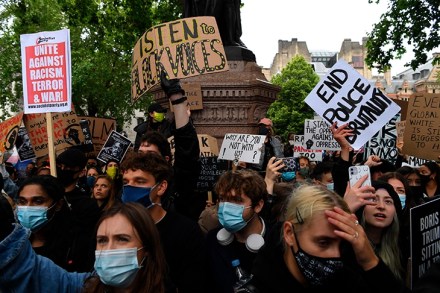
The protestors have brought down the lockdown

I wasn’t surprised to see that a woman whose father died at a care home in Bicester in April has decided to take legal action against the government. If I had an elderly relative in a nursing home whom I hadn’t been able to visit in the last months of his life because of the lockdown, I too would be angry. And I can imagine that anger turning into incandescent rage as I watched pictures of the Black Lives Matter protests on the nightly news. Why are police officers, who were so zealous about enforcing the social distancing rules until last week, now getting down on one knee to genuflect before the protestors?

Why is YouTube so afraid of free speech?

On Sunday, the hosts of Trigger--nometry, a YouTube show, posted an interview they’d done with Peter Hitchens. They labelled it ‘Lockdown is a catastrophe’, which is an accurate summary of the journalist’s view. Over the next 24 hours, instead of generating tens of thousands of hits, which their interviews normally do, it got very few. Why? The hosts got out their laptops and discovered that when they searched for the video on YouTube or Google, its parent company, it didn’t come up. That wasn’t a technical hitch. On the contrary, it’s a tried-and-tested method that YouTube and Google employ to suppress traffic to material they regard as suspect. It’s a form of censorship known as ‘shadow banning’.

Unfortunately our new puppy is not just for lockdown

Will the huge surge in demand for puppies and kittens during lockdown lead to a lot of abandoned pets when life returns to normal? That’s the concern of various professional bodies and animal welfare organisations. The Kennel Club has warned those searching for puppies on its website that a dog is for life, not just the coronavirus, while Battersea Dogs Home initially slapped a ban on rehoming, allowing only fostering during the crisis. ‘Now isn’t the right time to bring home a puppy, or make an impulsive decision to get a pet,’ warned Holly Conway, head of public affairs at the Kennel Club.

Liberal fears are contagious

It has become a commonplace among social psychologists that one of the characteristics that unites conservatives is our sensitivity to disgust. A succession of experiments carried out over the past ten years seems to show that a person’s political views are linked to how disgusting they find the idea of, say, touching a toilet seat in a public lavatory. The more repulsed you are, the more likely you are to hold conservative positions on issues like gay marriage, immigration and abortion. These findings have been lapped up by liberal social scientists since they confirm their view of conservatives as uptight control freaks whose love of hierarchy and tradition is rooted in an irrational fear of contagion.

This lockdown may kill me

I have a new job, which is maintaining a website called Lockdown Sceptics (lockdownsceptics.org). It’s a compendium of evidence that the lockdown is a needless act of self-harm that will almost certainly cause a greater loss of life than it prevents. I set it up myself, so I can’t complain, but trying to stay on top of all the news about coronavirus, moderating the comments and writing the daily update is taking up almost all my time. On Sunday, for instance, it took me about nine hours to summarise the latest data — and leaven the mix with jokes, memes and anecdotes —and by the time the clock struck midnight that post had received 544 comments. It’s a Sisyphean task and every day it begins all over again.

Professor Lockdown’s spell has been broken

I originally had Neil Ferguson down as a kind of Henry Kissinger figure. The professor of mathematical biology at Imperial College London seemed to have bewitched successive prime ministers, blinding them with his brilliance. Whenever a health emergency broke out, whether it was mad cow disease or avian flu, there he was, PowerPoint in hand, telling the leaders of the country what to do. And they invariably fell into line. In 2001, after the outbreak of foot and mouth, his team at Imperial advised Tony Blair’s government to adopt a strategy of pre-emptive culling, leading to the slaughter of more than six million animals.

Did anyone really believe what my wife wrote about me?

One of the nice things about having a column in The Spectator is that I get a chance to reply to all the smears and lies published about me. Which brings me to my wife’s remarks in last week’s magazine. The editor asked the partners of regular contributors to write a few words on what it’s like living with us during lockdown and Caroline was unbelievably rude. Among other things, she accused me of being a ‘complete hypochondriac’, said the pandemic had sent my anxiety levels ‘through the roof’ and ascribed my own life-and-death battle with the virus to a bout of shingles brought on by the stress. Needless to say, this was manna from heaven for all the haters out there.

If you really want to lose friends, start a magazine

I’m more impressed than most that The Spectator has racked up 10,000 issues, because I used to be a magazine publisher myself and I know just how hard it is. In 1991 I co-founded the Modern Review with Julie Burchill and Cosmo Landesman and appointed myself its first editor. Our motto was ‘Low culture for highbrows’ and we ran long, scholarly essays by intellectuals and academics about popular icons like Madonna. I remember one particularly good piece by David Runciman, now a politics professor at Cambridge, called ‘Wazza mazza wiz Gazza?’ about the footballer Paul Gascoigne. Among the magazine’s more dubious achievements was publishing the first ever article by Will Self. In 1995 it went belly--up after 21 issues.

Our puppy has no respect for the two-metre rule

Since the beginning of the lockdown, Caroline has been congratulating herself for having bought a puppy ‘just in time’. She doesn’t mean it would have been impossible to get one after 23 March, because visiting a breeder is not an ‘essential’ journey. She means that a puppy is a great source of entertainment, as well as solace, when you’re cooped up in your home, particularly if you have children. It’s like having our very own therapy dog. She’s a cavapoochon — a cross between a Cavalier King Charles spaniel, a toy poodle and a bichon frise. A handbag dog, in other words.

I’m recovering – but I glimpsed the coronavirus cliff edge

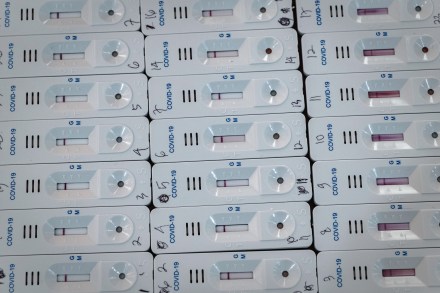
So I’ve had the virus. Or rather, I think I have. Ordinary mortals can no longer get tested by the NHS unless they’re admitted to hospital and I was nowhere near that point. I self-diagnosed, based on having some of the symptoms, and took to my bed. Needless to say, Caroline is convinced the whole thing was a sham to avoid doing the housework, which has increased exponentially during lockdown thanks to four kids and no cleaner. Now that I’m out of bed she’s exacting sweet revenge. I first developed a temperature on Tuesday 24 March, along with chills, a headache, a blocked-up nose and fatigue. A tickle at the back of my throat, but no persistent dry cough, so perhaps it was just seasonal influenza.

Dissent over coronavirus research isn’t dangerous – but stifling debate is

One of the paradoxes of the coronavirus crisis is that the need for public scrutiny of government policy has never been greater, but there’s less tolerance for dissent than usual. I’m thinking in particular of the work of Professor Neil Ferguson and his team at Imperial College London, which has done so much to inform the government’s decision-making. Remember, it was Professor Ferguson’s prediction last month that an extra 250,000 would die if the government didn’t impose extreme social distancing measures that led to the lockdown last week. Anyone questioning Professor Ferguson’s analysis is likely to be met with a tsunami of opposition.

How Oxford taught the no-platformers a lesson

Three weeks ago Amber Rudd travelled to Christ Church, Oxford, to speak to students about her experiences of being a female politician. She was there at the invitation of the UNWomen Oxford UK society, which had organised a number of events in the run-up to International Women’s Day on 8 March. But half an hour before she was due to appear, Rudd was told the event had been cancelled. Nothing to do with coronavirus, which had not yet swept the country. Rather, it was because a number of students had protested about the ex-Conservative MP being allowed to speak. Rudd had been no-platformed. The society published an apology on its Facebook page, but not to the former home secretary.

Quarantine with our new puppy will send me barking

When the news leaked at the weekend that the government was considering telling those aged 70 and over to self-quarantine for 12 weeks to protect them from catching coronavirus, I began to worry about my elderly neighbours. How will they get essential supplies, particularly if the supermarkets’ home delivery services get backed up? What if they’re not on Netflix and have gone through all their box sets? Who will walk their dogs? It was time to summon up that famous Dunkirk spirit and create a network of volunteers willing to muck in until the crisis is over. A bit of googling revealed I was far from alone in thinking this. Turns out, neighbourhood groups across the country have set up WhatsApp groups to look after vulnerable people during the epidemic.

Cartoonists have a right to free speech

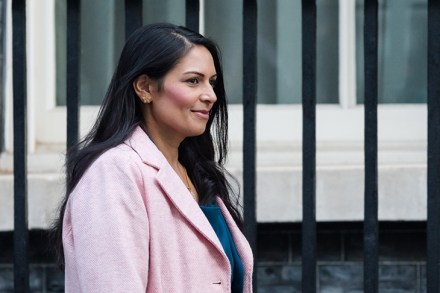
I’m no fan of Steve Bell, the Guardian cartoonist. I can’t say I’ve ever laughed at one of his squibs, which are witless and crude. Some would call him ‘fearless’, but he just seems cruel and over the top to me. When the Guardian finally puts him out to grass, which surely won’t be long, he will disappear into the inkwell of history. But having said all that, I would defend to the death his right to produce his tasteless cartoons, as well as the right of his newspaper to publish them. Last week, the Guardian printed a Steve Bell caricature of Priti Patel sitting next to Boris in the House of Commons that was widely condemned as ‘racist’. The reason?

My night in A&E left me worried about the NHS’s coronavirus response

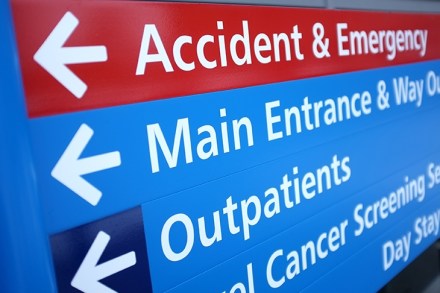
I wish I shared the Prime Minister’s confidence about the ability of the NHS to cope with coronavirus. ‘I have no doubt that with the help of the NHS and its incomparable staff, this country will get through it – and beat it,’ he said on Sunday. Not if my experience in A&E last week is anything to go by. I wasn’t keen to visit A&E in the midst of the current crisis, obviously, and had it been my own health I was worried about I would have stayed in bed. But it was Sasha’s, my 16-year-old daughter. She was pushed down some stairs at a party (not deliberately) and one of her fake fingernails got bent back, ripping her actual nail off its nail bed. She was complaining about the pain and it looked infected so I called 111 and asked what to do.

How far should we go to defend free speech?

This week sees the official launch of the Free Speech Union — an organisation that stands up for the speech rights of its members. It’s my baby, but a number of people have come on board as directors, including Douglas Murray and Professor Nigel Biggar. I’ve also had a lot of help behind the scenes from people who got in touch after reading about it in this column. I was on the Today programme on Monday to talk about it and have done a number of interviews since. By the time you read this, I’ll be recovering from the launch party, scheduled for Wednesday night. So far, it’s going pretty well.

Why on earth did I volunteer to do stand-up?

It was on my ‘bucket list’, but that doesn’t mean it was a sensible thing to do. Climbing Mount Kilimanjaro is something I’d like to do before I die as well, but at the age of 56 and with the lung capacity of a broken windsock I probably shouldn’t attempt it. In this particular case, though, all I was risking was public humiliation and I know from experience — lots and lots of experience — that I can survive that. So I decided to do it. I would try my hand at stand-up comedy. This particular story begins last year at the Backyard Comedy Club in Bethnal Green.

Even the Oscars after-parties have lost their shine

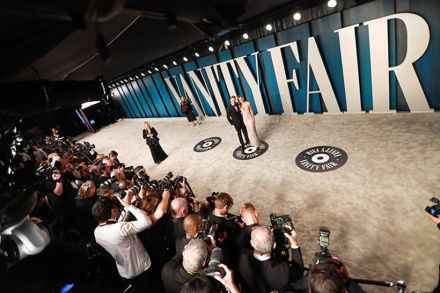
Reading about the Oscars this week, I couldn’t help thinking back to a time when they actually meant something. When I lived in America in the mid-1990s, the Academy Awards were described as ‘the gay Super Bowl’ which, although it sounded flippant, acknowledged their cultural significance. And judging from the number of people who watched them, the Oscars were a big deal. In 1998, the year Titanic won Best Picture, 55 million Americans tuned in. This year, the Oscars attracted an average of 23.6 million viewers, an all-time low. Not so much the Super Bowl as Bristol Rovers vs Southend United on a rainy Tuesday night. The parabolic decline of the Vanity Fair Oscars party makes for a good case study in what has gone wrong.

Climate doomsayers keep putting sell-by dates on their credibility

I was slightly surprised when Greta Thunberg announced at Davos that we had eight years left to save the planet. As long as that? Admittedly, that’s four years less than Alexandria Ocasio-Cortez, who put it at 12, although, come to think of it, that was last January, so presumably she now thinks we’ve got 11 years left. But some doomsayers have been much less optimistic. According to Peter Wadhams, a Cambridge professor interviewed in the Guardian in 2013, Arctic ice would disappear by 2015 if we didn’t mend our ways, while Gordon Brown announced in 2009 that we had just 50 days to save the Earth. Then again, playing the long game can also catch up with you.