No sacred cows

What I’ll miss most in Lockdown II

A second lockdown won’t cause me much suffering. I don’t have a shop selling ‘non-essential’ goods (e.g. books) that will go out of business. As a freelance journalist, I’m not at risk of losing my job. I don’t have a life-threatening disease so I’m not going to die because my local hospital won’t admit me. I have only one elderly relative and she’s in our family’s ‘support bubble’. My biggest worry is that schools will close again, not least because one of my children is doing her A-levels next year and another his GCSEs. Boris has absolutely, categorically ruled that out so I give it about another week before he does a U-turn. But I’m probably better off than 95 per cent of the population.
There’s nothing neutral about Wikipedia

A couple of weeks ago Newsweek ran an article attacking Elon Musk, the CEO of Tesla, for engaging in a friendly Twitter exchange with me about the coronavirus pandemic. According to the article, I was a ‘eugenics advocate’. How could the apparently respectable industrial designer sully himself in this way? Didn’t he realise I was Britain’s answer to Dr Mengele? The claim that I’m a ‘eugenics advocate’ isn’t true, obviously.

I’m turning into an English nationalist

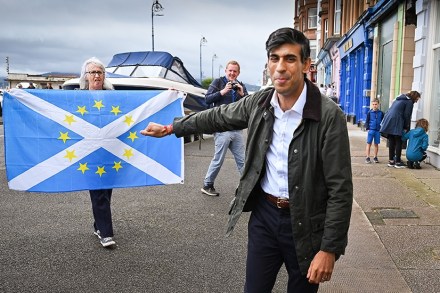
One of the things I hadn’t anticipated about the pandemic is that it would turn me into an English nationalist. At the time of writing, the governments of Scotland, Wales and Northern Ireland have decided to place their countries under various forms of lockdown, while No. 10 has stopped short of imposing one on England with some Tier 3 hotspots. The explanation for this divergence is simple. The Scottish, Welsh and Northern Irish executives don’t need to worry about the economic harm the lockdowns will cause because they know that Westminster will come to their rescue. Boris, by contrast, cannot afford to be so reckless because England has no equivalent sugar daddy.

Why can’t we talk about the Great Barrington Declaration?

You probably haven’t heard of the Great Barrington Declaration. This is a petition started by three scientists on 4 October calling for governments to adopt a policy of ‘focused protection’ when it comes to Covid-19. They believe those most at risk should be offered protection — although it shouldn’t be mandatory — and those not at risk, which is pretty much everyone under 65 without an underlying health condition, should be encouraged to return to normal. In this way, the majority will get infected and then recover, gradually building up herd immunity, and that in turn will mean the elderly and the vulnerable no longer have to hide themselves away.

Boris Johnson’s human shield

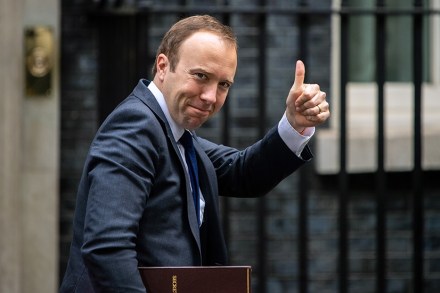
At a Conservative party conference fringe event last Sunday, Lord Bethell, a health minister, was asked where he thought Britain ranked in the world in terms of its response to the pandemic. ‘I think there have been some outstanding pieces of delivery that have not been fully appreciated,’ he said. ‘And I think it will be like the Olympics, that when it’s all over and we look back and reflect, we will actually be extremely proud of ourselves.’ A few hours later, Public Health England confessed that it had failed to include 15,841 people who’d tested positive for Covid-19 between 25 September and 2 October in the daily updates and had added them to Sunday’s total.

Laurence Fox is a political force to be reckoned with

From the moment I started criticising the government’s handling of the coronavirus crisis people have been urging me to start an anti-lockdown party. The idea would be to run candidates in the local elections in May, particularly in those areas that have been under almost permanent lock and key for the past six months, such as Leicester. They might not win, but they could bleed enough support from the Conservative candidates to make the government think twice about its ‘forever lockdown’ policy. But I’ve resisted. For one thing, I don’t have the time. Running the Free Speech Union and posting daily updates to my Lockdown Sceptics blog, as well as trying to earn a living as a journalist, means I’m already working 14 hours a day.

The creep of internet censorship

Kristie Higgs, a 44-year-old school assistant, didn’t realise that criticising the sex education curriculum at her son’s school on Facebook would get her fired. For one thing, her account was set to ‘private’, so only her family and friends could read it. For another, she was posting under her maiden name, so no one could connect her with her employer. Finally, the school that sacked her for expressing these views wasn’t actually her son’s, but another one altogether. This seems a pretty clear case of a person losing her livelihood for dissenting from progressive orthodoxy. Kristie’s case is being heard at an employment tribunal in Bristol this week. The dispute relates to two Facebook posts from two years ago.

I admit it: I was wrong to back Boris

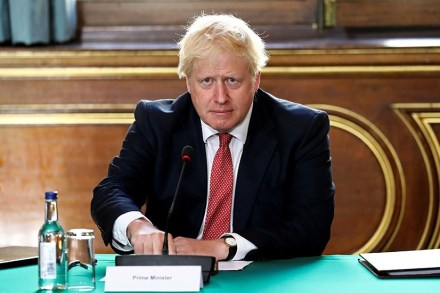
A friend emailed me earlier this week in despair about the Prime Minister. ‘Boris reminds me of a hereditary king — Edward II or Henry VI — who is so staggeringly incompetent that he must be removed before doing too much damage,’ he wrote. ‘I felt the same way about May but Boris is worse.’ He is not the only person feeling like this. It pains me to say it, but I too have given up on Boris. The final straw was hearing him talk about his plans to create an army of ‘Covid marshals’ last week — Britain’s very own, curtain-twitching version of the Stasi. What on earth happened to the freedom-loving, twinkly-eyed, Rabelaisian character I voted for? Oliver Hardy has left the stage, replaced by Oliver Cromwell.

Being a do-gooder did me no good at all

Michael J. Sandel, the Harvard political philosopher, has a lot to answer for. Some armchair psychologists think the reason I turned away from journalism to become a free-school evangelist in 2009 is that I wanted to make my late father proud. He helped set up the Open University, among other things. No doubt there’s something in that, but it was also testimony to the influence of the charismatic Harvard professor, under whom I studied for a year. Sandel is a sort of secular Quaker and was always urging his students to eschew the temptations of worldly success and embrace the common good. That was the path to true happiness. So thanks a lot, professor. I blame you for that disastrous wrong turning.

The best leader we never had

I spent Monday afternoon with The Wake Up Call, a new book by John Micklethwait and Adrian Wooldridge that lambasts the West for its grotesque mismanagement of the coronavirus crisis. Despite an upbeat chapter towards the end, in which they dust off the standard menu of reforms, it makes depressing reading. They contrast the cack-handed response of the authorities in countries like America, Britain and Italy with those of China, Singapore and South Korea and conclude that, absent a political miracle, the world will soon resemble the 17th century again, with Europe beset by war and corruption and Asia in the ascendant. There’s a good deal in the book to disagree with.

The BBC’s future is hanging by a thread

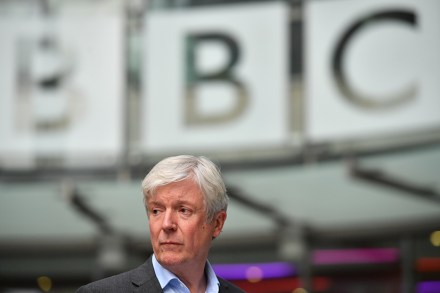
Reading the speech Tony Hall gave to the Edinburgh Television Festival, I was struck by his upbeat, confident tone. The outgoing director-general of the BBC talked about how its reporting of the coronavirus crisis had brought its core mission as a public service broadcaster into sharper focus and boosted its popularity, particularly among 16- to 34-year-olds. He said his goal when he arrived at the BBC was to reach a global audience of 500 million by 2022, its centenary year, and this target has now been revised upwards to a billion by the end of the decade. ‘But it needs extra investment from government and that bid is with them right now,’ he said. Doesn’t Tony Hall realise that the BBC’s future is hanging by a thread?

Spare a thought for next year’s A-level students

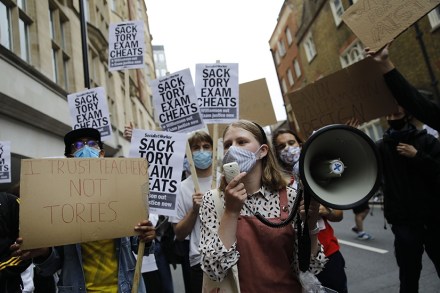
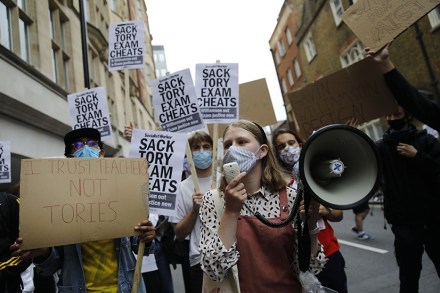
Three years ago I was contacted by an official at the Department for Education to see if I was interested in becoming a non-executive director of Ofqual, the exams regulator. There have been times since when I’ve regretted turning down that offer, but this week was not one of them. Ofqual was given the unenviable task of awarding A-level and GCSE grades to students in England who, thanks to the lockdown, had not sat their exams; and it was inevitably criticised by those children and their parents who felt they should have done better, not to mention various enemies of the government who treated Ofqual as a proxy for Gavin Williamson, the Education Secretary.

I’ve started a dating site for lockdown sceptics

I started a dating site last Sunday. Not words I ever thought I’d write, but I’ve become a kind of den mother to a large group of people who believe the risk of coronavirus has been exaggerated, and it dawned on me that this could be a useful service for them. The idea is that if you’re a Covid realist you don’t want to go out with a hysteric who thinks the lockdown is being eased too quickly and frets about a ‘second wave’. You probably wouldn’t even be able to arrange a first date, let alone manage a kiss at the end of the evening. What you need is a ‘safe space’ where you can meet potential partners who share similar views. It all began in April when I started a blog called Lockdown Sceptics.

The proof that free speech in universities is in peril

About 18 months ago, I attended a debate at Policy Exchange, the think tank founded by Nick Boles, Francis Maude and Archie Norman, on whether there was a free speech crisis at British universities. One panellist, Professor Jon Wilson of King’s College London, vigorously denied that any such problem existed. Various people pointed to examples of right-of-centre academics being no-platformed — Charles Murray, Amy Wax, Linda Gottfredson — but that was scarcely conclusive. It was anecdotal evidence, not hard data. The same cannot be said any more. This week, Policy Exchange published a paper by three academics — Remi Adekoya, Eric Kaufmann and Tom Simpson — which proves beyond reasonable doubt that free speech is in trouble in the higher-education sector.

How to get into a club and on to a plane

Disaster struck the Young family last Friday. My 12-year-old son Charlie woke up with a temperature. Ordinarily, that wouldn’t matter, but we were in the Dolomites and due to fly back to England from Venice later that day. On the flight out, we’d all had our temperature checked with an infrared thermometer pointed at our foreheads, and there was a similar policy in place at Marco Polo airport for our return journey. Would Charlie’s fever mean none of us would be allowed to board the plane? And would we be interned in some ghastly Travelodge for 14 days? The responsible thing would have been to remain in Italy until Charlie recovered, just in case he had the virus.

My plans for a Covid inquiry

The public inquiry into the government’s handling of the coronavirus crisis has already started. Not the official one, which won’t get under way until next year, but the unofficial ones. First out of the gate was the Sunday Times on 24 May, followed by the New Statesman and, last week, the Financial Times. In addition, there will be ‘inquiries’ by other newspapers and magazines, parliamentary select committees, television and radio programmes, think tanks and universities, scientific and medical journals. Few will be able to resist blaming the UK’s higher-than-average death toll on the government’s failure to lock down earlier.

How did I end up in Epstein’s little black book?

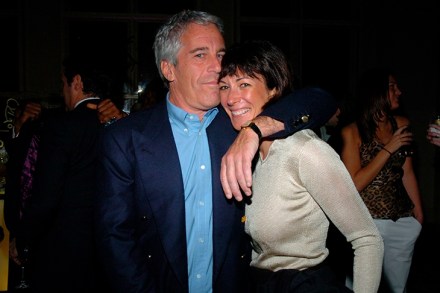
Every time Jeffrey Epstein is in the news, I start getting calls from strangers wanting to scream abuse at me. This happened a lot when the billionaire financier was found dead in his jail cell last year after being arrested on sex trafficking charges, and it has started again following the arrest of his ex-girlfriend Ghislaine Maxwell a couple of weeks ago. The reason is that my contact details were in Epstein’s ‘little black book’, and whenever his name pops up some kindly soul takes it upon themselves to post a picture of the relevant page, which shows my mobile phone number, on Twitter. I may have to change my number, so frequent have the calls become. On one level, it’s quite flattering.

Does the curriculum really need ‘decolonising’?

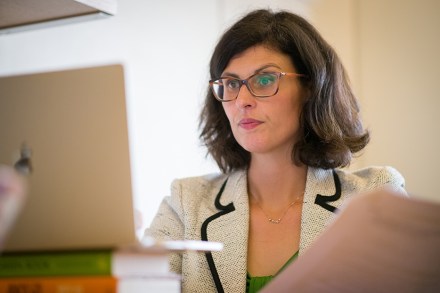
Layla Moran, the Lib Dems’ education spokesman, has written to Gavin Williamson urging him to do something about ‘systemic racism’ in schools. ‘Changes to the history curriculum, such as learning about non-white historical figures and addressing the darker sides of British history honestly, are a vital first step to tackling racism in our education system,’ she wrote. ‘This chasm in information only serves to present students with a one-sided view of the events in history.’ I’m not sure Moran knows very much about how the education system works. For one thing, Williamson cannot dictate how history is taught in free schools and academies — they don’t have to follow the national curriculum.

We’re facing a tsunami of censorship

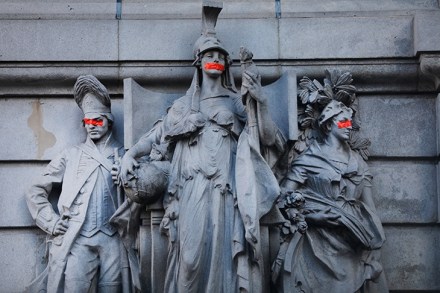
It’s open season on mavericks and dissenters at the moment. If you publicly challenge any of the sacred nostrums of the social justice left and you work in a school, a college, a university, an arts company, a public broadcasting organisation, a tech company, a charity, a local authority or, indeed, Whitehall, you are at risk of being cancelled. How do I know? Because in February I set up the Free Speech Union to protect those being targeted in this way and in the past month we’ve been contacted by people in all of these fields who have either been fired, suspended or are ‘under investigation’ for having said or done something controversial, usually on Facebook or Twitter. And by ‘controversial’ I don’t mean they’re guilty of hate speech.

Who watches the broadcast watchdog?

At the beginning of April, I became so frustrated by the supine coverage of the government’s response to the coronavirus crisis, particularly on radio and television, that I decided to start a blog called Lockdown Sceptics. The idea was to create a platform for people who wanted to challenge the official narrative. In addition to publishing original material by Covid dissidents, many of them eminent scientists, I include links to critical papers and articles, and write daily updates commenting on the news. One of the things that puzzles the contributors is why the coverage on broadcast media has been so hopelessly one-sided. The BBC, in particular, seems to have become a propaganda arm of the state.