No sacred cows

The facts about race and education

Judging from the reaction to last week’s Commission on Race and Ethnic Disparities report, you’d think it had been written by a group of white supremacists who deliberately falsified the evidence about the prevalence of racism in contemporary Britain. Labour MP Clive Lewis tweeted a picture of the Ku Klux Klan alongside the hashtag #RaceReport, while Dr Priyamvada Gopal, a Cambridge University professor, compared the chairman of the Commission to Goebbels. In fact, only one of the report’s ten authors is white and the chairman, Dr Tony Sewell, says in the foreword: ‘We take the reality of racism seriously and we do not deny that it is a real force in the UK.


I’ve swapped booze for Pot Noodles

Along with many other people, I gave up drinking for the month of January and then resumed with gusto on 1 February. But my 13-year-old son Fred, the only Christian in my household, urged me to give it up again for Lent. ‘Why not keep me company?’ he asked, having decided to forego sugar. But he didn’t just demand I stop boozing. He’d spotted the fact that when I go through a teetotal phase I compensate by stuffing my face with nuts and chocolate, thereby piling on the pounds. So he insisted I give up all three for 40 days. At least, he told me it was 40 days. In fact, the first day of Lent was 17 February and the last day is 3 April, which is 46 days.

The terror of seeing my dog attacked

I was walking with our one-year-old cavapoochon on the way back from the baker’s in Acton on Sunday morning when I spotted a man with two greyhounds coming towards me. At least, I think they were greyhounds. They looked like they’d been injected with steroids, making their muscles grow and pop and giving their faces ravenous, desperate expressions. ‘Just as well he’s keeping those dogs on the lead,’ I thought. Sure enough, as soon as they spotted Malinky they went crazy — barking, squealing, straining at the leash. Did they mistake her for a rabbit or a rodent of some kind? Mali looked terrified, as if she knew she’d been earmarked as a Scooby snack.

My plan to kick off life after lockdown

The last time I went to a football game was on Saturday 7 March last year when my 12-year-old son and I went to see QPR play Preston North End. When we got there we were handed a certificate, signed by the manager, congratulating us on having travelled 228 miles. Pretty heroic given QPR’s record on the road is so poor the fans have a song they sing after away games, adapted from ‘The Lion Sleeps Tonight’: ‘We’re the Rangers, the mighty Rangers, we never win away… a win away, a win away, a win away…’ etc. But on that occasion we won 3-1, in spite of going a man down. The scenes on the train back to Euston were something to behold.

How I learned to love audio books

According to a charity called Fight For Sight, 38 per cent of people who’ve been using screens more during lockdown believe their eyesight has deteriorated. I am definitely in that category. This time last year, I didn’t need reading glasses; now I do. When I’m working at my desk this doesn’t much matter, but it has made reading in bed more difficult because I was in the habit of doing this on an iPad under the covers so as not to wake Caroline. Keeping my glasses in place while lying on my side, with one hand clutching my iPad and the other pulling the duvet tight over my head to eliminate any light pollution, is surprisingly difficult. The upshot is I’ve switched over to talking books.

The conservative appeal of drug gangs

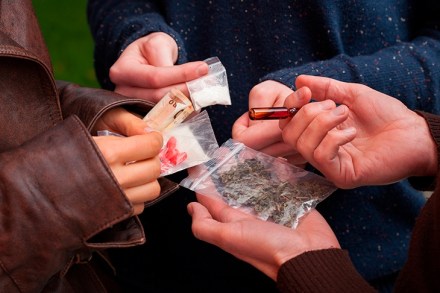
According to the Metropolitan Police Commissioner Cressida Dick, the easing of lock-down will be accompanied by a rise in crime in the capital, including the violent type associated with drug gangs. Just last week, the police recovered two zombie knives, two Rambo-style blades and a kitchen knife at the scene of an attack on a 16-year-old boy in Brixton. But it would be wrong to view this coming crimewave as a problem that just affects London’s underclass. According to Sheldon Thomas, the chief executive of an outreach organisation called Gangsline, a rising number of middle-class teenagers are being sucked into the gangster lifestyle in the wake of Covid. Thomas rather uncharitably attributes this to ‘the phenomenon of loveless middle-class homes’.

The secret code of the ruling class

I naively hoped that last year’s statement by the Equalities Minister explaining why unconscious bias training was being phased out across the civil service might slow its spread. After all, the minister’s scepticism wasn’t based on political disagreement but on research commissioned from the Behavioural Insights Team that concluded: ‘There is currently no evidence that this training changes behaviour in the long term or improves… equality in terms of representation of women, ethnic minorities or other minority groups.’ Reading between the lines, the BIT evidently thinks that UBT is little more than snake oil — and there’s a vast amount of literature in the social sciences to back that up.

My advice for the next ‘free speech champion’

I was delighted to hear the government plans to appoint a ‘free speech champion’ to the board of the Office for Students. His or her responsibility will be to make sure universities in England do everything that is reasonably practicable to uphold freedom of speech within the law, including preventing external speakers from being no-platformed by student activists. This legal duty has been on the statute books since 1986, but there is no enforcement mechanism. That’s why this announcement is so important. The new free speech tsar will have the power to fine universities that don’t uphold the law. Theresa May’s government took a dummy run at this when it appointed me to the board of the Office for Students in 2018.

Abstinence makes the heart grow fonder

The wine has been flowing in the Young household this week. The reason I’ve been celebrating is because I managed to get through January without a drink. Like many people, I try to do this every year, but it felt like a particular achievement this year because of the lockdown Boris announced on 4 January. Almost everyone I know used that as an excuse to fall off the wagon. ‘There’s no way I can get through another lockdown without a drink’ was the general refrain. One thing that helped was joining the Wine Society and loading up on bottles throughout ‘dry’ January. It had never occurred to me to join until my neighbour Mark Beaumont, who’s been a member for 30 years, told me you had to be proposed by an existing member.

What more do I have to do to get a peerage?

Watching Lord Hannan of Kingsclere being introduced in the House of Lords on Monday was a bittersweet moment. On the one hand, I’m delighted for Dan. He is one of the heroes of Brexit, and his impromptu speech about Margaret Thatcher in the pub following her memorial service brought a tear to my eye (you can find his speech on YouTube). But on the other, I can’t help thinking: where’s my bloody peerage? I’ve edited this and that, co-founded four free schools, served on the boards of numerous charities and set up the Free Speech Union. I was the chief exec of a high-profile charity, for Christ’s sake, and my immediate predecessor got a CBE. I haven’t even got a lousy MBE.

Quarantine heralds the death of Mid-Atlantic Man

As an ambitious journalist making my way in Fleet Street, I dreamed of becoming a Mid-Atlantic Man. Tom Wolfe came up with the term in the mid-1960s to describe someone who divided his life between London and New York. Not for social reasons, but because his career required him to spend time in both cities. Wolfe said the typical Mid-Atlantic Man worked in a field like advertising, public relations, television, commercial art, motion pictures or consulting. But journalists could join this exalted tribe too. David Frost, who was a kind of journalist, was the ultimate Mid-Atlantic Man. He practically had a permanent berth on Concorde. I failed, obviously, but for a couple of years I came tantalisingly close.

Farewell to my dear friend Richard, the very best of us

I heard the shocking news last week that one of my oldest friends — Richard Edwards — had died suddenly of a stroke. He was just 54 and a picture of health. I met Richard in 1988 when we were both PhD students at Cambridge. He had got the second-highest First in English in his year and was thought to have a brilliant academic career ahead of him, but as the year wore on it became clear that neither of us were particularly attracted to the scholarly life. Instead of dragging ourselves off to the library every day to ‘do the reading’, we would sit in his room drinking wine, making each other laugh and luxuriating in our mutual dissipation.

Meal kits are a recipe for mayhem

Caroline was pretty heroic during the first lockdown. She’s used to having no children to deal with between the hours of 8 a.m. and 4 p.m., into which she crams her part-time job, food shopping, exercise classes, tennis lessons, dog walks and a hundred other things. But during our children’s three-month break from school they would appear in the kitchen at 1 p.m. and ask what was for lunch and, in spite of her other commitments, Caroline would always do her best to rustle something up. ‘I’m like Nigella Lawson on steroids,’ she said at the time. But she has drawn the line at repeating this Stakhanovite labour during the third lockdown.

A dog is not just for lockdown

The Dogs Trust charity received 114 calls on 27 and 28 December from people wanting to offload their puppies. No, these weren’t unwanted Christmas gifts, but dogs they’d bought during the first lockdown. According to the RSPCA, demand for dogs soared last year, with breeders and rescue centres reporting unprecedented levels of interest. But some new owners have already become disillusioned. In the past three months, the Dogs Trust has received 1,800 calls from people begging them to rehome their puppies. She darts around with lightning speed hoovering up any stray morsels like a turbo-charged rat On some days, I’m tempted to contact the charity myself. The Young family’s new pet isn’t strictly speaking a lockdown dog.

The unlikely Schindler who saved my wife’s family

As I gaze at my four children on Christmas morning, clambering on to the bed with their stockings, I will think of one particular person to whom, in a roundabout way, they owe their lives. He was a colonel in the first world war and, had it not been for his generosity, my children, their mother, her brothers and sisters, their children, their aunts, uncles and cousins — the entire Bondy clan, in fact — would not exist. The story begins in 1918, as the conflict was nearing its end. Karel Bondy, my wife’s paternal grandfather, was a young Czech officer in the Austro-Hungarian army who had miraculously survived heavy fighting in Albania.

Can £3,000 make me as pretty as Emily Maitlis?

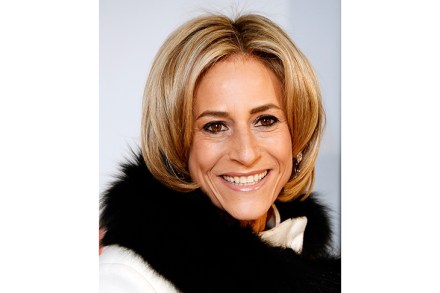
If you’re a journalist with a fondness for appearing on television — and, let’s face it, most of us are — the Covid crisis has been a double-edged sword. On the one hand, you’re no longer expected to drag yourself off to a studio at the crack of dawn, whether it’s Broadcasting House in the West End or Sky’s headquarters in Isleworth. You simply tumble out of bed, open your laptop and do a ‘down the line’. You don’t even have to put your trousers on. But the big drawback is, you look terrible. In a television studio, you have the benefit of make-up, professional lighting and proper cameras and microphones. Broadcasting from home, by contrast, is a pride-swallowing siege.

The battle for Eton’s soul

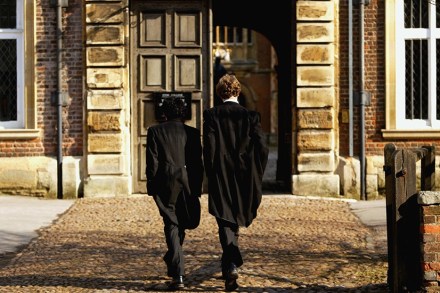
When trying to get my head around the row that has engulfed Eton College in the past two weeks I keep getting sidetracked by the comic details. Like the fact that the headmaster, Simon Henderson, is nicknamed ‘trendy Hendy’ on account of his mission to transform Eton into a modern, progressive institution. By all accounts, he has set about trying to cleanse the school of its ‘toxic’ traditions with the zeal of a captain in the Red Guards, promising to ‘decolonise’ the curriculum, recruiting the creator of the Everyday Sexism blog to lecture the staff on the gender pay gap and, at one point, proposing to scrap Eton’s famous uniform. Among his initiatives has been to elevate a drama teacher to the post of Director of Inclusion Education.

My kids think my move into the garden shed means divorce

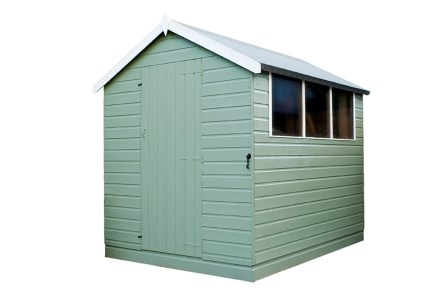
I’ve moved out of my home. No, Caroline and I haven’t broken up. It’s just that we’re having the house rewired, which means we have to be out of our bedroom by 8 a.m. Ordinarily, that wouldn’t matter but about eight months ago I started a blog about lockdown and I’m usually up until 4 a.m. working on it. We have almost 7,000 subscribers to our daily newsletter and I want it to be waiting for them when they wake up. And superhuman though I am, I can’t survive on four hours’ sleep a night. I haven’t gone very far. I’ve stuck a blow-up mattress in the garden shed that doubles as my office. But, weirdly, the children seem to think this is a prelude to divorce.

The dangers of censoring anti-vaxxers

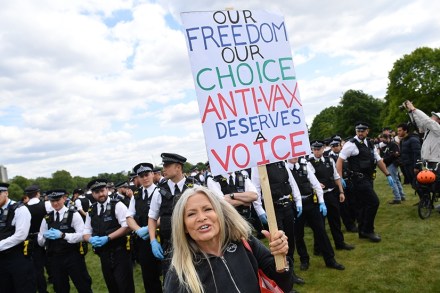
Earlier this week, the Labour party wrote to the government urging it to bring forward legislation so that social media companies which fail to ‘stamp out dangerous anti-vaccine content’ can face financial and criminal penalties. ‘The government has a pitiful track record on taking action against online platforms that are facilitating the spread of disinformation,’ said Jo Stevens, Labour’s shadow culture secretary. ‘This is literally a matter of life and death and anyone who is dissuaded from being vaccinated because of this is one person too many.’ My first thought on hearing this was how pitifully out of touch the Labour party is.

Will my kids report me for hate speech?

When Humza Yousaf, the SNP’s cabinet secretary for justice, announced that his new Hate Crime Bill would remove the ‘dwelling exemption’ in the Public Order Act 1986, people were understandably horrified. As things stand, you cannot be prosecuted for stirring up racial hatred because you’ve said something inflammatory about race or religion in the privacy of your own home. But that’s far too wishy-washy for Yousaf. Not only does he want to enlarge the number of ‘protected’ groups, he also wants the new speech restrictions to apply in people’s homes. Henceforth, Big Brother will be watching you in the kitchen and the bedroom.