Music

The problem with Siegfried

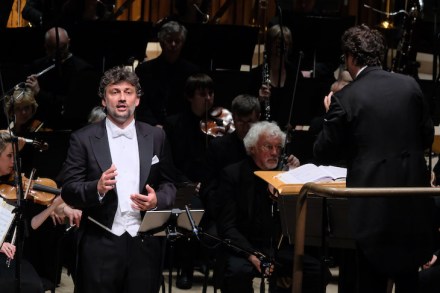
There’s one big problem with Wagner’s Siegfried, and the clue’s in the name. None of Wagner’s mature works hangs so completely upon a single individual. The character himself isn’t really the issue either, however troublesome he might superficially appear (a ‘randy overgrown schoolboy’, if you believe the misguided programme note for this Usher Hall performance). As so often, confusion falls away once you assume that Wagner — who, after all, wasn’t a complete amateur — knew what he was doing, and take Siegfried as the life-force his creator intended. Someone’s still got to sing the damn role, though, and that’s an Olympian challenge.

Teen spirit | 9 August 2018

In June, a 20-year-old man called Jahseh Onfroy was murdered after leaving a motorcycle dealership in Deerfield Beach, Florida. Onfroy was a rapper, who recorded under the name XXXTentacion, and he had become extraordinarily successful — his two albums had reached No. 2 and No. 1 in the US, despite moderate sales, because of the amount of online plays they had received. The day after he died, my social-media timelines were full of music writers discussing his death, and the tenor — from those with kids, at least — was clear. Post after post noted that XXXTentacion was a nasty piece of work, and few should mourn him, yet the writer’s 13- or 14- or 15-year-old was devastated by his death. XXXTentacion was, it is true, a nasty piece of work.

Lord of the dance

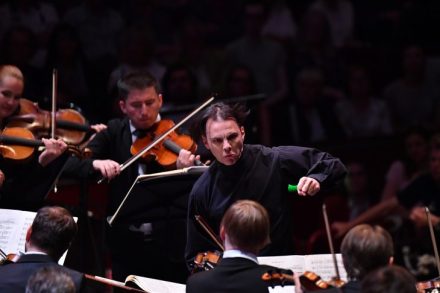
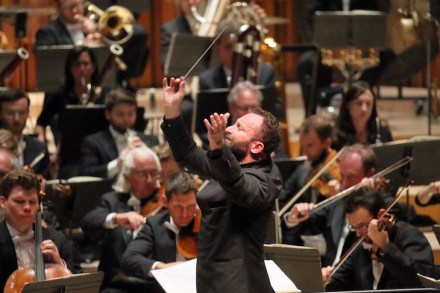
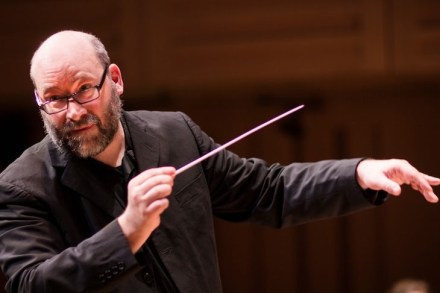
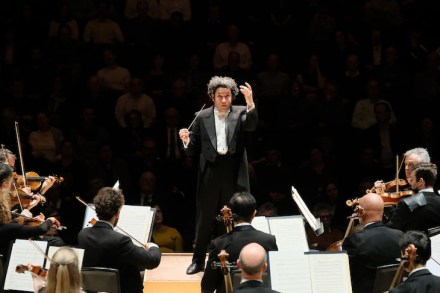
Some conductors conduct from the fingers — think of Gergiev’s convulsive gestures, flickering up and down the keyboard of an invisible piano in the air — while for others (check out footage of an elderly Richard Strauss) it all comes from the wrist: graceful, fluid and utterly detached. You could cut off Toscanini and poker-down-the-back-of-his-tail-coat Karajan (famously dismissed by fellow-conductor Fürtwangler as ‘just a time-beater’) at the waist and lose nothing from their precise gestures; but try the same trick with the irrepressible Dudamel or Kristjan Jarvi and the life-force of movements that start from the feet and shudder up through the entire body would be gone. With Teodor Currentzis it’s all about the knees.

Simon says… farewell

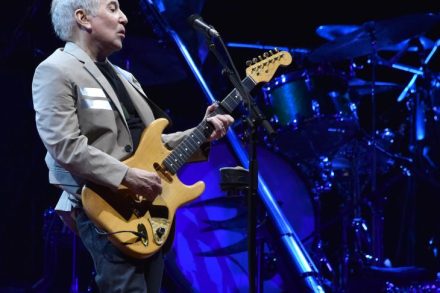
Early in 1987, a middle-aged woman approached me on the record counter of the Slough branch of Boots. ‘What do you have by Ladysmith Black Mambazo?’ she demanded. Nothing. Boots in Slough wasn’t big on South African isicathamiya choral music. ‘Well,’ she suggested, ‘you really ought to get their records in. They’re going to be huge.’ She was wrong, but I knew why she was so sure. Ladysmith Black Mambazo had been among the standout guests on Paul Simon’s Graceland, released a few months before. Graceland made Simon, by my reckoning, the first pop star who had emerged from the rock’n’roll era to make a major cultural impact across three decades. By the 1980s, the Stones had become just a touring machine. McCartney was adrift.

Knights at the opera

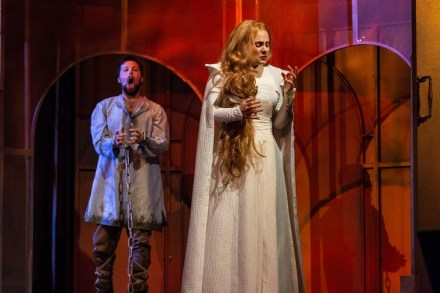
I’ve been trying to pinpoint the exact moment when it became impossible to take Mascagni’s Isabeau seriously. It wasn’t when the scenery jammed, leaving half the cast briefly trapped inside a revolving tower. These things happen, after all: you simply suppress thoughts of Spinal Tap and re-suspend disbelief. I don’t think it was the entry of a character called Ubaldo of Edinburgh either, though people were definitely starting to snigger. It wasn’t even the bit when Mascagni, called upon to depict a trotting horse orchestrally, deployed what sounded like a pair of coconut shells. A score that had started as a weak but listenable slice of art-nouveau medievalism descended — clip clop, clip clop! — into pure Monty Python and the Holy Grail.

The essential Kubelik

Rafael Kubelik is watching Wimbledon when I enter his suite at the Savoy. ‘Tennis fan?’ I ask, slightly surprised. He shakes his head. ‘No. Just her.’ It is 1983, the high summer of Martina Navratilova. ‘She will win,’ says Kubelik in the decisive tone that conductors use to save rehearsal time. ‘And one day my country will be free.’ He had flown out of Prague in February 1948 not daring to tell his wife and son until they landed in London that the communists had seized power and they could never return home. Sir Adrian Boult, a gent among time-beaters, offered to hand Kubelik his job with the BBC Symphony Orchestra, but there was no lack of bids for the exiled chief conductor of the Czech Philharmonic.

d/Deaf and dumb

All my life I’ve wanted to compose music, and now I’ve done it. I’ve written a sonata for solo flute that boasts two highly original features; it’s five hours long and must be performed by a badger. Though it took me only five minutes to write, my opus one is guaranteed to get through to the second round of the next competition for new composers sponsored by Sheffield University and the Centre for New Music. That’s because they operate a ‘two ticks’ policy, as the Scottish pianist Philip Sharp — possibly the only classical musician in Britain who calls himself a classical liberal — revealed in his blog earlier this year.

Mad about the girl

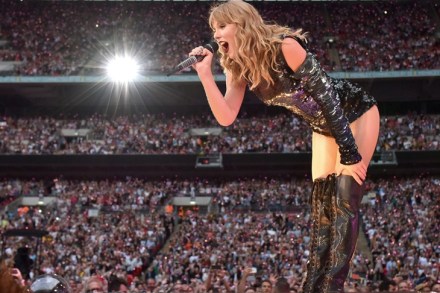
Imagine living Taylor Swift’s life. She has been staggeringly, life-dominatingly famous since she was 17. Not for a single moment in her entire adulthood (she’s now 28) has she been able to do any of the everyday things the rest of us take for granted. No wonder, then, that so much of what surrounds her seems so peculiar. No wonder her last two albums (2014’s fabulous 1989, last year’s rather less fabulous Reputation) have been dominated by songs about how other people perceive her life: every thing she does, as she is well aware, goes through a filter. She sings not about her love life — her relationships with the actors Tom Hiddleston and Joe Alwyn, the DJ Calvin Harris —but about how her love life is reported.

Playing dirty?

A young Korean, 22 years old, won the Dublin International Piano Competition last month. Nothing unusual about that. Koreans and Chinese, raised in a school of hard knocks and rounded off in western conservatories, are winning most prizes. A few — like the phenomenal Lauren Zhang who made child’s play of Prokofiev’s second piano concerto in the BBC Young Musician of the Year — are prodigious talents with bright futures ahead. Dublin’s winner Sae Yoon Chon is probably not one of them. His Prokofiev, an effortful shadow of Zhang’s electrification, trundled along at pedestrian pace with one or two stumbles. I was therefore surprised to see that Chon won. I also noticed that he is a student of the jury chairman.

The big chill | 7 June 2018

The picnic hamper’s open, the bubbly is chilled, and country house opera is starting to eat itself. When you arrive at the Wormsley Estate you enter a fantastic, baffling world. Figures in black tie stroll between topiary hedges in obedience to unstated rules, while serving staff hover a few paces behind, gliding silently in to reassert neatness and order. Children dressed in red (they’re from a local Scout group) pop up to help and guide. Then the new production of Die Zauberflöte begins and with a deft, surreal spin, the director Netia Jones bowls it all straight back at you. That’s a big part of the fun here. Jones has designed the production herself, and she clearly has quite a DVD collection.

Trivial pursuits | 7 June 2018

‘Is there an end [to this opera] that is not trivial?’ asks the Countess in her final bars of Richard Strauss’s last opera Capriccio. Given the previous two and a half hours, the answer would seem to be a decided no. It is a frothy confection even by the standards of his later operas, the better parts reminiscent of the Prologue to Ariadne auf Naxos and some of Arabella. One thing to be said in its defence is that Strauss’s writing it in 1941–2 is no criticism of him or of the work. People make a fuss about that, but do they think he should have produced an heroic piece — something he had already done, unfortunately — or another work in favour of peace, like the disastrous Friedenstag of 1938?

The lost boys

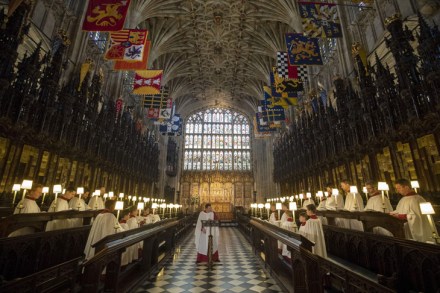
One by one, cathedrals have succumbed to the inevitable. In blazes of publicity, with front-page photographs of girls in cassocks in the cloisters, most deans and chapters have signalled their drive for equality of opportunity by inaugurating a girls’ choir to run alongside the boys’ one. So now, at the vast majority of our cathedrals, instead of boys singing up to eight services per week, the two top lines take turns, in varying ratios, with girls aged from eight to 18. The scheme has been working for 27 years, since Salisbury started the trend in 1991, and let me say from the outset: some of the girls’ top lines are extremely good and the boys’ top lines have adapted pretty well to the enforced job share.

War on waste

No wonder we have a problem with classical music in this country. The week started in celebration. The stats are in and it turns out that Radio 3’s breakfast show has enjoyed a rise of some 64,000 listeners — a not-to-be-sniffed-at11 per cent increase on last year. Meanwhile Classic FM’s listenership is also up significantly, including a startling 43 per cent rise in under-25s. Champagne (or perhaps something a little less effervescently elitist) all round. Why are all these new people tuning in? Musical diversity, apparently. That and a preference for music over chat, for radio that offers an escape from the emphatic, combative everyday of John Humphrys and his ilk over on Radio 4. Escape. Retreat.

Natural selection | 17 May 2018

‘All fish in flood and fowl of flight/ Be mirthful now and make melody’ writes the poet William Dunbar in the verses that Sir Charles Hubert Parry set to music as Ode on the Nativity. In David Matthews’s new Ninth Symphony, one particular fowl does exactly that. The symphony’s central movement begins on strings: an idyll of grey skies and shivering leaves. Matthews gradually introduces blocks of woodwind and brass, including a heavily stylised burst of birdsong.

Hype and anti-hype

Apparently it’s called ‘expectation management’. Pollux, Esa-Pekka Salonen’s new work for the Los Angeles Philharmonic Orchestra, takes its name from Greek myth. But as Salonen explains in his programme note, there’s more: lots more. It’s intended to form a diptych with a second piece called (naturally enough) Castor. It’s also part-inspired by Rilke’s Sonnets to Orpheus, and an image (Salonen compares it to Salvador Dali) of a tree growing out of an ear. And finally there’s a ‘mantra rhythm’, which Salonen heard played by a post-grunge band ‘during dinner in a restaurant in the 11th arrondissement of Paris’, which all sounds very civilised.

Hot and seedy

Salome is my favourite opera by Richard Strauss, the only one where there is no danger, at any point, of his lapsing into good taste, which there is to some degree in all his other operas, even if only momentarily. With Salome, from the opening quiet clarinet slithering upwards, and the luckless young Syrian Narraboth, later in the work to stab himself to death without anyone noticing, remarking for the first of many times how beautiful the princess Salome is tonight, we know we are in for a mischievous orgy of lust and violence. The work’s chromaticism isn’t used to make particular expressive points but to create and sustain an atmosphere so hot and seedy that we are prepared for anything to happen.

By ’eck, petal, it’s gorgeous

The opening of Mark Simpson’s new Cello Concerto is pure Hollywood. A fanfare in the low brass, an upwards rush and suddenly the screen floods with lush orchestral sound — as confident in its onward sweep as Star Wars or ‘Tara’s Theme’. Waiting, poised, in the middle of it all was the soloist Leonard Elschenbroich, for whom Simpson has said that he wanted to write a concerto that celebrated the cello’s ‘expressive and lyrical force’. He has, too. From the instant Elschenbroich entered, it felt right. The cello soared over a chiming marimba, like in Walton’s Cello Concerto. It lingered over its farewells, like in Elgar’s.

Bringing in the trash

Imagine the National inviting RuPaul to play Hamlet. Or Tate giving Beryl Cook a retrospective. The London Sinfonietta offered a similar cocktail of mischief and insanity in devoting the opening concert of its return to the Queen Elizabeth Hall, after a three-year refurbishment, to the nihilistic drag act David Hoyle. It had me grinning from ear to ear. Mostly from watching the other critics squirm. The woman next to me, an off-duty member of the Sinfonietta, was spitting words into her hand: ‘Patronising bollocks’. It was one of those nights. Half the audience stony-faced and tensed with anger. The other half creased double and whooping.

Mozart’s diminuendo?

Glenn Gould used to say that Mozart died too late rather than too early. The remark was intended to get up the nose of Mozart-lovers and it succeeded. What a nerve, coming from a pianist whose own reputation peaked in his early 20s, with his first Goldbergs, and was especially tarnished by his Mozart piano sonatas, which he butchered in order to demonstrate their supposed faults. But still... Gould wasn’t the first person to wonder if there was a slight diminuendo in Mozart’s creativity in the couple of years before he died in 1791 at the age of 35. The last concerto, for clarinet, has a wistful, naive perfection that doesn’t fire up the neural pathways to the same extent as say, the C minor Piano Concerto of 1786.

The sound of Iceland

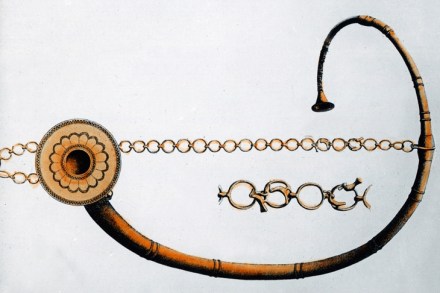
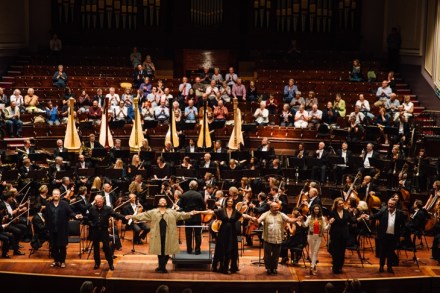
The lur is a horn, modelled in bronze after a number of 3,000-year-old instruments discovered at various archaeological sites across Scandinavia. Its unrefined yet distinctive sound — penetrating, direct and rough-edged — seems to rise up through the body rather than enter through the ears, like the stirring of a long-forgotten memory. The instrument, whose long neck reaches high above the heads of its players, is the first thing one hears in Jon Leifs’s second Edda oratorio. Two of them intone bare, open fifths, resonating against sustained low notes in the woodwind, rising up through the orchestral texture as it fills out. When the choir enters, they too sing in fifths, lurching from one bare harmony to another, incanting the coming of the Aesir, the Norse Gods.