Music

The last radical

A spectre haunted the first weekend of the City of Birmingham Symphony Orchestra’s Debussy Festival: the spectre of Richard Wagner. Debussy’s relationship with Wagner began with infatuation, and ended (as so often) in open rebellion. The young decadent who declared Parsifal ‘one of the loveliest monuments of sound ever raised to the serene glory of music’ later ranted that ‘30 million Boches cannot destroy French thought’ even while, tormented by cancer, he laboured to complete three late sonatas of near-infinite subtlety and grace. But there’s always the sense, as Debussy put it as early as 1890, that ‘I don’t see what can be done beyond Tristan’.
The making of the Moody Blues

Rarely has one irate punter so affected a band’s trajectory. Without the anger of the man who went to see the Moody Blues at the Fiesta Club in Stockton in 1966, the band would never have reinvented themselves, never have transformed into psychedelic pioneers, and next month they would not be travelling to America to be inducted into the Rock and Roll Hall of Fame, the honour bestowed annually upon those the US music business deems the most significant artists of all. The Moody Blues had been a moderately successful group — everyone who has ever listened to an oldies radio station knows their version of ‘Go Now’, a No. 1 single in 1964 — but by 1966 they were on the skids.

Bat squeaks and red herrings

Blue Gadoo is one of those cats whose face looks like it’s been bashed flat with a wok. He lives in New York, apparently, and his bulging eyes goggle out from Gerald Barry’s programme note for his new Organ Concerto. Check him out: the Guardian published the full note a day before the performance, which is only right because a Gerald Barry world première really ought to be national news. ‘I saw a photograph of him with a book called Sex and the Sacred in Wagner’s Tristan und Isolde,’ explains Barry. ‘By his expression I knew he was mourning the loss of atonality.’ There’s heaps more like that.

Gallic pieties

My two attempts to see Poulenc’s Dialogues des Carmélites at the Guildhall School were frustrated by the weather. Forced back on to my DVDs and CDs — vinyl, even — I took the opportunity to survey some of the manifestations and investigations of religious feeling in 20th-century French music. I began with Vincent d’Indy’s Fervaal, an opera he composed in 1895 which used to be referred to as ‘the French Parsifal’. Refreshing my memory of the plot by looking it up in The New Grove Dictionary of Opera, I was struck by the writer’s insistence that, while the work is heavily influenced by Wagner, ‘[d’Indy] had a better sense of dramatic pacing than Wagner, and more essential humanity’.

Sound judgment

I’m unlucky with Beethoven’s Appassionata Sonata. Twice in the past year I’ve bolted for the exit as soon the pianist crossed the finishing line. The first performance was phoned in to the Royal Festival Hall by a washed-out Maurizio Pollini. The second was musical chloroform, so dreary that it would be cruel to name the perpetrator. Cruel but fair, since I paid 30 quid for the ticket: Piers Lane. Fortunately he’d programmed it before the interval. By the time he’d moved on to Chopin I was back home listening to an Appassionata from another planet — simultaneously thoughtful and daring, the finale taken at such a perilous speed that it’s a miracle it didn’t come off the rails. The venue was Carnegie Hall, the year 1960.

No sense of direction

The new production of Bizet’s Carmen at the Royal Opera has received mixed reviews. It shouldn’t have done. They should have been unmitigatedly hostile, indignant, outraged — except that all those reactions would almost certainly have delighted the director, Barrie Kosky. What might please him less is the accusation of tedium, of making what often seems an unsinkable work into a colossal bore. This Carmen lasts for three-and-a-half hours and feels as long as that after the first 20 minutes. The whole and only set is a stage-wide flight of 16 steep stairs, up and down which the cast has to run at frightening speeds. As Jakub Hrusa, the conductor, dashed into the opening bars, hectic rather than brilliant, one wondered what might be added on-stage.

Get Carter | 1 February 2018

Das Rheingold at the Royal Festival Hall was, all told, a disappointment, but it might not have been had there been one or two more rehearsals, and a replacement of one of the singers. Vladimir Jurowski plans to perform the whole Ring cycle in due course with the LPO, but he needs to remember that memories are still very fresh indeed of Opera North’s transcendently wonderful performance at the same venue in 2016. That showed, among other things, that you can semi-stage the Ring cycle with some imaginative lighting, a minimum of meaningful movement and no props.

2017 and all that

This has not been an appalling year for pop music — it was better than 1984, for example, and 1961. Simply put, it was a year in search of a direction, one foot planted in 1980s cheese or bombast, the other still dipping its toe into the now mind-sapping boredom of EDM, with the occasional nod to a middle-class version of hip hop, a once garish and interesting subculture now utterly subsumed by the mainstream. And so everything rather swathed in both blandness and uncertainty — a year, then, without edge. Odd, really, considering the political climate. The biggest-selling albums of the year so far have come from the ubiquitous and unspeakable Ed Sheeran, Drake, Kendrick Lamar: folk, rap and hip hop assuaged into a kind of saccharine pap for the sake of mass acceptance.

Sugar rush | 7 December 2017

To get a flavour of Joseph Marx’s An Autumn Symphony, picture the confectionery counter in a grand Viennese café. Beneath the glass lies sweetness beyond imagining: towers of sponge cake, billows of whipped cream, and icing that shines red and orange. You wander down the display: there are Sachertortes, petits fours, candied angelica and glacé cherries. It goes on — dark chocolate glints over golden pastry and pink marzipan cushions swell beneath tangles of spun sugar. At which point you realise that what you really want is an espresso and a bread roll. And it looked like it would be such a treat, too.

Coming up for air | 30 November 2017

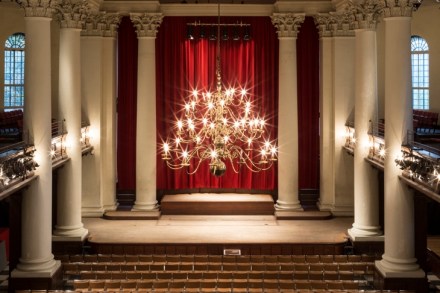
The musicians of Ensemble Grizzana are arranged in the usual way for their concert at St Paul’s Hall in Huddersfield. Another player, the percussionist Dmitra Lazaridou Chatzigoga, sits among them. The table beside her holds a small and rather beaten-up zither and a tray of the kind of objects you might find at the back of a spare kitchen drawer: two filter baskets from stove-top espresso machines, a tea-strainer, letter opener, a cog, a nut and bolt. Visitors to Huddersfield’s annual contemporary music festival, now in its 40th edition, are used to eccentricity. The presence of such a tray on the Wigmore Hall stage would raise eyebrows well beyond their usual range, but here it’s pretty much business as usual.

The Chinese are coming

On a bullet train out of Shanghai, a nuclear family catches my eye. The father, weather-beaten and wearing an ill-fitting suit, is clearly a working man. His wife, younger and city sleek, is dressed to impress. Their son, an only child, is four or five years old. Curious, I get talking and discover they are from a northern city, near the Russian border. What were they doing in Shanghai? Entering the boy in a piano competition. The number of children learning to play the piano in China varies from 40 to 60 million, depending on who you ask. Walk through a tower-block residential area in Shanghai at five in the afternoon and you can hear the clangour of many hands playing scales.

Man and boy | 23 November 2017

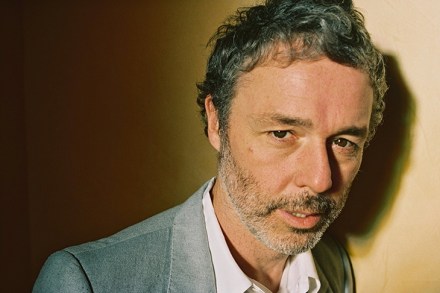
In the last week of October, the middle-aged Baxter Dury and the boy Baxter Dury were brought together. The 45-year-old man released his fifth album, Prince of Tears, his best so far. The five-year-old boy, meanwhile, appeared on the cover of New Boots and Panties!!, by his father Ian Dury, released in 1977, but re-released in a bells-and-whistles deluxe edition the same day Prince of Tears came out. You wouldn’t listen to Prince of Tears and conclude that Baxter was Ian’s son, but once you know they are related it becomes hard not to hear generational echoes. The opening song, ‘Miami’, is the kind of wrong-un character study that the elder Dury used to engage in, but updated for a colder age, in which the drugs and the delusions have changed.

Talking down to God

‘There is something enviable about the utter lack of inhibition with which Leonard Bernstein carries on,’ wrote the critic of the Boston Globe after the US première of Bernstein’s Third Symphony, Kaddish, in February 1964 — and looking at the forces arrayed at the Barbican, he had a point. In addition to the full LSO there was the London Symphony Chorus, a narrator, a solo soprano and the Tiffin Boys’ Choir. It barely fitted on stage. And if you thought the set-up was extravagant, a glance at Bernstein’s self-written text would probably have sent you screaming from the hall. ‘Lenny’ was classical music’s original bleeding-heart superstar: the man for whom Tom Wolfe coined the phrase ‘radical chic’.

Hearts and minds | 9 November 2017

Debussy’s Prélude à l’après-midi d’un faune begins with a sigh: a long, languorous exhalation played on the lower notes of a solo flute. The flute’s usual brightness and brilliance is gone. It’s a dusky, breathy sound, made of half-shades and velvet: the musical embodiment of luxe, calme et volupté. And it’s completely impossible to imitate on a piano. Not so much because of the tone-colour — the best pianists can create wonders — but because no piano in existence can play an unbroken melody. Wind and string players, like singers, produce and control a near-continuous stream of sound. A piano, though, is essentially a box of hammers. It hits notes, and then they decay.

Follow the lieder

If a symphony is, as Mahler famously put it, ‘like the world’, then songs and lieder are like seeing that world in Blake’s grain of sand. Their span may be short, but their emotional horizon is infinite — a lyric window on to an epic landscape. And yet there’s something about a song recital that sets up quite a different expectation. Maybe it’s the venues. Entering the Wigmore Hall or Oxford’s Holywell Music Room still feels like stepping into another, older world. Politeness, not passion, is the overriding sensation of well-heeled audiences with their well-thumbed programmes, prepared for 90 minutes of just-enough-but-not-too-much musical excitement.

Salon Strauss

An opera without singers, a Strauss orchestra of just 16, and an early music ensemble playing Mahler: welcome to the Oxford Lieder Festival, where familiar repertoire is getting a reboot this year thanks to some brilliantly ambitious programming. When it comes to classical music, we’re used to living in a bifurcated world. On the one hand, you have the contemporary ensembles: the orchestras, choirs and quartets performing pretty much everything from Mozart onwards. And on the other the early music groups, whose territory is everything that’s left — Bach, Byrd, Hildegard of Bingen. It’s only fairly recently, and thanks to groups such as the Orchestra of the Age of Enlightenment, that this crude, artificial divide has been challenged.

Make mine a double

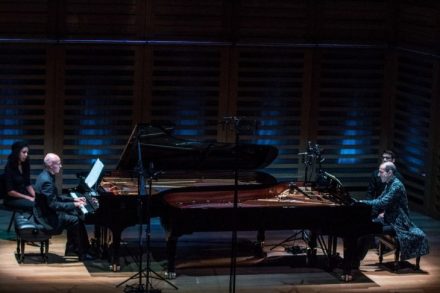
If two concert pianists are performing a work written for two grand pianos, there are two ways you can position the instruments. They can sit side by side, an arrangement known as ‘twin beds’. Or they can be slotted together so the performers face each other. That’s called a ‘69’. When Martha Argerich and Stephen Kovacevich play together, they opt for twin beds. Appropriately, you might think, since they’re divorced — but really it’s because Kovacevich insists on sitting so low that Argerich can’t see his head if she’s opposite him. With everyone else she prefers a 69, as do most pianists: it’s easier to make eye contact.

Mourning glory

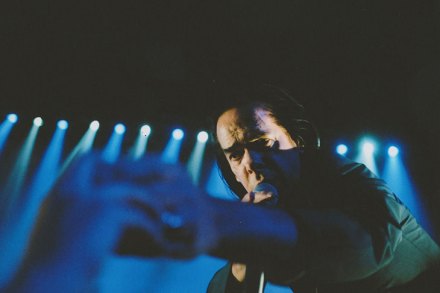
  On the face of it, Nick Cave & the Bad Seeds aren’t exactly a natural fit with the O2. Cave’s songs range from the thrillingly cacophonous to the quietly lovely. But with their recurring themes of death, violence and religion, and a muse that rarely leads Cave in the direction of the mainstream, very few have ever seemed particularly arena-friendly. And that was before his latest album, Skeleton Tree, which forms the basis of his current tour — and which Cave completed after his 15-year-old son Arthur died falling from a cliff in Brighton. Cave has warned against seeing the album as a direct response to the tragedy, emphasising that many tracks were written before it happened.

Vice and virtue

‘Can the ultimate betrayal ever be forgiven?’ screams the publicity for The Judas Passion, transforming a Biblical drama into a spears-and-sandals soap opera in a sentence. Thankfully, this really isn’t the premise of composer Sally Beamish and poet David Harsent’s new oratorio. Instead, the two authors pose a more interesting problem: is betrayal still betrayal when it’s divinely ordained, the price of salvation? A performance of Mahler’s Fourth Symphony this week celebrated the innocent joys of heaven; The Judas Passion invited us to count their sinful cost. You see them before you hear them. The 30 pieces of silver catch the light as they hang suspended as part of the ‘Judas chime’, an instrument created especially for The Judas Passion.

Sound and vision | 28 September 2017

To get a reminder of how strange the 1970s were, there’s no need to plough through lengthy social and political histories. Go instead to YouTube, and watch the public-information films made for schoolchildren. Take Lonely Water (1973), in which Donald Pleasence provides the voice of death, stalking careless children and dragging them to a watery grave. There’s Apaches (1977), in which kids playing on a farm suffer various recondite forms of agricultural death (falling under the wheels of a moving tractor, drowning in slurry). Or try my personal nightmare, The Finishing Line (1977); a school sports day, played out on a railway line, which ends with the traditional sprint through a tunnel pursued by a train and the bodies of dozens of dead children laid out on the track.