Music

The Rite stuff

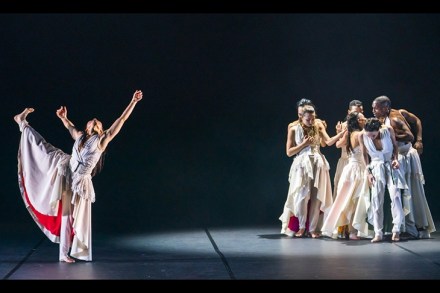
It was Stravinsky himself who suggested that, in order to preserve its difficulty, the opening bassoon solo of The Rite of Spring should be raised by a semitone every decade. And it was a performance by Birmingham Royal Ballet in 2005 that convinced me that he wasn’t entirely joking. The audience nattered away over the opening bars; the unlucky bassoonist wobbled and cracked. Clearly, this orchestra was not remotely prepared for what was about to hit it. Rhythms splintered like shrapnel and misplaced entries spattered across every silence. As they hurtled into the final Sacrificial Dance, you could almost hear the prayers of musicians audibly struggling simply to hang on. It’s still, without question, the most thrilling Rite of Spring I’ve ever heard.
The Berlioz problem

Hector Berlioz was born on 11 December 1803 in rural Isère. ‘During the months which preceded my birth my mother never dreamed, as Virgil’s did, that she was about to bring forth a laurel branch,’ he writes in his Memoirs. ‘This is extraordinary, I agree, but it is true… Can it be that our age is lacking in poetry?’ And so on, for nearly 600 candid, facetious, outspoken pages. Berlioz’s Memoirs are the inner voice of the Romantic generation as you’ve always imagined it, and everyone who’s interested in music in the 19th century — no, scrub that, everyone who’s interested in European culture — should read them.

Licensed to trill

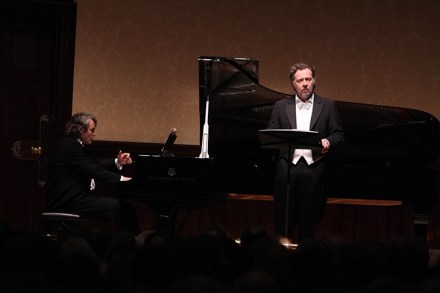
Broadly speaking, there are two kinds of approach to performing Schubert’s Winterreise, though sometimes there’s doubt or dispute about which one a given performer has taken. According to Jonas Kaufmann, Hans Hotter, for me the greatest of all performers of the cycle, as of so much else, insisted that the performer should be a narrator, not the Wanderer himself. But Kaufmann rightly insisted that Hotter’s various recordings are dramatic, with Hotter enacting, not narrating the monodrama. So it’s not always easy to tell. There was no doubt, though, in Christian Gerhaher’s recent performance of the cycle at the Wigmore Hall, with his long-time accompanist Gerold Huber, that we were witnessing the journey and sufferings presented directly.

It’s a girl thing

The teenage girls are often right. They were right about Sinatra and they were right about Elvis. They were right about the Beatles and the Stones. They were right, too, about the 1975, whose emergence in 2013 playing tuneful and accessible pop-rock with unusually self-questioning lyrics was driven by a large and voluble following among those teenage girls. Naturally, that led a swathe of male critics to write them off. One dismissed them on the baffling grounds that their songs were ‘ridiculously catchy’, as if that were a bad thing; the NME proclaimed them the worst band in the world Six years on, the critics have caught up.

Nasty, brutish and brilliant

If you take awards seriously (which of course you shouldn’t) you could argue that Rebecca Saunders is now Britain’s most important living composer. Last week she won music’s Nobel, the Ernst von Siemens prize. €250,000. And its record is pretty good — if you ignore 1974 (Britten) and 1987 (Bernstein). There are many reasons to love Saunders. Her post-concert talk was terrifically cheering. Explaining why she rarely writes vocal compositions, she told us blithely that it was because she ‘didn’t have anything to say’: ‘I don’t want my works to mean anything.’ Quite right. Meaning should be to music what shame is to Theresa May. A distant and hazy thing.

Mirror, mirror…

We increasingly accept the collision between life and art. Whether we’re puzzling over the real identity of Elena Ferrante, choosing our own adventure in Bandersnatch, or boycotting the latest Polanski film, we’re buying into culture that’s more mirror than window. But wasn’t it ever thus? It’s a case Barbara Strozzi would certainly argue. The most-published Italian composer of her age, a musician whose work could stand alongside Cavalli, Rossi, even Monteverdi, was caught throughout her career in the double-bind of biography. You have only to look at her famous portrait — gazing insolently out at the viewer, breast bared — to see the erotics of performance at work.

High and mighty | 13 December 2018

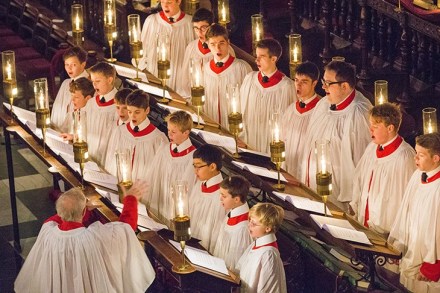
In this 200th anniversary of the birth of Mrs C.F. Alexander, author of ‘Once in Royal David’s City’, all of us for whom Christmas properly begins when we hear the treble solo of verse one on Christmas Eve should remember her and be thankful. She was born Cecil Frances Humphreys, ‘Fanny’, to a successful land agent in Dublin in 1818, and she seems to have been genuinely mild, obedient, good as He. From an early age she had an instinctive liking for vicars, rectors, deans, bishops and archbishops, although she was shy and at her most relaxed with children and dogs. She eventually married a Church of Ireland rector of her own, William Alexander, who later became a bishop, and they lived a long, happy life of parenthood and charitable works.

The saddest music in the world

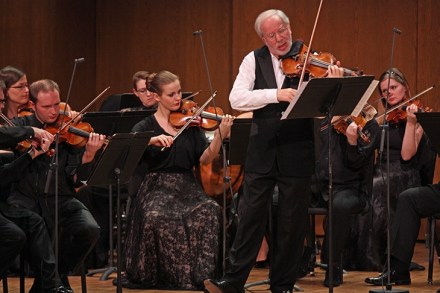
It’s a strange compliment to pay a composer — that the most profound impression their music makes is of an absence. I can’t claim much prior experience of the composer Mieczyslaw Weinberg, who died in 1996: a vague sense of a Shostakovich-like figure who had a bad time of it under Stalin, and the composer of an opera, The Passenger, for which great claims are made by people whose judgment I respect but who probably, on balance, spend too much time with their heads in Eastern Europe. By the end of the first evening of this ‘Weinberg Weekend’, devised by Mirga Grazinyte-Tyla and the City of Birmingham Symphony Orchestra, I felt slightly ashamed about that. Gidon Kremer played his own violin transcription of Weinberg’s 24 Preludes for solo cello.

Britten’s Blackadder moment

‘What passing-bells for these who die as cattle?’ We’ve heard a lot, lately, of the knell that tolls through the opening bars of Benjamin Britten’s War Requiem, and at Liverpool’s Anglican cathedral it was played on actual church bells. The Royal Liverpool Philharmonic Orchestra’s percussionist Graham Johns has had a set specially cast, and as he struck them video screens relayed the moment all the way down the cathedral’s length. The orchestra was a one-off, assembled half-and-half from the RLPO and the NDR Radiophilharmonie Hannover (the conductor Andrew Manze holds positions in both cities), and this was a major civic occasion, attended by gold chains of all sizes and preceded by speeches from city worthies.

Once in a lifetime

Let’s get the ‘was-it-good?’ stuff out of the way first. Yes, it was good. It was better than good. It was incredible, fabulous, dazzling. It was whatever adjective you want to throw at it. I can’t recall seeing a more engrossing pop production, ever. You don’t just get great songs — come on, you’re not going to quibble about ‘Once in a Lifetime’, or ‘Burning Down the House’, or ‘Slippery People’, or ‘Road to Nowhere’, are you? — played by brilliant musicians. You get them presented in a way no one has thought to present a rock show before. That way was to remove all fixed points from the stage.

Conduct unbecoming | 18 October 2018

The morning after the first night of Ronald Harwood’s Taking Sides in May 1995, I received a call from Otto Klemperer’s daughter. ‘Tell me,’ said Lotte, ‘is it true that, in Mr Harwood’s play, the denazification attorney addressed Dr Furtwängler as “Wilhelm”, or even “Willi”?’ I said something in reply about dramatic licence and the interrogator being, erm, an American. ‘No one,’ thundered Lotte Klemperer down the phone, ‘ever called my father “Otto”.’ Appearances meant everything to the generation of great conductors that survived the Nazi era, whether as anxious refugees or, in the case of the Berlin Philharmonic chief, as a cultural poster boy for a criminal regime.

Almond ayes

When Soft Cell first appeared on Top of the Pops in summer 1981, miming along to their version of Gloria Jones’s ‘Tainted Love’, it felt like a moment of palpable newness. Well, it certainly did if you were prepubescent and really had no idea what sex actually was. Romantic love — in either its glory or disappointment — was the everyday subject of the pop song, but here was this funny little fella in black, with studded accessories, singing of a love that was ‘tainted’. I had no idea what he got up to when the lights went out. I knew that homosexuality existed — in the same way that California condors existed, and Olympic athletes existed.

The write stuff | 20 September 2018

No one any longer denies the immense significance of Wagner’s musical-dramatic achievement, even if they find it repellent. But his reputation as a writer — of operatic texts, autobiographical and biographical memoirs, practical essays on how to conduct particular pieces, vast and less vast theoretical works, ranging from speculations on opera and climate to theologico-political musings — is not high. Nor should it be, except for the more ‘occasional’ pieces. He was in fact a major contributor to mauvaises lettres, and no kind of systematic thinker, however much he might have liked to be. His only prose that is consistently readable comes in his letters, some of them enormous, all of them full of life and colour.

Bingo with Birtwistle

A pregnant silence, a peaty belch from the tuba, and the scrape of brass on brass as gears lock into position and judder forward. It’s almost worth making a bingo card for a Harrison Birtwistle première these days, and I’m not complaining. His last big orchestral work, Deep Time, showed worrying signs of him mellowing into some sort of late period. Not here though, he isn’t. Grinding brass cogwheels? Tick. Sudden stillnesses, punctuated by deadpan creakings and poppings? Tick. Primal screeches from the woodwinds, jarring against chords of millstone grit? House!

Britten at war

‘I feel I have learned lots about what not to write for the theatre…’ There’s a prevailing idea that the ever-precocious Benjamin Britten was an operatic natural — a composer whose gift sprang fully formed with the première of Peter Grimes in 1945. But that’s not strictly true. Go back just a few years to 1941 and you’ll find Paul Bunyan — the oversized skeleton in Britten’s musical closet. Rewind those few years and Britten, darling of post-war England, was all but a national pariah. A pacifist who had escaped conscription by travelling to America, he was forced to take work wherever he could find it.

Striking the right note

I was at a funeral the other day at which the music was so inspiring that I struggled to feel sad. That’s fair enough, you may think — but the person in the coffin was my own mother. This is a difficult point to explain in cold print, but there are reasons why I wasn’t grief-stricken at the death of the person who meant most to me in the world. My mother Pamela loved my sister and me with a passion; she radiated holiness, but in an unobtrusively English way. She was also a very private person, sometimes driven to distraction by her attention-seeking son. She never sought — and never received — any official recognition of her decades of service to the Catholic Church.

The legend of Lawrence

‘I could still be a pop star,’ says Lawrence, sitting on a footstool in his council flat, high up in a tower block above London EC1. ‘I know I’m not going to be a person who has a million hits on the internet. Do they call them hits? Views, or streams, whatever they are. I’m not going to be that person, but I still think I could have a hit record. For me a song like “Relative Poverty” is a song for this generation, and I don’t know why it shouldn’t be an anthem for today.’ Lawrence is now 57, and he has been trying (and failing) to become a pop star since 1979.

The Bruckner effect

The lady behind me on Kensington Gore clearly felt that she owed her friend an apology: ‘It’s Bruckner. I don’t know how that happened.’ I felt for her. ‘It’s Nézet-Séguin and the Rotterdam Phil,’ I’d told a succession of my own musical friends. They’d seemed interested. Since the youngish Canadian conductor Yannick Nézet-Séguin took over at the New York Metropolitan Opera, he’s vaulted on to the A-list, and while the Rotterdam Philharmonic isn’t a super-orchestra, exactly, people do dimly recall that it was conducted by Valery Gergiev, back when that was still something to boast about. So, the inevitable question: what are they playing?

Gypsy king

Looney Tunes was always at its best when soundtracked by a Hungarian gypsy dance. (Watch ‘Pigs in a Polka’ if you don’t believe me.) It’s music that was made to chase small cartoon animals — and terrify conductors. The gunshot syncopations. The hand-break turns in tempi. The banana-skin portamenti and rubato ravines… Musical tripwires everywhere. Nothing to faze conductor Ivan Fischer, however. Last week at the Proms, with the Budapest Festival Orchestra, Fischer was giving a guided tour of Hungarian gypsy music and its century-long cohabitation with classical music. It was a masterclass.

Beggar’s belief

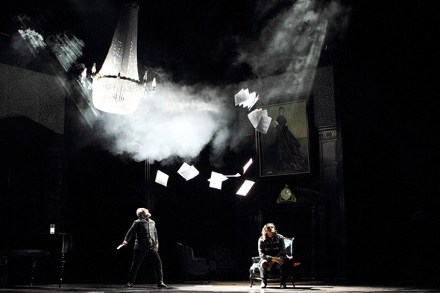
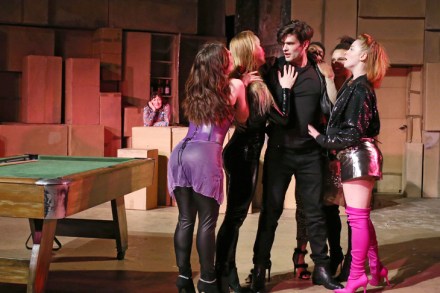
Robert Carsen’s new updating of The Beggar’s Opera is a coke-snorting, trash-talking, breakdancing, palm-greasing, skirt-hiking, rule-breaking affair — and every bit as wearyingly tedious as that sounds. Leaving behind the work’s original 18th-century setting, Carsen sets out boldly for present-day London (where the streets are paved with Brexit-related comedy gold), but in Ian Burton’s rewrite seems to land somewhere circa 1990. In a production originally created for Paris’s Théâtre des Bouffes du Nord, Peachum, Macheath and their band of criminal lowlifes are the kind of East End cockney schemers even DCI Jane Tennison would have found it nostalgic to investigate, while corrupt cop Lockit is more Pirates of Penzance than McMafia.