Music

Peter Phillips is mugged by a gang of Praetorius-loving six-year-old girls in China

We have read about the remarkable opening up of China in recent years: how many people live there and how good they are at business, perhaps finding the prospect of them rushing into our world rather daunting. However, a part of this process has been the sudden curiosity there for western art-forms. Not long ago the idea of a tour of China by a European early music group would have seemed completely fantastical. What space was there in a country which for many years had allowed only eight ‘model plays’ to be publicly staged — all of them about the achievements of the army — for the votive antiphons of Tallis, or the Passions of Bach? Not everyone in that vast country is ready for such delicacies yet, but a light has begun to shine.

The drunk conductor who ruined Rachmaninov’s career

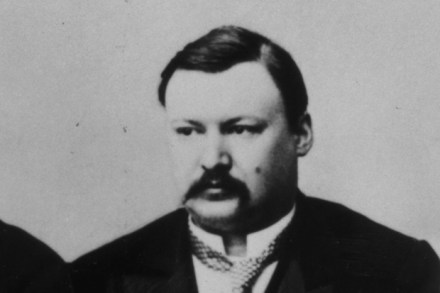
Would musical history have turned out differently if Alexander Glazunov hadn’t been smashed out of his wits when he conducted the first performance of Rachmaninov’s Symphony No. 1 in D minor? The best of Glazunov’s own neatly carpentered symphonies hover on the verge of greatness. Perhaps if he hadn’t been such a toper — swigging from bottles of spirits during lectures at the St Petersburg Conservatory, where he was director — they would do more than hover. Unfortunately, his drinking didn’t just screw up his own career. The 23-year-old Sergei Rachmaninov had spent two years working on his first symphony, whose climaxes erupt from melodic cells borrowed from Orthodox chant. Not that Glazunov would have noticed. He barely glanced at the score before the premiere.

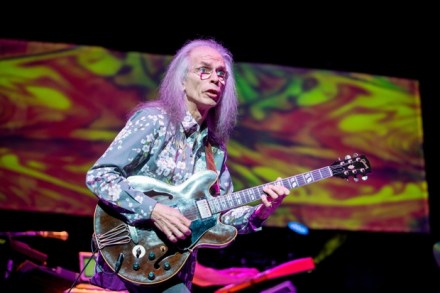
Why Yes are still the funniest rock band in the world (although Radiohead are catching up)

My favourite comment about the Scottish referendum came from the eminent comedian and novelist David Baddiel. ‘What if Yes wins, but due to a typographical error, the prog-rock band gets in and Jon Anderson becomes First Minister?’ You probably had to be there to find this funny, and in this case ‘there’ is the early 1970s. Having been there myself, I too remember Yes as the most intrinsically amusing of progressive bands, along with Emerson, Lake and Palmer. Genesis were quite funny in their early days, when Peter Gabriel dressed up as a flower. Pink Floyd weren’t funny, although Roger Waters is. The Beatles aren’t funny any more, but the Rolling Stones are as hilarious as ever. Many prominent 1980s acts — U2, Duran Duran, Spandau Ballet — were sidesplitting.

Christopher Hogwood: the absolutist of early music

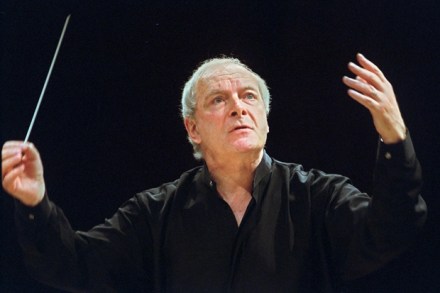
The death of Christopher Hogwood has deprived the world of the most successful exponent of early music there has ever been, or is ever likely to be. It has also reduced by one the quartet of conductors who have been called ‘the Class of ’73’, a term coined by Nick Wilson in a recent study of the early-music revolution of the 1970s and 80s. It refers to four groups that were founded in that year that are held to have changed the face of modern concert-giving: Hogwood and the Academy of Ancient Music; Trevor Pinnock and his English Concert; Andrew Parrott’s Taverner Choir; and my own Tallis Scholars. Of these it was Hogwood who had the most immediate impact and commercial success. It is also fair to say that his recordings are the most numerous, but least played, of all the Class.

If the idea of disturbing kraut-punk sung by a troll appeals, you’ll love The Fall

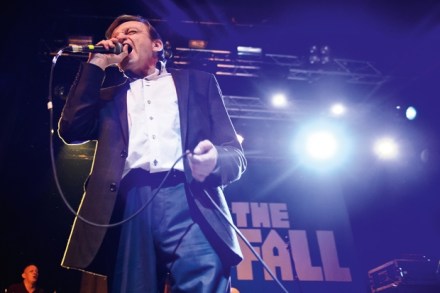
I had a fair idea of what I was in for when I went to see The Fall at Brixton’s Electric last Friday. They’re a middle-aged band from Manchester, just like the Stone Roses, or the various incarnations of New Order. In journalese, this almost makes them ‘Heritage Rock’. I can’t remember when people started using this term, but it’s gone from the repertoire of niche music writing to being A Thing. You can’t go a week without some old beat combo or other announcing their re-formation, and in return they get a sort of protected status. Old rock music has become to the British what films about unfaithful middle-class couples are to the French. That is, culturally important but not very interesting. Consummately psychotic: Mark E.

Wedding music lives or dies at the hands of the organist

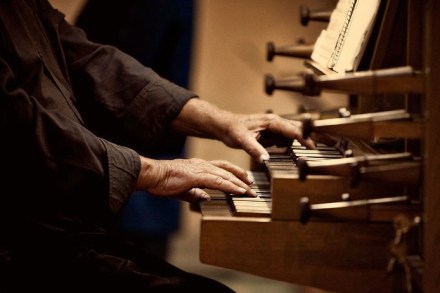
A few weeks ago I was at the perfect wedding. My young friend Will Heaven, a comment editor at the Telegraph, married the beautiful Lida Mirzaii, his girlfriend since university. The service was in Wardour Chapel in Wiltshire, a neoclassical masterpiece described by Pevsner as ‘so grand in its decoration that it seems consciously to express the spirit of the Catholic ecclesia triumphans’. Most of the guests were in their mid-twenties and doing their best to control their boisterousness. The Oratorian priest wore an antique cope; if it had been a Mass he might have been allowed to borrow the chasuble in the sacristy believed to have been worn by Cardinal Wolsey at the Field of the Cloth of Gold. Will was a boy chorister at Salisbury so the choice of hymns was spot on.

The secret to a long and happy pop career? Don’t die

As everybody in the world except me seems to have seen Kate Bush’s live shows — against all apparent arithmetical sense — these have been gloomy weeks in the primary Berkmann residence. Even the mother of my children managed to acquire a last-minute freebie, even though she only really likes the first two or three albums and Bush didn’t play those. Admittedly, I would have had more chance of getting tickets if I had applied for some, but no sensible English male turns down the chance to sulk like the teenager he most certainly was when he stuck the poster that came free with Lionheart on his bedroom wall. No doubt everyone under 40 thinks we have all gone mad. If so, it’s a madness that was seeded a long time ago.

Enough ‘themes’ at festivals

One might have expected the streets of Edinburgh, especially at festival time, to bear some evidence of the political struggle currently engulfing our nation, but in fact there was none at all. Apparently, the arguments for and against independence have to be traded on the doorstep and not in the street, which, to those visitors who anticipated fireworks, almost amounted to a vacuum. However, it meant that the streets could be made over to the customary bewildering number of stand-ups, advertisements, students handing out leaflets (they come at you these days on roller-skates, pirouetting as they approach), and thespians of every type.

Kate Bush Hammersmith Apollo review: Still crazy after all these years

It says something about Kate Bush’s standing in the music world that, perhaps uniquely in the history of long-awaited live comebacks, nobody has suggested — or possibly even thought — that her motives might be financial. After all, this is a woman who’s stuck to her artistic guns ever since, aged 19, she defied EMI by insisting that her first single should be the abidingly peculiar ‘Wuthering Heights’. So, a famous 35 years after her last stage appearance, how on earth could she live up to such a fiercely idiosyncratic career, now regarded with almost universal awe? Well, at first the answer seemed to be by doing the most unexpected thing of all: serving up a bog-standard rock concert.

My daughter wants to know why you haven’t heard of the Jayhawks

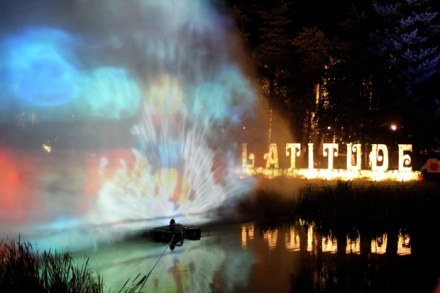
One of the many delightful aspects of having children is that you can get them to do things you are too old, lazy or important to do yourself. My disinclination to attend any sort of music festival, owing to a distaste for tents, chemical lavatories, mud and other people, has happily not passed down to my daughter, aged 15. Last month she went with a group of like-minded 15-year-olds, and large quantities of cider, to Latitude, which everyone says is much nicer than Glastonbury, if only because it doesn’t sprawl across several counties like a giant upper-middle-class shantytown. (The Guardian published an aerial photo of Glastonbury this year. It looked like Mexico City, only with a higher incidence of red trousers.

Was Elgar’s The Kingdom an attempt to write a religious Ring Cycle?

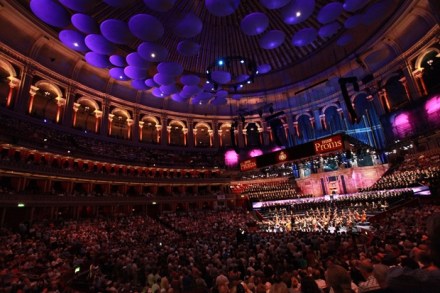
To go from the second day of the England v. India Test match at Lord’s to the Albert Hall for the opening night of the Proms was to make a journey that a chosen few might find enviable. Nonetheless, different though the two activities are, there were some similarities. For example, the arena at the Albert Hall, where the Promenaders stand, fills up more or less to capacity before the seats around it attract a single occupant, these seats being taken at the last possible minute before the start of the concert. Exactly the same thing happens at Lord’s: the pavilion is filled while the rest of the ground remains empty until seconds before the start of play.

Is Handel’s Messiah anti-Semitic?

The Hallelujah Chorus crops up in the most unexpected places, says Michael Marissen in his new book about Handel’s Messiah. For example, it’s used in a TV ad ‘depicting frantic bears’ ecstatic relief in chancing upon Charmin toilet paper in the woods’. That’s an amusing detail: it lingers in the mind. But, as you can work out from the title, Tainted Glory in Handel’s Messiah isn’t intended to be a fun read. Marissen, an American specialist in baroque music, has been taking a long, hard look at the oratorio’s libretto, adapted from the Old and New Testaments by Charles Jennens, a gentleman scholar.

How do you like your pop: clean, dirty or downright soap-shy?

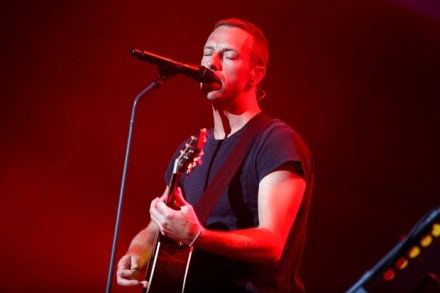
I am still listening to the new Coldplay album, and liking it more and more, and not just because everyone keeps telling me how terrible it is. There is perversity in all enthusiasm, for sure, but the unanimity of critical disapproval in this case seems to have mixed with popular ennui to create a bracing cocktail of contempt and contumely. It just makes me want to play the damn thing even louder. Ghost Stories (Parlophone) is the Millwall of break-up albums. If you don’t like it, it doesn’t care. Maybe it’s because break-up albums are supposed to be dogged, downbeat affairs, recorded in one take in some grotty old studio with a 1950s mixing desk and the door hanging off its hinges. But this one is luscious, expensively recorded and clear as a bell.

A Glastonbury adventure with Led Zeppelin, Lana del Rey, drug dealers – and my son

‘Charlie. E. Powder,’ said the friendly, helpful man working his way through the crowd during the mindblowing Friday-night headline set by the American dubstep DJ Skrillex. I looked wistfully at his man-bag of chemical  enhancers. Skrillex was good. Maybe the best electronic act I’ve seen in 24 years of Glastonburies. (‘Slivers of mutant dancehall, booty house, Daft Punk arpeggios and big pop choruses, all mangled into oblivion with his signature sub-bass wobbles,’ as the Guardian’s critic so rightly put it.) But imagine just how much more trippy that Transformers light show would look if...‘Dad?’ said Boy, next to me. ‘I’m really tired. Can we go soon?’ Yes.

Roger Wright’s legacy at Radio Three – and his one big mistake

Roger Wright’s precipitate departure from both Radio Three and the Proms came as a surprise. At first the news was that he would go at the end of the season, but then it became apparent he was leaving at the beginning of it. Whatever his reasons may have been — and one sympathises with the idea of a carefree summer holiday after all these years — it brings Edward Blakeman, who becomes acting director of the Proms during the interregnum, deservedly into the limelight. Wright, meanwhile, will become the chief executive of the Aldeburgh Festival from September. Wright has been the controller of Radio Three since 1998, and has been in charge of the Proms since 2007.

I think I’ve found the new Alfred Brendel

Can you tell how intelligent a musician is by listening to him play? Last year I discovered a recording of Schumann’s Piano Sonata No. 3 in F minor, a sprawling and spidery work that can fall apart even under the nimblest fingers. Not this time. Francesco Piemontesi, a young Swiss–Italian pianist, totally nails it. Believe me, it takes some nailing. In the opening Allegro brillante and the final Prestissimo possibile, Schumann stretches lyrical melodies across madcap scales and arpeggios that dart in every direction. The rhythms are insistently dotted: Schumann at his most obsessive-compulsive. There are lots of crunching gear changes and scampering pianissimo passages that turn to mush if the pianist seeks safety in the sustaining pedal.

Has any band of the past 20 years been as consistently irritating as Coldplay?

It’s a long time, a very, very long time, since I bought a Coldplay album. Has any band of the past 20 years been so consistently irritating? Oasis were aggressively annoying, which isn’t the same thing. I quite liked the first Coldplay album, particularly ‘Trouble’, and A Rush of Blood to the Head was a fine record, full of the sense of an ambitious young band finding out what they were capable of. After that, though, they made the fatal Faustian decision to become the biggest band in the world. Although I have made it my business to hear subsequent albums, partly out of curiosity and partly to confirm my prejudices, actual folding money has not been involved.

Why it’s good to remember that Bach could be a tedious old windbag

When I was first learning about classical music, 50 years ago, the scene was more streamlined than it is now. Beethoven was king, with Brahms and Mozart next in line, and Haydn slowly establishing himself. Mahler was the new kid on the block; Bruckner was largely unknown and mistrusted. If one wanted the full symphony orchestra experience in late romantic music, it was to Tchaikovsky that most promoters turned. Tchaikovsky cycles, Beethoven cycles, Haydn’s ‘London’ symphonies, Mozart’s last three symphonies were the way to guarantee a crowd, with general knowledge of all Beethoven’s music — string quartets, piano trios, Lieder — at an all-time high. Now Bach is king.

I could be dead soon. What should I listen to?

If I live as long as my father, I’ll be checking out on 9 December 2017. Since every man in my family drops dead of a heart attack at a ridiculously young age, it’s not inconceivable. I mean, obviously the chances of me dying on precisely that day are tiny, but it’s my ballpark figure. This faces me with big questions. Given that I’m probably croaking soon anyway, should I try smack? (I mean, try it properly: the only time I was handed a heroin pipe, by a professor, I was far too scared to inhale.) Do I need to worry about my miserably empty pension pot? Is there a God? And if there is, should I stop being so monstrously selfish? Big questions, as I say, but I still shunt them to the back of my mind.

One man’s guilty pleasure is another’s palpable greatness

The film critic Anne Billson wrote a typically pugnacious piece recently about the phrase ‘guilty pleasures’, which has spread like Japanese knotweed beyond its origins in pop music and taken root throughout popular culture. In film a guilty pleasure would be something like Four Weddings and a Funeral, which we’re not ‘supposed’ to like because it’s not La Règle du Jeu, but which we do like very much because it’s fab. My nomination in this category, and a possible reason my career as a film critic never quite reached the heights, would be Star Trek II: The Wrath of Khan.