Music

Morrissey can’t even moan properly — here’s a frontman who can

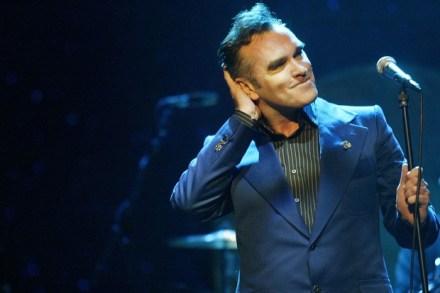
There is much to be said for Schadenfreude. (If it was edible, it would be a meal in a very expensive restaurant, for which someone else was paying.) So it’s probably inadvertently that Morrissey has added to the gaiety of nations this past fortnight with the publication of his autobiography, winningly titled Autobiography. So catastrophically bad does the book turn out to be that Morrissey-loathing critics have queued up to give it (and him) a damn good thrashing. It has been a long time coming. While it has always been clear that The Smiths were every bit as good as we thought they were at the time, it is even clearer now that Morrissey’s symbiotic working partnership with Johnny Marr was the reason why.
How to conduct a Tallis motet in a cardboard cathedral

To undertake a concert tour of New Zealand’s cathedrals at the moment is to be constantly reminded of the destructive power of nature and how dogged people can be when the chips are down. The list of buildings that the earthquake of February 2011 destroyed in the centre of Christ-church includes the Anglican cathedral, which, shorn of its bell tower and west end, will have to be entirely pulled down sooner or later. The square outside it looks like a war zone without the bullet holes. Other cities such as Napier, itself rebuilt after an earthquake in 1931 and made into an Art Deco jewel, are facing up to the reality of having to dismantle their principal buildings to make them quake-proof, as has happened in Wellington.

‘I was an arrogant 18-year-old’: Daniel Harding on growing up

‘Have a look at this,’ says Daniel Harding, goggle-eyed, between mouthfuls of salmon. The pictures on his smartphone show Claudio Abbado, one of his mentors, conducting the Berlin Philharmonic in Schumann’s Scenes from Faust, a work that gets closer to Harding’s musical personality than any other, which he has just recorded with the Bavarian Radio Symphony Orchestra, and which he will conduct in Berlin in December. ‘Doing his prep’, you might call it. If ever a conductor was a child of his time it is Harding, who, at 38, remains engagingly youthful and ever curious, hence the use of technology to augment his preparation. It is 20 years now since the schoolboy trumpeter left Chetham’s School in Manchester, trailing clouds of glory.

Damian Thompson: I may be in danger of becoming an opera queen

It’s taken 40 years, but I’ve finally developed a taste for the one type of classical music that I couldn’t stand. And last week I broke the news to the man responsible: Roger Hewland, owner of Gramex, the world’s finest second-hand classical CD and record shop, just behind Waterloo Station. ‘Roger, I’ve suddenly got into Italian opera,’ I said. He raised an eyebrow in mock concern. ‘Oh dear, now that is serious. It’s an incurable addiction and [rubbing his hands together — he’s a shopkeeper, after all] a most expensive one. May I ask what you were listening to when the symptoms first appeared?’ ‘Donizetti. Lucia di Lammermoor with Sutherland and Pavarotti.’ ‘All is lost!

Talk Talk bears repetition

First impressions always count, and they are almost always wrong. This is particularly pertinent if you review albums for a living, as I used to years ago. You would listen once, maybe twice, possibly three times if you were really being good, and then form an opinion, which was as much based on your preconceptions — and indeed taste — as on anything you had heard in the grooves. And then you would write your review. You would then forget about the record in question because there were so many others to listen to. It was essentially an industrial process, and it quickly ground my enthusiasm for music into dust. Music, though, is one of the few art forms, if not the only one, in which appreciation is inexorably tied to repetition.

Does London really need another concert hall?

Does London need another concert hall? Or, to put it more precisely, does London need another chamber music hall? The recent opening of Milton Court in the Barbican begs this question: a pertinent one since we already hold the world record for full-time concert spaces of fewer than a thousand seats, and must come equal first for symphony-size halls. We also, with the Royal Albert Hall, hold the world record for a jumbo-size venue, fully twice the capacity of a normally large auditorium such as, for example, the one in the Sydney Opera House. But even in these financially difficult times there remains a strong thirst for expanding our cultural resources.

Music at Mass is theological warfare by other means

How many battles have been fought over sacred music throughout history? The noise you make when you worship is a big deal: those who control it can shape everything from clerical hierarchy to intimate spirituality. And there are patterns. Deep suspicion of music is the mark of the puritan. Fundamentalist Sunni Muslims teach that all music except for chanted Koranic passages is forbidden; instruments in particular encourage lust. Strict Calvinists take a similar line. Even the Catholic Church considered banning original compositions during services after the Council of Trent. Legend has it that polyphony was saved only by Palestrina’s Missa Papae Marcelli of 1567, which demonstrated that rich harmony could also highlight the words of the text.

Pop: You’d love Love and Money, too – if only you’d heard of them

How and when do you become ‘a fan’, exactly? You can usually spot pop stars who are losing touch with reality when they start talking about ‘the fans’ as some kind of independent entity, rather than just a load of people who like their songs. For the music obsessive, though, there’s a simple definition. You’re a fan if you buy someone’s new record without even thinking of listening to it first. Fandom accepts no caution. It only ever hopes for the best. It can take the disappointment of underachievement; it might even half-expect it. Fans have a right to criticise the objects of their affection; in fact, no one has more of a right. It’s a matter of ownership, of pride and, at its extreme, of mild derangement.

Musicians are roasting at the Proms; freezing at the Bachathon

Gossip that an orchestral player fainted while performing in the Albert Hall during the recent heatwave points to a strange lacuna in the policing of concert conditions. The unions who like to stipulate how professional musicians are treated — Equity and the MU — have long made a big song and dance about minimum temperatures in the workplace. If the temperature falls below the agreed level, we are all entitled to walk out, without any further questions asked, since obviously the management is trying to save money on heating bills, to the detriment of the workers’ health. But global warming has produced a different set of difficulties.

Happy 80th birthday, Dame Janet Baker

Raise your glass on 21 August to wish a happy 80th birthday to one of the greatest singers and singing actresses this or any other country has produced — Dame Janet Baker, the mezzo-soprano from Yorkshire, who never went to a music college and won the hearts of her audiences in a career spanning 35 years. Joining us in our toast will be some shades from the past who have much for which to thank and applaud her. Make way for Bach, Handel, Elgar, Monteverdi, Britten, Mahler, Strauss, Purcell, Schubert, Berlioz, Schumann and Wolf, all of whose music she has sung with penetrating insight. In the concert hall and the opera house she has lavished her art on theirs. It is now more than 30 years since she sang in public.

Hell is other people’s taste in music

‘I don’t really like most of the music you play,’ said the tall blonde woman with whom I share my life. ‘There are no tunes. Where are the tunes? A lot of it sounds like the sort of thing you’d hear in Topshop.’ I was outraged. Admittedly, the song playing at that moment — a droll little thing called ‘Boring’ by The Pierces — didn’t exactly boast a killer melody, but even so. Like any music obsessive worth his salt, I pride myself on my ability to spot a decent tune from 40 paces, even if many of them are couched within the acoustic, minor-key, vaguely melancholy textures I tend to favour.

70th anniversary of Composer of the Week

Mention of the 70th anniversary of Composer of the Week brings to mind a distinguished list of long-running programmes on Radio 3. They all beg the question of how they have managed to survive so long in an atmosphere of constant doubt about the value of a station that has so few listeners. Time and again it has seemed as though dumbing down would be the fate of all these old shows, if not of Radio 3 itself, and every time a peculiarly British mix of grudging respect for the arts alongside a trenchant nostalgia for familiar things — of the kind that has kept The Archers going since 1951 — has saved them. Composer of the Week can outrank The Archers, however, having been launched (as This Week’s Composer) in August 1943.

Why has nobody heard of the miraculous Czech composer Zelenka?

When I was in my late twenties I discovered the joy of drinking alone. Well, perhaps ‘joy’ is putting it too strongly. I’d been thrown out of the flat I shared with one of my closest friends from university after a series of drunken rows about his social-climbing girlfriend. I was living in a converted gardener’s cottage in west London. It was painted pink, for some reason (‘a pink cottage — just right for you,’ harrumphed my ex-flatmate), and furnished so miserably that it didn’t seem worth the effort to throw out the empty wine bottles or bother with ashtrays. Now I could binge-drink and, just as important, binge-listen. The late Beethoven quartets, in virtuosic but slightly unhinged performances by the Lindsays, suited my mood.

The last taboo in pop: fat old men

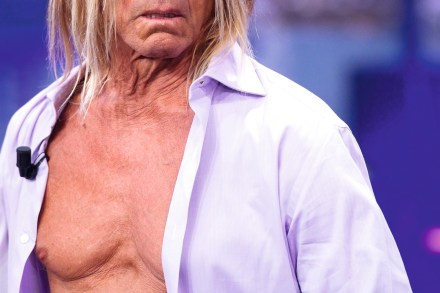
Don’t worry, I’m not going to go on about Glastonbury. I wasn’t there, I never have been and, unless forced at gunpoint, I never will be. It has been a source of great comfort to discover that rock critics far more professional than I detest festivals as much as I do. My friend Andrew Mueller tells the story of his appearance on Sky News as a token anti-Glastonbury grouch, doing a two-way with some idiot in a stupid hat standing in knee-deep mud (these are his words). The festival-goer went first, and talked of community and spirit and laughter in the face of adversity. The presenter turned to Andrew and said, ‘Well, Andrew, what do you say to that?’ Andrew said, ‘I’m indoors.

‘It was like 26-dimensional chess’: Roger Wright on managing the Proms

It sounds like a dream job — being in charge of what is now regarded as the greatest classical music festival in the world. But most of us would quail at the challenge. Quite apart from needing enough musical imagination to come up with 75 nightly programmes, it must surely be a logistical nightmare, corralling 300 musical artists and 315 works into a two-month season? Roger Wright, director of the BBC Proms since 2008 (as well as Controller of BBC Radio 3), obviously relishes the task. ‘I don’t do sitting in the chair dreaming about what we might put on,’ says Wright. ‘Nor is every single thing my personal choice.

The Stones at Glastonbury: the greatest show EVER

Yes, I’m sorry, the Stones at Glastonbury really were that good and if you weren’t there I’m afraid you seriously need to consider killing yourself. You missed a piece of rock’n’roll history, one of the gigs that will likely be ranked henceforward among the greatest EVER. So again, sorry if you weren’t there to enjoy it. Boy and I were. And we did. A lot. Perhaps it helped that so few of us were expecting much. I was hanging around the afternoon beforehand in the EE tent waiting for my phone to recharge, having one of those random Glasto conversations with strangers — an A&E nurse, a geeky kid — and we all agreed that the Stones were a band we planned to see more out of duty than pleasure.

Fête de la Musique: Couldn’t we just get over ourselves, risk a bit of foreign and join

One of the many cultural initiatives to have come out of France in the past 50 years — and therefore by definition to have been viewed with suspicion by the British establishment — is the Fête de la Musique. One need look no further than Margaret Thatcher and Unesco to get the flavour of what follows; but so complete has been the disinterest in the Fête around here that even I, Europhile to the core and anyway booked to perform in Paris on 21 June, had no idea what I was contributing to. This Fête began life in 1982 when Jack Lang, then minister of culture in Paris, framed a festival that would put ‘the music everywhere and the concert nowhere’.

The syphilitic sound of Schumann’s violin concerto is part of its genius

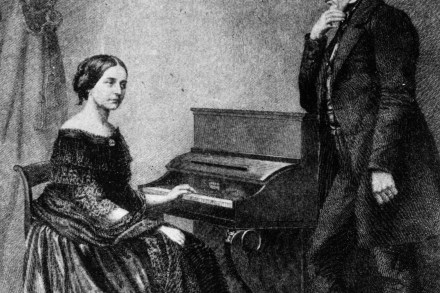
Robert Schumann met a wretched end. He died in a lunatic asylum where he thought the nurses were feeding him human faeces. Meanwhile he drove his fellow residents mad by sitting at the piano and bashing out nonsense-music until he had to be dragged away — a grotesque indignity for the creator of the most bewitching quicksilver fantasies in the history of the instrument. After Schumann’s death in 1856, the violinist Joseph Joachim hid away the strange concerto that the composer had written for him in 1853 because it showed evidence of softening of the brain. Clara, Robert’s widow, agreed. That became the conventional wisdom.

Has music died? If not, where are the new decent pop tunes?

I am suffering, as we all do from time to time, from a shortage of decent new tunes. Of course, ‘suffering’ may be a slight exaggeration here. Very little physical pain has been involved. But research has shown that music obsessives need a constant upgrade of their personal tunebanks in order to perform at full capacity. It’s all very well going back and playing the Electric Light Orchestra’s Out of the Blue at top volume and singing along to every vocal harmony, as I might have done once or twice this past week, but a long-term solution it is not. It’s where to find these new tunes that has become the problem. I try radio station after radio station, and then I try them all again in a different order.

Music: the German love affair with all things British

The current love affair that the Germans seem to be having with all things British has deep roots. It was Schlegel who first claimed Shakespeare for the German-speaking world when he said that the bard was ‘ganz unser’ (entirely ours). Goethe was equally obsessed. There are now more productions of Shakespeare’s plays in Germany every year than in England, with the advantage that he not only translates unusually closely into German but also that the audiences are hearing him in contemporary language. Then there is the instinctive German respect for the British sense of humour, which threatens anarchy, but, by some miracle they dare not trust, never quite delivers it.