More from life

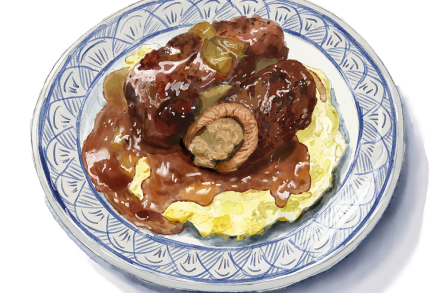
Beef olives – classic comfort food, without an olive in sight 

We all did mad things during the first Covid lockdown. For some it was getting a dog or starting up a microbakery. For me, it was signing up for a NVQ Level 2 in butchery. I’m still not quite sure how it happened, but, once the schools reopened, I spent my Tuesdays in a cold butchery store in east London, socially distanced from my septuagenarian master butchery tutor, who would teach me how to break down whole carcasses, the art of seam butchery and the trick to linking sausages.

The joy of iced buns

‘It’s just a hot dog bun with icing!’ the iced-bun detractors will shriek. I’m a lady with a lot of opinions about fairly esoteric foodstuffs, many of them declamatory, immovable, or strident, but I do not understand taking against the iced bun. I’m not sure what awful bakery-based trauma must have happened to you during childhood to make iced buns the target of your ire, but they are undeserving. For anyone not a self-proclaimed detractor, iced buns (also called Swiss buns or iced fingers) prompt reveries: forgotten childhood memories of plump buns in trollies and sticky fingers holding grown-up hands.

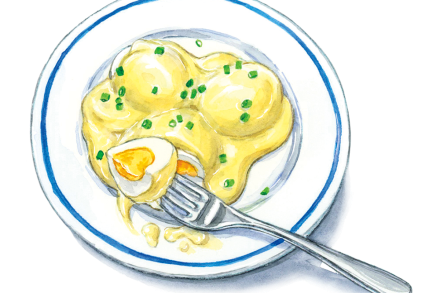
The extraordinary simplicity of oeuf mayonnaise

‘Sometimes, in the search for originality, the most obvious dishes are forgotten,’ says Elizabeth David, the doyenne of cookery, in her book French Provincial Cooking. I often think of this phrase when I’m writing about vintage cookery. So much of food (and food writing, and writing, and media, and life) is trend-driven. It’s all about novelty. I look at the handwritten list of my planned vintage recipes – ‘chocolate mousse, custard slice, beef olives???’ – and have to acknowledge that my particular wheelhouse is anything but original. I try, though, to hold David’s words close: those ‘obvious’ dishes are known for a reason. And their familiarity is part of their appeal. David was writing, specifically, about oeuf mayonnaise.

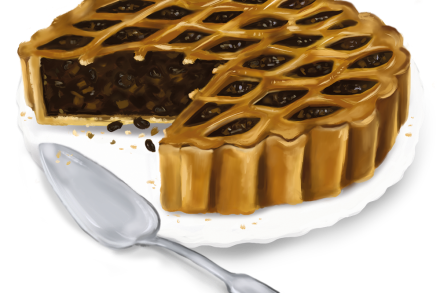
How do you make a tart that doesn’t really exist?

There are few things more delicious than falling down a rabbit hole. No, don’t worry, I’m not serving up a second recipe for rabbit in a row. I mean discovering a recipe or dish which, not only have I not cooked or tried before, but haven’t even heard of. A little while ago, a reader asked me about Hawkshead cake, which Beatrix Potter used to make with her husband at Christmas. Hawkshead is the village Potter grew up in, in the Lake District, and the cake is actually more of a tart, made with puff pastry and filled with currants and syrup. This is where the proverbial rabbit hole came in, because I couldn’t quite stop there.

This Easter, eat rabbit 

Dissonance is necessary around Easter. Fluffy lambs and chicks are everywhere: on cards and decorations, in countless chocolate forms and adorning every Easter-adjacent craft, toy or activity. But, of course, we also traditionally serve roasted lamb or chicken on Easter Sunday. In some part, this is simply seasonality. We associate gambolling lambs and new chicks with spring. But that apparent seasonality is also something of an untruth: lamb, particularly, is not actually in season at Easter. I know, I know, as soon as the days start to brighten, our green and pleasant lands are filled with sentient woolly fluff wobbling about on little legs. But those cartoon-like lambs are far from ready for market.

How to make the perfect 15-minute chocolate mousse

There’s an inherent pleasure in having something by heart. Poetry at school. Lines in plays. Song lyrics. The things that stick tend to be those that we had by rote when we were young. We get out of the habit, and our gears don’t move as smoothly. When I was at pâtisserie school, we were expected to memorise countless different base recipes – crème pâtissière, brioche, pâte brisée, pâte sablé, pâte sucrée – and our termly theory exams required us to regurgitate these formulae. I spent hours learning the ratios and the quantities, the steps and techniques, convinced I would have them down pat for evermore.

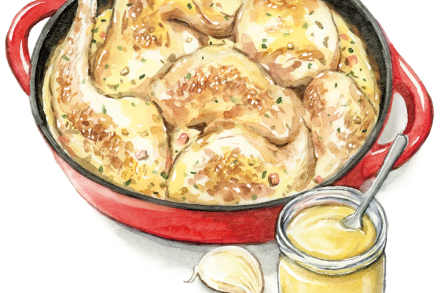
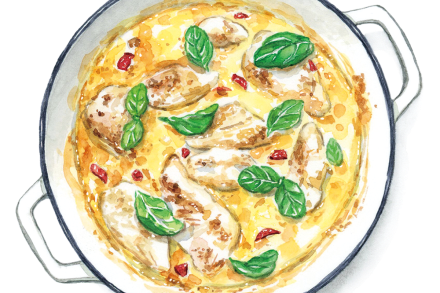
My take on marry me chicken

I am not in the habit of bringing viral TikTok recipes here. It is a safe space, away from digestive biscuits submerged in yoghurt masquerading as cheesecake, baked oats, or sugary instant coffee whipped up like foam (if you don’t know what I’m talking about, ignorance is bliss). No, here we are in the realm of tried-and-tested vintage recipes. So why am I letting marry me chicken into this sacred place? For the uninitiated, it first popped up a decade ago on an American food website called Delish, but it became the most-searched recipe on the New York Times in 2023. It’s a simple concept: chicken cooked in a creamy, tomatoey sauce that is so delicious that the person to whom you serve it will get down on one knee.

There’s no beating the comfort of cabinet pudding

The British hold a steamed pudding close to their hearts. Like a culinary hot-water bottle, it may not be terribly elegant but it’s hard not to feel comforted and delighted by its presence. Most, however, follow a similar formula: a sponge cake mixture that is steamed into ethereal lightness and topped with a gooey, drippy sauce. This isn’t to decry them: I could never be fatigued by the spongy similarity of a golden syrup pudding and a bronzely glistening ginger one but they all come from the same sponge playbook, so I was intrigued to find one that doesn’t fit the mould.

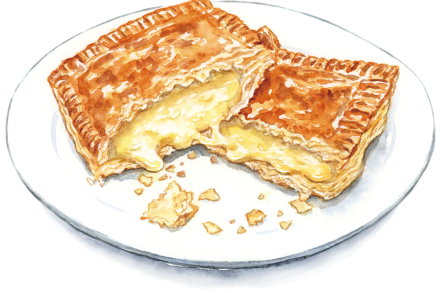
Cheese and onion pasties: how to make a Greggs classic at home

‘That’s not a pasty!’ my husband declares loftily, eyeing up what most definitely is a veritable clutch of cheese and onion pasties emerging from my oven. Handsome, puffed up, golden brown (the pasties, not the husband), filled with a cheese, potato and onion filling, contents threatening to splurge. The steam rises from them like in a cartoon, almost beckoning us towards them. ‘Oh, OK,’ I reply, sweetly. ‘I shan’t trouble you with them.’ He backtracks. No, no, perhaps he was hasty. What did he know about pasties? Shouldn’t he just try them anyway?

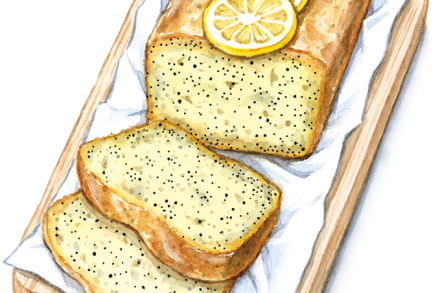
When life gives you lemons

As always, I begin my year with lemons. Regular readers must forgive me for my citrus evangelism. But, as the spice and richness of Christmas fare gives way to the drudge of the diet industry and the reality of the back-to-work routine, all framed by short, dark days and cold, icy pavements, the cobalt yellow orb is a literal light in the darkness. What began as a way of bringing brightness and culinary optimism to the new year now feels like a battle cry. Lemons are magical: they come into season during the winter months, their vibrancy at odds with the drab mornings, a flash of lightning in your fruit bowl. Their zipply zest and bracing sourness remind you that you are alive. I, for one, need that reminder.

Why are roast potatoes so hard to get right?

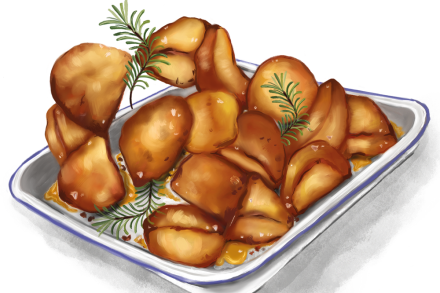
Roast potatoes shouldn’t be complicated. We’re talking two ingredients, plus some salt and maybe herbs if you’re feeling fancy. It’s just shoving some parboiled potatoes in a hot oven, right? Yet I can count on one hand the number of times that I’ve had a decent roast potato in a pub or restaurant. Bad ones are to be found all over the place. I don’t just mean school dinners, mass-catering, hospital-canteen potatoes here. The most carefully prepared Sunday roasts at charming establishments feature beautiful melting meat and thoughtfully cooked veg, all sitting alongside miserable roasties. Clammy. Dark brown. Soft (but not in a good way). A waste of a good potato. No one doesn’t like a roast potato; they’re practically our national dish.

I’m a Christmas pudding convert

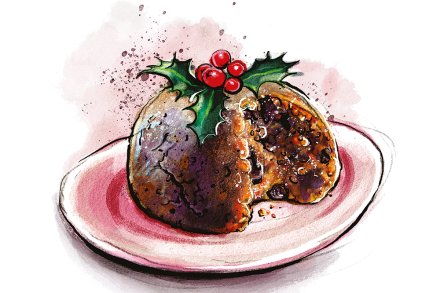
I used to be a Christmas pudding denier. I couldn’t see the attraction of a dense pudding made mostly of currants; frankly, I’d rather have a trifle. Of course, I was wrong: I was judging Christmas pudding by poor examples, those that sat on the edge of a Christmas lunch tray at school or were half-heartedly doled out by other pudding sceptics (I’m looking at you, Mother). My conversion came about thanks to a party – a Christmas pudding party. Not a party for eating Christmas puddings but rather one where the guests made Christmas puddings. It was hosted by my friend Kate and I went along out of love for her, rather than love for the pud. Under Kate’s keen eye, and following her great-granny’s recipe, we creamed kilos of butter and sugar in a big plastic tub.

The glory of gravy

In Robert Louis Stevenson’s Treasure Island, when Ben Gunn is found by Jim Hawkins, sunburnt and wide-eyed after three years of being marooned on the island, the first thing he asks Hawkins for is cheese: ‘Many’s the long night I’ve dreamed of cheese – toasted mostly.’ As a greedy person prone to daydreaming, I’ve often wondered what my ‘cheese – toasted mostly’ would be. A dozen oysters? A cold negroni in a fluted tumbler? A perfect quivering soufflé? I think it’s gravy. That’s my desert island dream, the idea I can’t shake, the touchstone I’d return to. I’d take gravy in any form: thick and rich, made from meat scraps, a thin, boozy jus whisked up from pan scrapings, even the ‘from granules’ stuff, stirred in a plastic jug moments before serving.

How to make the perfect pecan pie

A pecan pie has been on my kitchen table for the past few days, due to circumstances rendering every other surface or shelf unusable, thanks to badly timed building work and an absent fridge. A mixing bowl sits over it, protecting it from dust and sticky fingers. I’ll tell you what I’ve learned: everybody loves pecan pie. Everyone who has walked past it has stopped dead, done a double take, and then rhapsodised unprompted about the pie’s virtues. At one point, excitement was generated simply by the pie being in the background of a video call. Pecan pie, one of America’s traditional celebration (especially Thanksgiving) puddings, is adored by children, but it has a dark, complex sweetness that wins over grown-ups too, and the toasty nuts bring texture as well as richness.

Cullen skink is comfort in a bowl

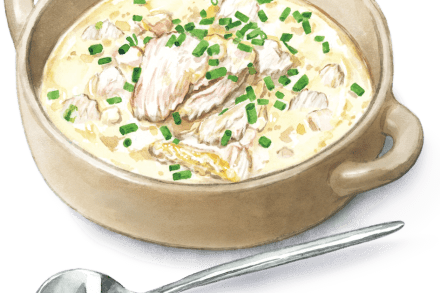
They say not to judge a book by its cover – but what about judging a recipe by its name? Some sound like a disease or worse. Spotted dick, toad in the hole, lady’s fingers, Dutch baby, I’m looking at all of you. Cullen skink is one that has been accused of having an off-putting name. But in its defence, Cullen skink is descriptive. There’s a suggestion that the word ‘skink’ comes from an Old German word for ‘beer’ or ‘essence’, but given that Cullen skink is a creamy, thick soup, with no beer constituent and no obvious German connection, this seems an unlikely origin.

The secrets of sachertorte

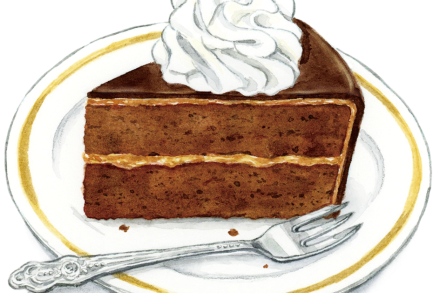
My theory is that sachertorte is a victim of its own success. Over the past 150 years, it has become an Austrian icon and, as such, can be found throughout Vienna. And that’s the problem: its ubiquity means that inferior versions abound. It has developed an unfortunate reputation for being dry, dull, tasteless – a pale imitation of a chocolate cake. It is often described – even by its supporters – as a ‘grown-up’ chocolate cake or an ‘elegant’ chocolate cake, but I feel like this does it a disservice. Both feel a little like euphemisms for ‘not that nice’, but this couldn’t be further from the truth.

Bacon and egg pie, the perfect throw-it-together, please-the-whole-family dish

There are a handful of elements that make me nervous about tackling particular classic recipes. First, if it’s a dish that I didn’t grow up with and can’t speak to personally; secondly, if it’s a dish that a lot of other people did grow up with, and feel very strongly about. Thirdly, if it requires an ingredient that we don’t have in Britain, which I then have to imitate, or simply ignore. That can be pretty restrictive. I didn’t encounter a Staffordshire oatcake until I was 28, so they’d be out. Risotto, which I’m fairly sure doesn’t hail from the north-east coast of England, would be untouchable. Gorgeous vintage puddings like bananas Foster or pecan pie would be out of the question, too.

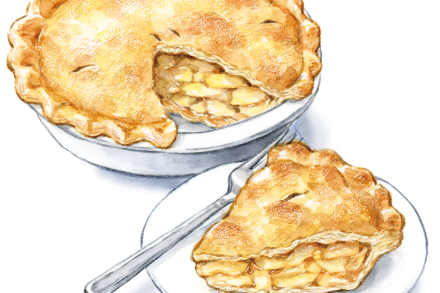
The secrets of a British apple pie

‘As American as apple pie’, or so the saying goes. But what happens if the apple pie in question isn’t actually American? America is the source of many of my most beloved vintage recipes, especially puddings, and particularly pies. But the knock-on effect is that sometimes they can overshadow similar dishes that come from other places. The British apple pie is not quite an underdog in this fight, but it’s certainly less celebrated than its cousin from across the pond. It took a while for apples to take hold in the US. Only crab apples were native to America, and they were small and sour – no good for baking with.

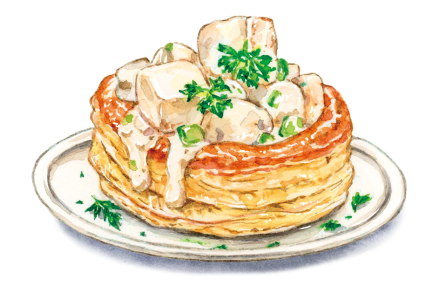
Whatever happened to chicken à la king?

As sure as eggs is eggs, what was once comfort food will be reinvented as fine dining. Lancashire hotpots will be turned fancy, served with teapots of lamb jus. Fish and chips will become canapés, spritzed with atomisers filled with malt vinegar. French onion soup will be served in teeny-tiny shots; Scotch eggs gussied beyond recognition. I once ate a (large and unwieldy) single bite of shepherd’s pie from a Chinese soup spoon at a posh party. Chefs just can’t resist the joke. Chicken à la king – chicken braised in a cream sauce with onions, mushroom and peppers – has gone in the opposite direction, from fine dining to comfort food.

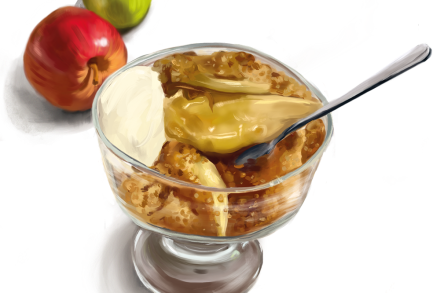
What to do with the last of the summer’s apples

The double-edged sword of eating with the seasons is the glut. A blunt, un-pretty word, which is a joy in theory and delicious in result, but which can feel daunting when you’re facing down a bench full of berries to be picked over, or countless apples to be processed. My husband and I were once given an apple tree as a present. It’s a multi-graft, meaning each of the three branches produces a different type of apple: russets, for storing, bramleys, for cooking, and tart eating apples. This is the first year that it’s thrown up more than three measly apples. Well, it’s made up for lost time; we are, to put it mildly, drowning in apples.