More from Books

Too much information

In managing too carefully the revelation of truth, parents often betray it. Graham Swift’s new novel is narrated by a mother and addressed to ‘you’, her teenage twins, boy and girl. It involves us, as voyeurs, in the revelation of a truth that will come as a bolt from the blue to the children. But it tries to manage this revelation so carefully, with so many detours, so much cushioning and qualification, that we may easily wonder whether the truth has been served or betrayed. The novel takes the form of a letter written by Paula, the mother, late one night while her children and her husband, Mike, sleep.

Family Home, Lincolnshire

and from the summerhouse, the viewis, first, that unmarked area of grass,where stood the Air Force quarters of a fewof England’s Few, that rings with silent laughs,our chipping green for practice golf. Beyond —the orchard’s gorgeous blossom, later fruitfor village children and the Anderson,now apple store. Then, topiary in privetand in box; my sculptor’s hands can seethe shape inside the mass. By Perkins’ grave,a clump of perfect daffodils blow freeof London’s politicking stress. I havea cherished weekend refuge where I come,say, ‘Hello House. Restore me.’ I am home.

Historical- thrillery-factual fiction

Recently, Adam Mars Jones accused me in the Observer of being in some ways worse than Hitler, because at least Hitler had an excuse for idolising the German upper classes, namely race science, which I didn’t. I was outraged, and seriously considered suing him. I have since calmed down a little and see now that novels set in the recent past are particularly prone to judgments which are more about the history than the fiction, and sometimes even confuse the author with the fictional voice.  This was the point Allan Massie made so eloquently in these pages a few weeks ago.       Dancing with Eva raises some of these questions.

Making a virtue out of necessity

John Evelyn would find our agonies about food all too familiar. He was impressed with the modern ‘miracles of art’ whereby plants were forced in hot beds and meats and fish were preserved for months or years; but nothing tasted better or was more wholesome than fresh ingredients. He was preoccupied by healthy diets, noting that ‘husbandmen and laborious people [were] more robust and longer lived than others of an uncertain, extravagant diet’. Others, from the 16th century through to the 18th, who were lucky or rich enough to be able to eat wild produce, rated their taste far above cultivated or reared foods.

Voodoo, rape and an apple tree

A summary of the events that take place in this novel might run as follows: a lost boy (who may be the soul of a comatose adult) walks around a hospital with an apple tree growing inconveniently in his stomach. He explores most of the floors, some of which are in a different dimension, and meets, among others, the kinky ‘Rubber Nurse’. Elsewhere, Nurse Swallow loves Mr Steele, a handsome surgeon. Nikki Froth, a prostitute, is hiding from her drug-addled pimps, Spanner and Case. PC Dixon loves Nikki. Sir Reginald Saint-Hellier, the head surgeon, leads a Satanist cult which murders babies and rapes virgins on the building’s 13th floor. Haitian porters perform voodoo rituals.

Not content with the contents

Degas once complained to Mallarmé that he had been trying to write a sonnet, unsuccessfully, though he had had such a good idea for it. ‘Alas, my poor Edgar,’ was the reply, ‘poems are made with words, not with ideas’. A neat comment, but is it always possible to distinguish between the two? Even a ‘nonsense poem’ is not devoid of ideas: ‘The vorpal blade went snicker-snack’. Nonsense words, yet the idea is evident. How to separate aesthetic delight from content? The question becomes more acute still when you turn to consideration of the novel. Nabokov, better critic than novelist to my mind, went for aesthetic delight, ‘the tingle in the spine’. ‘Cherish the details,’ he said.

Our women at the front

In the horror that is the Iraq war reporters usually broadcast from the safety of the vast Green Zone where Coalition civilians eat, sleep, make policy and issue statements. What we see on television are pictures taken by non-white photographers; the face-to-camera commentary usually comes from within the Zone. We can only surmise what life is like for Iraqis and along with the guessing there creeps in an I-don’t-want-to see-anymore fatigue. Now comes Lynne O’Donnell who, as Joseph Conrad insisted about good writing, above all makes us see. A foreign correspondent with considerable experience in China, she now works for Agence France-Presse in Hong Kong. In 2003 O’Donnell found herself in the northern city of Mosul a few weeks after the American invasion of Iraq.

Starting out on the wrong foot

E. Nesbit once pointed out that, in order to write good books for the young, it is not necessary to enjoy a close relationship with children in adult life. The essential thing is to retain a true and vivid memory of one’s own childhood; not only of events and people, but of feelings and emotions, sounds and smells and all the minutiae of day-to-day life. Jacqueline Wilson, the enormously popular writer and most borrowed author from British libraries, is certainly a case in point. Her childhood covered much the same period as mine, and this account, written for her younger readers, brings back a host of memories. Many of the best descriptions of childhood are written by people whose own experience of it was miserable: Dickens and Kipling are obvious examples.

Wonders never cease

Janet seems to have her life neatly organised. She’s hardworking, she has a nice boyfriend, she lives in a comfortable house and she drives a dark-green Golf. Recently, however, she has been receiving messages from her mind. Seizures (which also occurred in her childhood) will strike without warning and leave her humming with nervous tension — a struck tuning fork. Janet disregards this important signal of an imminent decline; in any case, her attention is diverted by a call from a solicitor. She is told that she has inherited, from her mother, a house beside the sea. Janet is puzzled by this news. She had always believed — had been told by her father — that her mother was killed in an accident when Janet was a little girl.

A nation transformed in two generations

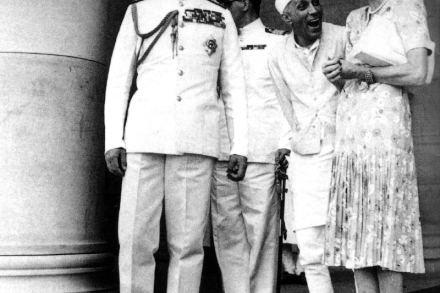
When in November 1975 Franco died, he still possessed the powers granted him by his fellow generals after the outbreak of the Civil War. Such powers, a French general observed, had been enjoyed by no leader since Napoleon. For 36 years, ‘all important decisions’, in John Hooper’s words, ‘were taken by one man’. In the last instance he decided who should govern Spain under his guidance. With the constitution of 1978 Spain became a democratic constitutional monarchy. Governments are the creation of free elctions based on universal suffrage. Elections are a contest betweeen two modern mass parties: the progressive centre left Socialists and the conservative right-of-centre Partido Popular.

No Picnic

Ironically, they rode a tandem bike,that warring pair, though any two less like to live in tandem would be hard to find.He rode in front. She took the seat behind. They quarrelled as they puffed up Devon hills.‘You pedalling?’ ‘Of course!’ ‘I swear it feels as if you’re not,’ he snarled. He spoke his mind.She held her tongue sometimes thinking it kind and wiser, since the sidecar held their child,a two-year-old aware and watchful of their wild abuse. Inevitably came the rift.The front, the back, the sidecar came adrift. He took their money, bought himself a carand left. The woman panicked, married far from suitably — again — sank without trace.The infant washed up in a Home for Waifs.

The squalor of the past

The ability to manufacture discontent from whatever materials are to hand is one of the most consistent characteristics of human nature. In Hubbub, pithy historian Emily Cockayne roams the seamy, stinky and squelchy side of English life: ‘The experiences presented here are unashamedly skewed towards the negative . . . . I am deliberately not presenting a rounded view of life — I am simply presenting the worst parts of it.’ For those with a cheerful predilection towards grime, gunge and disease, the torrent that follows is riveting. Within chapters headed Ugly, Itchy, Mouldy, Noisy, Grotty, Busy, Dirty and Gloomy, Cockayne rolls like a pig in a delicious vat of mud.

Trick or treat

Why do the French call an April Fool a poisson d’avril and a 1 April dupe a victime d’un poisson d’avril? I have always assumed it is because the victimes take the bait and swallow the hook; but Martin Wainwright tells us that the April Fish derives its name from ‘the dim-witted, bulging look of carp’ — ‘the notion suits the bewildered look of a baffled hoax victim’. This side of the Channel we do refer to a ‘cod letter’, a genre in which I can claim a modest track record. Apparently on 1 April Frogs go round sticking paper fish on each others’ backs. How droll: if they had tried that on Quasimodo, he’d have been the Fishback of Nôtre Dame — high gudgeon amid the bells and corbels.

Playtime | 31 March 2007

Old men with dogs roam the neglected parkWhere they once played as boys. Now take a peepInto the lounge of Number Twenty  ThreeThe Meads. Four sturdy youngsters sitBefore a slick computer, playing  games.A milky, midget, artifical skyHolds them enraptured. Sterile  bullets flashAnd flicker, stuttering across the  screen,While Mother whisks around her  microwavePreparing instant meals from plastic  packs.Better to stay indoors. It’s clean and  nice.That dog-polluted field is a disgrace.Besides it makes less work for  Mummy. SoThe piper bleeps, luring his victims onThrough the dark doorway. Deep  inside that hillAll children are forever quiet and still.

We also do some work

The narrative trademark — or gimmick — of Joshua Ferris’s first novel, Then We Came to the End, is contained in the title: the book is told in the first person plural, which gives this story of Chicago office workers its initial powerful, even oracular, thrust. ‘We were fractious and overpaid,’ the book begins. ‘Our mornings lacked promise.’ Soon comes a key sentence: ‘Most of us liked most everyone, a few of us hated specific individuals, one or two people loved everyone and everything.

Past and future imperfect

This is a book about the failure of two marriages. One is destroyed by a past that refuses to slacken its grip, though the marriage itself has to limp on; the other is wrecked by a future impossible to avoid. They are seen through the eyes of four different people, two from one family, two from the other. Ruth, a precocious 15-year-old, has by far the most entries, hence the book’s title. The result of all this is a very crowded and colourful canvas, a patchwork quilt of a book. The two families live within walking distance of each other in a sparsely populated part of Northumberland and they are in each other’s pockets whether they like or not.

Meandering through the boondocks

South of the River is a stadium-sized novel of over 500 pages. It has the scope and ambition of an American McNovel — Don DeLillo’s Underworld, say, or The Corrections by Jonathan Franzen. At first it appears to be in narrative disarray, the plot leaping backwards and forwards in time. A theme soon emerges, however, as the disparate stories converge. Touted by the publishers (or by the author) as ‘the big British novel of our times’, South of the River opens with Labour’s election victory in 1997 and chronicles the misfortunes of a south London family over a period of five years up to 2002. London south of the river has not been mapped in a novel of this bulk for some time.