More from Books

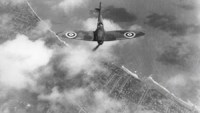
And when they ask us how dangerous it was . . .

As every biographer knows, all evidence is suspect. Probably the diary comes nearer to the truth than any other source: it is subjective and no doubt biased but a least it usually reflects what the author really thought at the time. Letters are second-best. They too are contemporary but they contain what the writer wanted someone else to think, not necessarily what he or she thought themselves. Most problematical of all is oral testimony. Memory plays fearful tricks. With the late Tom Harrisson I once conducted an experiment. From the diaries kept by Mass Observation volunteers during the second world war we picked a few which contained particularly vivid Blitz experiences. We then wrote to the authors, asking them, without referring to anyone or any document, to tell the story again.

Brief encounters with the dubious

Volume five — or is it six? — in the Simpson autobiography series. For many people, one volume tends to be enough, but Simpson has a lot to tell. In this latest doorstopper, he offers us an engaging collection of ‘snapshots’, essays on a lively and eclectic bunch of characters he’s run into over the years. There’s a crooked extortioner, the maddeningly elusive Japanese emperor and empress, Saddam awaiting execution, film stars, Serbian contract killers, a child sorcerer in the Congo, Chinese tomb-raiders and ‘a variety of other thoroughly dubious people including Robert Mugabe and Alastair Campbell’. The last few words of that sentence, not buried midway through the book but on its very first page, are a masterstroke.

A march that has lost momentum

‘Do not judge a book by its cover’ is not a dictum that applies in the present case. Towards the Light: The Story of the Struggle for Liberty and Rights that Made the Modern West by Mr A. C. Grayling, Printed in the year 2007, sets us up for a rollicking defence of Freedom and Enlightenment in the style of Tom Paine or William Godwin. And that is exactly what we get. This is the story of modern Europe as told by a 19th-century liberal secularist, updated but not fundamentally rethought.

What’s become of Baring?

Maurice Baring is one of those writers of whom it is periodically said that he is unjustly forgotten and ripe for reappraisal. In his own lifetime, he was a prolific and popular author: a uniform edition of his work published by Heinemann in 1925 lists over 50 works — novels, plays, anthologies, poetry, memoirs and reportage — most of which are now out of print. Clearly, the very volume of his output has made it difficult to separate the wheat from the chaff: in the 1970s Edmund Wilson wrote an essay entitled ‘How Not to Be Bored by Maurice Baring’. Baring was born in 1874 into one of the grandest and most influential families in England. Barings Bank was then second only to Rothschilds, and there were five Baring peers in the House of Lords.

How sacred is Shakespeare?

A couple of weeks ago I was at the Wigtown Book festival where I had been invited to give the first Magnus Magnusson Memorial Lecture. Magnus had been a great supporter of this festival — and no wonder, for it is quite charming — ever since it began when Wigtown was chosen as Scotland’s official book town. That selection was a surprise, partly because this small Galloway town on the Solway Firth is ill-served by public transport. (‘What’s the quickest way to get to Wigtown from Edinburgh by public transport?’ Answer: ‘Fly to Belfast and take the ferry.’). Nevertheless it has been a great success, and the little town seems more prosperous on every visit.

Memory speaks volumes

It’s a dangerous business, oral history, at least when you try it in Russia. Without oral history a complete history of the Soviet Union is almost impossible to write. Archival documents are dry, containing only the official point of view; memoirs, often written years later, are unreliable and frequently slide over important details. In an interview, by contrast, one can pose questions, prompt forgotten memories, or ask an eyewitness about things no one would put in print. It is no accident that many excellent books on Soviet history written in recent years (Catherine Merridale’s Ivan’s War or Simon Sebag-Montefiore’s Court of the Red Czar) have made extensive use of interviews.

How and why the Twenties roared

Attempts to anatomise the Bright Young People of the 1920s have included Beverley Nichols’s The Sweet and Twenties (1958), Martin Green’s Children of the Sun (1977) and Humphey Carpenter’s The Brideshead Generation (1989). Osbert Sitwell called Nichols the first of the Bright Young People and Nichols claimed to be the last of them. D. J. Taylor suggests that this was not quite accurate, as there is still one survivor of that febrile group — I think he must mean Teresa (‘Baby’) Jungman, once the object of Evelyn Waugh’s desire, and now 100. Certainly Nichols was Bright Young Person in excelsis.

Never a dull moment

In May this year Scotland had an election for its parliament. I was in London a couple of months earlier and was surprised by the blank stares with which some of my English friends greeted my remark that we were facing a very interesting political situation north of the Border. Some people, it seemed, did not even know that there was a parliament in Scotland, let alone one about to be the subject of an election. Then the Scottish National party won — in a sort of way — and, as we say in Scotland, perhaps people ken noo. English lack of interest in Scottish affairs is quite understandable. It is difficult and depressing enough to keep abreast of one’s own current affairs without following the unfolding history and politics of others.

Accentuating the human factor

It is a commonplace to say that novelists should be judged by their work rather than their private lives or their publicly expressed views. And writers, of course, subscribe enthusiastically to this idea. It is true that it is usually for their books that novelists reserve their most considered and ordered thoughts; but the fact is they arise inescapably from one consciousness, the same one that is occupied in all the other activities which make up a life. In Graham Greene’s case, I don’t think his novels are the key to understanding him. He writes, ‘I am my books,’ but this admirable volume of his letters suggests that for all his success he is not his books.

A ghastly crew | 6 October 2007

Jennifer Johnston is adept at economy. Here is a short novel in which the eight characters are introduced one by one, with minimum fuss — some dialogue, a brief reference by someone else — and their complex relationships obliquely revealed. Complex indeed are these connections. ‘I am gay, bent, queer, homosexual, call it what you will,' says Donough, coming out to his mother Stephanie. Sexual identity lies at the heart of the narrative — who is inclined to what, and with whom. By the end, four of the eight are defined as gay, bent, call it what you will, and the past is floodlit, with all its confusions and deceptions. Stephanie’s ex-husband Henry is in hospital, recovering from a car accident in which the driver, his wife, was killed.

Relishing the death throes

Piers Brendon does not much like the British empire. In over 650 pages of closely researched, patronising disdain he uses his Stakhanovite labour to perform a smug hatchet job on empire- builders, administrators and the British military. He warns us in his introduction what to expect: ‘Less emphasis is placed here on triumphs than on the disasters that undermined the future of the empire.’ As a result, he accumulates the impression of an empire consisting entirely of unimaginative, hypocritical despots embattled by racial attitudes, snobbery and smug military incompetence. You have to ask yourself how such a useless people as the British managed to acquire a quarter of the earth’s surface and hang onto it until the middle of the 20th century.

A case of missing identity

This could have been a wonderful book. Take a scene from it which could so easily have been the start of a film. It is the 1920s, and in the garage of a large stockbroker’s mansion in the Home Counties two youths, the spoilt and jobless sons of a rich man, are noisily tuning a hell bat ( actually a modified Model T-Ford ), a car already capable of 100 m.p.h. Dissolve to the woods above them, to silence broken by tinkling notes. Among the trees their elderly father is playing a musical box. A huge and powerful individual, with the sort of moustache then popular among army officers of field rank, he has, according to his earlier biographer Hesketh Pearson, ‘no more mystery about him than a pumpkin’.

How now Browne cow?

The Christmas book market is about to be flooded, if that’s the word for these somewhat juiceless jottings, by not one but two biographies of the actress Coral Browne. This dual assessment is perhaps just as well, as quite clearly there were two Coral Brownes, one a witheringly witty, ravishing (in the early 1960s she was voted one of the three most beautiful women in the world, along with Princess Grace and Nina of aristo folk singers Nina and Frederick), loyal and quintessentially ‘West End’ creature; the other an insecure, sour, mercenary, and often cruel self-creation, the Coral evident in her attitude to, and treatment of, the children of her second husband, the epicene actor Vincent Price.

The worst of friends

In this his latest book Max Hastings aims not so much to write another history of the war in the Pacific but to describe ‘a massive and terrible experience, set in a chronological framework’. It is a companion volume to his Armageddon which did much the same for the last phase of the war in Europe; but the experiences he describes are yet more terrible, and the framework will be even less familiar to British readers.

Riding out the storm

I share with Richard Mabey a love of trees. Beechcombings begins with the great storm of 1987, although Mabey’s love of trees has its origins in his childhood in the Chilterns. The childhood romance shines through. Trees were family. When I had the privilege of being Member of Parliament for Henley, and so the Stonor Valley, the great beech woods of the Chilterns were in my constituency. Mabey’s particular affection for the beech — fagus sylvatica — is touching, human and altogether understandable. I took a rather more positive view of the consequences of the 1987 storm than Mabey does. Of course there were some sad losses. Mabey refers to the beeches of Chartwell which Churchill so admired. If you looked at the carnage on the ground it was devastating.

The pleasure of his company

Some writers have the ability to poison one’s daily existence. James Salter, I have discovered, is one of them. To read him is to be painfully reminded of how mundane, how blurry, how fatally lacking in glamour one’s own life is. Still, if you can hold such feelings at bay, reading him is also an intense pleasure. Salter has written no great novel. But he has written a couple of very good ones, some superb short stories, and an amazing memoir, Burning the Days. His writing is lyrical, dashing, succinct — modelled on Hemingway, but with strains of Fitzgerald, Colette and Cheever. Rich in the kinds of experience most writers lack, Salter’s life feeds into the writing at every point. It makes it incandescent, and gives it credibility, too.

Examine my thoughts

The following extracts are from The Blind Eye: A Book of Late Advice: Please don’t be misled by the apparent self-certainty of these utterances; be assured that after each one I nervously delete the words but that’s probably just me, right . . . I can see exactly what not to do at the moment. No doubt through the usual process of elimination I’ll arrive at my favourite strategy of total paralysis. With your back to the wall, always pay a compliment. Even your mugger or torturer is not immune to flattery, and still capable of being a little disarmed by a word of congratulation on their choice of footwear or superior technique.