More from Arts

Lives of others

Tonight (Saturday) on the World Service there’s a chance to hear a most unusual play, which takes us into the heart of life on the Persian Gulf. Tonight (Saturday) on the World Service there’s a chance to hear a most unusual play, which takes us into the heart of life on the Persian Gulf. Al Amwaj (The Waves) was written by a group of writers from Qatar and Saudi Arabia, brought together by the World Service and the British Council. They were commissioned to create a single drama that would ‘reflect the things they care about’ for an audience of listeners in all corners of the globe. So seven writers gave us seven separate stories within a single one-hour drama.
That’s priceless

The most gruesome television moment of the week I caught on Saturday night, part of the Red Nose Day mutual congratulation fest. A gang of minor celebs had climbed Mount Kilimanjaro, and Davina McCall — she must be hard to live with, running into the bedroom, shaking her face in yours and screaming that the toast is ready — informed us with breathless excitement that they had raised ‘a staggering £3 million!’. What was offensive about this was the fact that Jonathan Ross was there on stage. Three million quid is just half his annual salary! He could give it away every year, with tax relief, and still have £8,219 to live on every single day. Had nobody thought this through? Seemingly not.

A piece of paradise

I find it impossible to be dispassionate about the Royal Botanic Gardens, Kew. For me, it is not just an area of part-designed, part-semi-natural landscape of 300 acres in south-west London, as well as a world-renowned centre of research and learning in botany and horticulture. Kew is where I learned the science and craft of gardening, and where I first started to write about them. I am prouder of being a ‘Kewite’ than pretty well anything else, so I cannot easily view Kew’s semiquincentennial this year with Olympian detachment. The story of Kew is well-known*.

Escape from reality

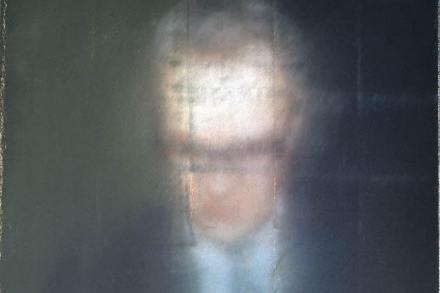
Gerhard Richter Portraits National Portrait Gallery, until 31 May George Always: Portraits of George Melly by Maggi Hambling Walker Art Gallery, Liverpool, until 31 May Gerhard Richter (born 1932) is one of the most influential figures in the art world. This show of his portraits is slightly more enlivening than his recent coloured-panel exhibition at the Serpentine, but don’t expect fireworks. Richter offers a subdued measure, a restricted purchase on the world of paint. He has said, ‘I don’t think the painter need either see or know the sitter. A portrait must not express anything of the sitter’s “soul”, essence or character.’ So what’s the point, then?

Irish stew

Dancing at Lughnasa Old Vic Burnt by the Sun Lyttelton It’s almost physically painful to see the vandalism wrought at the Old Vic by the new stage configuration. It’s like looking at some doomed Darwinian experiment, a cloven-hoofed butterfly, a spaniel with a trunk, a winged slug. Worse still is the fussy, over-ambitious set for Anna Mackmin’s production of Dancing at Lughnasa. Apparently, no one realised that bolting a sycamore tree, yes an entire tree, to the upright of the proscenium arch and then dumping a big old stove next to it would look a bit weird. Arch, tree, stove, all in a line. Strangest thing I’ve seen all year. The play is a classic Irish wrist-slasher from the Frank McCourt school of rural suicidalism. Take cover, everyone. Blarney attack.

Bellicose Bellini

I Capuleti e i Montecchi Royal Opera Education Double Bill Glyndebourne Of all the painfully premature deaths of composers, there can’t be any doubt that Schubert’s is the least endurable. Shatteringly great as his finest works are, one can envisage him striking out on new paths and taking his place beside his adored Beethoven. Mozart is the other most obvious candidate in this macabre competition, but he composed so many supreme masterworks, and there is even a sense of completeness about his oeuvre which there isn’t about Schubert’s.

British institution

Now that the Allegri Miserere season is fully launched — the text is suitable for Lent — it seems fitting to ask why every choir in the land thinks it incumbent on them to sing this piece of music, for 150 years only ever sung within the walls of the Sistine Chapel. Now that the Allegri Miserere season is fully launched — the text is suitable for Lent — it seems fitting to ask why every choir in the land thinks it incumbent on them to sing this piece of music, for 150 years only ever sung within the walls of the Sistine Chapel. It never used to be so.

Woof to all that

Marley & Me PG, Nationwide  Marley & Me is based on American journalist John Grogan’s best-selling memoir about his young family and their Labrador — ‘the world’s worst dog’ — and it all sounds horribly cloying and lame, I know, but don’t rush to judge unless you simply can’t help yourself, in which case do and you won’t regret it. This is cloying and lame and I say this as a dog lover who loves all dogs aside from the local, fat-bollocked Staffie who always tries to eat my dog (‘Tyson,’ his owner always calls out, ‘be nice...’). It stars Owen Wilson as John and Jennifer Aniston as his wife Jenny.

Get real

Did you know that in 1970s and 1980s Yorkshire there were death squads of heavily armed policemen whose job it was to assassinate anyone who got too close — be he witness, investigating officer, or informer — to unmasking their mysterious bosses’ sinister web of lies, deceit, corruption, betrayal, wife beating, torture and serial killing? No, I didn’t either. Did you know that in 1970s and 1980s Yorkshire there were death squads of heavily armed policemen whose job it was to assassinate anyone who got too close — be he witness, investigating officer, or informer — to unmasking their mysterious bosses’ sinister web of lies, deceit, corruption, betrayal, wife beating, torture and serial killing? No, I didn’t either.

Forgotten voices

Saturday night’s Archive on 4 (Radio Four) began and ended with the haunting voice of a Tibetan singer, mourning the loss of her country’s independence. Saturday night’s Archive on 4 (Radio Four) began and ended with the haunting voice of a Tibetan singer, mourning the loss of her country’s independence. In A Tibetan Odyssey — 50 Years in Exile, the veteran reporter and Sino-Tibetan expert Isabel Hilton recalled events in Tibet since its invasion by the Chinese People’s Liberation Army in October 1950. We heard the voice of Field Marshal Montgomery being interviewed by the BBC just after his visit to Mao Tse-tung in 1961. It should be required listening for every politician seconded to the Foreign Office.

Past imperfect

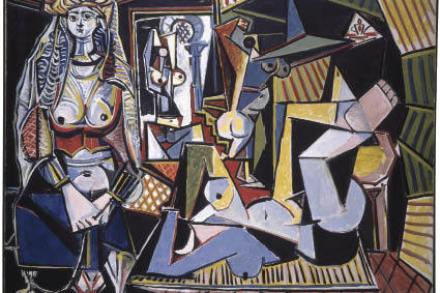
Picasso: Challenging the Past National Gallery, until 7 June The ostensible subject of this show is Picasso’s relationship with past art, and accordingly the visitor might expect to see great works of the past hung next to Picassos for purposes of comparison. This does not occur. The exhibition contains only some 60 paintings by Picasso, some of which indeed evince references to particular Old Masters, though others don’t, apart from showing the kind of sound knowledge of art history which used to be expected of artists, before the foppish ignorance of today became fashionable.

Waiting for the end

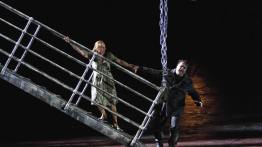
Doctor Atomic English National Opera Der fliegende Holländer Royal Opera House John Adams’s latest opera Doctor Atomic, in a production shared with the New York Met, had its UK première at the English National Opera, and was greeted with the kind of cheers that you don’t often encounter in opera houses.

Royal offensive

The Young Victoria PG, Nationwide The Young Victoria stars Emily Blunt and is based, apparently, on an idea first pitched by Sarah Ferguson, Duchess of York: ‘I know! Let’s do a film about Queen Victoria, but when she was young, and call it “The Young Victoria!”.’ She is listed as a producer as is, bizarrely, Martin Scorsese, who probably said, ‘Yes, let’s!’, if only to get her out of his Winnebago. Actually, that’s mean, particularly as I happen to admire the Duchess of York and think she has a lot more oomph than any of the other royals. Still, you would want her out of your Winnebago, wouldn’t you? Let’s not get carried away here.

Sweet temptation

There really should be a technical term for it: the compulsion to buy an album when you know beforehand that you aren’t going to like it. There really should be a technical term for it: the compulsion to buy an album when you know beforehand that you aren’t going to like it. In 2005, Paul McCartney put out a record called Chaos And Creation In The Backyard, an unwieldy title for what I thought was the best music he had made in a quarter of a century. I speak as someone who has bought an awful lot of McCartney albums. What are we searching for when we buy a McCartney album? Lovable moptop tunefulness, unaffected by the passing years? Possibly, but I rarely play my Beatles albums any more, while for the last month I have been playing little but Ram from 1971.

What’s for pudding?

Last weekend we learned that Heston Blumenthal had closed his Fat Duck restaurant in Bray, because 40 or so customers had reported feeling ill. I’m not surprised. I felt ill just watching the start of his new series, Feast (Channel 4, Tuesday), and not a morsel had passed my lips. (Actually, some years ago I managed to get a table at the Fat Duck. The food was extraordinary, the price reasonable considering it was that year’s Best Restaurant in the World, but the experience was marred by the snotty French waiter who said the tasting menu was for the whole table only, so I couldn’t have it. Since I know I will never eat there again, this was both disappointing and infuriating.) There is, I fear, some desperation in this new series. Where can Blumenthal go next?

A world beyond

Science fiction has never been the same since Douglas Adams so brilliantly lampooned the genre in The Hitchhiker’s Guide to the Galaxy, first heard on Radio Four aeons ago, back in the era of flares and hippie hair. Science fiction has never been the same since Douglas Adams so brilliantly lampooned the genre in The Hitchhiker’s Guide to the Galaxy, first heard on Radio Four aeons ago, back in the era of flares and hippie hair. Once again, though, the sound of robots clanking through the studio can be heard on virtually all the BBC’s wireless networks in a season of dramas inspired and written by some of the greats — H.G. Wells, J.G. Ballard, Iain M. Banks, Arthur C. Clarke.

Taking stock

There’s a dog-leg road junction a mile up the lane off which I live that’s made dangerous by the pub that partially obscures traffic from the right. There’s a dog-leg road junction a mile up the lane off which I live that’s made dangerous by the pub that partially obscures traffic from the right. It’s safer in the dark when headlights show up from far off. I approached it in the second before daybreak the other morning, reckoning I wouldn’t have to stop (it’s a Give Way junction) because I’d see any lights in good time. There were lights and I saw them but I pulled out anyway and made it safely across, so nothing happened. Yet as I did it I knew I shouldn’t. So did the oncoming white van man who flashed me. He was right to be annoyed.

Out of proportion

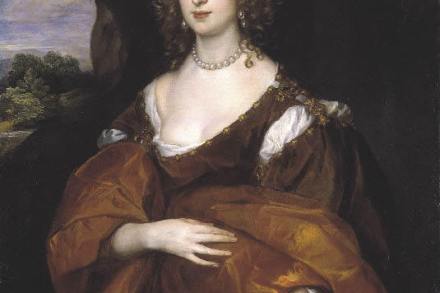
Van Dyck and Britain Tate Britain, until 17 May In the course of my work last week, which included attending the press view of van Dyck at the Tate and visiting a couple of artists’ studios, one in north London and one in Oxfordshire, I found myself thinking about the current state of exhibition catalogues. This train of thought was encouraged by having to carry the van Dyck catalogue around for two days, on and off public transport, along with the more essential items of the itinerant writer’s kit. I say ‘more essential’ because catalogues have become less useful as they’ve grown more unwieldy and overblown.