More from Arts

That sinking feeling

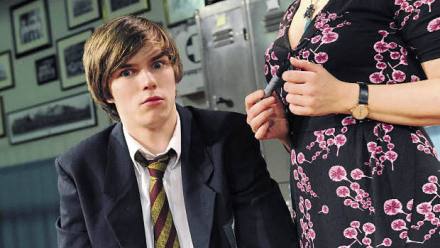
The Boat That Rocked 15, Nationwide Now, although it has always been fashionable to take a bit of a pop at Richard Curtis and his ‘feel good’ movies (Four Weddings, Notting Hill, Love Actually) and I’ve been as guilty as anyone — I am just naturally bitchy, I’m afraid — I do think it is perhaps time to move on and take it up a gear: this man has to be stopped. Pallid I can take, and unchallenging I can take, happily — in fact, there is no one who likes less of a challenge at the cinema than me — but I could not take The Boat That Rocked, an embarrassing shambles and boring in a way I’ve rarely been bored before. I felt it in the very marrow of my bones.
A critic bites back

‘All critics are failed writers,’ someone with a New Zealand accent said on Desert Island Discs the other day. ‘All critics are failed writers,’ someone with a New Zealand accent said on Desert Island Discs the other day. Obviously I have completely blanked out who it was, but I do know she was talking out of her fundament. Most of us become critics not just because we need the money (please send all cheques payable to me c/o The Spectator) but because we love the subject of which we write, and obviously because other critics drive us potty. The Pet Shop Boys have a new album out, which I haven’t yet heard, but I have read some of the reviews, one of which floated the iconoclastic notion that the Pet Shop Boys are electropop’s Ramones.

Dying well

Since the demise of Socrates in 399 BC, killed by the hemlock he was forced to drink on sentence from the state for corrupting the minds of Athenian teenagers, the Good Death has been deemed possible. According to Plato, his pupil, Socrates died with his senses intact, surrounded by those he loved and who loved him, and in control until the last moment, his body numbed but not distorted by that toxic drug. It’s a myth, of course. We know, as must Plato have known, that hemlock produces dreadful cramps, vomiting, convulsions; it would not have been possible for Socrates to remain calm, thoughtful, prescient while in such agony.

Ubiquitous Branson

Television often throws up unpleasant images to surprise you, like finding an earwig in the sugar. The BBC has got the transmission rights for Formula One motor racing, and they were lucky in that the Australian Grand Prix (BBC1, Sunday), which opened the new season, proved a very exciting race, and was won by a Brit. There were lots of crashes, nobody was hurt, and that’s the way we like it.

Getting it right

I tested the old Freelander when it first came out, taking it up the M6 into the Shropshire hills and returning with backache. That apart, I thought it a good car in four-door form, as did plenty of others — it became Europe’s best-selling smallish 4x4. But I and they were wrong: a component that would have cost a few pence to improve in manufacture meant that the majority of petrol versions had coolant problems requiring new engines at some stage (one dealer I know replaced 60), while build quality of petrols and diesels alike meant that the trim disintegrated around you. For Land Rover lovers such as me, they were an embarrassment. Will I be as wrong about the new version, Freelander 2, tested last week?

Under the stars

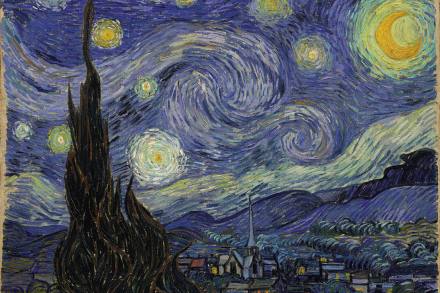
Van Gogh and the Colours of the Night Van Gogh Museum, Amsterdam until 7 June Remembering his former teacher Vincent van Gogh, the painter Anton Kerssemakers described a walk one evening in 1884 from Nuenen to Eindhoven when Vincent suddenly stopped before the sunset, framed it in his hands and, half closing his eyes, cried out, ‘My God, how does such a fellow — whether God, or whatever you want to call him — how does he do that? We must be able to do that too!’ The hours of sunset, dusk and darkness — outdoors and in — always fascinated van Gogh.

Halfway to heaven

When some 700 people throng the auditorium at Earl’s Court to hear a debate about whether eco houses are ugly, then a frustrated tree-hugger like myself may feel that we are halfway to heaven, not that I plan to share my Elysium with Germaine Greer in ranting mode if I can avoid it. When some 700 people throng the auditorium at Earl’s Court to hear a debate about whether eco houses are ugly, then a frustrated tree-hugger like myself may feel that we are halfway to heaven, not that I plan to share my Elysium with Germaine Greer in ranting mode if I can avoid it.

In the extreme

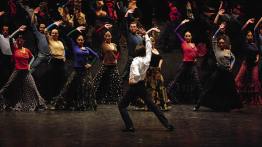
Verdi’s Requiem Royal Opera House Carmen Sadler’s Wells Every time there’s a performance of Verdi’s Requiem the issue of whether it is a liturgical or theatrical work gets solemnly discussed, as if it couldn’t be both. If you take the Creator to be the figure described or invoked in the Bible, then He clearly has a taste for highly dramatic effects. As Auden put it, ‘When God said “Let there be Light” He must have realised that He was being extraordinarily pretentious,’ and the promise that the Day of Judgment will be heralded by trumpets indicates a thoroughly operatic imagination.

A sum of all parts

Most attractively packaged, these four CDs comprising the new survey of British songwriting are issued by NMC recordings to mark the 20th anniversary of its indispensable activities; poetically evocative photographs of the initial letters, drawn from pubs, floral clocks, blue heritage plaques, transport directions, shops, warehouses, fruit barrows, etc., spell out the salient words, and promise a rich and sparky diversity of contents amply fulfilled when one knuckles down to listen. Vital statistics: the total of 110 items is slightly deceptive because 12 are partial arrangements, by NMC’s presiding begetter Colin Matthews, of a galliard by the eminent Jacobean, Thomas Morley (a 13th presents the entire dance in all its ceremonial majesty).

Sporting marriage

The Damned United 15, Nationwide The Damned United is, I suppose, a football film but if you don’t like football don’t let this put you off. (If you do, I’ll hear about it, and then you’ll be in trouble.) I liked it enormously even though football bores me stiff and I don’t know the first thing about it, although please, please — and I’m begging you here — don’t take this as a cue to get all the condiments out of the cupboard and start explaining the offside rule to me or I shall have to say to you, ‘Put the malt vinegar away, love, before I punch you on the nose. See how my fingers are already forming into a fist?’ The thing you must understand is that when I say there will be trouble, there will be trouble.

It’s so unfair

Is it really a six-figure salary? Only, this time last year it wouldn’t have seemed worth it, but now it’s looking almost as attractive as a job in the public sector. I think I might have to go for it. ‘Step up to the plate,’ as I must learn to say, if I’m to stand any chance whatsoever. There’s a place going spare at the moment, too, so it’s not totally unfeasible. I could actually be Sir Alan’s new Apprentice. Then again, no. For a man of such tremendous supposed business acumen and shrewd character judgment, Sir Alan has never been much cop at picking the right candidate. He’s unhealthily drawn to spivvy chancers like Michael Sophocles, and rough diamonds like the CV-tweaking Neanderthal who won the last series.

Not four children

Cuts. We’re going to have to get used to them in the next few weeks and months as the vast maw of recession gapes wider and wider and things start disappearing into its black hole. Cuts. We’re going to have to get used to them in the next few weeks and months as the vast maw of recession gapes wider and wider and things start disappearing into its black hole. What goes, or rather what we allow to be decommissioned, devalued or disappeared without a murmur of dissent will tell us a lot about the society we’ve become. Take, for instance, the latest changes to BBC Radio announced at the end of last week. The World Music Awards have been discontinued, as have the Jazz Awards. Both have been suitably mourned as a diminishing of radio’s rich menu.

Bathed in light

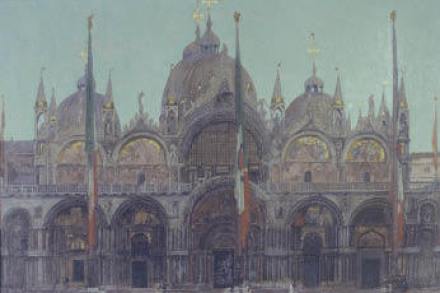
Sickert in Venice Dulwich Picture Gallery, until 31 May Walter Richard Sickert (1860–1942) is a key figure in 20th-century British art, and an immensely talented and enjoyable painter into the bargain. His long life was a productive one, so there’s room for many exhibitions dealing with different aspects of his achievement. Following the excellent Camden Town Nudes at the Courtauld last year, the current exhibition focuses on Sickert’s paintings of Venice done between 1895 and 1904. Meanwhile, at the Fine Art Society (148 New Bond Street, W1, until 27 March) is a fascinating display of Sickert as printmaker. The Dulwich show begins strongly with a roomful of views, mostly of St Mark’s Cathedral, inside and out.

No questions asked

Berlin Hanover Express Hampstead Invasion! Soho When TV writers turn to the stage there’s often a suspicion of fly-tipping, of rejected ideas being dumped in the hope that others will tidy them away. Ian Kennedy Martin, creator of The Sweeney, has come up with a cracking theme. Berlin, 1942. Two Irish diplomats grapple with the conflict between their country’s neutrality and the emerging evidence of the holocaust. To compound the dilemma, the beautiful cook at the Irish embassy is a covert Jewess being investigated by the Gestapo. But it all goes wrong in the details. The diplomats are unlovable misfits. O’Kane, played by Owen McDonnell, is a debt-ridden loudmouth who drinks claret for breakfast and boasts endlessly about his father’s friendship with de Valera.

Efforts rewarded

La fedeltà premiata Royal Academy of Music Jenùfa English National Opera Everyone agrees that Haydn’s operas are a disappointment, given what is now widely regarded as his supreme musical stature, but it’s hard to say just why. In the case of La fedeltà premiata (Fidelity rewarded), which the Royal Academy of Music staged brilliantly — my efforts to persuade soi-disant opera lovers to go to these productions of the music schools are, it seems, a total failure — one reason could be the insanely complicated plot, which I abandoned any attempt to follow. Richard Wigmore, in his Faber Guide to Haydn, quite rightly points out that the finale to Act I is as extended as any Mozart finale, and gathers an impressive momentum.

Music therapy

My son turned to me in the car the other day, and observed, ‘This is the band you’ve been waiting for, isn’t it, Dad? My son turned to me in the car the other day, and observed, ‘This is the band you’ve been waiting for, isn’t it, Dad?’ Playing on the car’s CD player, at a volume that would have led my wife to accuse me of deliberately trying to deafen our own child had she been present, was Focus Level by a New York group called Endless Boogie. My God, they hit the spot.

Bring back Benny Hill

Lesbian Vampire Killers 15, Nationwide There really isn’t a lot to say about Lesbian Vampire Killers apart from this: don’t go anywhere near it. Just don’t see it. Do something else instead. Do anything else instead. Catch up with your ironing. In fact, if you don’t mind me saying, last time I came round and saw the size of your pile, I was shocked by how behind you are. So it has to be a better option than this, a horror spoof which, as far as experiences go, is like being smacked round the head with a copy of Nuts magazine, and smacked hard. It’s all endlessly repeated ‘tit’ jokes and ‘fanny’ jokes and ‘knob’ jokes and it’s not as if I even mind a ‘knob’ joke usually.