More from Arts

Island inspiration

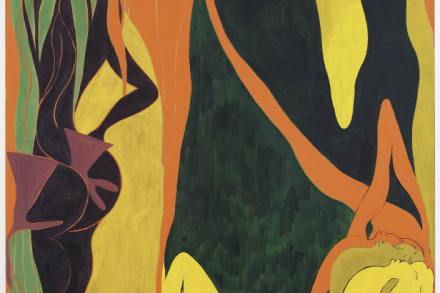
Chris Ofili Tate Britain, until 16 May There’s always something temporary-looking about an installation of Chris Ofili’s early paintings. These works are not hanging on the wall, but lean against it, propped up on feet of elephant dung — the best-known ingredient of this Turner Prize-winning artist’s work. As a consequence, the exhibition looks as if it’s still in the process of being hung, and these elaborately decorated and largely trivial paintings have yet to be hoisted on to the gallery walls.

Blunt instrument

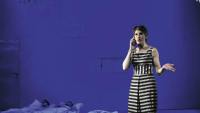
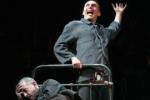
Enron Noël Coward Fool for Love Riverside With Enron, the playwright Lucy Prebble has picked an almighty task. The Texas fuel giant collapsed in 2000 with $30 billion worth of debt, which at the time was the largest bankruptcy in the history of money. The firm’s bosses flipped through the almanac of bent accountancy and lighted on a hoary old swindle. A shadow company was created to buy up their loss-making assets thus boosting profit margins and forcing the stock price skywards. To get the auditors to sign off the paperwork Enron simply bribed them. Anyone hoping to find any ingenuity or sophisticated elegance in the fraud will be disappointed. Money is a very blunt instrument in this play. So is the writer’s technique.

Anything goes | 6 February 2010

God and the editor willing, next month’s column will be the 100th ‘Olden but golden’. God and the editor willing, next month’s column will be the 100th ‘Olden but golden’. For those who write in The Spectator every week, this would doubtless seem small beer. For a monthly column it feels like a landmark and one I sometimes doubted I would reach. And of course I may not.... As any journalist will tell you, every piece you write has the potential to be your last. ‘Olden but golden’ began in October 2001, and I was pleased as Punch to be allowed to do it. Pop music has been a big part of my life since 1963, when I was eight and first discovered the Beatles.

Displaced families

Imagine, if you will, that it’s 1922 and you’re living in a small mountain village thousands of miles from Istanbul above the shores of the Black Sea. Imagine, if you will, that it’s 1922 and you’re living in a small mountain village thousands of miles from Istanbul above the shores of the Black Sea. You’re a practising Christian, and there’s a tumble-down cruciform church in the central square, with an icon of the Virgin hanging above the altar. Life until now has been ruled by the Ottoman Turks, but you speak a version of Greek handed down from the days when this part of Asia Minor was ruled by the emperors of Byzantium based in Constantinople.

Broken Britain

I’ve got another brilliant idea for a TV series. I’ve got another brilliant idea for a TV series. It’s called MPs Walled Up in Scorpion-Filled, Ebola-Ridden, Plague-Rat-Infested, Acid-Drenched, Radioactive Tower Block of Slow Hellish Screaming Death. All right, so the title does give away the premise, slightly, but I’d still watch it, wouldn’t you? 24/7. Done right — with special feature-length episodes devoted to Ed Balls, Harriet Harman, and the Milibands — I reckon it would be more satisfying than Band of Brothers, The Sopranos, Das Boot, South Park, The Simpsons and University Challenge rolled into one. And from me, that’s quite an accolade.

All change at Hampstead

As Ed Hall takes over the Hampstead Theatre, Lloyd Evans offers some advice on how to run this prestigious venue Congratulations, mate. You’ve landed a plum job. And a bloody tough one, too. Paradoxically, it’s harder to run a single venue than to run a group of theatres. The focus is tighter. There’s less opportunity to experiment, to learn as you go, to fine-tune your style. You have to get it right fast. Here are some hints. First, where are you? Since moving to its new premises in 2003, the Hampstead has barely left a trace on London’s theatre scene. Many play-goers have yet to pay their first visit. You’re a product in a marketplace but you’re invisible.

Extremes of joy and suffering

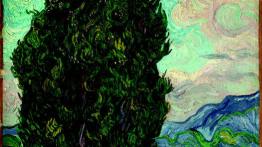
The Real Van Gogh: The Artist and His Letters Royal Academy, until 18 April Sponsored by BNY Mellon From time to time we need to remind ourselves of the astonishing fact that Vincent van Gogh (1853–90) produced more than 800 paintings and 1,200 drawings in a mere ten-year career. He also wrote letters, of a depth and originality that qualify them as literature in their own right. So much to offer the world, such a sense of discovery and originality, yet he took his own life while still in his thirties. For decades, Van Gogh has been the artistic god of the self-taught and the misunderstood, making a particular appeal to the adolescent mind. I remember devouring my first book on him in an unusually quiet school dormitory during an influenza epidemic.

In sight of the <em>Ring</em>

Anniversary-consciousness is no doubt primarily commercially driven, certainly in the music world, where the fact that a scarcely remembered composer has been dead for exactly 300 years is a reason for featuring him as This Week’s Composer on Radio Three, but more importantly for many record companies to persuade us that it is time to revalue his contribution to the Orpheus myth, the first to have a bass hero, etc., etc.

Fab four

The last of 2009’s remarkable concatenation of musical anniversaries was celebrated — if that is the word — by Radio Three on New Year’s Eve with a chat show in which each of the four great composers was allotted a defence by a noteworthy music lover, backed up by live phone calls for a brief, impromptu telegram, illustrated with well-chosen extracts from their works, subjected to dissenting discussion, and eventually put to the vote at the hands of the anonymous mass of listeners.

Dealing and drifting

Six Degrees of Separation Old Vic, until 3 April The Little Dog Laughed Garrick, booking to 10 April Even those who’ve never entered a theatre know the title. John Guare’s 1990 play, Six Degrees of Separation, tells of a penniless black hustler, Paul, who inveigles his way into New York’s upper-class society by claiming to be the son of Sidney Poitier. The couple he bamboozles are art dealers. Wily, avaricious and insecure, they work without a gallery and instead operate in the shadows of parties and restaurants, like illicit bookies, speculating in works which they own briefly and then ‘flip’ to the next greedy broker or syndicate.

Sound check

Thank heavens for Chekhov! Master of the mundane, the boring monotony of daily life, the meaningless passage of time, he actually makes the random chaos, the pointless repetitions of day-to-day survival seem somehow rather beautiful. Or at least he helps us to realise that we’re all enduring the same feelings that life is useless and trivial and dull, so why worry. Just get on with it.  Radios Three and Four have been giving us a feast of the Russian writer (born 150 years ago), with plays, features, monologues. It’s been the perfect antidote to this drabbest of all Januarys, now that the snow has gone leaving behind layers of grimy grit through which a few timid bulbs are struggling to peep.

Perfect pitch

Our attitude to the past of our own youth is like our feelings towards an old grandfather: we love him, admire him for what he’s done, but, goodness, we don’t half patronise him. Our attitude to the past of our own youth is like our feelings towards an old grandfather: we love him, admire him for what he’s done, but, goodness, we don’t half patronise him. ‘Gosh, grandad, you mean if you weren’t at home, nobody could phone you? How did you find anything out without Google?’ Television does this mixture of affection and condescension very well. Rock and Chips (BBC1, Sunday) was John Sullivan’s prequel to his astoundingly successful sitcom Only Fools and Horses. It was set in 1960 and told the back story. But this was scarcely a comedy at all.

Keeper of the treasure

It’s lovely here in the Art Fund director’s office, both elegant and cosy. Windows sweep from floor to ceiling, an Iznik bowl on a low table reflects the glow from a gas fire. But, even so, Stephen Deuchar doesn’t seem quite settled. It’s the way he moves warily across the room; turns to stare at his computer when it makes a noise. Do you feel at home here yet? I ask. ‘No, not yet. But, actually, being uncomfortable isn’t a bad thing.’ Deuchar sits down on a sofa opposite me and grins. ‘I know from having spent 11 years in my last job [he was founding director of Tate Britain] that it’s much easier to see things clearly when you’re uncomfortable and new.’ So what does Dr Deuchar see? Well, the Art Fund is a curious place.

Family tensions

Greta Garbo Came to Donegal Tricycle Every Good Boy Deserves Favour Olivier Frank McGuinness, the world’s leading supplier of Celtic Kleenex drama, is back with a variation on his favourite theme. Misery upon misery bravely borne in a green, green island long, long ago. The twist is the addition of Greta Garbo. In 1967, the wandering superstar visited McGuinness’s home town of Buncrana in Donegal. This nugget of truth is decorated with fictional frills. McGuinness billets the melancholy hermit on an invented Irish family, the Hennessys, whose house has been bought by a society painter from England. The toiling Irish underlings are thus condemned to scrub and skivvy in a mansion their ancestors once owned. Family tensions are accentuated by this daily humiliation.

Ocean of ugliness

Elektra Barbican La bohème Opera North In his little-read but wonderful book Daybreak, Nietzsche writes: Our composers have made a great discovery: interesting ugliness too is possible in their art! And so they throw themselves into this open ocean of ugliness as if drunk, and it has never been so easy to compose...But you will have to hurry! Every art which has made this discovery has turned out to have only a short time to live. Written in 1880, with Wagner in mind but unmentioned, the words fit Richard Strauss’s Elektra with uncanny precision. Everyone exclaims about Strauss’s alleged retreat from modernism after Elektra, but where was there to go?

Confessions of a Cog

There’s something about Chris. There’s something about Chris. Don’t know what it is. But his Radio Two breakfast show is so bright, so bouncy, so full of bonhomie, it’s irresistible. I just can’t turn it off — even though I know Evan and Jim are waiting patiently on the other side. By the weekend I was wondering how I’d cope without that blast of high-octane energy to wake me up. Yes, I’m going to have to admit it. I’m a Cog — and proud of it. He’s not, it’s true, blessed with Sir Terry’s smooth, seductive voice. It’s actually a bit hoarse and grating, and the decibel level is far too high for first thing in the morning when it’s still pitch-dark beyond the bathroom window.

Glorious send-up

Bellamy’s People (BBC2, Thursday) began life in 2006 as a spoof Radio Four phone-in show called Down the Line presented by ‘award-winning’ Gary Bellamy (Rhys Thomas) with the Fast Show’s Charlie Higson and Paul Whitehouse playing the various callers. Bellamy’s People (BBC2, Thursday) began life in 2006 as a spoof Radio Four phone-in show called Down the Line presented by ‘award-winning’ Gary Bellamy (Rhys Thomas) with the Fast Show’s Charlie Higson and Paul Whitehouse playing the various callers. Now it has moved to TV and its satirical target — not before time — are all those programmes where celebrities drive round the country meeting people and saying, ‘Isn’t Britain brilliant?