More from Arts

More of everything

Peter Phillips on Nicholas Kenyon’s Proms swansong and a lost masterpiece Nicholas Kenyon’s swansong at the Proms this summer is surely the most elaborately complicated, one might say contrapuntally conceived, series of concerts ever staged. Just reading the blurb makes one’s head spin — so many themes, so many anniversaries, so many reasons for paying attention that there comes a point when one might, most ungratefully, just wish that a concert was there because the performers wanted to perform the music they had chosen. But I suppose that if you are to live within the hype of a series this extended (90 concerts and countless fringe activities), you have to have some binding. There really is more of everything, not least in striving to attract new audiences.

Insider Dealing

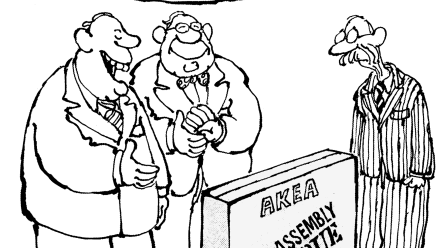
It’s a commonplace these days for satirists and their fans to claim that they have an unnerving ability to know how politicians work behind the scenes. ‘Someone from No. 10 said, “How on earth do you get it spot-on, every time? It’s uncanny.”’ For instance, some years ago Rory Bremner was playing Tony Blair. There was a bowl of fruit on the set, so he picked up an apple and started munching. Apparently Blair (I’m sure you remember him; tall chap, rather unnerving smile) did the same thing in real life, and this convinced the ever paranoid team in Downing Street that there was a mole spying on them. Bremner insists that there wasn’t; eating an apple just seemed the logical thing to do.

Celebrating Stoppard

Strange to think of Tom Stoppard attaining three score years and ten. It seems a mere nanosecond since we were first dazzled by his disturbing take on Shakespeare, Rosencrantz and Guildenstern Are Dead, and his plays are still characterised by the tumbling ideas and linguistic foreplay of youthful ingenuity. To celebrate his birthday, BBC Radio has come up with an unusual season of plays that spans the stations from Radio Three to BBC7. This week you could have heard Arcadia and his 15-Minute Hamlet on Radio Four, while on Radio Three the Nightwaves team discussed the extraordinary success of R&G, which was premiered by Laurence Olivier’s National Theatre company at the Old Vic in 1967.

Absolute blast

My computer gave up the ghost last week. I bought it in 1999 and in recent months it has felt a bit like one of those clapped-out spaceships in Dr Who, held together only with wire and willpower as you force it through the space-time continuum. Normally such technical failure would reduce me to fury or tears or both, but I’ve remained eerily calm. I’ve been living on borrowed time for months, and there is a kind of peace about not feeling a constant need to check your emails. I have however missed the web, six words I thought I would never write.

Hugh Mistake

I thought I was unembarrassable, at any rate with the lights out. ENO’s production of Kismet has proved me wrong. I sat blushing furiously and sweating, when I wasn’t struggling to keep my eyes open and head up. Anyone who thinks — and some people do — that artistic badness is merely a lack of artistic goodness should see this show and admit that they have been decisively refuted. It has every variety of ineptitude, and it isn’t easy to imagine who looked at the script and read the score and still decided it was performable; what is harder still to imagine is how it can ever have been a popular hit. In 1953 lyrics about the desirableness of living in Baghdad, what fun it is, merry and gay, and so on, wouldn’t of course have seemed out of place.

Cry Freedom

Edmond 18, Key Cities Edmond Burke (William H. Macy) is middle-aged, middle-American, dully employed, dully married. One evening, on his way home from work, a quasi-mystical whim leads him to consult a fortune-teller who tells him, ‘You are not where you belong.’ The consequences of this are felt later that evening when he says to his wife, ‘I’m going.’ ‘For cigarettes?’ she queries. ‘For ever,’ he replies. He flees. He flees first to a bar where he cries, plaintively, ‘I want to feel like a man.’ Then it’s to Palm Beach where he buys a condo, starts a vegetable garden, plays boules, does yoga, lives happily ever after.

Gloom and sparkle

As we are constantly reminded, every exhibition in these novelty-obsessed times has to be the first to do something, and the Tate’s rather dreary photo show is no exception. ‘The first major exhibition ever to present a photographic portrait of Britain from the invention of the medium to the present day,’ trumpets the press release. What a rich and varied panoply of images that suggests, and how tawdry and oddly defeated the reality proves to be. Forgive me if I single out only a few photos which seem to express some kind of hope or optimism: the leaden weight of material here is so depressing as to require substantial editing.

The ‘transvestite potter from Essex’

I was intrigued to meet Grayson Perry — who wouldn’t be? I hadn’t known his work before he hit the national headlines in 2003 as one of the artists shortlisted for the Turner Prize, which he subsequently carried off in triumph as his alter ego ‘Claire’, dressed to kill in mauve satin frock with ankle socks and red patent-leather Mary-Jane shoes. Since then, everything I’ve seen or heard indicates a truly original talent, an integrity matched with iconoclastic wit.

Kristin defrosted

Kristin Scott Thomas has a bee in her bonnet. Actually, she has several bees in her bonnet. It’s more like a beehive than a bonnet. ‘British cinema is at death’s door,’ she rages. ‘Funding is a real issue. But people just aren’t making the right decisions about what gets made.’ I’m speaking to her at her home in Paris, in theory to discuss her latest film, the French thriller Tell No One. But talking about French films has got us talking about British films and talking about British films gets her hopping mad. It’s all to do with America. It’s so difficult to get financing for films in Britain, she explains, that film-makers have to go cap in hand to the United States.

An odd bunch

Artists’ Self-Portraits from the Uffizi The Uffizi is to Florence what the National Gallery is to London, and part of its astonishing collection is devoted to a unique array of self-portraits, housed now in the Corridoio Vasariano. This long corridor, which links the Palazzo Vecchio to the Palazzo Pitti, was designed by Giorgio Vasari, artist, architect and grandfather of art history with his classic Lives of the Artists. The self-portrait collection was begun in the 17th century by Cardinal Leopoldo de’ Medici, and has been added to ever since, but its documentation has never been precise. Thus there are two self-portraits by Guercino in the collection, both disputed by scholars, but neither seems to be the one originally commissioned by the Cardinal.

Mountain people

John Ruskin (1819–1900) was Britain’s leading authority on art in the 19th century, and his voluminous writings had a profound influence on both artists and public appreciation. The process of art, according to Ruskin, was one that should be founded upon the truthful perception of nature, and landscape art and its practitioners, notably Turner, were the focus of his prescriptive ideas. A work of art was not about replication or, at the other extreme, artistic expression, but an artist’s ability to respond to and capture the form, colours (hue) and tones of Nature, as perceived at certain times of day, or under key atmospheric conditions. As art was a celebration of God-given beauty, the more sublime and awe-inspiring the landscape depicted, the better.

Heaven before your eyes

Scripts like sheep, marks dancing out of the ears; but amidst the academic year’s most frazzling fortnight there have been five successive events in Cambridge of pure ecstasy — pleasure more spiritual than carnal — chaste, severe, poised to ‘bring all Heaven before your eyes’. Thanks to collegiate generosity, the viol-consort Fretwork, finest of its kind, has enjoyed a term’s residency at Sidney Sussex, and just crowned it with evensongs in four other college chapels, each with its distinctive choir, style, building, acoustic, dipping a toe into the sea of 17th-century church music that uses this four-, five-, six-voiced ensemble to support the singers, and adding a rich selection of purely instrumental fantasias to open and close the five services.

Handful of women

At The Five Wives of Maurice Pinder I had to suspend my disbelief so hard that my brain chafed. Mr Pinder is an ordinary south London labourer who likes marrying, getting divorced and keeping the divorcees at home. Curtain up and he’s living with three former wives — and a new young filly has just cantered into the yard. The women rub along OK and accept that each gets just one night a week with the epic seducer. Only Mr Pinder isn’t epic, nor is he much of a seducer. He’s a sentimentalist who likes nattering and cuddling. Wife number one is a childless long-suffering depressive and it’s easy to see how the obsessive spouse-collector bagged her.

Shrek goes soppy

Oh, for heaven’s sake, now they’ve gone and ruined Shrek, and I hate them for it. Indeed, may those responsible be damned to the eternal fires of hell. Failing that, may they at least wake up one day with their feet on the wrong way round and an elbow for an ear. How dare they? How could they? I so loved Shrek: noisome, lousy, foul-breathed Shrek. Shrek of the bottom-fumes so noxious they could wilt flowers. Not too far removed from your average bloke, then, but wasn’t Shrek kind of lovable, too? And cute and funny? And didn't you love Donkey? ‘Parfait, parfait, everybody loves parfait.’ That’s Donkey from the first movie and it still makes me laugh even though I couldn’t tell you why or what parfait is exactly.

Who dares and wins

Doctor Who (BBC1, Saturday) has been particularly brilliant of late and I think Spectator readers should know. There were moments in the first two new series where one might reasonably have gone, ‘Yeah, but it’s still not a patch on the original.’ But as series three draws to an end, I don’t think there can be any more doubt: the new Doctor Who is the greatest British TV sci-fi series since Quatermass. Where did it go so incredibly right? My personal theory on this — based on wishful thinking, mainly — is that it has to do with the episode in the first series called ‘The Empty Child’. If you saw it, you’ll never forget it. It’s the one with the spooky child wearing the gasmask who goes round saying, ‘Are you my mummy?

Books at bedtime

The last thing Winston Churchill (or Ramsay MacDonald, for that matter) would have thought of discussing before taking power as prime minister was the kind of books they read to their children, or took to bed with them after a hard night’s slog wading through government papers. But such are the times we now live in that Gordon Brown felt compelled this week to disclose to Mariella Frostrup that his favourite children’s book was an illustrated fable by Julia Donaldson. (For the uninitiated she writes books like The Snail and the Whale and The Gruffalo, whose square-jawed visage has already become so familiar to families with young children.) Frostrup interviewed our new PM for Open Book (Radio Four, Sunday), asking him to choose five of his favourite books.

Lord of the crags

There is a corner of Northumberland, in the valley of the River Coquet, where the climate has been changed for ever by the actions of one man. In the mid-1860s, William Armstrong set out to transform vast tracts of raw, bleak moorland into what he described as ‘an earthly paradise’ and by the time of his death in 1900, at the age of 90, he had planted over seven million trees and shrubs on an estate of more than 1,700 acres. Armstrong’s intention had been to recreate a rugged Himalayan landscape of rocks and streams and cascades — a damp valley environment that, as it happened, was well suited to conifers.

A Pevsner for paintings

There is a remarkable project of great enterprise and diligence in progress throughout the land — a plan to catalogue all the oil paintings (as well as those in acrylic or tempera) in national collections. This gigantic task is being undertaken by a charity called The Public Catalogue Foundation, which is publishing its findings in single volumes dedicated to different areas of the UK. The aim is to give a county-by-county account of pictures in museums and other public collections. As I write, I have in front of me half a dozen of the Foundation’s catalogues: West Yorkshire: Leeds; Cambridgeshire: Fitzwilliam Museum; East Sussex; North Yorkshire; Suffolk and Imperial War Museum.