Letters

Letters: Keir Starmer has failed the country

The word of God Sir: Douglas Murray complains that the C of E has embraced the ‘new religion’ of anti-racism (‘The C of E’s new religion’, 20 March). But the truth, which neither he nor the church seems to have realised, is that the ‘anti-racist’ agenda is a secular attempt to plug a long-standing gap in western Christianity. The answer is to recover the full message, not to bolt on new ideologies. The earliest Christian writings insist that in the Messiah ‘there is neither Jew nor Greek’. The book of Revelation envisages Jesus’s followers as an uncountable family from every nation, tribe, people and language.

Letters: What really irritates Meghan’s critics

Meghan’s adroitness Sir: Tanya Gold suggests that people criticise Meghan Markle because she is mixed race and a woman, and states it is because she has dared to attack the royal family (‘In defence of Meghan’, 13 March). I think that misses the point. For a great number of people, her narrative simply does not ring true. Over the past few decades, thousands of media articles have accused the royal household of being claustrophobic, pedantic and antiquated. But unlike the young and naive Diana, Meghan was a thirtysomething TV star with agents and PR people when she met Prince Harry. It’s hard to believe she didn’t know what she was letting herself in for.

Letters: What happens if interest rates rise?

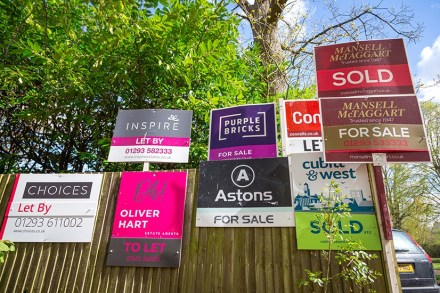
Spinning plates Sir: Kate Andrews is right to highlight the looming risk of inflation (‘Rishi’s nightmare’, 6 March), but to say that the UK has known barely any inflation for almost a generation misses a very painful point. It may be true for consumer prices. Low interest rates and quantitative easing, along with other ill-advised stimuli, have caused huge inflation over the past two decades in the single greatest expense throughout most working people’s lives: the cost of housing.

Letters: The key to Scotland’s future

The key to the Union Sir: ‘Love-bombing’ the Scottish electorate with supplemental spending in devolved areas (‘The break-up’, 27 February) is unlikely to prove a decisive tactic in the ongoing battle over Scottish independence. It will never be enough, and the average voter will not distinguish Westminster spend from Holyrood’s. Neither should opposition to an independence referendum be the Scottish Conservative and Unionist party’s primary policy in the upcoming Holyrood election. Falling into the SNP trap of focusing on this issue allows the party to pursue its agenda of confected grievance and division. Secession is the SNP’s preferred battleground, not least because it permits deflection of their record in government.

Letters: Immunity passports are nothing to fear

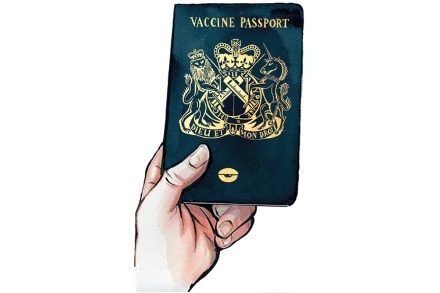
Nothing to fear Sir: Many of us await the day when we can travel abroad for much-anticipated holidays — but surely there is a distinction between immunisation passports and Tony Blair-type IDs (‘Papers, please’, 13 February)? If a country requires you to be immunised to travel there in order to protect its citizens against Covid, then I would be happy to have that ‘passport’ requirement. It is quite different from carrying ID with you in your own country. Let’s face it, the danger from Covid will fade in time, and the ‘passport’ requirement along with it. After all we happily travel with a passport in our pockets to show who we are when we go abroad. Didn’t people have the same worries when passports were introduced?

Letters: Immunity passports are nothing new

Too many bishops Sir: As a former Anglican clergyman, I have been following your articles about the current state of the Church of England with interest and sadness. I note that the recent article by the Archbishops of Canterbury and York is strong on modish phrases, such as a ‘mixed ecology church’, but it ignores two of the large elephants in the room (‘A Christian vision’, 13 February). The number of bishops over the past century has more or less doubled, in spite of the diminishing number of worshippers and parish clergy. Likewise, while archdeacons used commonly to run their own parishes in addition to their archdiaconal duties, they are now separately housed and paid, along with an army of administrators and advisers.

Letters: How to repair the Church of England

Save on bishops Sir: The Church of England is once again missing the point if its financial crisis will result in the closure of parish churches and redundancy of clergy (‘Holy relic’, 6 February). Radical action is required, but the focus should be elsewhere. A starting point would be to amalgamate the vast majority of dioceses. Why is East Anglia served by the C of E dioceses of Ely, Norwich, St Edmundsbury and part of Peterborough when the Roman Catholics manage more than adequately with a diocese for East Anglia? Time to unite and benefit from economies of scale. But it should go much further: halve the number of bishops, diocesan and suffragan, and axe some of the non-jobs with fancy names which seem to proliferate in and around the centre.

Letters: How to revive Britain’s orchestras

Good conductors Sir: Yes, it is sad to see talents like Sir Simon Rattle and Mirga Gražinyte-Tyla leaving our shores (‘Rattled’, 30 January) and yes, the Brexit complications faced by British musicians are ludicrous. But both might be bearable if there were sufficient investment in grass-roots music here. At least then we could hope that the gap left by departing maestri would be quickly filled by homegrown talent. Unfortunately, the government continues to turn a blind eye to musical education, despite the many studies evidencing its benefits.

Letters: Don’t overlook the Trumpisms

Canterbury tales Sir: Having opened my copy of The Spectator upon arrival in the post, I read your article ‘Welby’s gatekeeper’ with interest (23 January). I was surprised and humbled to discover how much power and influence I have over the political engagement of the Archbishop. Let there be no doubt that the Archbishop sets his own agenda. More fundamentally and crucially, I was disappointed to see victims of abuse and wider issues relating to safeguarding being brought in to play in a politically focused piece about the workings of Lambeth Palace. It is a matter of public record that the Archbishop and his team are ready to meet with survivors and have done so regularly.

Letters: The Church of England’s Covid shame

Paradise lost Sir: After reading Jonathan Beswick (‘Critical mass’, 16 January) I am writing to express the shame I feel as a lifetime member of the Church of England at our Church’s attitude to this pandemic. Here was the greatest opportunity in 70 years to demonstrate care for our fellow people, to advertise our faith and love and to keep the Church in the public eye. I hoped that there would be thousands of Church members flocking to help the lonely and the isolated. But I find my local church locked. This was the chance for the Church to show commitment and sacrifice for the good of the community, to cast aside timidity and get on with normal life, as does the postman, the milkman, the parcel delivery brigade, the health service and many others.

Letters: Lockdowns ruin lives

Lockdown damage Sir: I am sick and tired of people taking the moral high ground and looking down on ‘lockdown sceptics’ like me as if we don’t care. It’s ironic, because while there is no clear evidence to date that national lockdowns actually save more lives (contra the interview with Matt Hancock, 9 January), there is plenty of evidence that lockdowns ruin lives. If anyone should take the moral high ground it is those, like myself, who witness this ‘collateral damage’ on a daily basis. Yes, the health issues are complex. And who would want to govern at this time?

Letters: Is cycling really conservative?

Veritas vincit Sir: Professor Dawkins eloquently and engagingly defines true truth for us (‘Matters of fact’, 19 December). It seems to me that ‘true’ is a poor little four-letter word with a heavier workload than is reasonable. Historic truth may include ascertainable facts, which I suppose he would pass, but combined with conclusions based on available evidence or ‘true-to-life’ conjecture. Theological truth combines historic fact with unassailable moral principle and a journey of imagination beyond the reach of experience. It cannot be called untrue — only unproven. Perhaps we need to find a word with more gravitas than ‘truth’ for the scientists. I suggest ‘veritas’ — as found in vino.

Letters: The case for immunity passports

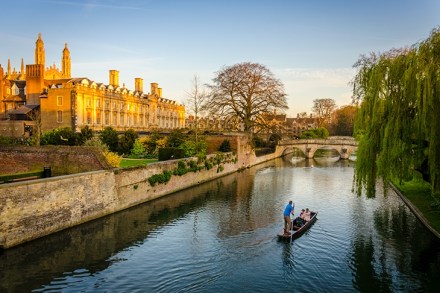
Joy Sir: Alexandra Coghlan identifies the coincidence between the rise of recording and broadcast technology and the flourishing of the Choir of King’s College, Cambridge (‘Going for a song’, 5 December). Just as the publication of A Christmas Carol in 1843 coincided with cheaper books and a growing readership to forge the modern Christmas, so recent improvements in musical technology have just as firmly established its soundtrack. If Dickens created our modern Christmas, then its musical accompaniment should be accredited to Sir Stephen Cleobury, who served as Director of Music at King’s for 37 years until his retirement in September 2019.

Letters: Eton is failing to protect freedom of speech

Eton mess Sir: As much as I am a great admirer of Charles Moore, as a former Eton master and head of the Perspectives lecture series (over which Will Knowland has been dismissed), I must disagree with his analysis (‘The Spectator’s Notes’, 5 December). The format of the lecture series is designed for individual speakers to defend an academic point of view on a controversial topic, which is then discussed in class. Perhaps Mr Knowland’s lecture contained certain errors, but that should not have constituted a reason to discipline him. The initial decision not to allow the lecture to be used was lamentable. The headmaster has the right to exert discipline within the school, and masters must do anything he reasonably requests of them.

Letters: Labour’s left vs left struggle

Left vs left Sir: Your leading article (‘Comfort spending’, 28 November) makes the classic mistake about modern politics which prevents so many from grasping what is going on. You refer to Sir Keir Starmer as the leader of a battle against Labour’s left by its ‘centre’. Since Neil Kinnock’s pantomime battle with Militant in 1985, political journalists have been beguiled by a fantasy. They think that Labour leaders who attack villainous leftist factions do so in the cause of moderation. But this is in fact a battle by the sophisticated left — of post-1968 cultural revolutionaries — against the crude and embarrassing steam-powered left of Militant or Jeremy Corbyn. Each thinks the other is the wrong kind of socialist.

Letters: Solidarity is the best thing for Scotland

SNP sophistry Sir: Andrew Wilson (‘Scot free’, 21 November) poses the question: ‘What if the case for independence was a highly sophisticated position?’ If only. For the SNP position is one of sophistry rather than sophistication. Wilson states that Scottish voters want Scotland to return to Europe. He also states that an independent Scotland would retain sterling, but does not mention the two policies are incompatible. It would be impossible for an independent Scotland to join the EU using sterling.

Letters: The limitations of a Covid vaccine

Still distant Sir: In James Forsyth’s analysis (‘Boris’s booster shot’, 14 November) he infers that a vaccine, if provided to the majority of the UK population, would deliver herd immunity from Covid-19, noting that ‘it seems increasingly probable that by the second half of next year, we will be emerging from this Covid nightmare’. I pray that he is right, though fear he may not be. In a recent Lancet editorial the view expressed was the exact opposite, as it notes that any vaccines are ‘unlikely’ to prevent transmission, though will reduce the severity of symptoms and likelihood of death.

Letters: Why lockdown II was necessary

Cancelled procedures Sir: Your leader (‘A lockdown too far’, 7 November) suggests that the Prime Minister should have shown ‘leadership’ and ignored Sage’s call for a second national lockdown. Sam Carlisle (‘No respite’, 7 November) illustrates why this would have been a mistake. Sam reminds us that ‘half of community paediatricians were deployed to acute services’ during the pandemic’s first wave. Many other specialists were similarly redeployed. That the NHS was not overwhelmed in the first wave was precisely because most routine work stopped and staff were redeployed en masse to treat Covid-19 patients. Leaving projections aside, there were in fact 13,000 Covid-19 patients in hospital on Sunday 8 November.

Letters: Wales has been betrayed by Westminster

Woeful Wales Sir: Allison Pearson succinctly points out the absurdity of the so-called Welsh government and its assembly, now trying to masquerade as a parliament (‘Wales of grief’, 31 October). For those of us living in Wales it is difficult to talk of the Welsh Assembly without using the F-word: failure. For the past 20 years it has failed the Welsh people at every conceivable level, while building a conceit that it is a true government. The only irony of the current Covid-19 debacle is that for once it has been forced to actually do something instead of talking endlessly around a subject before doing nothing. I have described its failure as the Sadim effect.

Letters: How Nicola Sturgeon outdoes Boris

Ask the English Sir: Toby Young rightly criticises the juvenile posturing of the devolved governments of the Union over Covid-19 (No sacred cows, 24 October). Each of these governments has implemented extreme lockdown measures without consideration of their cost to the taxpayer. As 90 per cent of British taxpayers are English, this represents an egregious example of ‘taxation without representation’. In contrast, I watched the Commons announcement of a Tier 3 lockdown in the north of England, which was followed by an opposition reply, and then a reply from the SNP. Surely I wasn’t the only Englishman to ask: ‘What’s it got to do with them?’ Toby Young is right to call for a new referendum to bring this nonsense to a halt.