Letters

Letters: why Scots want independence

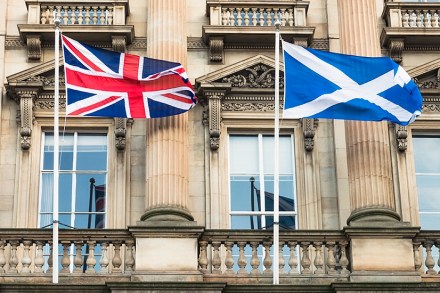
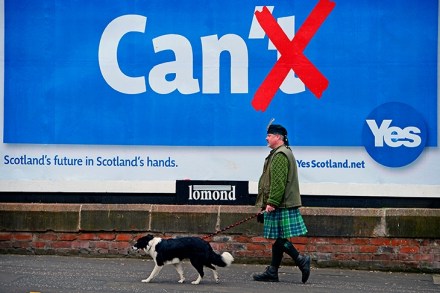
State of the Union Sir: Writing in a week that an opinion poll shows 58 per cent support for independence in Scotland, it seems bizarre for Professor Tombs to claim that commentators are ignoring ‘the death throes of separatism’ (‘Out together’, 17 October). He argues that nationalist supporters rely on the Brexit and Covid-19 crises to advance their cause, and that they will be in retreat once things return to normal. Then, once doubts begin to bubble up about the financial and economic uncertainties of independence, Scottish voters will return to the unionist cause. These arguments may give him some comfort, but here in Scotland they seem unreal.

Letters: what unites the two sides of the mask debate

Wind worries Sir: You are right to side with the 2013 version of Boris Johnson, when he claimed that wind power could not pull the skin off a rice pudding (‘Boris’s second wind’, 10 October). However, it was wrong to claim that offshore wind at £40 per megawatt hour makes Hinkley Point C, at over twice that price, look like a bad deal. The nuclear plant will be able to provide reliable, constant baseload power for up to 50 years. A wind plant will provide power only when the wind is blowing (and not blowing too hard). To provide reliable baseload requires fossil-fuelled backup. Second, the £40 per megawatt hour is the current strike price offered by the winners of projects to build new capacity.

Letters: The sorry state of BBC sport

Misplaced Trust Sir: Charles Moore is as ever bang on target (The Spectator’s Notes, 26 September). National Trust members have had a raw deal this year, but so have many loyal staff and volunteers. It should not surprise any visitor to a National Trust property that a very rich person built it and lived there. No doubt they achieved great financial wealth by being quick-witted, entrepreneurial and above all ruthless in their dealing. They likely exploited everyone irrespective of race or creed. How many mill owners sent ‘boys’ up chimneys, down mines and into the machinery to clear blockages? The National Trust is a curator of buildings, artefacts and estates. They do not have a remit to delve into the background of their benefactors and make judgments.

Letters: Lessons for Boris from the classroom

Lessons for the government Sir: James Forsyth suggests that the Prime Minister wishes to avoid sounding as if he is blaming voters for the rise in coronavirus infections (‘Lockdown breakdown’, 26 September). Mr Johnson appears to have already crossed that line. In education we recognise that a teacher has lost control of their class and of their own good judgment when they become exasperated with their pupils for not learning anything. Fortunately, we know a great deal about how to help someone stuck in this negative cycle. Good teachers are predictable and consistent; they know that it is futile to claim that a rule is vitally important if it comes with a list of options and exemptions.

Letters: It’s too late for Boris

Disastrous decisions Sir: In his otherwise excellent analysis of Boris Johnson’s premiership (‘The missing leader’, 19 September), Fraser Nelson suggests that he could still succeed. It’s too late. Although we ‘know that he’s not responsible for the pandemic’, he is responsible for the government’s response to it. The consequences of that hysterical response, seemingly contrived by a small, mostly unelected cabal, have been, and will be, disastrous for huge numbers of people; the enormity of the failures too great to be set against subsequent successes. Boris persuaded us to support him with a carefully crafted image of a jovial positive thinker, a libertarian and man of the people. He’s been found out.

Letters: In defence of seagulls

China’s covered Sir: If Charles Moore had contacted the BBC, rather than conducting a fruitless Google search, we would have told him we run three China bureaux — in Beijing, Shanghai and Hong Kong — and that our three mainland correspondents are backed up by production and administrative staff locally. In Hong Kong, we have a team for the BBC’s online Chinese language service. We would have outlined our agenda-setting, and award-winning, reporting on the Uighurs over the last two years, as well as other major issues such as Covid and the situation in Hong Kong. We would have highlighted our BBC2 three-part series on President Xi. And we would have pointed out the audience growth for our Chinese language service, despite our site being officially blocked in China.

Letters: Why does No.10 seem so oblivious to the threat of Scottish independence?

Referendum risk Sir: James Forsyth’s excellent analysis (‘To save the Union, negotiate independence’, 5 September) has one flaw: it is not quite correct to say that ‘there is no way a legal referendum can take place without Westminster’s consent’. That is true for a decisive referendum that would commit the UK to the outcome, but not necessarily true for an advisory one. The Commons Library briefing paper (29 May 2019) says that the devolution legislation is unclear and the matter ‘has not been resolved’. This view is supported by the Institute for Government. Nicola Sturgeon is likely to take the issue to the Supreme Court which, with its two Scottish judges, is quite likely to side with Edinburgh.

Letters: The growing cladding crisis

Cladding fear Sir: Emma Byrne’s report on the cladding scandal (‘Ill clad’, 29 August) will have given many of those affected real hope that our plight is acknowledged. I am the first in my family to go to university, so getting on the property ladder was a major achievement. I bought my flat under shared ownership. Three years ago, we were told our building did not have dangerous cladding — only to learn later that this was not the case. My housing association is still unable to tell us how dangerous my home is. But it has warned we may have to pay to have the cladding removed. If the draft Building Safety Bill passes, the cost will be capped at £78,000.

Letters: Why do we need beavers?

It’s not about money Sir: Professor Tombs criticises Alex Massie (Letters, 22 August) for ignoring evidence when the latter claims that economic concerns ‘no longer matter’ in great political decisions. But the evidence from the last Scottish referendum tends to support Massie. At the beginning of the Scottish referendum campaign in 2014, polls showed 26 per cent of Scottish voters favoured independence. The Better Together campaign amassed compelling evidence that independence would be a financial disaster and set about presenting this to the Scottish public in an exercise they christened Project Fear.

Letters: why do we put up with bats?

Scottish hearts and heads Sir: Alex Massie ignores the evidence when he espouses the assumption that economic concerns no longer matter in great political decisions (‘Scottish horror’, 15 August). Compare, as he does, a future Scottish referendum with the 2016 Brexit vote. Then, around two thirds of the British electorate held ‘Eurosceptic views’ (so Sir John Curtice of Strathclyde University tells us). But the barest majority voted to Leave. The cause is plain: the largest single motive for Remain voters was that ‘the risks of voting to leave the EU looked too great when it came to things like the economy, jobs and prices’. A Eurosceptic two thirds was whittled down by ‘hearts vs heads’ considerations.

Letters: Will office workers ever want to return?

The future of offices Sir: I agree with much of Gerard Lyons’s article about the future of the capital (‘London in limbo’, 8 August), but there is more to consider. Before the virus, many organisations considered having staff working from home. However, there were always objections: people needed to be at meetings; the technology wasn’t good enough; questions over whether workers would work their contracted hours. With the onset of the virus, working from home was forced upon many, and has proved to work better than could ever have been expected. Will these workers ever want to come back to the office?

Letters: How to slim down the nation

Peer review Sir: A neat solution to the levels of inactivity of some members of the House of Lords (‘Peer pressure’, 1 August) might be annual self-assessment against national minimum standards: record of attendance (including duration), contributions to debates, questions asked, involvement in legislative procedure, notable achievements, charitable works. Any peer falling short should be shown the ornate door, as should any caught popping in just to claim their £300.David EdwardsNorton sub Hamdon, Somerset Matrix of success Sir: It is agreed that the purpose of the Upper House is to employ its wisdom and experience to improve draft bills emanating from the Commons. The present occupants of the Lords hardly represent a font of all wisdom.

Letters: What cycle helmets can tell us about face masks

Masking the truth Sir: Matthew Parris is right to laud the importance of embracing the scientific method (‘Why should opinion matter more than science?’, 25 July) to determine the efficacy of face masks. However, his proposed experiment contains a significant oversight — the human factor. That is, how the very wearing of a mask (or a conscious decision not to) may itself result in behaviours that alter transmission risk. Multiple studies into the benefit of wearing a bicycle helmet provide a useful reference. Those forced to wear one by law may do so incorrectly simply to avoid a penalty. Meanwhile they may also indulge in ‘risk compensation’ — more dangerous cycling because they feel safer.

Letters: Why is the problem of working-class white boys not considered worth solving?

Left-behind boys Sir: Christopher Snowdon’s perceptive and informative article (‘The lost boys’, 18 July) reflects perfectly my own experiences in trying to highlight the under-attainment of white working-class boys in higher education, particularly in chemistry, a frontline Stem subject. I was elected to the Inclusion and Diversity Committee of the Royal Society of Chemistry to investigate this matter. Despite strong acknowledgment of the under-representation of ‘white working-class males’, any positive action remains painfully slow. It is abundantly clear that while white working-class males are the largest group of disadvantaged young people in this country, their cause is the least fashionable and the problem not considered worth solving.

Letters: We must sing again

Growing pains Sir: James Forsyth (‘Rewiring the state’, 4 July) shocked this loyal Spectator reader with the following: ‘Even before Covid, this country was in a productivity crisis and it’s nigh-on impossible to improve productivity without government involvement. Increasing productivity requires improvements to be made to physical and digital infrastructure and to the skill base, and those need public investment.’ James clearly has not studied the sources of productivity growth (or lack of it). In the 50 years to 2008, the UK experienced around 2 per cent p.a. growth in real Gross Value Added per hour worked — which is what politicians generally mean when they talk about productivity. Since then, productivity growth has effectively stalled.

Letters: Why Hugh Dowding deserves a statue

Police relations Sir: As a former Met Police officer, with a similar background to Kevin Hurley, I was surprised how much I disagreed with his article (‘Cop out’, 27 June). Central to this was the lack of emphasis he placed on the attitude of police officers. The emphasis on violent gang crime undoubtedly leads to a distortion in how young black men are perceived by the police, and this in turn can quickly lead to confrontation on the street. The attitude of young police officers is key to avoiding an escalating reaction between them and members of the public. Senior officers need to develop more holistic ways of addressing crime, and acknowledge that the police cannot arrest their way to safer communities. Communities need to be integral to policing solutions.

Letters: Police must focus on deterring crime, not responding to it

Deterring crime Sir: Rod Liddle is right to highlight the politicisation of the police as a source of their inadequacies, but I think he misses the crucial point (‘Defund the police’, 27 June). We simply do not have bobbies on the beat to even feel sympathy for, and this means that constructive relationships between a recognisable police officer and their community are a rarity. As Kevin Hurley describes, many black youths in our cities have nothing but hatred towards police officers, and this cannot be a surprise when the only interactions they have with them are being forced to empty their pockets after being suspected of criminal activity.

Letters: Churches have risen to the challenge of lockdown

Back to schools Sir: I share Lucy Kellaway’s enthusiasm for seeing school-life return and inequality gaps closed (‘A class apart’, 20 June). I was also glad that she debunked the myth that teachers have been on holiday during lockdown. It doesn’t feel like a holiday to me, as I sit contemplating a set of essays, the second set of predicted grades of the year and my annual Ucas references, not to mention daily work postings, live sessions on Microsoft Teams, Zoom staff meetings and a long list of emails. Where we depart is at Lucy’s call for a return to school at all costs, rather than the ‘blended learning’ approach she decries.

Letters: Did Bristol really want to see Colston fall?

Hong Kong’s success Sir: Carl Heneghan and Tom Jefferson are right to compare the UK’s Covid-19 response with Hong Kong’s (‘Who cared?’, 6 June). We write as UK-trained emergency physicians, who have worked as specialists in both the UK and Hong Kong. In many ways, the economic and healthcare contexts are similar. The majority of care is delivered at minimal cost to the patient at the point of care; we share similar per capita GDP and human development indices. But we responded very differently to Covid. In Hong Kong, initially all patients with possible Covid were admitted to hospital until they tested negative. No one with suspected Covid was transferred to care homes. Healthcare staff, patients and the public routinely wear surgical masks.

Letters: What Hong Kong really needs from Britain

Hong Kong’s future Sir: So we have a moral duty to protect the people of Hong Kong and guide them back to the golden world which existed before 1997 under British rule (‘Let them come’, 6 June)? Come off it. It is true that the hope behind the 1984 Joint Declaration was for HK to move gradually to stronger democratic forms, although under the direct authority of the government of the PRC, as it had been with the UK. What has destabilised Hong Kong and alarmed Beijing is digital grass-roots empowerment — the same thing that half the world’s governments are facing. In Hong Kong it appears in a particularly virulent form. The Chinese have their own way of trying to police it.