Letters

Letters: the NHS shutdown is hurting patients and costing lives

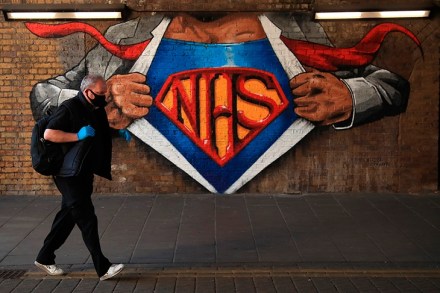
Poor treatment Sir: My recent experience supports Dr Max Pemberton’s view that the NHS is letting down thousands of patients (‘Nothing to applaud’, 30 May). I am a 71-year-old living alone, with no symptoms of coronavirus. For several weeks I have, however, been experiencing severe pain in my left hip. A consultation with my GP diagnosed that I needed a shot of cortisone to reduce the inflammation, but I was told that the NHS was unable to offer clinical consultations due to a focus on the crisis. I was unable to cope with the pain any longer, so my daughter arranged a private consultation and an injection at a cost of £220. My heart problem is potentially more serious and is proving more difficult to resolve.

Letters: Why we need music festivals

Disastrous decisions Sir: One cannot but agree wholeheartedly with Lionel Shriver (‘This is not a natural disaster’, 16 May). Given the unremarked impact of other diseases which she mentioned, Covid-19 is small beer. The government set out on the right path with its herd immunity policy, but was bounced into lockdown by the ‘science’, hounded by the media in full cry. We are now in a situation where employees, mainly in the public sector and supported by the unions, refuse to rise from their feather beds and return to work. This is not a situation from which we will recover easily — if at all.

Letters: When is a sport not a sport?

Save the children Sir: Your leading article is correct that the government should have evaluated the detriment caused by shutting schools, against the risk posed by Covid-19 (‘Class divide’, 16 May). This is not a glib trade-off between protecting lives and allowing children to go to school: the predicament foisted on young people will affect their future for decades. Exams were abruptly cancelled in March. This has left many schools dealing with apathetic individuals. The disparity between disadvantaged and affluent students is widening: middle-class schoolchildren are twice as likely to receive online tuition, and only 8 per cent of teachers in low-income communities report more than three-quarters of work being submitted, compared with 50 per cent in the private sector.

Letters: It’s not so easy to boycott Chinese goods

Jobs for all Sir: Charles Bazlington championed Universal Basic Income in last week’s magazine (Letters, 9 May). It is welcome to see innovative ideas being discussed at a time of unprecedented economic crisis. Might I suggest that if we wish to empower citizens, not just pay them, we instead look to provide employment via a National Job Guarantee? A guaranteed job at the living wage backed by the state and administered by national and local government as well as the charity and private sectors. This crisis has proved that people need not only money but purpose, camaraderie with colleagues, and the pride of a ‘job done well’; they want to provide for their families and contribute to society. We have plenty of work that needs doing.

Letters: The toilet paper stockpile that lasted 80 years

The case for small homes Sir: Your editorial rightly highlights what must be one of the government’s priorities once the worst of this crisis abates (‘Call that care?’, 2 May). I have been the owner and manager of a small, five-bedroom care home for nearly 30 years and, having had a majority of privately funded residents, can recognise ‘the iniquity whereby residents with savings have found themselves cross subsidising those who are funded by local authorities’. The government should firstly allow the payment of care home fees to be tax refundable. It is only fair that those who are saving the state the money for their care should at least not have to pay tax on it.

Letters: Country and town are in this together

End-of-life plans Sir: Charles Moore writes about his neighbour with poor lung function being telephoned about a ‘Do Not Resuscitate’ order (Notes, 18 April). Even today when I discuss end-of-life plans with patients in A&E, many immediately think that medical staff are giving up on them. Nothing could be further from the truth. What are actually called DNA-CPR decisions do not stop treatment for a health condition. What it does is say that if this patient were to die, then chest compressions (which often break ribs) and intubation will in all likelihood not work, and that allowing the natural end of life to occur peacefully is better.

Letters: The joy of balconies

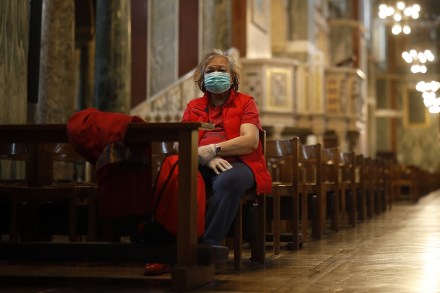
The closing of churches Sir: Stephen Hazell-Smith is quite right in writing that churches should re-open (Letters, 18 April), however the issue is now more fundamental. Recent weeks have demonstrated a crisis of leadership in almost every aspect of national life, excluding the Queen, who has exercised a spiritual leadership made necessary by the failure of bishops. The closing of churches may be seen as a defining moment in the life of the Church of England. As the Archbishop of Canterbury broadcast from his kitchen on Easter Day, impervious to the damage his ‘leadership’ has caused, many Anglican clergy and people I know looked to the image of the Pope in an almost empty St Peter’s, and saw the true image of Christian service.

Letters: The ban on public worship has enabled more of us to experience spiritual riches

Divine works Sir: Luke Coppen writes that livestreamed services ‘lack the vital communal dimension of worship’ and ‘are, at times, excruciatingly dull’ (‘Risen again’, 11 April). I would beg to differ. Catholics, at least, have had the rare opportunity to tune in to some beautifully sung Latin Masses in the Extraordinary Form which they would otherwise struggle to attend. As a Hampshire resident, for example, I have greatly appreciated the Birmingham Oratory’s livestreams. When celebrated well, these Masses are divine works of art in themselves, but are also highly prayer-focused and God-centred, with the celebrant facing the same way as the congregation — towards the altar.

Letters: Our churches bring comfort – they must reopen

Is ‘the Science’ scientific? Sir: I hope that those in the highest places will have read and will act upon Dr John Lee’s excellent summary (‘The corona puzzle’, 28 March). His article cuts through the information overload and explains the surreal situation the country is now in. Draconian decisions have been made on the basis of ‘the Science’, apparently without realising that it is not science at all. The dangers of mere extrapolations, both mathematical and humanitarian, are widely understood. Modelling is, in this instance, a sophisticated form of extrapolation and even more dangerous. A specific model cannot be dignified with the term ‘science’ until it has withstood thorough testing.

Letters: Why coronavirus is so hard to investigate

Corona mysteries Sir: John Lee highlights the issue of dying of seasonal flu vs dying of coronavirus when assessing attributable deaths (‘The corona puzzle’, 28 March). The obvious solution would be a high autopsy rate. However, autopsies on known or suspected coronavirus deaths are not being done in case they lead to mortuary technologists and pathologists becoming infected. (Tuberculosis, HIV and even rabies infections are easier to prevent in mortuary work than coronavirus.) This contributes to a lack of information about how coronavirus affects people. In the long term, it also seems unlikely that anatomical examination of the dead will revert to its pre-coronavirus autopsy rate of 17 per cent of all deaths (in England and Wales).

Letters: Civilisation will survive coronavirus

Covid questions Sir: I worry that Matt Ridley and others are trying to frighten us about Covid-19 (‘Like nothing we’ve known’, 21 March). The fact is that we do not know how deadly the virus is. We know that it is widespread; but that does not make it deadly. How long-lasting is the danger from Covid-19? Will it remain in the system after the pandemic scare is over? We do not know. But will civilisation survive? You betcha! I was called up to National Service in 1952 and while waiting for the train to take me to Aldershot, I bought a book at the station called Earth Abides by George R. Stewart. Written in 1949, this was about a deadly virus that wipes out 99.9 per cent of humanity. Civilisations collapsed, but slowly the remaining humans regrouped.

Letters: The perfect song to wash your hands to

British science Sir: Dr Fink is right that the UK bats well above its weight through curiosity-driven research (‘Back to basics’, 14 March). This forms the bedrock of scientific progress, but it is misleading to imply that ‘blue skies’ thinking and practical application are mutually incompatible. Should we not nurture both? In this way the UK will lead in discovery and exploitation for societal benefit through the earliest application of new ideas, preventing us from dropping the ball as we have in the past. He is right that we should let scientists focus on delivering new science, but is it too much to spend a few weeks outlining forward plans every five years?

Letters: The BBC licence fee is an anachronism

Coronavirus predictions Sir: While precautionary advice regarding the coronavirus should be followed, Ross Clark is right (‘Feverish imaginations’, 29 February) to urge an open mind on the doomsday predictions which are edging us towards panic. In 1996 the then government’s chief scientific adviser, Professor Kenneth Calman, predicted that 500,000 people could die within a few years from the human form of BSE. Another official adviser, Professor Richard Lacey, described the disease as ‘the time bomb of the 20th century, equivalent to the bubonic plague’. In the event, the reported death toll was 177, while the scare cost the UK an estimated £7 billion.

Letters: We need career detectives, not fast-tracked officers

We need career detectives Sir: Your lead article (Trial and error, 29 February) rightly condemns Tom Watson for pressurising police into investigating the spurious allegations of Carl Beech. What should urgently be abandoned is the fast-tracking of police officers into senior positions, and the promotion of uniformed inspectors into detective ranks without them having the necessary experience and training to be effective investigators. It was well known in junior police circles that Operation Midland was a non-runner virtually from the start, but pressure from on high demanded that the investigation continued.

Letters: How to really revitalise the North

Devolved or decentralised? Sir: Paul Collier (‘Northern lights’, 22 February) conflates what devolution has come to mean, in UK terms, with decentralisation of authority. Thus it is adrift to imply that Edinburgh has benefited from a conscious decentralising of powers from central government. It was simply that Scotland as a whole got devolution and Edinburgh is its capital city, whereby it administers the devolved responsibilities. Until such time as commentators and politicians distinguish properly between devolution and decentralisation, they will continue to prompt fears that England could be balkanised rather than treated as a national entity on a par with Scotland.

Letters: How to make a cup of tea

No defence Sir: Jon Stone (Letters, 15 February) recalls the horrors and miseries of being subjected to bombing from the air. How right he is to do so. The deliberate burning and crushing of civilians in their homes is a revolting and indefensible form of warfare. It is no surprise that Hitler used it. What is surprising is that people in this country continue to make excuses for our own use of this method, which was actually far more extensive and deadly than the German bombing of the United Kingdom. There are no such excuses. Those who fall back on utilitarian justifications will also find that these do not work. The bombing of Germany failed on its own terms.

Letters: Britain can be zero carbon – but only by becoming poorer

A green and poor land? Sir: Your editorial (8 February) is a timely warning about what the government’s headlong drive to carbon zero really means. We seem to be intent on wrecking our economy in order to further reduce our 1 per cent portion of the world’s greenhouse gases. But while we are scrapping our petrol and diesel cars along with our gas heating and cooking, Asian countries are building coal-fired power stations because the 21st-century world needs electricity and that is the cheapest and quickest way to provide it. Their emissions are already many times higher than the UK’s. This problem is surely what the UN’s climate change conference in Glasgow in November should be dealing with.

Letters: Innovation has been stifled in Britain for too long

The chance to fail Sir: Matt Ridley’s article ‘Risky business’ (1 February) offers a variety of reasons why innovation has been stifled in Britain for too long. As an educator, I would like to add two factors that I encounter on a regular basis: the tremendously suffocating grip of insurance companies, which turns the safest idea into a discouraging risk-assessment exercise, and the desire of parents to protect their child from any failure. There are understandable reasons why insurance companies and parents act like this. However, in schools and at home it prevents necessary opportunities to test and try, fail, learn and improve, and try again.

Letters: Cats are clearly right-wing

Enemies on the left Sir: James Forsyth’s article ‘Labour must change to win’ (25 January) describes how little appetite the party’s prospective leaders seem to have for arranging this change. Nonetheless, Labour remains a threat to national prosperity. The party was captured by the Trotskyists of Momentum in 2015. Trots never give up. Indeed, they regard politics as a long game. The danger is that the Conservatives have already been in government for nine years, and sooner or later all governing parties become unpopular. Momentum knows this very well and is getting ready. We ducked a bullet at the recent general election, but sensible people, of whatever political stripe, should not yet relax about Britain’s political situation.

Letters: Slimming down the monarchy will only hasten its decline

Royal travails Sir: The travails of the royal family outlined by Penny Junor (‘In check’, 18 January) may be public theatre but that does not make the suggestion to ‘slim down’ the monarchy any less dangerous. It might be farce now but it could turn to tragedy. Remember King Lear, where Goneril and Regan use Lear’s rowdy night in the castle as a pretext to begin robbing him of his knights and independence, leaving him destitute and mad. ‘What need you five and 20, or ten, or five, to follow in a house where twice so many have a command to tend you? What need one?