Letters

Letters: Unfair care costs will turn the red wall blue

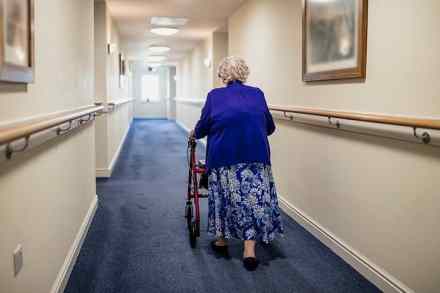
Take care Sir: Your editorial (‘Counting the costs’, 8 January) makes valid points regarding the funding of social care. The good people of the north in the red-wall seats will be rightly appalled. A couple who have worked hard and made their own way onto the property ladder must wonder what they have voted for. They sit on a property worth £100,000 to £200,000. If they need a care home, they will see their children’s legacy disappear into the hole of care costs while knowing that they are subsidising the same care costs of millionaires. This is deeply unfair and, I daresay, anti-Conservative. There should be no care costs on a modest legacy of, say, less than £250,000.

Letters: Afghan interpreters deserve better from Britain

Welcome changes Sir: Lloyd Evans’s sympathetic piece on the fate of Afghans once they arrive in the UK made for sobering reading (‘New arrivals’, 18 December). In the Sulha Alliance we are endeavouring to support those Afghans and their families who served with and alongside British forces in Afghanistan. That is not the totality of Afghan migrants, but of the former interpreters and their families it can be truly said ‘they are here because we were there’ — and we owe them. I will not go over the whole sorry saga of the UK’s mistreatment of this group, but we really need a step change in how they are looked after.

How to cure what ails the NHS

Wrong cure Sir: In referring to the UK as the highest-spending European nation in healthcare proportionate to GDP (‘Hospital pass’, 4 December), Kate Andrews paints an exaggerated picture which is based upon additional expenditure in the NHS during the Covid pandemic, partly accounted for by £38 billion spent on test and trace. The figures are further inflated by the UK suffering a relatively greater fall in GDP. In reality, the NHS has been woefully under-resourced compared to its European counterparts over the past decade, leaving it with approximately 50,000 fewer doctors compared to OECD averages, the second-lowest numbers of hospital beds per capita, and the lowest numbers of MRI scanners.

Letters: the army should be used as an emergency service

Flood relief Sir: In my lifetime there have been at least two major flood emergencies when the armed forces have played a key role: the 1947 floods, and the East Coast storm surge in 1953 (Leading article, 4 December). Both of these major catastrophes required large inputs of manpower and machinery. We should remember that National Service was in operation then, and because the second world war was so recent there was an innate sense of collective responsibility and discipline which extended to the many volunteers who came forward to help. Disaster and emergency response and relief is a highly interconnected activity, requiring many different roles and responsibilities.

How accurate is the ‘Waitrose test’?

The Waitrose test Sir: Like Rod Liddle, I live in the north-east of England — a little further north and nearer to Sunderland (‘Keeping up appearances’, 27 November). The area is not particularly affluent and we do not have a Waitrose. For the first 30 years of my life there was an enormous slag heap in the area: a legacy of our coal-mining era and an eyesore. There was a deposit of open-cast, accessible coal next to the heap, and an opportunity arose to dig out the coal, deposit the slag heap into the space left, and then landscape the area into a beautiful country park with ponds and trees, suitable for walking, cycling and other pursuits.

Letters: Europe’s contribution to peace

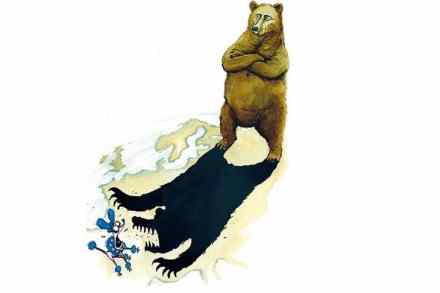
Peace project Sir: It was heartening to read your editorial on the peace which has reigned in Europe since 1945, in which you paid justified tribute to those who sacrificed their lives in the two world wars (‘Why we remember’, 13 November). You emphasised how Nato and the UN have contributed to the maintenance of peace, but sadly you failed to mention the European project and the EU. The first president of the European Council, Herman Van Rompuy, always insisted that the project of European integration, launched by Adenauer, Schuman and De Gasperi, was above all a ‘peace project’. That continues to be the view of today’s Commission president, Ursula von der Leyen. The peace dividend of the EU must not be overlooked. The UK may no longer be a member of the EU.

Letters: it isn’t climate change scientists who are the hysterics

Balance of power Sir: Ross Clark sums up the problem with wind power (‘Storing up trouble’, 13 November). It is often inadequate or alternatively excessive, leading in the latter case to the ludicrous position of making payments to operators for producing nothing. A solution to the question of storing electricity to even out the peaks and troughs of wind power would clearly be of great benefit in our quest for net zero. Mr Clark does not appear to be keen on batteries, which make demands on our finite sources of rare metals and can be dangerously volatile. Pumped water storage has limited application. What he did not mention was hydrogen.

Letters: climate protestors would do better to boycott China

Heat Sir: May I place some of Nigel Lawson’s comments in a sensible historical context (‘Stupid fuels’, 6 November)? First, he notes that the difference between the average annual temperature in Finland and in Singapore is at present 22°C. However, he is wrong to suggest that we should therefore not be concerned about a predicted rise in the average global temperature of a few degrees. The average global temperature during ice ages was only about 6°C colder than today, but that difference was enough to make the planet unrecognisable: much of the northern hemisphere’s land was covered in glaciers several thousand feet thick, and the sea level was 100 metres lower.

Letters: Why net zero is impossible

Carbon deceit Sir: At this week’s climate change conference, countries will be urged to follow the UK’s ‘lead’ in setting the goal of net-zero carbon emissions by 2050 (‘Cop out’, 30 October). This goal is impossible for any advanced economy based on mass consumption. The majority of British manufacturing has shifted abroad, where labour is cheap and items are mostly produced with electricity supplied by coal and other fossil fuels. For a real figure for Britain’s emissions, the consumption of goods produced overseas must be included. As our consumption has increased enormously over the past 30 years, this carbon addition will be substantial. It is a dangerous nonsense for rich countries, therefore, to pretend they are cutting carbon emissions.

Letters: The contentious issues of religious conversion

Hard to reconcile Sir: Although not an Anglican, I appreciate Michael Nazir-Ali’s dilemma (‘A change of mind and heart’, 23 October) and know many Anglicans whose loyalty to the C of E is being severely tested. But insofar as his theology is classically Protestant and evangelical, it is difficult to see how the former bishop can reconcile it with the teaching of the Roman Catholic Church on the sacraments, the office of the Pope, the role of Mary, purgatory and justification, to name but a few contentious issues. He speaks of how ‘what Anglicanism in its classical form has held most dear is being fulfilled in the progression of the Ordinariate’.

Letters: How to feed the world

Doom and gloom Sir: The depressing article by Tom Woodman (‘You must be kidding’, 16 October) confirms my growing fears about the damage being wrought by the promoters of apocalyptic climate change, which has become a dangerous cult with alarming echoes of millenarian doom which has stretched through many previous centuries. While sensible care for the environment is a good thing, the descriptions of a frightening future of the imminent end of the world through drought, flood and fire now imbues every aspect of education and politics. Constantly bombarding young people with the news that the end of the world is nigh has led many of them into completely unnecessary visions of death and disaster.

In praise of Irn Bru

Gasbags Sir: Seb Kennedy tells us that, like Covid, our looming energy crisis came from China (‘Power grab’, 9 October). Its roots are nearer home. The capitulation of successive governments to doom-mongers such as Insulate Britain and the catastrophists who are due to fly to Glasgow in a few weeks for COP26 is just as much to blame. Britain has sufficient shale gas reserves to last hundreds of years, yet in the face of a few illegal demonstrations, the government abandoned the opportunity to secure gas supplies for generations to come. It caved in to those who opposed planning permission for shale mines in Lancashire and elsewhere. The naivety of aspiring to net zero without a realistic and costed transition plan is now hitting home.

Letters: In defence of Land Rovers

How to stay safe Sir: Mary Wakefield is correct to highlight the opprobrium heaped on anyone who suggests sensible safety advice to women (‘Don’t mix up murder and hate crime’, 2 October). It has long been the case that this is the one area where it is impossible to give crime prevention information without stirring up a hornet’s nest. Motorists are constantly told not to leave valuables on display when they park their cars, as they may return to find their windows broken and the articles stolen.

Letters: Don’t let the parish perish

Parish problems Sir: Emma Thompson draws attention to a serious problem in the Church of England (‘Power to the parish’, 25 September). Why are they trying to make it easier to close down parishes when the parish is where the people are to whom the church must minister? The parish is also the major funder of the C of E through the generosity of its many local donors. If you take away the incumbent, you take away a major portion of the income for both parish and diocese. One reason many parishes struggle to pay their parish share is because it has been swelled by the diocese to pay for the ever-growing bureaucracies. In most cases, parish share is at least 50 per cent greater than the actual cost of paying and housing an incumbent.

Letters: The lure of lorry driving

Driving force Sir: As a long-distance UK lorry driver I am very aware of the issues raised by Rodney Pittam (‘So long, truckers’, 18 September). However the job can provide an income of more than £40,000 to those with a practical rather than an academic bent. Yes, there is unpleasantness, discomfort and a combative attitude from other road users. But there is also a high degree of independence, a chance to see this country and others, and a sense of pride in the job. Better facilities are overdue in this country for drivers, and this may go some way — together with greater remuneration — to creating more respect for the work we do.

Letters: the horror of communism

A kick up the assetocracy Sir: While it was heartening to see Fraser Nelson take a stand against the ‘assetocracy’ (11 September), it made for a depressing read too. As a millennial, voting Conservative today feels increasingly like an act of social charity. Something done at my own economic expense to shield my fellow citizens from the negative impacts of the alternatives. Should I continue to vote for my values, or should I vote for my own self-interest? For all the hypothetical benefit of a society run by a party that believes in the virtues of liberty, free enterprise and our national institutions, for young people the value proposition of a Conservative government is woeful. Ever higher property prices.

Letters: In defence of GPs

Out of practice Sir: GPs are not ‘hiding behind their telephones’ (Leading article, 4 September). In-person appointments are the core of general practice, and practices have been delivering millions of them throughout the pandemic. GPs share patients’ frustrations with the limitations of telephone consulting, which can often take longer than a face-to-face appointment, and with longer waits to be seen. However, as with other areas of the NHS, practices continue to follow national infection control guidance to keep patients and staff safe. You talk of pubs and nightclubs reopening — but how many nightclubs force very sick people, many of them elderly and living with a number of long-term illnesses, into a confined space at the same time?

Letters: The agony of the forgotten Australians

A glimmer of hope Sir: After the debacle of the West’s shambolic withdrawal from Afghanistan, it was comforting to read two of the articles in last week’s Spectator (28 August). The first was Rod Liddle’s explanation as to how we got there in the first place (‘I blame Tony Blair’) and the second was John Casey’s piece about Ahmad Massoud and the mention of his late father, the messianic Ahmad Shah Massoud (‘Fatherland’). Very often out of a dire situation something positive can appear. It may be that the arrival of Ahmad Massoud as the leader of the National Resistance Front, the potential he has of being the head of the Tajiks, along with his understanding of Afghani divisions, will give Afghanistan the hope of a settled future.

Letters: the West has failed Afghanistan

The blame game Sir: Like many who served in Afghanistan, I have watched with growing dismay the recent events unfolding in Kabul (‘Mission unaccomplished’, 21 August). I have also listened with growing frustration to the grand speeches of politicians, pointing fingers while distancing themselves from this tragic debacle. David Galula, the French military scholar well known for his counter-insurgency thinking, described the role of the military in such operations as providing a secure space for the legitimate government to work safely with the people. He accepted that the military could also be given other suitable and appropriate tasks but was very clear that they must never be in charge. These precepts were at the heart of all our planning and operations.

Letters: the problem with Net Zero

Zero balance Sir: James Kirkup (‘In defence of net zero’, 14 August) highlights the falling cost of solar and wind energy. But he fails to mention that on some winter days, the associated capacity totals only around 1 to 10 per cent of UK maximum demand. Adding more solar and wind generation will not change that. The shortfall has to be made up by nuclear or fossil-fuelled power plants, or by energy storage plants, which cost money to install and maintain. How much money? Ross Clark’s article (‘Zero-sum game’) is more enlightening, with a National Grid estimate of £3 trillion just to decarbonise the grid.