Letters

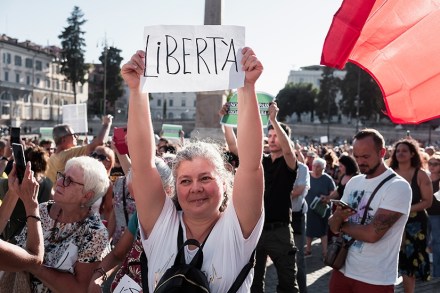
Letters: Why aren’t Italians fighting for their liberty?

Wage concern Sir: Martin Vander Weyer’s call for higher wages to end the shortage of British HGV drivers (‘Your country needs you at the wheel of a lorry’, 7 August) should be extended to other hard-pressed economic areas which have lost cheap labour from the poorer EU countries. For far too long, farming, hospitality, construction, care homes and other vital services have failed to recruit and train local staff or pay a decent wage. Low wages at the bottom of the economy increase the cost of social welfare benefits, bring in less or no money from income tax and VAT and thus adversely affect the whole economy.

Letters: The problem with the ‘alpha migrants’

Here illegally Sir: Unfortunately, Charlotte Eagar misses the point (‘The alpha migrants’, 31 July). The Channel migrants may be ‘bright and brave’, and may repay what they gain from the benefit system. But they are here illegally, thus riding roughshod over the immigration system and those who are still waiting to have their asylum applications processed lawfully. This farce must not be allowed to continue as a taxpayer-funded taxi service for people-trafficking gangs.

Letters: In defence of organic food

A note about manure Sir: I am afraid Matt Ridley shows a lack of understanding about agriculture in general and organic production in particular in his argument against organic food (‘Dishing the dirt’, 24 July). Livestock production has involved the use of animal faeces — or farmyard manure as it is called when mixed with straw — ever since livestock was first housed in the 1800s. Bacterial infections are due to poor hygiene in the slaughter and processing chain, not how animals are fed, grass is produced, or the use of manure, which is an important by-product. Bean sprouts being infected with E.coli is probably down to poor hygiene of personnel, not organic vs non-organic systems. Yes, organic food is more expensive.

Letters: The clock is ticking in Afghanistan

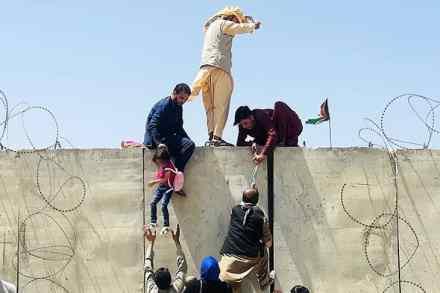
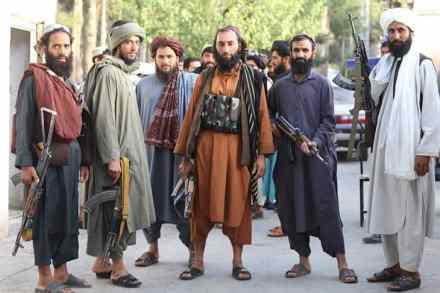
Out of Afghanistan Sir: Boyd Tonkin’s review of Anna Aslanyan’s Dancing on Ropes highlights the post-war abandonment of local Afghan and Iraqi interpreters by the US and UK (Books, 17 July). The UK’s response, up until last summer, deserved every bit of Tonkin’s strictures but the past year has seen a ‘strategic shift’. Ben Wallace and Priti Patel were clearly determined to change our approach and to give sanctuary to our former staff. More generous regulations were introduced in December and April but the imminent withdrawal of Nato forces now raises the fearful prospect of a Taleban takeover, or Taleban-induced paralysis of the Afghan government, before the necessary evacuation can take place.

Letters: How to save Cambridge’s reputation

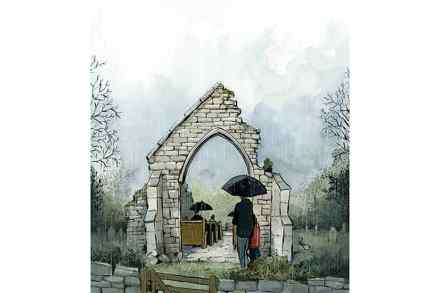
Save the parish Sir: The Revd Marcus Walker eloquently describes the crisis that has taken hold in the Church of England (‘Breaking faith’, 10 July). He correctly states that the church belongs to the people of England and not to the archbishops, bishops or clergy. As he wrote, the costs of parish clergy are not a ‘key limiting factor’. They should be the church’s first priority in terms of costs. Stipendiary parish clergy play a vital role in bringing the Christian gospel and pastoral care to their communities. Without properly trained and ordained clergy, there would be no holy communion, no absolution and remission of our sins and no church weddings.

Letters: Let the housing market collapse

Treading the boards Sir: As a teacher, I was sorry Lloyd Evans did not include school productions in his excellent assessment of the cultural devastation inflicted by Covid-19 (‘Staged’, 3 July). While cancellation of West End shows is a tragedy, far more damage will be done to the thousands of children whose one chance to watch or perform in a play or musical has been taken away. These humble, often cheerfully disastrous, amateur productions bring pupils together in a way nothing else can. W. Sydney Robinson Oundle, Northamptonshire Big bad builders Sir: I enjoyed Liam Halligan’s comprehensive assessment of the appalling state of the UK building industry and the dire quality of much of what they produce (‘The house mafia’, 26 June).

Letters: We can’t build our way out of the housing crisis

Excess demand Sir: Liam Halligan (‘The house mafia’, 26 June) treats us to an exposé of the shoddy products of the mass housebuilders. In the course of his article, however, he accepts as given that the solution to the housing crisis is to build more houses. The problem, however, is not one of deficient supply; it is a problem of excess demand, driven by ultra-low interest rates, kept so low for so long that the result has been an out-of-control housing boom. The young are being prevented from buying a house, not because housebuilders hoard land and refuse to build, but because buyers with access to eye-watering amounts of borrowed money have forced prices so high that they are now out of reach of most.

Letters: Covid wouldn’t be the first virus to leak from a lab

The good doctors Sir: Not all GPs are currently ‘Dr No’ (12 June). I phoned my surgery at 9.30 the other day, expecting to be told the doctor would phone me back in three days’ time, only to be given a face-to-face appointment for 11.30. Everything seemed normal there, apart from the face masks and open windows, and the doctor gave me nearly half an hour of her time. On another occasion when I requested an urgent consultation, I was told to go straight round, and the GP gave me 40 minutes. During the pandemic I have had one biopsy, two brain scans, two full-body scans, one chest scan, one heart scan, two eye scans and five dilation eye examinations, two x-rays, 16 blood tests, two urine tests, one ear syringe, and seen six consultants face-to-face.

Letters: The case for an NHS card

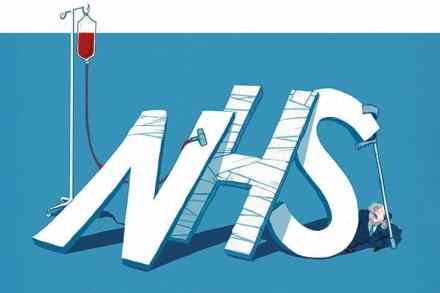
A new prescription Sir: It is maddening to see the British people being refused face-to-face GP appointments and subjected to a form of health rationing that should have ended decades ago (‘Dr No’, 12 June). In Australia a Labour government solved the problem in 1975 by separating payment for healthcare from provision of healthcare. The government gave everyone a Medicare card that could be presented to any accredited healthcare provider. The provider would be paid at a set rate per procedure and send the bill to the government. The result is a truly responsive healthcare system where the patient comes first, is treated with respect and courted by a competitive and creative ecosystem of public, private and third-sector providers. Supply meets demand, unlike in the UK.

Letters: In defence of the National Trust

Trust us Sir: I refute Charles Moore’s assertions (‘Broken Trust’, 5 June) that the National Trust frowns on local expertise, ignores its members and is prone to ideological zealotry. National Trust houses are historic treasures of national importance and we are very proud to care for them. Before the pandemic, the Trust was spending three times more on its houses than on coast and countryside. Covid has caused regrettable staff reductions, but we still have more curatorial posts than we did several years ago. This is hardly an organisation ‘attacking the very idea of country houses’. The report looking at links with slavery and colonialism was not driven by ideology, our intention was simply to acknowledge factually these aspects of history.

Letters: The uncivil service

Uncivil service Sir: The elephant in the room in the handling of the pandemic (‘A tragedy of errors’, 29 May) is the civil service, which has become the problem in government rather than the solution. Repeated disasters of problem management — from the blood transfusion scandal to Hillsborough to the failures illuminated by Dominic Cummings — reveal an inability to make precise decisions, accept errors and move on. This is especially illustrated by the Home Office which is no longer fit for any purpose. The difficulties encountered by the Windrush people are a case in point. The incompetence and sheer nastiness is breathtaking.

Letters: The unfairness of ‘free care for all’

Taking care Sir: I agree completely with Leo McKinstry that care for parents should be paid out of their estate (‘Home economics’, 15 May). The costs of care are what people effectively work for, not for the passing on of wealth paid for by the taxpayer. My mother lived until she was 100, and was in care for almost 14 years. Although she had a property and shares, we funded her care until her cash/share balance was £15,000. After this time she was means-tested and between her pension and the rent from her flat, we were able to pay for some of the care, with the rest paid for by the local council. On her death the property was sold and the effective loan from the local authority was paid out of the proceeds of the sale.

Letters: The beauty of brick

The Union in peril Sir: Fraser Nelson (‘The great pretender’, 15 May) writes that it has never been easier to make a bold positive case for the Union. He suggests the UK government starts to fight. Perhaps the starting point could be the benefits which flowed from 1707 — joint citizenship, a currency union, a customs union and wealth transfer — both individual and national (the Barnett dividend speaks for itself). Without the Union these would not have happened. Without the Union there is no guarantee any of these will continue. It is not Project Fear to point that out.

Letters: China has peaked

China has peaked Sir: Niall Ferguson makes some good points about the nature of Xi Jinping’s imperial aspirations but misses two important parts of the picture (‘The China model’, 8 May). First, the Chinese Academy of Science predicts that China’s population will peak at 1.4 billion in 2029, drop to 1.36 billion by 2050, and shrink to as few as 1.17 billion people by 2065. They even forecast that China’s population might be reduced by about 50 per cent by the turn of the next century. And second, China’s economic rise is stalling.

Letters: The C of E’s obsession with critical race theory

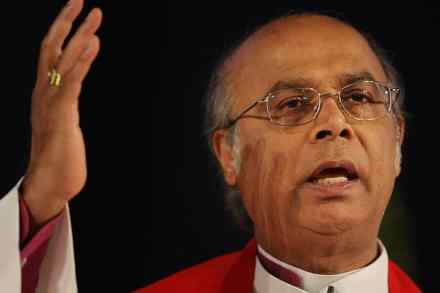
Christian approach Sir: Dr Michael Nazir-Ali’s criticism of our report ‘From Lament to Action’ (‘Bad faith’, 1 May) was wide of the mark in its suggestion that Marxist-inspired critical race theory was the ‘intellectual underpinning’ of our approach. Far from it. The source material for our report was three decades of reports on the issue of racial justice from the General Synod of the Church of England. Doubtless there are valid criticisms which can be made of Synod; however, being a hotbed of radical Marxism is not one of them. Our report explicitly rejects any idea that our work should be viewed as a battle in a culture war.

Letters: The veiled elitism of social mobility

Levelling up Sir: In making the case for social mobility, Lee Cain unwittingly endorses the classism he hopes to fight (‘Left behind’, 24 April). As the historian Christopher Lasch has argued, the canard of social mobility merely replaces ‘an aristocracy of wealth with an aristocracy of talent’. Far from being egalitarian, the concept is inherently elitist: it implies moving up, out or away from a class, town or profession condemned as undesirable. And by paying lip service to ‘meritocracy’ it becomes a self-serving justification for elites’ power and privilege — if they had the ‘ability and ambition’ to rise to the top, it must only be indolent dullards who are left behind.

Letters: The true cost of the green dream

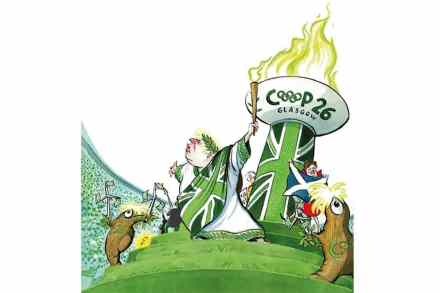
Zero possibility Sir: Katy Balls is right to conclude that the government is ‘not being upfront’ on the bill for net zero and who will pay (‘The green games’, 17 April). As the Covid pandemic has revealed, expectations need managing, and without an urgent agreement on a consistent set of policy guidelines which embrace fairness, energy security and affordability, the whole net-zero project could backfire. Whichever way you approach the problem, the costs of transitioning to net zero by 2050 are massive, with estimates ranging from £50 billion p.a. (Climate Change Committee) to £100 billion p.a. (National Grid), and the burden falling most heavily on those who cannot afford it.

Letters: There’s nothing libertarian about vaccine passports

Taking liberties Sir: I feel that Matthew Parris is absolutely wrong about liberty (‘The libertarian case for vaccine passports’, 10 April). True liberty is that each individual has the possibility to live their life how they desire (within the law), taking full responsibility for any and all the risks they incur. I am not responsible for anyone else’s health. To say that we have to stay indoors, wear masks, observe social distancing or have vaccinations because we would be killing others if we did not is blackmail. If you use the logic that the individual is responsible for the health of all other people then everyone who owns a car is directly responsible for every injury on the roads.

Letters: The inconsistencies of Mormonism

A leap of faith Sir: I live not far from the ‘London Temple’ of the Church of Jesus Christ of Latter-day Saints. Most summers, the local streets are trodden by American Mormon missionaries, polite teenagers who occasionally approach to ask if we know Jesus Christ. Some years ago, I read the book on which the new Netflix series Murder Among the Mormons (‘Latter-day sinners’, 3 April) appears to be based. So when I was accosted by a couple of missionaries, I was able to ask them why the practice of polygamy, so avidly promulgated by the founder of their church, Joseph Smith, had been abandoned.

Letters: Britain should hang on to its vaccines

Ticket to freedom Sir: While I sympathise immensely with the spirit of last week’s lead article (‘Friends in need’, 27 March), we cannot justify asking Britons to wait any longer than necessary while their ticket out of lockdown is exported to the EU bloc, whose level of freedom is on average significantly higher than the UK’s. How can we justify exporting vaccines to Finland and Sweden, for example, where there has always been the freedom to meet family and friends in groups, while we are still enforcing draconian measures here?