Leading article

Disruptor-in-chief

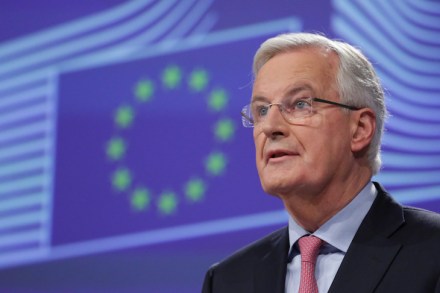
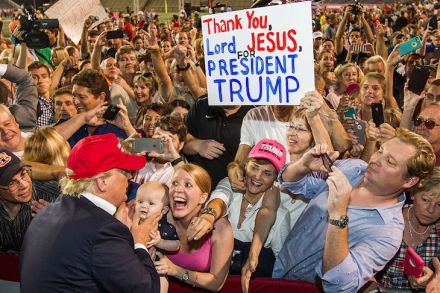
It is appropriate that the 45th President of the United States has come to Britain this week on a working visit rather than the state visit that was originally intended by Theresa May. Donald Trump’s habit of expressing his frank and impolite thoughts through early morning tweets is undiplomatic and demeaning to his office. It is hard to imagine another leader of a western democracy taking the opportunity to undermine a Prime Minister shortly before arriving in Britain, as Trump did this week by describing the country as being ‘in turmoil’. He then appeared to take sides with Boris Johnson just after the former foreign secretary had resigned in protest at Mrs May’s attempt to unite the cabinet on a shared vision of Brexit.
To convey intelligence

In the basement of The Spectator office, there is a 12-volume version of the paper in its original incarnation. That journal, started in 1711 by Joseph Addison and Richard Steele, lasted barely two years. But collections of its essays could be found in almost every educated household for generations after. The first Spectator was seen as an example of something extraordinary: a journal full of humour, wit and civilised discussion at a time when Britain was being torn apart by partisanship and war. It was a freak of its time. On 6 July 1828, a Dundonian printer named Robert Rintoul relaunched The Spectator. He had the good sense to adopt Addison’s formula: ‘the pleasures of books, conversation and the other accidental diversions of life’.

An unhappy birthday

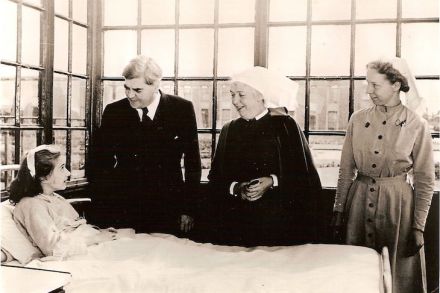
When Nye Bevan launched the NHS on 5 July 1948, most of the British population could not expect to celebrate a 70th birthday. Life expectancy at birth for men was 66 and for women 71. That this has since grown to 79.1 years and 82.8 years respectively is in part — though far from entirely — thanks to the NHS. Many insist that Bevan’s description of the service as the ‘envy of the world’ remains true. For Lord Lawson, a former editor of this magazine, the NHS is ‘the closest thing the English people have to a religion’ — an assertion confirmed during the opening ceremony of the London Olympics, when NHS nurses jumped joyfully up and down on old-fashioned hospital beds.

Refugee lives matter

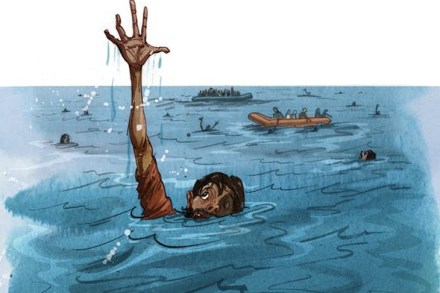
The photographs of children in cages at US migration centres, apparently separated from the parents with whom they illegally entered the country, do not reflect well on the Trump administration. Talking tough on migration helped the President to win the election but there is a difference between building a wall and carrying out a policy which appears to use cruelty as a shock tactic. Yet there is a policy towards migrants that is ultimately far crueller, and which is being pursued beneath our noses in Europe. That is to tempt migrants into unseaworthy boats to cross the Mediterranean. Last year, according to the International Organisation for Migration, 3,116 people died attempting to reach European countries from North Africa by sea, in addition to 5,143 deaths in 2016.

Beyond Brexit

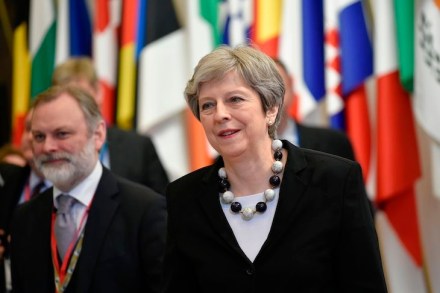
This week Brexit reached its Somme. The government has been bogged down in votes on amendments inserted into its Brexit bill by the House of Lords. Theresa May saw off the threat of cabinet resignations only to have a more junior minister resign, as he put it, in order to voice the concerns of his constituents (although, as has been pointed out, a majority of them actually voted to leave the EU). It all looks a mess. The Brexit process would have been unpleasant enough with the small majority which the Prime Minister inherited from David Cameron.

The lessons of Grenfell

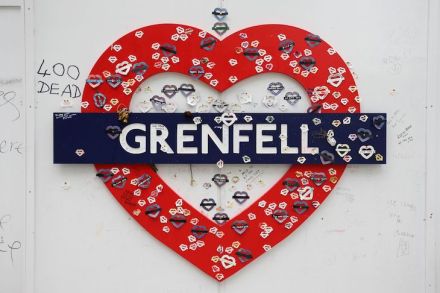
The opening of the Grenfell Tower Inquiry is good news. It will now become harder for politicians and campaigners to do as they did in the immediate aftermath of the disaster and exploit it for their own ends. The 72 who died were not victims of an uncaring government bureaucracy, as some on the right have said. Nor was this about austerity and ‘Tory cuts’. The costs of the renovation which had been completed shortly before the fire worked out at more than £70,000 per flat: money had been spent, and an expensive deathtrap unwittingly created.

Life matters

Predictably enough, there have been no calls this week for the Irish referendum on abortion to be re-run, no complaint from Ken Clarke about the ‘-tyranny of the majority’, no moaning that the campaign had been in any way unfair. Neither should there have been. The Irish people have made a fair and democratic choice and the result should be respected. Less respect seems to have been forthcoming, however, for the views of the Northern Irish on abortion. On the contrary, no sooner was the result from south of the border announced than the calls began for the government in Westminster to impose its will on Northern Ireland and liberalise the province’s abortion laws.

Carney’s errors

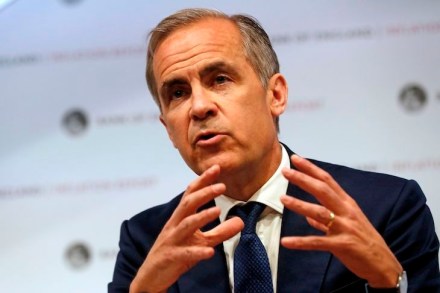
Soon after he became his party’s leader, David Cameron spoke dismissively of Conservatives who ‘bang on about Europe’. He had a point. The subject has a peculiar ability to turn intelligent people into crashing bores who obsess over Europe to the exclusion of all else. Often, the subject warps good judgment. Since the referendum, this phenomenon has become much worse. Take the Bank of England governor, Mark Carney. Twice this week, he has claimed that households are £900 worse off as a result of the referendum. Why? Because his officials had overestimated salary growth, and he sees the Brexit vote as an explanation for their error. This is odd. Given that the Bank has been getting its forecasts wrong for years, why blame Brexit?

Power and the press

That the House of Lords has survived as an unelected chamber is largely down to the Salisbury Convention, which holds that peers do not vote down government bills on matters which appeared in the governing party’s election manifesto. It is a doctrine under attack as never before, partly as a result of the Lords’ votes against the government’s Brexit plans but also as a result of the Upper House’s battle of attrition against the government on press standards. It is bizarre to see an issue of such little importance to the public taking up so much parliamentary time. For generations, freedom of the press was regarded as an essential British liberty — the sort that people entered parliament to defend.

Who’s afraid of cryptocurrency?

Since its inception, cryptocurrency has been regarded as technically fascinating but fundamentally unreliable. Those who invested £10 in Bitcoin eight years ago would have £1.6 million today — a fluctuation which, while mind-boggling, further undermines the notion that digitally created currency is a stable store of value. At first, it was dismissed as a toy for geeks. Then it was seen as a threat, used by criminals to buy drugs and guns. Some, like Lloyds Bank, have refused to carry out any cryptocurrency transactions on behalf of customers. But its popularity has kept growing and this week, it made a significant leap towards the mainstream.

Momentum builds

The local elections have thrown up a paradox. In theory, Britain has never had more devolution: we have assemblies in Edinburgh and Cardiff, city mayors in England, elected police chiefs and the supposed Northern Powerhouse. So, the run-up to the vote ought to have been dominated by local issues, with a new breed of local political heroes or villains in the media spotlight. Instead, apart from a few door-knocks and the odd leaflet, one could be forgiven for not even realising local elections were being held. This may be in part because of the sad decline of the local press and the dearth of reporters to cover the elections. But it is also because of the equally sad decline in the number of political volunteers willing to campaign, especially for the Tories.

Rocket men

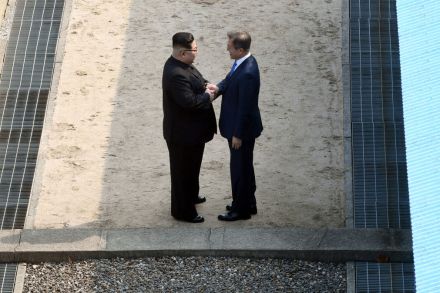
After spending most of his presidency posing a nuclear-armed hothead, Kim Jong-un is now presenting himself as a man of peace. ‘I came here to put an end to the history of confrontation,’ he said on his historic visit to South Korea. Which might be so. But his real agenda may be to gain acceptance for North Korea's status as a nuclear power: holding an olive branch in one hand, and a seven-kilotonne bomb in the other. The visit to the south comes ahead of his trips to meet Donald Trump, who has referred to Kim Jong-un as a ‘little rocket man’ and tweeted a photo boasting that his own nuclear button was larger and more effective than that of the North Korean leader.

Home truths | 19 April 2018

Much rot is spoken about how the young have it so bad. In fact, this generation is healthier, richer and better-educated than any before — as well as being better-behaved and more conscientious than their parents were. But the one area where they do struggle is in buying a house. The asset boom of recent years has disfigured the economy, sending property prices soaring and conferring vast wealth on pensioners while giving the young a mountain to climb. Home ownership rates stand at a 30-year low. And the proportion of 25- to 34-year-olds in private rented accommodation has almost doubled in the last ten years. This marks not just a dramatic socioeconomic shift in a country that was once strongly associated with owning your own home.

Crown and countries

Next week, 53 world leaders arrive in London for the Commonwealth summit. It is hard to imagine a better network for the globalised age. Leaders of countries with a combined population of more than two billion will come to discuss issues of common interest. There will be a banquet hosted by the Queen — in her role as the Head of the Commonwealth — at Buckingham Palace, and a day-long leaders’ retreat at Windsor Castle. A nod to history, to be sure, but if the Commonwealth was just about nostalgia the summits would have stopped long ago. The G53 will have much to discuss. The Commonwealth has a shared language, overlapping administrative and legal systems (largely based on English common law) and a shared heritage.

Criminal policies

Any notion that the surge in killings in London was a problem confined to gang members has been dispelled by the death of 17-year-old Tanesha Melbourne-Blake, who acted as a mentor for troubled children but who died in her mother’s arms after a drive-by shooting. The number of people killed in the capital has now risen to more than 50 this year, with the latest victim an 18-year-old man who was stabbed to death in an east London street on Wednesday night. Violent crime is everyone’s problem, yet until this year it had slipped a long way down the list of pressing political issues. Terrorism continues to take up debate, as do sexual offences, especially allegations involving public figures.

War and peace | 28 March 2018

After Britain voted to leave the European Union, there was much mistaken talk about how it might also move away from its allies. Boris Titov, one of Putin’s appointees and a half-hearted challenger to him in the presidential election a fortnight ago, claimed that it would break the transatlantic alliance, turning the remainder of the EU into Russophiles, adding: ‘It’s not long until a united Eurasia — about ten years’. That fantasy was destroyed last week when, in an unprecedented show of solidarity, 23 countries announced that between them they are to expel more than 100 Russian diplomats whom they suspect have been working as spies.

Losing control

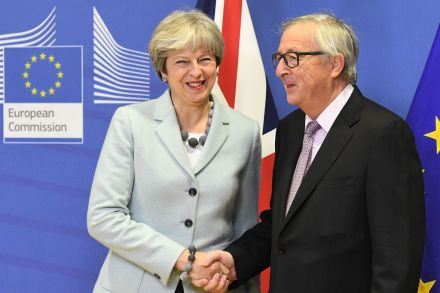
If Brexit was going to be as easy as some of its advocates had believed, we would not have had weeks such as this one. It’s hard to interpret the recent agreement over the transition period as anything other than a capitulation to EU demands. Theresa May has quietly scrubbed out her ‘red line’ on the rights of EU citizens and the jurisdiction of the European Court of Justice. Nationals of other EU countries will be free to move to Britain, seek work here and have their rights protected by the court until 31 December 2020. Moreover, she has agreed to UK waters being open to EU trawlers until that date. Indeed, to the chagrin of our own fishing industry, fishing quotas will be set for our waters in 2020 — without the UK even having a say as to what they should be.

A dangerous silence

Whenever a Hollywood actress complains about some lecherous man, there’s blanket coverage. Even our MPs feel the need to tut. So why, when there are allegations involving 1,000 underage girls abused by child-grooming gangs in this country, does no one turn a hair? For the most part, the paedophile scandal in Telford was ignored by the people who should care most. The BBC, which has devoted hour upon hour to the #MeToo movement since the allegations over Harvey Weinstein broke last year, initially did not even think it worth covering the Telford abuse story on the section of its website devoted to news from Shropshire, let alone the national news.

The spying game | 8 March 2018

The apparent chemical attack on a former Russian double-agent and his daughter in an English cathedral city could be straight from a cold war thriller. Unfortunately, though, the case is not going to be solved in 500 pages — nor will it be solved by July, when the Foreign Secretary has threatened to withdraw a British delegation of dignitaries, if not the English team, from the opening ceremony of the World Cup. It was inevitable, as soon as Sergei Skripal was taken acutely ill on a bench in Salisbury, that fingers would point at Vladimir Putin. He did, after all, pass a law to give the FSB, the successor organisation to the KGB, powers to execute enemies of the Russian state on foreign soil.

Back off, Barnier

There’s an unwritten law governing Boris Johnson in Westminster: every-thing he says or does is a gaffe, or can be portrayed as one. Yet actually Johnson has an uncanny knack for conjuring similes which sum up the political situation precisely. So it was for his much-ridiculed remark, in response to a question about the Irish border, that there are no border posts between London boroughs even though they have different business rates and policies on various other things. His phrasing was careless but the point stands: it is nonsense to claim that different regimes must mean border patrols. There are significant tax and excise differences on either side of the Northern Irish border, but they’re managed without any need for checkpoints.