Leading article

A fallen idol

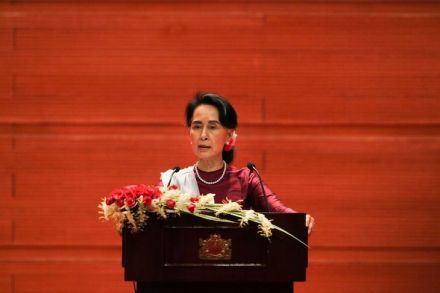
Few world leaders have fallen from grace as quickly as Aung San Suu Kyi. The Nobel prize-winner, who also holds the US Congressional Gold Medal for her bravery and peaceful resistance to Burma’s military junta, now stands accused of aiding and excusing the suppression — even the genocide — of the Rohingya Muslims, more than 400,000 of whom in recent weeks have fled from Burma, which elected her leader nearly two years ago. There have been calls from her fellow Nobel laureates for her peace prize to be annulled. The UN has described action against the Rohingya as a ‘textbook example of ethnic cleansing’ and complained that its observers have been denied access to Burma to judge the situation for themselves.
Red Tories

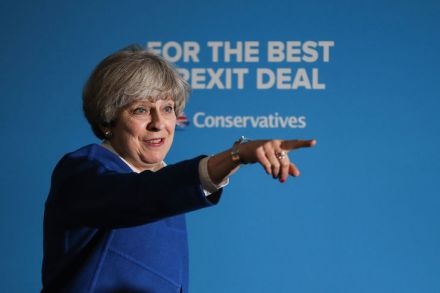
Jeremy Corbyn has never been very keen on parliamentary democracy. He may be changing his mind now. The British electoral system has allowed him to strip the Conservatives of their majority, an extraordinary result that not even he had thought possible. As a reward, he can watch the government squirm as well as shape its policy. All he needs to do is threaten a vote which Theresa May thinks she might lose, and she buckles — as we are now witnessing. For some time, the Prime Minister had stood firm on the public sector pay cap, arguing that when you factor in generous pensions, the average government worker is still paid 10 per cent more than their private sector counterpart.

Keeping faith | 7 September 2017

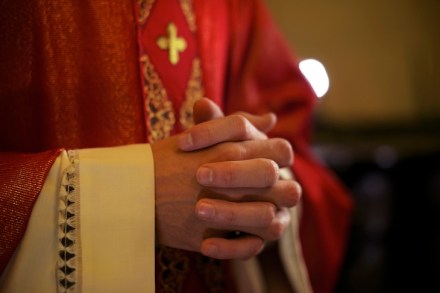
For Church of England vicars who worry less about what they will preach on Sunday than whether there will be any parishioners to listen to them, the latest findings of the British Social Attitudes Survey will make grim reading. For years the number of people professing religious belief in Britain has hovered around the 50 per cent mark. Now it seems to have dived decisively, plunging from 52 per cent to 47 per cent in just a year. According to a survey we are no longer a Christian country, but then neither — for all the squeals over sharia law — are we becoming much of a Muslim country, or indeed any other religion. Just 6 per cent of us profess a faith other than Christianity, down from 8 per cent last year. Our established national church is declining fastest of all.

Call Barnier’s bluff

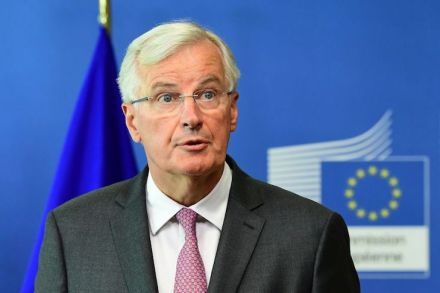
There is a growing perception that Britain is floundering in its EU negotiations, with a professional team from Brussels running rings around our bumbling amateurs. It is an idea that is being put about by the EU’s chief negotiator, Michel Barnier, who this week appealed for Britain to begin ‘negotiating seriously’. As he has found out, the strange dynamic of British public debate at present means that EU spin is repeated uncritically by those hostile to Brexit. It can seem, at times, as if we are in the grip of hysteria normally seen during the final days of an election campaign. This is not to say that the British side has been faultless. The government has struggled to articulate the clear case for Brexit that we heard during the Leave campaign.

Hard lessons

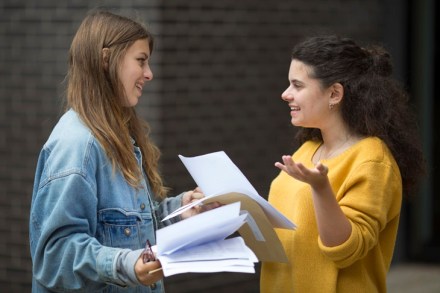
George Tomlinson, the post-war education secretary, declared that politicians should leave exams to the teachers because ‘the minister knows nowt about curriculum’. Today, however, the curriculum seems to be in a state of permanent revolution. The new GCSEs, for example, are marked on a nine-point scale: a grade of 7 or above indicates what used to be an ‘A’. For every five students who hit the 7 threshold, only one will get 9, the top mark. How employers are meant to understand this is another question. The GCSE overhaul is the latest of a series of reforms, started by Michael Gove seven years ago, which are intended to ‘restore confidence’ after years of grade inflation. During the Labour years, ministers denied that exams were getting easier.

America’s identity crisis

Long before student activists started talking about pulling down statues of Cecil Rhodes, a cultural war was being waged in America over monuments honouring General Robert E. Lee and other leaders of the Confederacy. In 2001 there was a petition to remove some of these statues from the University of Texas on the grounds that their presence might ‘lead people to believe that the university is tolerant of the Confederate ideology regarding slavery’. The arguments that started on campus then branched out beyond it. To some, the statues were a symbol of Southern heritage and pride. To others, they were a monument to racism. In recent years this argument has intensified, gathering a momentum that few of America’s political leaders fully understood.

Corbyn’s fallen idols

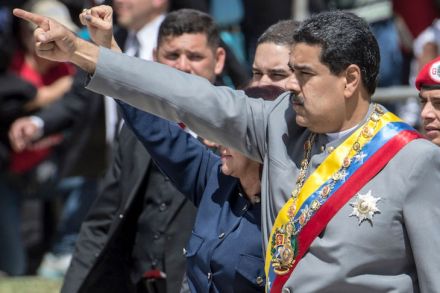
Jeremy Corbyn finally broke his silence on Venezuela this week, but in the manner of a man who has his head buried in a very large bucket of sand. He condemned violence ‘on both sides’, painting the country’s problems as a battle between factions rather than a case of a repressive government snuffing out popular protests. No one would know from the Labour leader’s words that President Maduro’s regime is engaged in what the UN Human Rights Office described this week as a ‘widespread and systematic use of excessive force’. More revealing still was Corbyn’s reply when prodded on the economic and social conditions which led to the protests.

Crunch time

For anyone considering a career in economic forecasting, the Bank of England’s inflation report for August 2007 ought to be required reading. A graph illustrating its Monetary Policy Committee’s ‘best collective judgment’ of annual economic growth two years ahead is fixed around a central prediction of 2.5 per cent, with extreme boundaries of 0.8 per cent and 4.2 per cent. But after two years, economic growth was running at –5.6 per cent, and the economy had just completed its fifth consecutive quarter of negative growth. The finest minds of Threadneedle Street could not see two years ahead.

Playing chicken

Besides being important in themselves, the trade talks between Britain and the United States which began this week are symbolic of the opportunities that should become available as we leave the European Union. For years we have dealt with the US, our biggest single customer, under burdensome tariffs and other regulation — but we had no choice. The EU handled trade policy and it never succeeded in completing a trade deal with any of its major trade partners. Britain, by contrast, has always been more global than Europe in its outlook. The vote for Brexit was, among other things, a vote to raise our sights to more distant horizons. At the time of the referendum, a bilateral trade deal with the US looked unlikely for political reasons.

Let May govern

It used to be said that loyalty was the Conservatives’ secret weapon. While other parties might descend into internecine warfare, the Tories would always, when circumstances demanded, show just enough respect for their leader. The words ‘loyalty’ and ‘Conservative’, -however, lost their natural affinity during the Major years. Since then, to borrow a phrase from the left, the leadership of the party has descended into a state of permanent revolution. After the failure of her general election campaign, Theresa May seems to have become a tortured prisoner of her cabinet. Talks of leaks are exaggerated.

Hope in Mosul

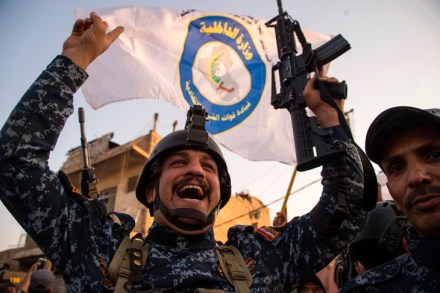
For the title of world’s most benighted city, Mosul takes some beating. Liberated from Saddam Hussein by US forces in 2003, the ancient Assyrian town was pummelled by years of insurgency before being seized by Isis in 2014 and its population subjected to militant theocracy. It has no water supply, no infrastructure, it has been gutted by occupation and there are some 850,000 displaced citizens. The Iraqi government’s long and bloody battle to regain what remains of Mosul culminated this week in a visit by Prime Minister Haider al-Abadi to declare victory. Many will find it hard to see anything to celebrate, given the destruction that has been wrought in the nine-month campaign to free the city from Isis control.

The beginning is nigh

Just a few weeks ago, the Conservatives triumphed in the local government elections and Theresa May was hailed as an all-conquering Brexit Boudicca who could do no wrong. Now, after her general election humiliation, an opposite view has taken hold: that the government is a disaster, the country is in an irredeemable mess, Brexit has been derailed and nothing can go right. This is a sign that parliamentary recess is overdue; a great many people are -exhausted and a little emotional. But the facts, for those with an eye to see them, do not give grounds for such pessimism. The Tories have lost their majority and deserved to do so after an awful campaign.

Stronger together

There is unlikely to be much of a legacy from Theresa May’s premiership, which could yet be truncated a short way into its second year. Yet one very good thing looks like coming out of it: the strengthening of the United Kingdom. The Union suddenly looks in better health than it has done for several years. Nicola Sturgeon did not quite scotch her dream of a second independence referendum this week, but in delaying the required legislation until the autumn of 2018 at the earliest she has bowed to the inevitable. She has been sent, as the Scottish national anthem says, homeward tae think again. Meanwhile, the importance of Northern Ireland in Westminster has been enhanced. The deal between No.

Opening gambit

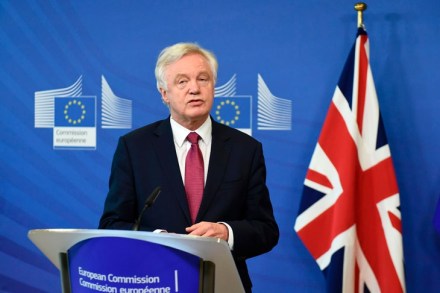
The unexpected outcome of the general election has led some to hope that a weakened government will be forced to pursue a ‘softer’ Brexit. They are right to think that the emphasis of the negotiation will have to change, but they use the wrong adjective. The choice before David Davis and his team as they start work in Brussels is not and never has been between ‘soft’ and ‘hard’ Brexit; it is between an open Brexit and a closed Brexit. The former is one where Britain retains open trade with, and a high degree of free movement to and from, other EU countries — as well as taking fresh opportunities to liberalise trade with the world beyond.

The thin blue line

The lessons to be learned from the Conservatives’ poor showing in the election could fill more pages than the national curriculum. Don’t unleash on the public a manifesto which has not even been tested among senior ministers. Don’t think you can get through a seven-week election campaign by endlessly repeating the same mantra, especially when you are being ridiculed for it. Don’t underestimate how quickly public opinion can change. Sell yourself, your party and its ideas, rather than just attacking your opponent. Yet there is a serious danger that Theresa May and the rest of the Tory party could pick up the wrong message.

May needs her party

As if we needed reminding, this past week has shown that the Islamist threat is a truly global problem. In the space of a few days, Isis claimed responsibility for attacks on London Bridge and Borough Market; and elsewhere, for the attack on the Iranian Parliament and the tomb of Ayatollah Khomeini in Tehran. It would be hard to think of more diverse targets than drinkers at London pubs on a Saturday night and the tomb of the theocratic Shia cleric who inspired the 1979 Iranian revolution. Yet for Isis there is logic. All are enemies: infidels, heretics, apostates. The Tehran atrocity shows again that what we are witnessing is a civil war within Islam. To the Sunni militant, the enemy could be a girl at a music concert or a worshipper at a Shia mosque.

The PM took voters for fools

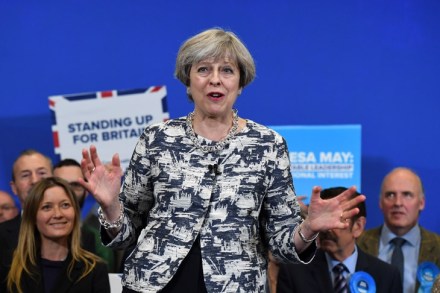
During the election campaign — or what passed for it — Theresa May would sometimes declare that Britain was facing its most important choice for a generation. If she lost just six seats, she said at one point, then Jeremy Corbyn would be heading to Brussels to negotiate Brexit. But if the risk was so great, why call an election in the first place? She was closer to the mark outside No.10 early this afternoon, when she declared this was a ‘critical time for our country’. All the more critical as a result of her calamitous handling of the election.   This was a needless election, intended to tighten Theresa May’s grip over her own government.

May’s mistakes

On the eve of the US presidential election, experts at Princeton university decided that Donald Trump had a 1 per cent chance of being elected. Before the last general election, Populus, the opinion poll firm, gave David Cameron a 0.5 per cent chance of winning a majority. Much is made of the need to look at ‘the data’ when considering political arguments, but so often it is a wildly inaccurate guess with a decimal point at the end to give an aura of scientific specificity. So when we read that Jeremy Corbyn has just a 17 per cent chance of becoming prime minister, this does not mean that the election is in the bag. The Tories are still quite capable of blowing it. It’s understandable that voters have misgivings about Theresa May.

Tackling terror

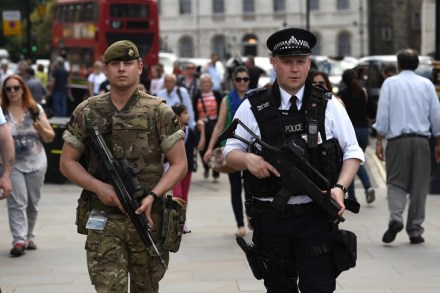
Until last week, it was thought that the jihadi threat was subsiding and the security services were increasingly able to disrupt any serious plot. The recent attacks involved knives or rented cars – deadly in the wrong hands but a far cry from the 7/7 attacks, or the seven-aircraft Heathrow aircraft bomb plot thwarted in 2006. Yet now, for the second time in our history, a suicide bomb attack has been perpetrated against the public. And this might show that things are getting worse. That as Isis is forced into retreat in Iraq and Syria, the jihadists are preparing to return to Britain with deadlier skills and tactics. While al-Qaeda focused on military and economic targets, Isis considers young girls at a pop concert to be ‘crusaders’.

Trump on the edge

Donald Trump has often wrong-footed the media. In last year’s election his campaign seemed to be always on the verge of falling apart, but it didn’t. Candidate Trump was endlessly engulfed by crisis. The media said he could not win, but he did. It’s tempting to think that the Trump presidency fits the same pattern; that all the chaos in the White House, that reports of the horrifying incompetence of his administration and his dangerously erratic behaviour are exaggerated: fake news, as he would say. But it doesn’t. Just four months in, the Trump presidency is starting to look unviable. Trump’s greatest problem is himself. He seems determined to plunge himself into scandal. The allegations against him are grave and mounting.