Leading article

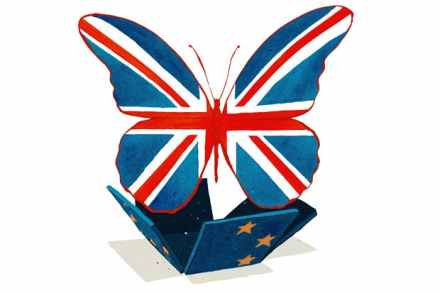
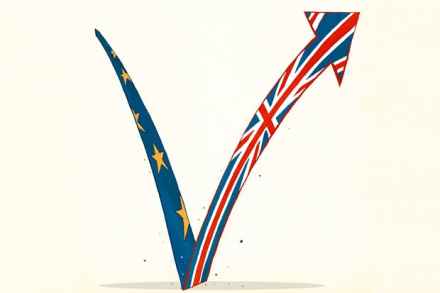
Theresa May’s deal is not Canada Plus – it’s Remain Minus. Why pretend otherwise?

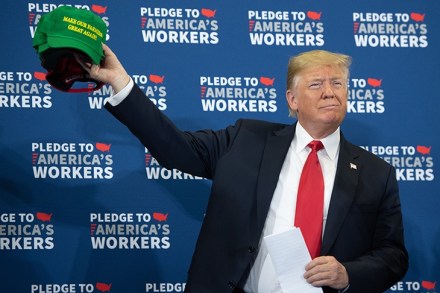
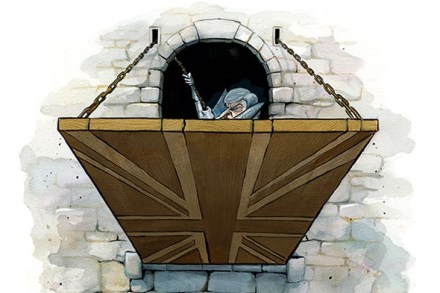
While some may doubt Donald Trump’s claim to be a friend of Britain’s, his intervention in the Brexit debate this week has been timely and depressingly accurate. The deal that Theresa May has brought back from Brussels, and which she will put before the Commons on 11 December, is indeed a good deal for the European Union. Brussels retains control over the British economy but no longer has to deal with the British in its various voting procedures. Britain agrees not to become more competitive through regulatory reform, and its chances of striking trade deals are slim. So Trump was merely saying, in his usual offhand manner, what other world leaders have been thinking. His thoughts are echo-ed in Australia, which had been looking forward to doing a trade deal with the UK.
In place of strife

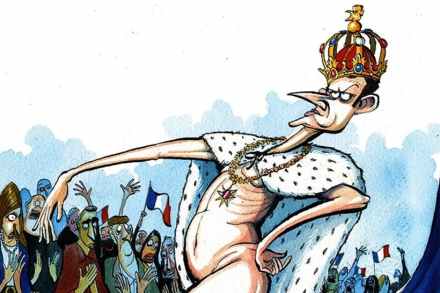
France has been in a state of organised uprising this week, with 300,000 motorists taking to the streets and autoroutes to protest against rising fuel taxes. One protester has died, more than 400 have been injured and even more disruption is on the way. Watching Emmanuel Macron, you wouldn’t know it. He travelled to Berlin to commemorate Germany’s war dead, launching for the second time in a fortnight into his proposal for a single European army, and saying it was Europe’s duty to prevent the world ‘slipping into global chaos’ — apparently unable to recognise the chaotic scenes he had left behind.

A bad deal

During last year’s general election campaign, Theresa May declared that ‘You can only deliver Brexit if you believe in Brexit’. Unfortunately, her deal proves this point. It was negotiated by a team of people who imagined their job to be a damage-limitation exercise. They did not see Brexit as an opportunity and this is reflected in the terms put before the cabinet. The deal falls far short of what was promised in May’s Lancaster House speech. She said she’d bring back a clean Brexit, taking Britain out of the Single Market, the Customs Union and the jurisdiction of the European Court of Justice. The deal she ended up presenting to her cabinet will, in several important regards, fail all of these tests. But May has conveniently forgotten her tests.

Lessons from America

Donald Trump can, at the very least, claim to have killed off political apathy. Americans this week voted in greater numbers than in any such elections of the past half-century — but it does not follow that this is an encouraging development. The midterm results were a blow for Trump, but not much of a blow. American politics is developing along the lines with which we are familiar: a cultural war, where voters are enthused not so much by what candidates have to say but because of tribal hatred of the opposition. President Trump has proved an even more incendiary figure than candidate Trump: he has not stopped campaigning or using Twitter to set the news agenda. His enemies have not stopped rising to his bait.

Unhealthy spending

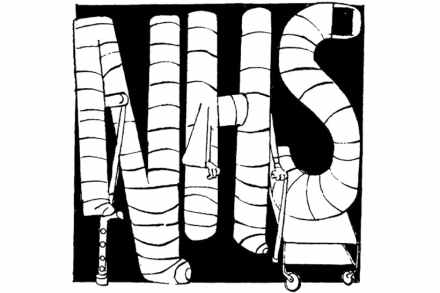
Since the Budget, economists have pointed out that Britain is turning into a health service with a government attached. The NHS was protected from what Philip Hammond calls ‘austerity’, yet it has emerged as the big winner from his abandonment of the old Tory idea that government should live within its means. The plan is for more debt, more spending, more tax and a lot more NHS. At the start of the last decade, the NHS accounted for 23 per cent of government spending on public services: this figure is now set to rise to 39 per cent. And then, no doubt, further still. Simon Stevens, the chief executive of the NHS, will soon run an organisation that has more people and money than some European Union countries.

Hammond’s House of Horrors

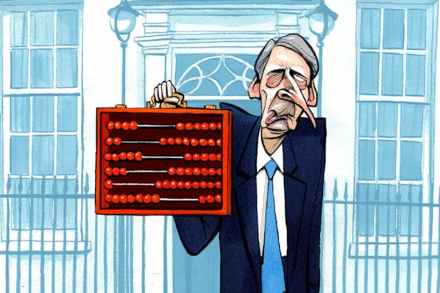
What is the point of Philip Hammond? Most chancellors have an agenda, but it’s hard to discern any purpose or direction from the current one. Gordon Brown’s project was to oversee the largest expansion of government spending in peacetime history — which he achieved, albeit with ruinous results. George Osborne spoke about trying to wind this programme back. The results were decidedly mixed, but at least he had an idea about what he sought to achieve. Mr Hammond, by contrast, has spent his time in the brace position preparing for Brexit. When he delivers his Budget on Monday, he might have to admit that the country does not seem to be quite so worried. Companies have been hiring at a rate never seen before. Youth unemployment is at an all-time low.

Modern family

Whether it was intended so or not, the decision by the Duke and Duchess of Sussex to choose Australia as the place to announce that they are expecting their first child was a public relations triumph. For years the royal family was criticised for having a tin ear when it came to reading and dealing with the public, but no one could say this now. The tone of the younger royals’ tour to the southern hemisphere has been one of approachability, without compromising the dignity of the positions which Harry and Meghan hold. Their visit also runs counter to the conventional wisdom of some republicans — in Britain as well as Australia — that support for the monarchy is dependent on personal affection for the Queen and that the institution will be doomed upon her death.

Director’s cut | 11 October 2018

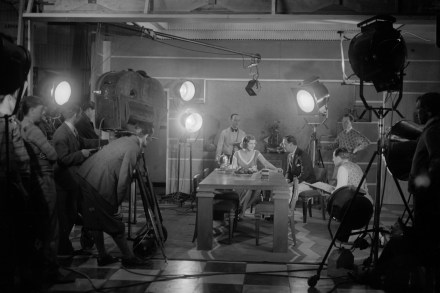
‘The role of government is not to pick favourites and subsidise them or protect them.’ So says the government’s industrial strategy, published last year — a document which was supposed to distinguish between a free-market approach and the interventionism favoured by Jeremy Corbyn. Yet in one industry, at least, the government is doing exactly what it says it should not: it is showering firms with subsidies in the hope of generating growth. This week the British Film Institute (BFI) published a report making grand claims for the government’s ‘tax reliefs’ for the film industry.

Britain after Brexit

Over the next few weeks, we can expect breathless reporting about the Brexit deal and its dynamics: the state of phytosanitary checks in the Irish Sea and the desirability of chlorinated chicken. But the real question about Brexit is about what type of country we become, once the process is complete and sovereignty has been retrieved from Brussels. And it’s a question to which the Conservative government is finally beginning to provide an answer. Theresa May’s concluding speech to her conference was one of the best she has given as leader. She spoke about what Michael Howard called the British dream: that children and grandchildren of immigrants and refugees can, in this country, rise to the cabinet.

Left in charge

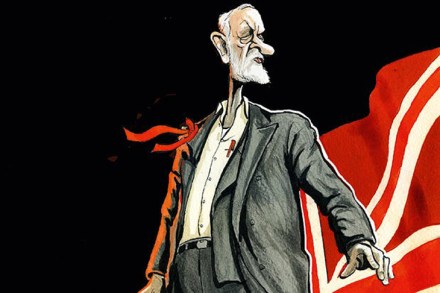
The worst of Britain’s post-war mistakes, ideas we thought long dead, are once more in the air. Yet again there are plans for ‘workers on boards’ (the govern-ment, of course decides who’s a worker), and for mandatory price caps, based on the delusion that government can make things cheaper by diktat. Intelligent people are once more agreed that British employers should pay the highest minimum wage in the developed world — a policy estimated to condemn tens of thousands to unemployment. The tax burden is at a 30-year high, yet many assume we should make that burden still heavier — as if the country can be taxed to prosperity. The Labour party has been pontificating along these lines in Liverpool all week, but these are in fact Tory ideas.

Trading blows

Donald Trump campaigned as an unrepentant protectionist and, on the face of it, he has lived up to his word. He has torn up the US-Pacific free- trade partnership, threatened the European Union with trade wars and imposed tariffs on billions of dollars’ worth of imports from China. As you might expect, Beijing’s retaliation has been immediate — as has the damage. American cherry growers, for example, estimate that they have lost about $85 million after suffering retaliatory surcharges. Farmers are now having to be bailed out by the US government. Yet this week Trump has doubled down, introducing tariffs on another 6,000 Chinese imports. When China responds in kind, he says, America will move on to phase three.

Why can’t the Tories see that a Canada-style Brexit deal is the answer?

Loyalty, it used to be said, was the Tories’ secret weapon. No longer. Self-discipline has been discarded — along with commitments to lowering taxes, being strong on defence and keeping the streets safe. The Conservatives appear to have abandoned all of their beliefs and transformed into the party of Brexit. But, it seems, they can’t even get that right. Brexit is one of the most important projects any government has undertaken in our postwar history — a task that has been entrusted to Conservative MPs, most of whom voted against Brexit. The Prime Minister and her Chancellor, her Foreign Secretary and her Home Secretary all argued during the referendum campaign that leaving the EU would be a disaster.

The case for Sajid Javid

Since being appointed Home Secretary, Sajid Javid has taken a series of bold and overdue decisions. On immigration, he understood that most people would like skilled doctors and nurses to come and work for the National Health Service, so he removed them from the cap that Theresa May had imposed on skilled workers coming to this country. In his response to the case of Billy Caldwell, the severely epileptic boy whose fits were eased by cannabis oil, Javid brought political nous to a department that all too often lacks it. He recognised that if heroin could be prescribed for medical purposes without further undermining prohibition, the same could be true for cannabis.

Into Africa

On her tour of South Africa, Nigeria and Kenya, Theresa May finally made a positive case for Brexit. For too long her government has tried simply to salvage what they can of Britain’s trading relationship with the EU, overlooking the possibilities that Brexit offers to build trading relations with the wider world.  The tone of this week’s tour, however, was different: a pitch for how Britain can make new alliances. This country will soon have the freedom to do so — no longer bound by its role as the most reluctant member of a 28-nation bloc. The opportunity is to treat African nations as partners and equals, not as risks or charity cases.

When fear fails

Economies run on confidence — as Franklin D. Roosevelt observed when he told Americans, in his first inaugural address during the depths of the Great Depression in 1933, that they had ‘nothing to fear except fear itself’. If that confidence is lost, if people collectively start drawing in their horns, squirrelling money away because they fear turbulent economic times ahead, then recession can all too easily become a self-fulfilling prophecy. No serious economist would dispute this theory. The puzzle is why the UK economy, riddled with Brexit anxieties, is in such good health. The Dutch prime minister said we were ‘collapsed’. The New York Times publishes frequent reports saying that Britain is falling apart, even that our country has ‘vanished’.

The futility of terror

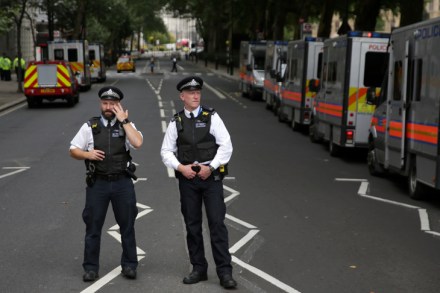
By now, the routine is familiar: a lone wolf strikes, roads are sealed off, buildings locked down and a biographical picture begins to emerge. Often, the perpetrator turns out to be born and bred in Britain. His astonished friends and neighbours say they saw no signs that he had succumbed to fanaticism. It later emerges that radicalisation happened incredibly quickly — perhaps inspired by online videos — and the terror plan was so low-tech that interception would have been impossible. How, it might be asked, can any country protect itself against such threats? But Britain has protected itself, both in thwarting such attacks and in blunting their impact. The latest attacker found the House of Commons protected by barriers.

Bravo Boris

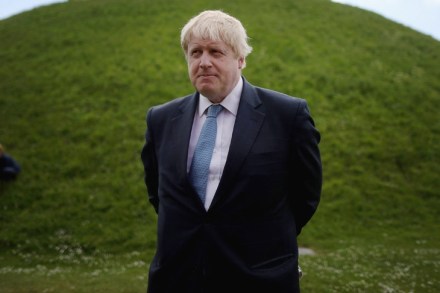
Ever since Boris Johnson resigned as foreign secretary, it was generally assumed that there would — in time — be a dramatic clash with Theresa May. But it was thought that the Prime Minister would pick her battle over a point of principle, perhaps on Europe, rather than over a joke in his Daily Telegraph column. Boris was defending the right of Muslims to wear what they like in public, but added that he thinks niqabs look like letterboxes. The ministerial reaction has been extraordinary, and deeply unedifying. Boris’s point was that, in banning the niqab, Denmark had passed a surprisingly illiberal piece of legislation — all the more surprising in that it has emerged from a country often viewed as a bastion of liberty.

How to negotiate

Ever since Theresa May declared that ‘no deal is better than a bad deal’ she has seemed to be drifting towards the ‘bad deal’ option. The government has put forward numerous constructive proposals, only for them to be shot down by Michel Barnier — who goes on to warn of ticking clocks and the need for Britain to cede ever more ground. His strategy is logical and amply rewarded: every time he rejects a British plan, more concessions are offered. All along, Barnier’s approach has been to portray a post-Brexit trade deal as if it were a favour to Britain rather than an agreement of mutual interest. Britain, he has asserted, has everything to lose — while the EU could carry on after a ‘no deal’ Brexit as if nothing had happened.

Troubled water

The year 1976 rises like a spectre whenever the sun shines for more than a few days. That long, dry, hot summer has become a regular reference point for people in their late forties and over searching for happy memories of childhood or young adulthood. Those too young to remember it will nevertheless be familiar with photographs of people dipping in the fountains in Trafalgar Square, walking alongside dried-up reservoirs or showing a ‘Blitz spirit’ as they filled buckets from standpipes in the streets. Yet rarely does anyone see the summer of 1976 in a clear light: as a time when our then state-owned water industry failed to cope with adversity.

The road not taken | 19 July 2018

Handling Brexit was never going to be easy for Theresa May, given that the Tories have been fighting a civil war over Europe for at least a quarter of a century. But the past ten days have been so calamitous that there is a real possibility that her Chequers gambit — threatening a general election unless MPs support her watered-down version of Brexit — could lead to the fall of the government and the ceding of power to the most left-wing Labour administration in history. The mood in Parliament is now as anarchic as it was during the last days of the Callaghan government in 1979: the Maastricht crisis in 1992 looks rather tame by comparison.