Leading article

Corbyn’s useful idiots

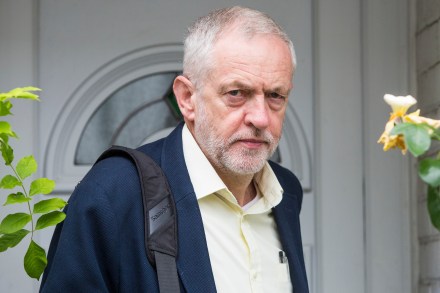
The news that Jeremy Corbyn met a Czechoslovakian agent three times during the 1980s, when the Cold War was still very much in progress, has come as a shock to some. But it should not come as a surprise. What we have discovered so far fits entirely with everything we know about Corbyn’s character and his sympathies. He does not appear to have sold secrets, or even to be interested in anything venal. To judge by Czech sources, he was unaware that the man he was meeting was an agent attempting to recruit him. This was at a time when British diplomats were trained to work on the assumption that everyone they met from behind the Iron Curtain was a spy: Corbyn seems to have been blithely unaware of what he was walking into. But that is the Labour leader all over.
Justice for jihadis

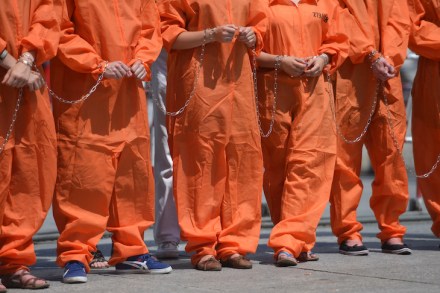
The success of the military campaign against Isis in Syria and Iraq has left behind a diplomatic and legal problem: what to do with the British citizens who travelled to join and fight with Isis, but who have survived hostilities. The problem has been brought to a head by the capture, by a group of Syrian Kurds, of El Shafee Elsheikh and Alexanda Kotey — two Londoners who were members of ‘the Beatles’, a group which tortured and beheaded at least 27 hostages. There is little use in looking to the government for consistent guidance as to what should happen to the two men, who have been stripped of their British citizenship.

A return to normality

It is easy to mock the most strident critics of capitalism, like Bernie Sanders and Jeremy Corbyn. It’s harder to ask whether they might actually have a point. Consider the past ten years of evidence. Since the collapse of Lehman Brothers, wages for ordinary workers have been on the floor — even today, the average pay packet in Britain is lower than it was before the crash. The main response to the crisis has been to print money, through quantitative easing and ultra-low rates. This artificially inflates assets. And who benefits? Those who have the most assets: in other words, the very rich. Since the crash, the amount of wealth in Britain has risen by more than £4 trillion — almost half of which has accrued to the richest 10 per cent of households.

Trump vs Trump

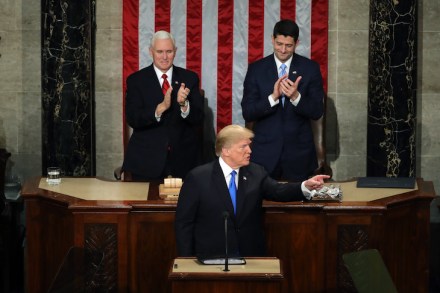
It’s easy to see why Donald Trump gets angry. He is presiding over a robust economy, growing at the fastest rate of any major economy. His recent tax cut has encouraged jobs and investment to come back to the United States. Apple alone is redirecting an extra $38 billion in tax towards the Treasury’s coffers. Other employers are using the tax cuts to pay workers a bonus: AT&T is handing 200,000 of its staff a payout averaging $1,000 each. There’s so much economic optimism that even Democrat voters say they feel better about the economy than they did under Barack Obama. But Trump isn’t taking much credit. He is still very much blamed — and his approval ratings are still very low, worse than any other President going into his second year.

Open goal

A decade ago, bankers were not merely the masters of Davos, but the ‘masters of the universe’. No one calls them that any more. It is a mark of how far the global economy has shifted that the market capitalisation of Goldman Sachs was this week overtaken by that of Netflix, the online entertainment company. The world’s five largest companies are now all in the field of technology and the internet: Apple, Google, Microsoft, Amazon and Facebook. Ten years ago, none of them made the top five: the masters, then, were Exxon, Walmart, China National Petroleum and the Industrial and Commercial Bank of China.

Corbyn’s latest triumph

For Jeremy Corbyn and his allies, there has been no far-left takeover of the Labour party or its governing National Executive Committee. It’s true that, this week, Corbyn supporters came to control the majority of the NEC, completing their command of the party apparatus. But they see this as getting rid of the last of the right-wingers and enabling — for the first time — the Labour party to dedicate itself to the interests of the working class. It’s not the triumph of a fringe, they say, but the expulsion of a fringe. The Corbynite agenda of government expansion, mass nationalisation of railways, utilities and more, can now be pursued. Those still laughing at all that have not been paying attention.

What’s going right

It is only a few months since gloomy economic commentators were confidently predicting that the world was about to plunge into a dark era of protectionism. Yet the global economy begins this year in its healthiest state ever, growing faster than any time since 2011. There has been a change in political rhetoric, but not in the willingness of people around the world to trade with each other. According to the OECD’s most-recent projection, made in November, world trade grew at 4.8 per cent last year. Something seems to be going badly right. Negative sentiments about the world economy echo those which have hung over Britain’s economy ever since the Brexit referendum.

Where Trump succeeds

Among the many new political maladies of our age, one has been left largely undiagnosed. This is Trump Derangement Syndrome, a condition whereby intense dislike of the 45th president renders sufferers unable to understand what he is trying to do or allow that he is capable of success. Trump is hard to admire, it’s true, and seems to revel in his ability to appal. But therein lies the secret of his power: with a few tweets, he can set the world’s news agenda and drive his critics to distraction. Take this week, when he tweeted that his nuclear arsenal is larger than that of Kim Jong-un. His comments were seized upon as yet another example of his idiocy and his playground logic.

The Spectator’s Christmas appeal: donate internships, not money

Perhaps the most insightful piece of political analysis since the turn of the century came from the Queen in a speech to the United Nations a few years ago. She first addressed the UN in 1957 and returned in 2010 to reflect on what she had learned in the interim. She had seen prime ministers every week and dined with presidents from all over the world — but what struck her was how seldom their schemes translated into real progress. ‘Many sweeping advances have come about not because of governments, committee resolutions, or central directives,’ she pointed out, ‘but instead because millions of people around the world have wanted them.’ Politicians run the government, not the country.

Bring jihadis to justice

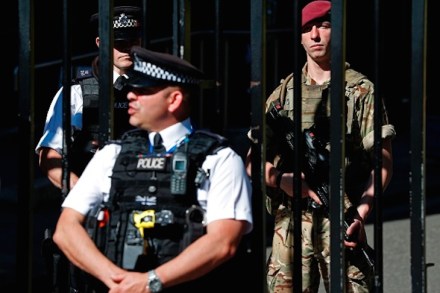
At first sight, the evidence presented in David Anderson’s report into the four terror attacks committed between March and June sounds damning. The security service, MI5, had had three of the six attackers on its radar. The Manchester bomber Salman Abedi, who murdered 22 people, had come to the attention of MI5 in 2014. As recently as the beginning of this year, he had been implicated in criminal activity, which MI5 officers now admit might have led to his attack being thwarted had it been investigated. Khuram Butt, one of the attackers at London Bridge, had been under investigation for two years, yet still he and his two accomplices were allowed the space to plot and carry out their attack, in which they murdered eight people.

A price worth paying

There will be howls of outrage in some quarters if it is confirmed that the government has offered the EU a ‘divorce’ bill of up to £50 billion (over several years). Some on the leave side of the debate insist that the bill should be zero. They ask: does the EU not owe us some money for our share of all the bridges we have helped build in Spain and railway lines in Poland? But it was never realistic to think we could leave the EU and maintain good relations with the bloc without paying a penny — even if a House of Lords report did seem to suggest that this would be legally possible. We are in the process of creating a new relationship with the EU, not ending it altogether.

Being boring

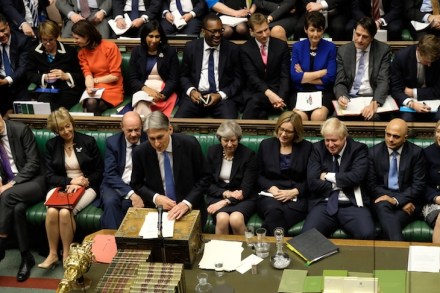
Philip Hammond began his first Budget, in March, by playing down its importance — for his big ideas on fiscal policy, he suggested we would have to wait until the autumn. It was a wait which was very nearly extended to eternity as he narrowly avoided losing his job in a post--election reshuffle. We found out this week that it was a bluff: he doesn’t have many big ideas, just a selection of small ones. Which, under the circumstances, is something of a relief. The Chancellor is getting better at telling Britain’s story, boasting about record employment and how the best-paid 1 per cent pay 27 per cent of all income tax. He didn’t say why (that tax rates for the best-paid were reduced), nor did he double down on more tax cuts that could have stimulated growth.

The next Iraq war

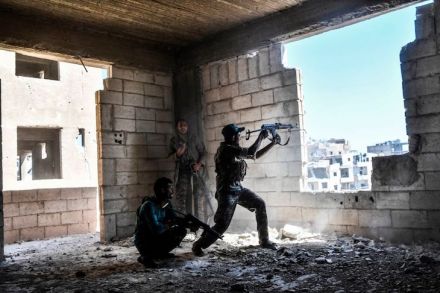
After the most intensive street-by-street combat since 1945, Isis’s so-called caliphate is no more. Last weekend, the Iraqi government won what should be the final battle and is now preparing to say that the war is ended. The jihadis still have the odd redoubt — but they have been forced out of Mosul and Raqqa after an intensive coalition campaign led by America and Britain. Donald Trump is unlikely to emulate his predecessor-but-one by appearing in front of a banner saying ‘Mission Accomplished’. Theresa May probably won’t deliver such a statement either. Indeed, the war against Isis has barely been mentioned by either politician, even though our involvement has been larger than expected.

Stop the rot

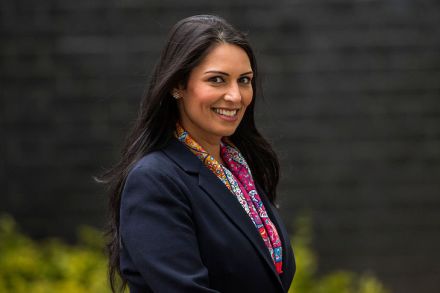
Dealing with a hung parliament was never going to be easy, but no one quite foresaw the decay which now seems to have set in to Theresa May’s government. The best that can be said for the Prime Minister is that the past week’s events have weakened her rivals within the Conservative party. No one is talking up Priti Patel as a potential rival any more and a challenge from Boris Johnson is now highly unlikely, following his loose words about a British woman incarcerated in Iran — which the Iranian regime may use as a pretext to increase her sentence. Like John Major, the Prime Minister benefits from the feuding in the Cabinet and is kept in place by the fear that a leadership challenge would see the party rip itself apart.

The Brown delusion

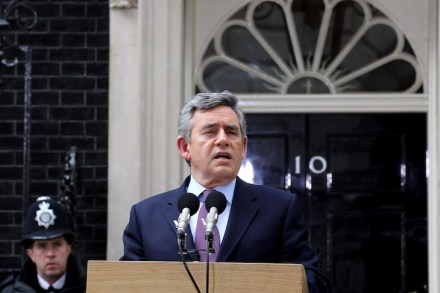
Gordon Brown has pitched his memoirs as the honest confessions of a decent man. He failed to win the one general election he fought, he asserts, due to a personality that was unsuited to an age of Twitter and emotional displays. His is the Walter Mondale response to failure — the former US vice president said of his defeat in the 1984 presidential election: ‘I think you know I’ve never really warmed up to television, and in fairness to television, it’s never really warmed up to me.’ Admitting to poor media skills is not genuine self-examination on the part of Brown, more an attempt to shift the blame for his failures on to something he considers trivial.

Identity issues

It was always going to be difficult for Theresa May’s government to secure a legacy beyond Brexit. With the negotiations running into difficulty, it becomes all the harder. Ministers must avoid, however, resorting to well-meant gestures which open the government to ridicule. Take, for instance, the revelation that Britain has insisted on the UN’s International Covenant on Civil and Political Rights making reference to pregnant transgendered people — although it now denies that it objected to the term ‘pregnant women’. The purpose of the relevant clause is deeply serious — to dissuade malignant regimes from subjecting pregnant women to the death penalty.

The Kurds are on their own

The routing of Isis in northern Iraq ought to be a time of international celebration, but as ever in the Middle East, there is no such thing as a straightforward victory. No sooner had Isis been driven away — though not quite vanquished — than the next great struggle commenced, this time between the Iraqi government and the Kurdish forces who for the past three years have been holding back Isis from the city of Kirkuk and its surrounding oilfields. This week, Iraqi forces stormed into Kirkuk and raised the country’s official flag, removing the Kurdish flag which was raised there in 2014.

The new tycoons

The giants of the internet have long said that they are not publishers but mere platforms — or couriers — of the new information age. Companies such as Google and Facebook insist that they’re the digital equivalent of the vans, newsagents and paperboys who distribute what other people publish. So they ought not to be held responsible for it. In the early years of the internet, their argument made sense. Most news and comment came from newspapers and magazines (like this one). But then social media arrived and restraint vanished. Military-grade email encryption has emerged as standard, giving security to those who don’t want their email hacked, but also cover to criminal networks.

Tory blues

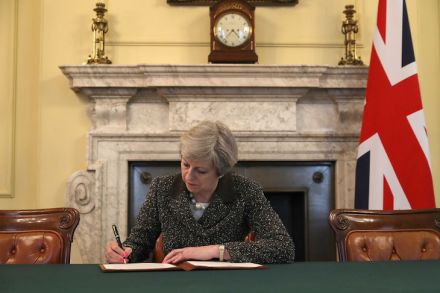
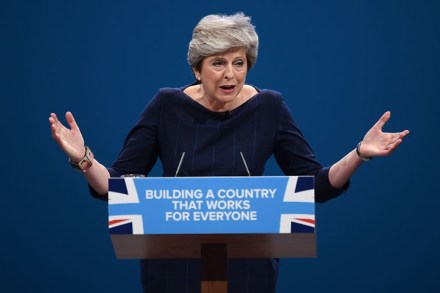
Theresa May’s conference speech — interrupted by coughing fits and with part of the set falling apart behind her — served as an unfortunate metaphor for her premiership and party. She is carrying on and in doing so, she demonstrates her resilience, but also her frailty. The horrified faces of cabinet members watching as her voice dried up on stage seemed to sum up their wider concerns about whether their party is in a fit state to see off Labour, so recently dismissed by them as a joke. Now, they are left wondering if their party is falling apart. The Prime Minister spoke about taking the fight to Jeremy Corbyn, but her announcements suggest that she is suing for peace — accepting his argument, and seeking to copy some of his solutions.

It’s time to talk trade

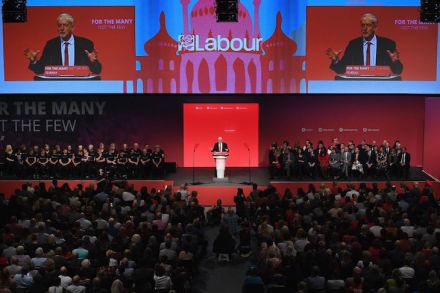
Thirty years ago, the Conservatives would have had no problem countering what Jeremy Corbyn had to offer in Brighton. But as they gather in Manchester for their own conference, they know they are going to have to find a new way of appealing to a generation born after the fall of Soviet communism, which has no memory of (or interest in) the 1970s, with its industrial strife and moribund state-run industries. Socialism, as we found out in June, is this year’s surprise hit. For younger voters struggling to find a way on to the property ladder, a bigger, all-embracing state may seem to be the answer. As for financial crises, the only one they have witnessed in their adult lives was one blamed on reckless banks.