Leading article

What Isis wants

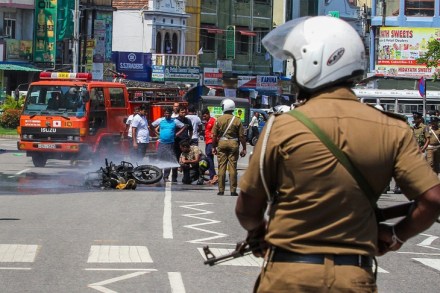
It has become commonplace to describe terror attacks as ‘senseless’. The horrific Easter Sunday bombings in Sri Lanka, which cost the lives of more than 350 people, several British citizens among them, make little sense. The only way to understand them is as a symptom of the growing globalisation of terror. The tactics — synchronised bombs on a Christian holy day — are grotesquely familiar. And it was not surprising to learn that one of the attackers was partly educated in London. The attacks, on three Catholic churches and three hotels favoured by westerners, clearly targeted Christians. The culprits have been identified as local Islamic extremists. The purpose of the attacks, therefore, was to increase tensions between Muslims and non-Muslims.
Out of the ashes | 17 April 2019

‘Great edifices, like great mountains, are the work of centuries,’ wrote Victor Hugo in Notre-Dame de Paris. ‘The man, the artist, the individual, is effaced in these great masses, which lack the name of their author. Human intelligence is there summed up and totalised.’ The foundation stone of the cathedral of Our Lady of Paris was laid 850 years ago, but it was the work of generations, and took 200 years to complete. It soon became one of the greatest churches in Christendom and, as such, was ripe for desecration by the Jacobin fanatics of the French Revolution. In 1793, its altar was torn out in a ceremony that was too grotesque even for Robespierre.

Friends and allies

The European Union’s official goal — an ever-closer union of people — remains its single most attractive feature. Our continent is marked by its diversity: nowhere can you find a greater range of languages, histories and cultures. Closer co-operation is within everyone's interests, and the EU has done much to facilitating this. Its mistake was a lack of respect for the democratic traditions of its member states, and when it sought to impose a fixed set of rules over the most culturally and economically diverse club of nations it became a source of instability in Europe. The rise of populist parties in Europe is the most visible sign of the over-reach.

Where Brexit failed

One of the many tragedies of Theresa May’s premiership is that, having come up with a coherent policy on how to enact Brexit, she spent her prime ministerial career failing to follow it.  The words she used in her speech at Lancaster House in 2017 seemed clear enough: ‘No deal is better than a bad deal.’ It made sense to repeat this in the last Tory manifesto. She was to seek a free trade deal with the EU, but if that proved impossible, then Britain would be leaving anyway. In the event, the EU has not merely failed to offer a good deal, it has refused to offer any trade deal at all — only a withdrawal agreement that might or might not lead to a trade deal in future but which in the meantime threatens to trap Britain in the customs union indefinitely.

Healthy debate

It is not hard to make the case that vaccination programmes have been one of the greatest contributions to mankind over the past century. It is sufficient simply to list the most common causes of death in 1915 of British children aged under five, in descending order: measles, bronchitis, whooping cough, diphtheria, tuberculosis, pneumonia, infective enteritis and scarlet fever. Few parents in Britain now have to undergo the trauma of nursing a child suffering from any of these conditions, still less of burying a child who has died from one. That these diseases have receded into history is down entirely to advances in medicine and public health.

Agony prolonged

For many people, next Friday was supposed to be a celebration. Boris Johnson spoke about an ‘independence day’ marking the beginning of a new era of national self-confidence. But as we approach 29 March, not even ardent Brexiteers can claim that there is anything to celebrate. Theresa May has been reduced to asking, or rather begging, the EU for an extension to Article 50 — something that the EU has said it will grant only if Britain can provide a good reason for needing the extra time. So far, the Prime Minister has not provided one, apart from the prolonging of every-one’s agony. When parliament voted to enact Article 50 two years ago, the challenge seemed daunting but perfectly possible.

The leadership deficit

In all the madness of the Brexit voting, it's easy to forget that Philip Hammond revealed a mini-Budget this week. Even the Chancellor started his speech by promising not to talk for long, so MPs could discuss the no-deal Brexit which he has so lamentably failed to prepare for. Ever since the referendum result, he has been expecting economic gloom. It has refused to follow: the figures in his statement seemed to mock his general pessimism. Disaster has struck Westminster though. Theresa May has lost control of her party and her government and yet her opponent, Jeremy Corbyn, is so weak that he strikes most voters as an even worse option. It’s hard to think of a time when our politics looked more dismal.

Close the deal

It is becoming painfully clear that on Tuesday the House of Commons will be asked to vote on an EU withdrawal bill that is almost entirely the same as the one defeated by 230 votes in January. Geoffrey Cox, the Attorney General, is seeking to guarantee that Britain will never be trapped in the backstop. If he succeeds, Brexiteers, whatever their wider misgivings, should hold their noses and vote for Theresa May’s deal. It will be tempting for MPs who are seeking a proper break with the EU to repeat their rebellion. May’s deal means Britain will, for two years, be an EU member in all but name: paying all of the money and obeying the directives while undergoing (at least) two more years of Brexit talks.

Read all about it | 28 February 2019

The announcement this week that Capital, Heart and Smooth radio are cutting back their local news shows might not in itself seem important — they have loyal audiences keen to know what’s happening outside London — but it’s part of a worrying trend. Over the past two decades, important powers have been devolved to regions and local areas, a process that began with Tony Blair’s regional assemblies and picked up with David Cameron’s ‘localism’ agenda. We now have several elected mayors, while local authorities have more responsibility over the NHS. The decisions that affect our lives are more likely to be taken locally than nationally. And yet at the same time the local media that once held local government to account has atrophied.

Britain is working

At any other time, news that Honda intends to close its Swindon plant in two years’ time with the loss of 3,500 jobs would have been seen for what it is: a tragedy for those affected, their families and businesses it supports. But the story was used by both sides in the Brexit wars to prove their point. Certain Remainers saw it as proof of what leaving the EU will bring, while some Leavers were almost callous in the way they shrugged off the closure. When news like this is being exaggerated for effect, it’s hard to form a clear view of what’s going on. But through the fog, a pattern is discernible. The car-making industry is in great difficulties worldwide, as Ross Clark argued in our cover piece a fortnight ago.

Ragwort: an apology

An article published in The Spectator on 11 August 2018, Root out ragwort!, stated that the Wildlife and Countryside Act 1981 obliges landowners to stop ragwort spreading to adjacent grazing land. In fact, orders to stop ragwort spreading may be made under the Weeds Act 1959. We also said that the RSPCA ‘will prosecute’ the owners of horses found grazing among ragwort. We are happy to clarify that, while the RSPCA may prosecute such owners, they will only do so when horses have no choice but to eat ragwort. The article also stated that a website, Ragwort Facts, ‘insists there is no evidence that horses are being killed by ragwort’. The website in fact says ragwort ‘doesn’t really kill many horses’.

Break point

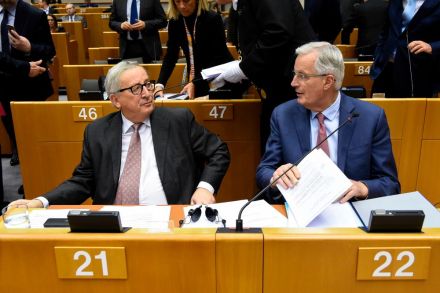
Even the most fervent Brexiteer would have to admit to being impressed at the cohesion and chutzpah of the European Union negotiating team. Michel Barnier talks as if it is the UK that most needs a deal, while the rest of the EU could carry on just as well as before, or better, without one, given that it would be able to attract business and investment away from us. For the EU to concede a trade deal, therefore, would seem to be little more than an act of kindness towards a fallen friend. As a diplomatic bluff, it is strikingly successful. But the economic reality is rather different. A free-trade deal benefits all. But if there were to be no deal, then what would happen?

The power of giving

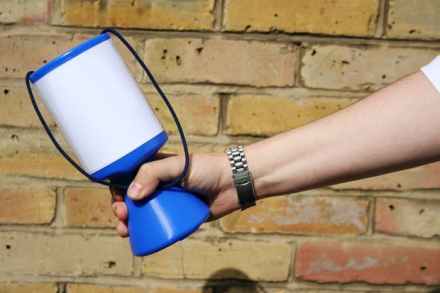
The British are said to be among the most generous people on earth. When it comes to ordinary people scraping together pennies to give to children’s hospitals or donkey sanctuaries, this is unquestionably true. Yet when it comes to wealthy individuals using large slices of their fortunes to make transformative donations to institutions such as universities and schools, we are a long way behind America. Where are the Carnegies, the Rockefellers? We do have wealthy donors, but they are generally on a much smaller scale, and quite often feel inclined to make their donations anonymously, as if it were an embarrassment to be seen to be acting with generosity.

Red handed

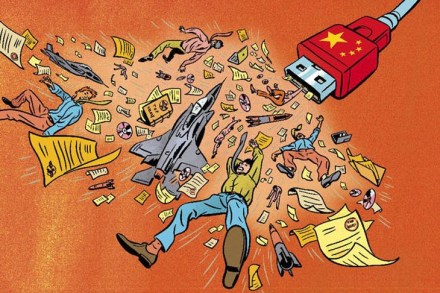
The world is a better place for China’s emergence from behind the bamboo curtain where it hid for half a century. Economic and market reforms have led to the greatest reduction of poverty in world history. For some western manufacturers, competition from low-cost China has sometimes proved fatal, yet the overall economic effect has been beneficial, helping to deliver years of global growth without the inflation which once acted quickly to snuff out the boom times. All this arouses a protectionist backlash, especially in America, but the American case against Huawei, the largest Chinese tech company, shows how many of these concerns are well-grounded.

The Brexit vacuum

If knighthoods could be removed by vote of parliament, Sir James Dyson would be first in line. Knighted for being one of Britain’s most celebrated entrepreneurs, he backed Brexit — only to decide this week to scarper to lower-taxed Singapore. To Sam Gyimah, a former Tory minister, it is a ‘betrayal of the public’. To Labour’s shadow business secretary, Rebecca Long-Bailey, it exposes a ‘culture of short-termism’ in British business. To the Lib Dem Layla Moran, it is an act of ‘staggering hypocrisy’. This response encapsulates a failure to understand the economically liberal case for Brexit. The truth is that Brexit, in and of itself, will do very little for Britain. It brings new powers.

Rude health

An unexpected outcome of the tortuous process of Brexit negotiations has been the enhancement of Britain’s reputation as a parliamentary democracy. For many years, it has seemed as if political debate was draining away to the TV and radio studios, or even to social media — with MPs reduced to simply rubber-stamping decisions which have already been made elsewhere. This week, the Commons reasserted its authority in the most dramatic way imaginable, inflicting the largest ever government defeat on a substantive motion. The rejection of the Prime Minister’s Brexit deal is a humiliation on a scale which confounded the government’s attempts at expectation-management. To Mrs May’s credit, she immediately conceded that MPs must decide what happens next.

Rise above it

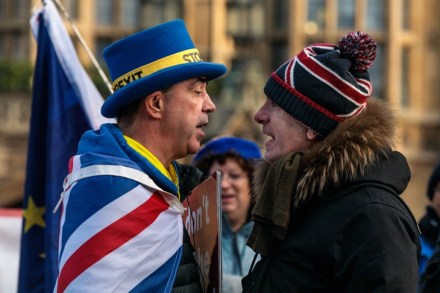
For several weeks now, a group of anti-Brexit protesters have found a way of regularly appearing on television news. They wave banners and chant slogans and try to disturb politicians being interviewed. Most MPs take it in good part. Jacob Rees-Mogg even expressed his admiration for those able to shout ‘Stop Brexit’ in a way that is picked up by microphones a hundred yards away. But when pro-Brexit protesters called Anna Soubry a Nazi, dozens of MPs wrote to the police asking them to intervene. The police issued new guidelines to officers. Broadcasters have been conducting interviews with politicians on the green outside parliament for decades. Protesters have rarely interfered. That they do so now on a daily basis is a reflection of the coarsening of political debate.

Rough crossings

It has been a messy start to the new year for Sajid Javid. For months now, migrants using small boats have been landing in Kent, usually no more than a dozen people at a time. For a country that receives up to 2,500 asylum applications a month, this falls short of a national crisis. It was quite absurd for Tory MPs to talk about deploying the Royal Navy to fend off a few dinghies, and absurd for the Home Secretary to rush back from his holiday to handle the non-crisis and declare it a ‘major incident’. It is a minor incident, but may turn into a major one if the government panics. Migration patterns change, as do the methods.

Two futures

Last Christmas, The Spectator set up an appeal — not for money to be given to charity, but for our readers to use what influence they have to offer internships for children selected by the Social Mobility Foundation. The response was wonderful. Offers arrived from across the country and, as a result, teenagers found themselves in barristers’ chambers, railway companies, even the royal household. It was such a success that we are repeating our appeal this year. Several of our readers wrote in to make an interesting point: that while they were delighted to help, they could not pretend their motives were entirely charitable. There is great demand for young talent nowadays, so shrewd employers go the extra mile to find it.

Beyond May

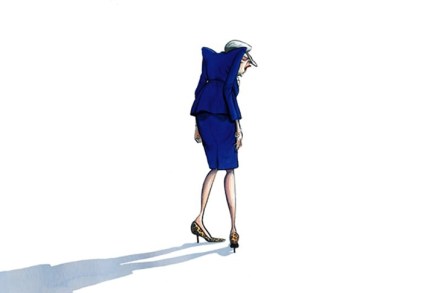
On Tuesday, MPs will face something rare: a Commons motion which really does deserve to be described as momentous. It will set Britain’s place in Europe and in the world for years to come. The vote will place an especially heavy burden on Conservative MPs, for they have the power to inflict a hefty defeat on their own government, an administration which has no majority and which governs thanks only to a confidence and supply agreement with the DUP. It is all too easy to see where defeat on Tuesday could lead: to the collapse of the government, a general election and the arrival of Jeremy Corbyn in Downing Street. Theresa May’s deal has been rejected by MPs on the left and the right, by radicals and moderates.