Leading article

We need to demand more from our politicians

The first mention of Westminster came in a charter of 785, attributed to King Offa, granting land in ‘that terrible place’. The document was a forgery though, drawn up by 12th-century monks to make Westminster Abbey seem a site of holy terror. Even so, ‘that terrible place’ would strike most people today as a good description of SW1. Parliament has failed to cover itself in glory in recent years: the financial crisis, the expenses scandal, the Brexit wars, the prime ministerial merry-go-round, the unfair if unshakeable perception that our politicians are fiddling – with their finances, and possibly their staffers – while Britain suffers. No wonder, then, that politicians of all stripes have tried to boost their popularity by railing against Westminster.
Labour must be honest with voters about the coming crisis

So far, Labour has staged a contested leadership election in government only once – 50 years ago, in 1976. The New Economics Foundation once declared 1976 to be post-war Britain’s happiest year, judging by income equality and public spending. Cosseted by memories of a hot summer of space hoppers and Swap Shop, the left-wing thinktank brushed over strikes, stagflation and Britain going – to use the obligatory phrase – cap in hand to the International Monetary Fund (IMF). Compared with Labour’s current phoney war, that election was enviably swift. Harold Wilson resigned on 16 March; three rounds of voting by Labour MPs later, and James Callaghan entered Downing Street on 5 April.

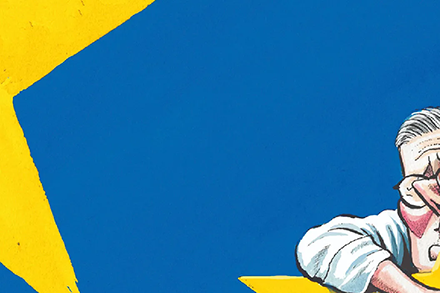
The EU can’t save Labour

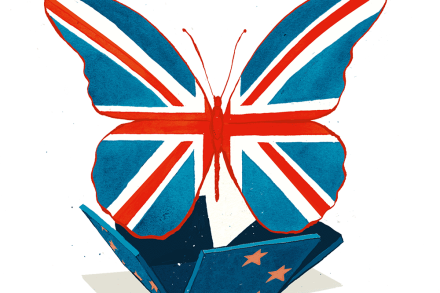
Amid the rubble of this government lies a tattered standard – the regimental colours of the current Labour party. The blue and gold of Brussels is now the binding force that holds together the different factions of this government. Keir Starmer and those who wish to replace him are united in their conviction that a refreshed, closer relationship with the EU is central to their destiny and Britain’s. Starmer’s wish to once more hoist the European flag is understandable. He positioned himself to succeed Jeremy Corbyn by becoming the face of Brexit resistance. In the days, not so long ago, when he had a following, it was because his supporters believed he would lead Britain back into the heart of Europe. Now, Starmer wants to play that old tune.

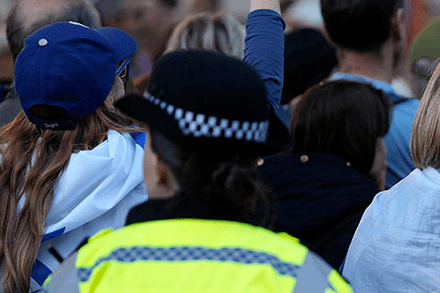
Anti-Semitism is a virus – and it’s spreading

To eradicate a virus, one needs precision. The origin of the threat needs to be identified, as do the circumstances of its incubation and spread, and the vulnerability of specific hosts. The wrong response risks making things worse. Anti-Semitism is a virus, and, as the late Chief Rabbi Jonathan Sacks explained, one that mutates over time. Originally, it was a religious prejudice; post-Enlightenment, it developed into a racial hatred, fuelled by a twisted version of social Darwinism. It was thought that after the unique evil of the Holocaust, the single greatest crime in history, when man became wolf unto man, the virus had at last been defeated. But in our own time a new variant has emerged.

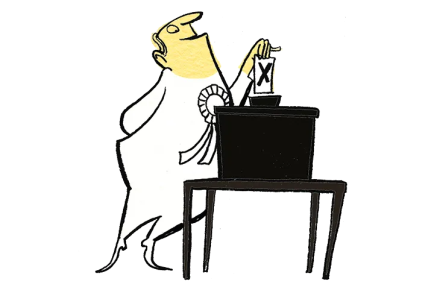
In the local elections, think local

In March, just before Artemis II rounded the far side of the Moon, the Transport Secretary had her own lunar encounter. Heidi Alexander claims that a ‘moon crater’-sized pothole forced her Mini off the road in Oxfordshire. She is far from alone. Pothole casualties in Britain rose from 270 in 2020 to 393 in 2024, including six dead. An RAC Europe survey found that 62 per cent of British drivers thought European roads are better maintained. Britain’s pothole problem is a story of government dysfunction. Local authorities seem unable to perform their basic duties; meanwhile, council tax continues to rise, bin collection becomes more infrequent and public spaces continue to deteriorate.

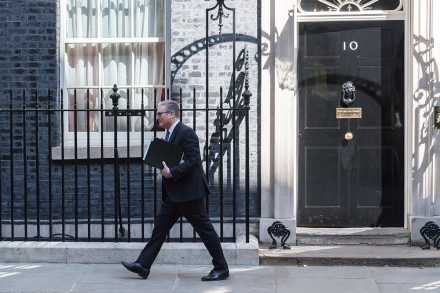
It’s time for Starmer to go

The Book of Common Prayer asks that those who ‘suffer for the sake of conscience’ might be strengthened. Those prayers were answered on Tuesday morning. Sir Olly Robbins, the not so permanent under-secretary at the Foreign Office, demonstrated a calmness and strength of purpose in upholding the duties of his office which shamed the prime minister who sacked him. The suffering civil servant, who told the committee that he knew sections of both the civil service code and the Book of Common Prayer by heart, was vindicated. Sir Keir Starmer was revealed, by contrast, as not so much a king led astray by evil counsel but a whited sepulchre – professedly virtuous but corrupted within.

The Spectator won’t give up on Gentleman’s Relish

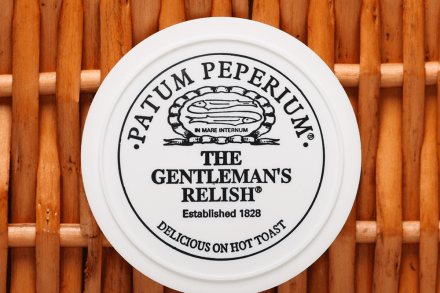
Last week our cookery writer Olivia Potts scooped the world by revealing that AB World Foods was to cease production of Gentleman’s Relish – on the eve of the 200th anniversary of the anchovy paste first gracing our dinner tables. For The Spectator, itself approaching its 200th anniversary, this was a loss that could scarcely be borne. But, thanks to quiet diplomacy between this magazine and the owners of Gentleman’s Relish, negotiations are now advancing to secure the future of Patum Peperium. More details will follow, but in the meantime, the chairman of Associated British Foods has released one of the last existing consignments of Gentleman’s Relish to The Spectator. We will outline plans for the distribution of this emergency supply next week.

We can’t afford to keep the pension triple lock

When Britons go to the polls next month, the results will likely reveal just how un-United the Kingdom has become. Separatist parties are poised to win in Northern Ireland, Scotland and Wales. The established parties of government – Labour and Conservative – are likely to sustain losses. The former may be deserved, and the latter unjust, given Kemi Badenoch has been vigorously effective in holding the Prime Minister to account. Even so, the polarising dynamics of our splintered nation will hit both historic parties hard. In a polity that is split by geography, attitude and income, one division is particularly striking: age In a polity that is split by geography, attitude and income, one division is particularly striking: age.

Trump: the boy who cried war

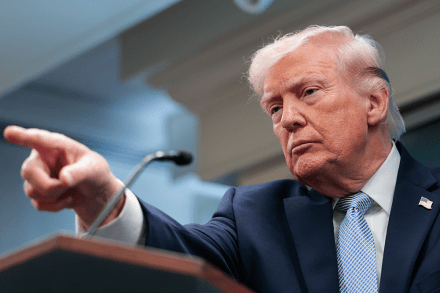
Did Donald Trump ever intend to obliterate Iranian civilisation?  Some will see the past week as one in which the world pulled back from the brink, when an unhinged US president experienced a rare moment of lucidity at the last crucial minute. Trump’s oscillation is, his defenders argue, the ‘madman theory’ in operation. This was the name given to the approach employed by Richard Nixon in Vietnam, when he tried to persuade the North Vietnamese that he had become so unstable he was capable of just about anything – nuclear annihilation included. Nixon believed his foe would have no option but to come to the negotiating table. Trump has succeeded in convincing many western commentators that he is genuinely on the point of lunacy – heedless of slaughter.

A Ukrainian win is more important than ever

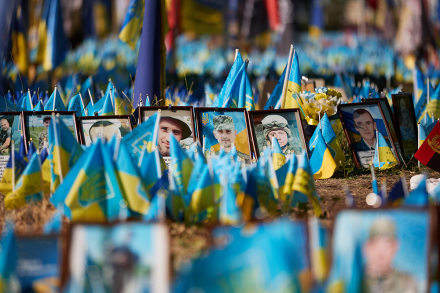
On 3 April we mark 1,500 days since Russia invaded Ukraine; on 11 June, the conflict will have lasted longer than the first world war. At that point in 1918, the German army was in complete collapse amid the success of the final Allied offensive, as the Kaiser’s disillusioned troops were forced back through the battlefields of the Somme. By contrast, the Ukrainian conflict remains locked in a bitter and bloody war of attrition. The Ukrainians have displayed an inspiring level of resilience; indeed, in recent months they have made small territorial gains. But the outbreak of war in the Middle East has, for the moment, strengthened Vladimir Putin’s hand.

The Tories are the real green party

You might describe it as the Polanski paradox. The party which calls itself Green, which has concern for the environment as its raison d’être, has never been more popular. Four Green MPs returned at the last general election. Victory in the recent Gorton and Denton by-election. Local election gains in May predicted to be sweeping. Running second in many national opinion polls, and in the projected seat tally for the Scottish parliament. And yet while the Green party surges ahead, green issues fall by the wayside. As Angus Colwell explores in this week’s cover piece, Zack Polanski has focused the Green party away from the environment and turned it into a movement of the populist left.

The West should double down on the Iran war

Donald Trump may be the volatile leader of an unstable coalition. America’s numerous interventions in the Middle East may have been marked by chaos, inconstancy and the erosion of western prestige. Nato, and even more so the European Union, may be militarily anaemic and economically sclerotic. And the war in Iran may well have intensified fears about American intentions, as well as placing further strains on the Atlantic alliance. But that does not mean now is the time to step away, shake one’s head and lament the un-wisdom of war. It only reinforces the need to finish the job: to rid Iran of its rulers, its regime infrastructure, its nuclear capability and the Islamist nightmare it has endured for almost five decades.

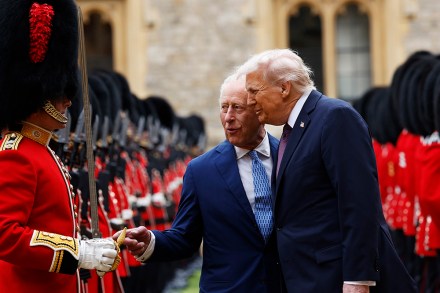
The King is still our Trump card

George III has not been well remembered on either side of the Atlantic. Despite reigning for almost 60 years, in Britain he is known, if at all, for losing the Thirteen Colonies and his madness in his later life. But in America, he is the villain of the national story; in Thomas Jefferson’s phrasing, the ‘Prince, whose character is thus marked by every act which may define a Tyrant’. The Declaration of Independence is a lurid list of his alleged crimes against his American subjects. But 250 years after that document was signed by the Founding Fathers, George III has been going through a renaissance. In recent biographies, Andrew Roberts and Jeremy Black have argued that he was a much-misunderstood monarch.

Ed Miliband must go

Economic forecasting was created, J.K. Galbraith said, to make astrology look respectable. It is not difficult to imagine what the great Keynesian economist would have thought of Rachel Reeves’s Spring Statement this week. It was pure -crystal balls. The statement was redundant on delivery – redundancy being one of the few areas of growth in our economy, as the bleak unemployment figures amply attest. The developing conflict in the Middle East, which has unleashed precipitous oil and gas price rises, has rendered the Chancellor’s promises of future growth more unlikely than ever.

Is it still worth going to university?

When self-styled ‘Money Saving Expert’ Martin Lewis gate-crashed Kemi Badenoch’s Good Morning Britain interview to reprimand the Conservative leader over her plans to cut the interest on student loans, he failed to mention that she was addressing a crisis for which he carries a little of the blame. For years, Lewis has encouraged prospective students not to be put off by tuition fees, arguing that the loans should be thought of as a ‘graduate contribution system’ rather than traditional debt. This was an investment in their futures, easily paid off through the higher earnings a degree would confer. But the system has become a tax on aspiration.

Can Keir Starmer keep us safe?

‘Shape without form, shade without colour. Paralysed force, gesture without motion.’ T.S Eliot’s lines from ‘The Hollow Men’ sum up in 11 words the emptiness of Sir Keir Starmer’s administration. Nowhere is the shade darker and the force more paralysed than in our government’s defence policy. At the Munich Security Conference last weekend, the Prime Minister boasted that he has demonstrated ‘Britain’s leadership on the world stage’ and pledged to augment our ‘huge defence capabilities’. A promise to increase defence spending further, faster, followed. But this is all gesture and no motion.

Keir Starmer can only delay the inevitable for so long

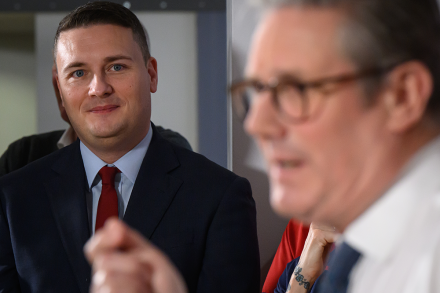
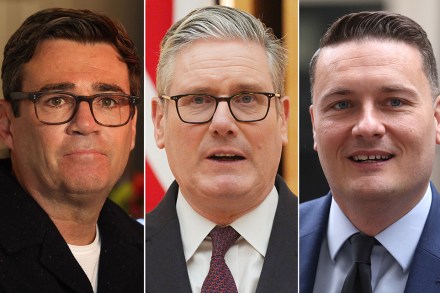
Wes Streeting is known to be a Spectator reader. Pinned on the Health Secretary’s office wall, as he revealed in an interview last Easter, is a leading article of ours asking whether he was ‘the Hamlet of the Health Service’. Streeting was ‘so riled’ by our suggestion of inactivity that he put it up to hold himself to account. It’s thus flattering, but unsurprising, that he also agrees with us about the holes at the heart of the government in which he serves. In WhatsApp conversations with Lord Mandelson, which he released helpfully early this week, Streeting lamented that the government has ‘no growth strategy’ and is not providing ‘a clear answer to the question: why Labour?’.

How to fight the AI revolution

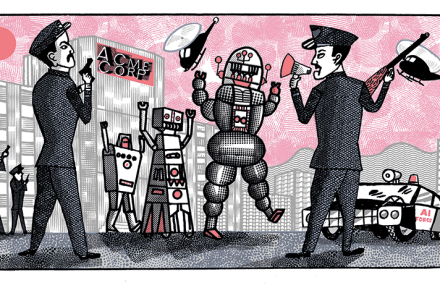
Ask ChatGPT to write a Spectator leader about the risks of AI and it begins like this: ‘There are two kinds of people talking about artificial intelligence today. One group is exhilarated, convinced that AI will usher in a new era of abundance, productivity and human flourishing. The other is distinctly alarmed, warning of mass unemployment, runaway systems and even existential catastrophe. They disagree on almost everything – except one crucial point. This is going to be a big change. And Britain, like most countries, is not nearly ready for it.’ As the bot identifies, the consensus among experts is that AI’s impact will be seismic, whether for good or ill.

A decade on, Brexit still means Brexit

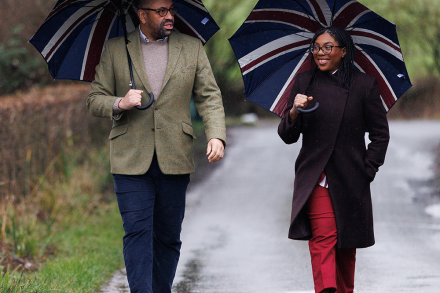
It’s been almost a full decade since Britain voted to leave the European Union. Inside Labour, whatever words are muttered about accepting the referendum’s result, the consensus remains that Brexit was a mistake. Ministers compete to see who can flirt most openly with re-entry, despite their party manifesto pledges not to rejoin the single market or customs union, or to reintroduce freedom of movement. Keir Starmer has attacked the ‘wild promises’ of Brexit supporters and said Britain must ‘get closer’ to the single market. David Lammy and Wes Streeting have both lamented the ‘damage done by Brexit’ and called for a customs union with Brussels – a proposal that Peter Kyle, the Trade Secretary, suggested would be ‘crazy’ not to consider.

The Tories and Reform should present a united front

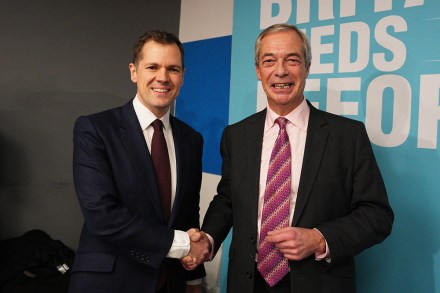
In the summer of 1643, as the dispute between Charles I and parliament raged on, Sir William Waller wrote to his friend Ralph Hopton to lament with ‘what a perfect hatred’ he detested ‘this war without an enemy’. The hardening of hearts between the Conservatives and Reform UK resembles a similarly self-defeating civil war – a family dispute more public and bitter even than the Fall of the House of Beckham. Just over a year ago, Robert Jenrick narrowly lost the Tory leadership contest to Kemi Badenoch. For some, his defection to Nigel Farage’s party was the overdue exit of a shameless careerist who never accepted coming second.