Leading article

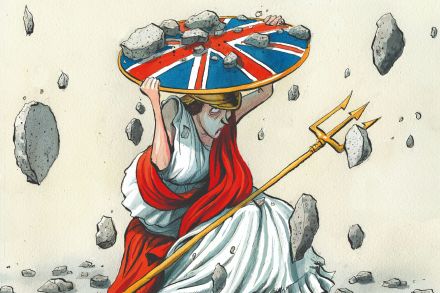
Britain is broke – and we all need to face it

Sometimes when I go to bed, I think that if I were a young man I would emigrate,’ said James Callaghan, the then foreign secretary, in 1974. He was referring to that decade’s chronic economic dysfunction, with its double-digit inflation, growing unemployment and stuttering growth. Two years later, as prime minister, he would have to go cap in hand to request a bailout from the International Monetary Fund. Two years after that came the Winter of Discontent. Today’s economic picture may not be quite so bleak. Even so, the young see only intractable stagnation, cost-of-living pressures and visible decline.
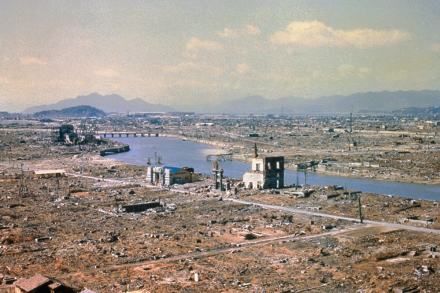
Hiroshima and the continuing urgency of the atomic age

In August 1945, Group Captain Leonard Cheshire was stationed on the Pacific island of Tinian as an official British observer of the dropping of the atomic bombs on Hiroshima and Nagasaki. Two decades later, he wrote for The Spectator about his experience. For him, the attack on the two cities represented ‘the ‘destruction of the impotent by the invincible’. Nevertheless, he argued that the Allies had been ‘undeniably’ right to carry out the bombings since the attack ended ‘the most terrible war’ and prevented an extremely bloody invasion of Japan.

The cult of safetyism harms us all

Last month, the government announced that 16-year-olds would be able to vote at the next general election. If these new voters had wanted to inform themselves about political issues over the weekend, they would have found it strangely difficult. Take, for example, a recent speech about the rape gangs made by the Tory MP Katie Lam in parliament. It was blocked on X, alongside transcripts of the trials of the perpetrators. X users also discovered that they were unable to watch videos of protests against illegal immigration, unless they could prove they were over 18. Even if 16-year-olds are now wise enough to vote, the government believes there is information that they are too childish to know.

Recognising Palestine isn’t a path to peace

The children of Gaza are enduring horrendous suffering. The control of aid has been restricted. Innocent lives have been set at nothing. Ruthlessness well beyond the terms of realpolitik has put hundreds of thousands at risk. The people responsible deserve global condemnation. But instead it seems they are to be rewarded. It is Hamas which is responsible for the suffering in Gaza. The terrorist organisation has, for years, used its thugs to control international development assistance to enrich its leaders and subdue the population. Its murderous – indeed, genocidal – intent was made manifest on 7 October 2023 when it unleashed an assault on innocent Israelis which resulted in the biggest single loss of Jewish life since the Holocaust.

The Afghan asylum leak cover-up saved lives

The United Kingdom’s immigration system is broken. Tens of thousands have entered the country who should not, and the bureaucracy which processes asylum cases is a creaking wreck. Those who do deserve a safe welcome are left in legal limbo for months, if not years. And yet the Home Office, which is responsible for this chaos, is not even the department in government with the most inefficient and unaccountable bureaucracy. That hard-fought distinction belongs to the Ministry of Defence, which combines profligacy in procurement with an inability to give armed forces families homes that meet even the most basic standards of decency.

Norman Tebbit was the symbol of an age 

Norman Tebbit, who died this week aged 94, was a self-made man who shouldered his way to the top of a party of old Etonians. He was, to many, the leather-clad bovver boy of Spitting Image, ordering the unemployed to get ‘on yer bike’. He was a devoted husband who stepped back from politics to care for his wife, Margaret, after they were pulled from the wreckage of Brighton’s Grand Hotel. And he was an unrepentant right-winger, who was unflinching about where his party had gone wrong, and unforgiving to the monsters who had put his wife in a wheelchair. This Middlesex grammar school boy turned airline pilot, turned cabinet minister, changed the country he loved for the better.

For the NHS, it’s Wes or bust

Labour swept to power on a pledge to ‘save the NHS’. As shadow health secretary, Wes Streeting said he would go ‘further than New Labour ever did’ to clear the health service’s backlog and, to achieve this, he claimed old taboos would be torn up, including the use of the private sector to improve services. Failure to clear the backlog now will be hugely politically consequential for this government. Partly because of how important the NHS is to the voting public, but more so because of the emotional resonance the service and its ‘free-at-the-point-of-use’ model has for Labour, both its MPs and its supporters. If the party that founded the NHS cannot save it, who can? That is why the NHS has been mostly immune to Rachel Reeves’s new austerity.

Let Kneecap play

During the Troubles, some 2,500 people were victims of kneecappings – punishment shootings, dished out by paramilitaries, for perceived crimes ranging from fraternising with British soldiers to drug dealing and rape. The term is something of a misnomer. The torture entails a low-velocity gunshot to the knee from a handgun. That isn’t guaranteed to destroy one’s kneecaps but could cause tissue or nerve damage and joint fractures. At least 13 victims had to have their limbs amputated; one in five was once estimated to limp for the rest of their lives. Until recently, a mention of kneecapping was a reminder of the terror that plagued Northern Ireland within living memory. Yet this week, thousands will descend upon Glastonbury, at £373.

The unvarnished truth about rape gangs

Some crimes are so horrific that our instinct is to look away. And there can be few as appalling as those perpetrated by the rape gangs whose activities Dame Louise Casey reported on this week. Girls as young as ten were beaten and sexually abused. They were tortured with baseball bats, knives and meat cleavers. They were urinated on, had cigarettes stubbed out on them, were burned by lighters and branded on their buttocks. Some contracted venereal diseases. One 12-year-old was compelled to undergo an abortion. These crimes weren’t rare, but sustained and widespread, carried out in up to 50 towns and cities across Britain over decades. The perpetrators were overwhelmingly Muslim men from Pakistani diaspora communities.

Britain needs reform

This week’s spending review confirms that where there should be conviction, there is only confusion; where there should be vision, only a vacuum. The country is on the road to higher taxes, poorer services and a decaying public realm, with the bandits of the bond market lying in wait to extract their growing take from our declining share of global wealth. When every warning light is flashing red, the government is driving further and faster towards danger The Chancellor approached this spending review with her credibility already undermined. Promises not to raise taxes on working people translated into a tax on work itself which has driven up unemployment.

This is a dangerous moment for free speech

Britain without blasphemy laws is a surprisingly recent development. Blasphemy was abolished as a common law offence in England and Wales only in 2008 and in Scotland in 2021. But that was the final burial of a law dead for much longer. The last execution for the crime was in 1697; the last imprisonment in 1921; and the last successful trial in 1977 – Mary Whitehouse’s prosecution of Gay News for publishing a poem about a centurion’s rape of Christ’s corpse. Even if 11 local councils banned Monty Python’s Life of Brian two years later, the trend since has been towards trusting that the Almighty is big enough to fend for himself. Yet this week the clock seemed to have been turned back to around ad 650.

Will any party stand up for ‘Nick’?

Meet Nick. He is 30 years old, has a good job and lives in London. He keeps himself to himself. He isn’t political. At least he never used to be. And yet the struggle of Nick has become the struggle of our age. For Nick, the social contract has broken down. Nick embodies a generation for whom achieving the same life quality as their parents is a distant dream  After he has paid his taxes, student loan and the rent for his Zone 4 shoebox, Nick’s take-home pay is meagre. He knows where his money goes: on the benefits, social housing and remittances of one Karim, 25, an aspiring grime artist; and on Simon and Linda, 70, a retired couple spending the fruits of their final-salary pensions and property portfolio on cruises.

The BBC’s problems go far beyond Gary Lineker

As one might expect from a 103-year-old organisation, the BBC has a very high opinion of itself. Outside Broadcasting House stands a statue of George Orwell. Inscribed next to it is a quotation by him: ‘If liberty means anything at all, it means the right to tell people what they do not want to hear.’ A noble sentiment, and a more flattering testament to the corporation than Orwell’s description of it after working there during the second world war: ‘Something halfway between a girl’s school and a lunatic asylum.’ In his growing outspokenness, the football pundit Gary Lineker might have thought that he was channelling Orwell.

The left is finally accepting immigration control

When it comes to immigration, Keir Starmer has been ‘on a journey’. As a young barrister, he authored a review in which he argued that all immigration law was ‘racist’. As a new Labour backbencher, he called legislation to make renting to illegal immigrants a criminal offence ‘everyday racism’. While running for his party’s leadership, he demanded an ‘immigration system based on compassion and dignity’, pledged to ‘defend free movement’ and backed a letter objecting to the deportation of 50 Jamaican criminals, including burglars and rapists.

Britain’s decline is a threat to democracy

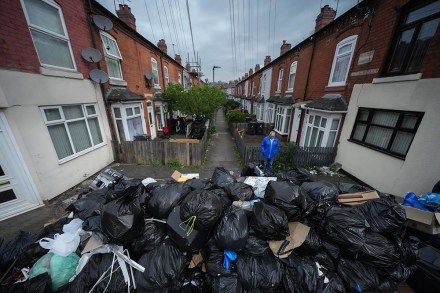
Democracy was born in the public square. The Athenian agora was the central meeting place of an engaged citizenry where business was transacted, social life flourished and a common direction for the people was determined. The idea of a public square – where individuals operate in a relationship of trust and shared endeavour – is embedded in the life of our democracy. But today, increasingly, our public squares are squalid, lawless, derelict spaces, as Gus Carter records in our cover piece. Shoplifters go unpunished, fly-tipping is unpursued, drug-taking and dealing are commonplace.

The EU is luring Starmer away from Brexit

Throughout Keir Starmer’s life, a recent fawning profile ran, he has ‘worked to safeguard the value of justice and democracy’, from fighting the death penalty in Caribbean courts as a young human-rights lawyer, to taking on Vladimir Putin by representing Alexander Litvinenko’s widow. ‘Those same principles,’ the profile gushes, ‘have guided him since he became the UK’s Prime Minister.’ The author of these words? Ursula von der Leyen, the European Commission President, who had the dubious honour of penning the Prime Minister’s entry for Time’s annual list of the world’s 100 most influential people. She is glad, she claims, ‘to have someone with Starmer’s dedication and strong principles as a partner’.

The law that is choking civil society

If one were to ask for a quintessential display of the British character it would be hard to better the Shrewsbury Flower Show. Officially the world’s ‘longest-running flower show’, according to the Guinness World Records, it is held over two days in August, attracting 60,000 visitors. This summer should be the show’s 150th birthday. Last week, however, the Shropshire Horticultural Society abruptly cancelled it. Rising costs were cited as a factor. But the main reason was the Terrorism (Protection of Premises) Act – known as Martyn’s Law. The legislation, which was given royal assent this month, requires organisers of events with more than 200 people to engage in lengthy bureaucratic and state-monitored protocols to protect visitors from terror attacks.

The Easter story reminds us of the importance of truth

Live not by lies, Aleksandr Solzhenitsyn warned the West half a century ago, but we have hardly heeded him since. Fictions have bewitched our minds and captured our culture. Hard truths struggle to be heard. Last week BBC presenters took the leader of the opposition to task for her failure to watch a Netflix drama, Adolescence, which purported to explore the risks to young women from misogyny. At the same time they ignored Kemi Badenoch’s questions about real male violence – the abuse of thousands of girls by rape gangs in 50 British towns and cities.

Labour has once again betrayed grooming gang victims

Parliament’s last day before recess is usually a dull affair. A one-line whip allows MPs to return to their constituencies early and the matters for debate are deliberately parochial. When the Commons rose for Easter this week, the government could have expected attention to have been even more desultory than normal, since politicians and the media were focused on the fallout from Donald Trump’s global tariff war. Which is why it is all the more concerning that the Home Office chose that afternoon to slip out the announcement that it was retreating from its commitment to investigate the operations of grooming gangs in five local authorities. Someone must have thought it was a good day to bury bad news.

Keir Starmer must look beyond adolescent politics

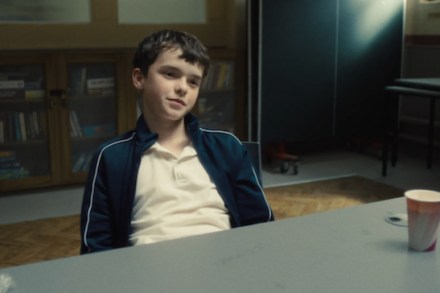
An industry poll by the British Film Institute in 2000 to find Britain’s best television programme put Fawlty Towers first and Cathy Come Home second. The latter, Ken Loach’s bleak 1966 play about a woman’s downward descent through unemployment, homelessness and poverty, is about as far from John Cleese’s inimitable farce as can be conceived. Yet both made lasting impressions on viewers of very different kinds. Adolescence’s popularity is down to telling liberal England what it wants to hear, never mind its basis in reality Watched by a quarter of the population at the time, Cathy Come Home took an uncompromising approach to its subject and provoked wide reaction. Passers-by stopped its star Carol White in the street to hand her money, assuming she really was destitute.