Leading article

Our duty to British Jews

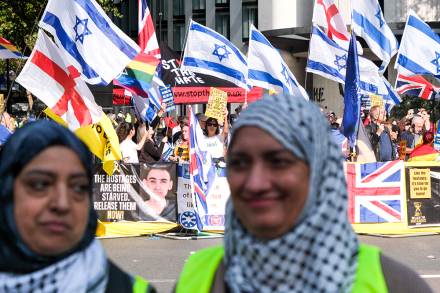
Are Jews safe in Britain? To even have to ask the question is extraordinary. But a recent survey has found that half of British Jews feel they do not have a long-term future in the UK and 61 per cent have considered leaving. Those figures are shocking, but not surprising. Since 7 October 2023, anti-Semitism in Britain has reached record levels. Violence against British Jews is more common than at any time since their readmission in the 1650s. The survey was conducted between the Heaton Park synagogue terrorist attack in October and the sentencing of Walid Saadaoui and Amar Hussein in December for plotting to open fire on a march against anti-Semitism.
Donald Trump is confronting a reality that Europe has ignored

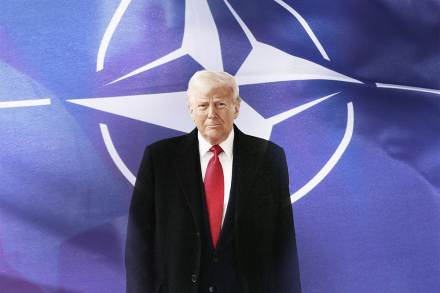
Donald Trump’s rendition of Nicolas Maduro was a brilliantly executed coup. It was also an exhibition of America’s hard power, power that has underpinned the rules-based international order that protected America’s allies for decades. Now those allies fear that the rules-based order is as much a smoking ruin as Maduro’s Caracas compound. European hysteria is, however, misplaced. President Trump has not inaugurated a new era of disorder, he has responded to realities about which European elites have been in denial. The post-war international order has been crumbling for more than a decade. And British governments have been enablers of that process. One of the most determined users of hard power in subverting every restraint has been communist China.

Who’s up to the challenge of restoring Britain’s prosperity?

In 1956, Malta held a referendum on joining the United Kingdom. Since the islands were economically reliant on the Royal Navy, it was unsurprising that three-quarters of those voting believed their future lay in integrating with their colonial masters. But after a lukewarm response from the British government, the referendum result was never implemented and Malta instead hastened towards independence. Seven decades on, it seems the Maltese had a lucky escape. The Centre for Economics and Business Research (CEBR) has declared that Malta’s living standards will overtake Britain’s by 2035. It cites Malta’s low taxes and pro-enterprise culture, which are especially attractive for the wealthy Britons fleeing a country that lacks both.

The radical message of Christianity

A meeting planned in secret. A message deemed subversive. The authorities both antagonised and confused. The gatherings of the early Church in the time of the Roman Empire? Or Tommy Robinson’s proposed carol concert at an as yet undisclosed London location, proclaimed as the event to put ‘Christ back into Christmas’? To draw even the most strained comparison between the two would seem to offend most mainstream sensibilities. Established churches across the country have reacted with horror and disdain at the former football hooligan and recent prison inmate claiming to be Christianity’s champion this Christmas.

Labour’s dereliction of duty over defence

Last week, our political editor, Tim Shipman, revealed a recent meeting between Air Chief Marshal Sir Richard Knighton, the Chief of the Defence Staff, and the three heads of the services to discuss the defence investment plan. This plan governs the day-to-day armed forces’ budgets and follows the recent Strategic Defence and Security Review (SDSR), which sets our military aims as a nation. The chiefs agreed to write an unprecedented letter to John Healey, the Defence Secretary, explaining that the SDSR couldn’t be delivered without the requisite funding. That money was not forthcoming in the Budget, so they are forced to contemplate a bleak alternative: immediate cuts to both our forces and ambitions. These looming defence cuts could not come at a worse time.

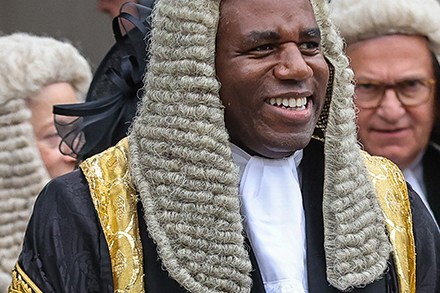
What is a ‘fair’ trial, Mr Lammy?

Why are jury trials so precious? According to one prominent alumnus of Harvard Law School, who was writing in protest at proposals to drop them during the Covid pandemic, they are ‘a fundamental part of our democratic settlement’. In a separate report, the author noted that, by deliberating ‘through open discussion’, juries deter and expose ‘prejudice or unintended bias’ since ‘judgements must be justified to others’. They added: ‘Successive studies have shown that juries deliver equitable results, regardless of the ethnic make-up of the jury or defendant.’ Trials without juries, they concluded in 2020, are thus ‘a bad idea’. That astute legal mastermind?

It’s not science if you can’t question it

Follow the Science. The Science is settled. Two phrases which invoke the power of open inquiry to close down open inquiry. Science is not a body of unalterable doctrine, a chapter of revealed truths. Science is a method. It is a means of arriving at the best possible explanation of phenomena through thesis, testing, observation and revision. Science depends on a culture of doubt, as one of the greatest scientists of the last century, Richard Feynman, continually argued. Its conclusions, by definition, are provisional models which are subject to future revision as new data and better explanations arrive. The story of science is a chronicle of old models being superseded and new theories seeking to make sense of our world.

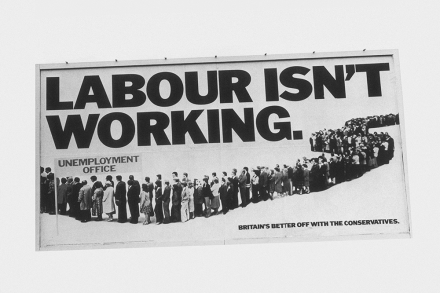
Labour isn’t working

Labour: the clue should be in the name. In March, Keir Starmer branded Labour the ‘party of work’. If ‘you want to work’, he declared, ‘the government should support you, not stop you’. Even as his premiership staggers from crisis to crisis, that mission remains. If Labour doesn’t stand for ‘working people’ – however nebulously defined – it stands for nothing. As such, this week’s unemployment figures are more than just embarrassing for Starmer; they are a betrayal of his party’s founding purpose. Unemployment has risen to 5 per cent – its highest rate since February 2021, in the middle of the third lockdown.

Stench of failure: Britain’s shameful surrender in the war on drugs

The New York senator Daniel Patrick Moynihan was that rare figure in politics – a progressive who followed the facts. The contrast between his grown-up moral clarity and the adolescent ideological posturing of New York City’s latest Democrat darling, Zohran Mamdani, could not be starker. Moynihan was a welfare reformer who knew that incentivising work, not subsidising idleness, was the route out of poverty. He was a resolute supporter of Israel, the Middle East’s only democracy, backing the victims of two millennia of prejudice against terrorists and tyrants. By way of contrast, Mamdani demonises that state as a proxy for what he considers the wider western sins of colonialism and exploitation. It was on crime, above all, that Moynihan showed courage.

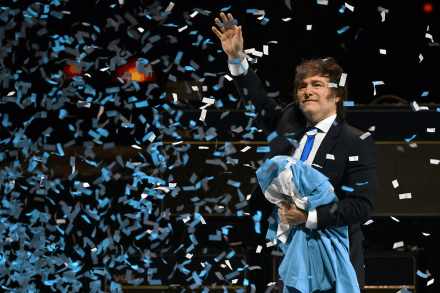
Mystic Milei proves ‘austerity’ needn’t be a dirty word

Javier Milei’s election in 2023 was a repudiation of decades of Peronist turmoil, corruption and inflation. Milei offered shock therapy, delivered with an Austin Powers haircut and chainsaws. This is a man who had worked as a tantric sex coach and claims to speak not just with animals but also with God himself. Eyebrows were raised. Could such a strange man, one who seems to embrace the new occultism outlined in our cover piece, deliver his promised reconstruction of Argentina? Or would voters soon grow tired of the state-slashing mystic? Yet this former frontman of a Rolling Stones tribute band has proved his sceptics wrong.

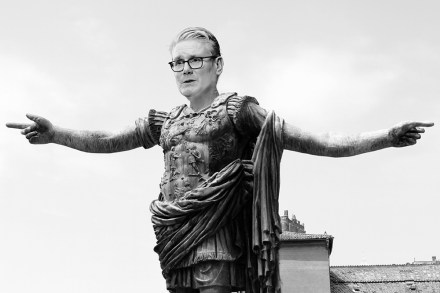
Sir Keir, Emperor of Inertia

In Silicon Valley there is a simple mantra that drives innovation: You Can Just Do Things. Wait for permission from the system, the bureaucrats or, worst of all, your lawyers, and nothing ever happens. Incumbents want inertia not challenge. Progress depends on movement. Nowhere does the PM seem so adrift than in the area he claimed to have made his own: law and order It is a lesson that seems lost on this government and this Prime Minister. They are a model of inactivity, none of it masterly. They proclaimed they would be a ‘mission-led’ government. In December last year, Keir Starmer promised that these missions ‘must be felt tangibly in the health, wealth and security of working people and our country’. His ‘missions’ have been all but abandoned.

The questions the government must answer over the China spying case

Exactly a year ago, this magazine warned that ministers were showing a dangerous naivety towards China. We revealed that the Chancellor, the Foreign Secretary and the Prime Minister were all intent on cosying up to Beijing. They were scornful of the wariness Conservative ministers had shown towards the Chinese Communist party. The Labour leadership believed that their pursuit of growth could be supercharged by Chinese investment. They hoped one of their missions – the drive to decarbonise the grid – could be facilitated by Chinese tech. They thought Tory attitudes to China were warped by ideology and a more pragmatic line towards Beijing would be economically rewarding.

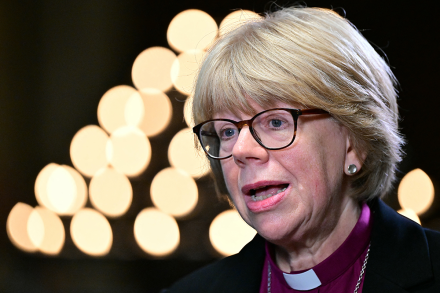
What we need from our new Archbishop of Canterbury

There have been 106 Archbishops of Canterbury since Gregory the Great declared Augustine his ‘Apostle to the English’ in 597. Their number has included Catholics and Protestants, progressives and traditionalists, academics, politicians, even a tank commander. But none had ever been a woman. Sarah Mullally’s appointment is a historic moment for the Church but it comes at a moment of peril for Anglicanism. The Church of England seems to be in a state of perpetual crisis. Few would argue that it serves the world’s more than 100 million Anglicans well or that it sits at the heart of public life.

ID cards are Labour’s alibi for its failure

Questions of identity permeate our politics. What is it to be English, to be British? The Prime Minister sought to reclaim patriotism for the left in his conference speech, but his invocation of football stadium flag-waving and Oasis swagger was a remix of Britpop themes which were tinnily jarring two decades ago and beyond tired today. It was karaoke Cool Britannia. A much more thoughtful consideration of what modern patriotism requires, and where the dangers in an exclusively ethnic approach to national loyalty lie, came from the Home Secretary, Shabana Mahmood.

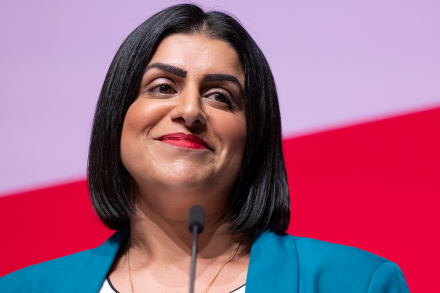
This is Shabana Mahmood’s moment

What is the point of Keir Starmer? He was the means by which the Labour party could suffocate the hard left and assume the mantle of respectability and, in due course, power. But he lacked, and has never acquired, a governing philosophy. He was handed a landslide by an electorate determined to eject the Conservatives from office with ruthless force. Yet he has contrived to forfeit the authority it lent him and now rivals the government he supplanted in unpopularity and lack of direction. The men and women who engineered his ascent to the leadership, and delivered the majority he has acquired but does not command, have always known his limitations.

The failure of Britain’s elite universities

Politicians, authors, priests and the occasional Spectator editor have all served as the Oxford Union’s president over its 200-year history. Few among them would know what to make of George Abaraonye. The debating society’s president-elect faces disciplinary proceedings for celebrating the killing of Charlie Kirk. Upon hearing of the conservative activist’s assassination – some four months after the pair had debated in person – Abaraonye posted ‘Charlie Kirk got shot loool’ on social media, along with other excited expletives in a WhatsApp group chat. He deleted the remarks but defended making them. Something is rotten in the state of Oxford when its chief debater celebrates the murder of a free speech advocate on another university campus.

Starmer’s survival depends on going against his instincts

Athelstan has long faded from public imagination, despite being the king who, in 927 ad, first united England. But thanks to a campaign by historians such as Tom Holland, David Woodman and Michael Wood, the 1,100th anniversary of his coronation last week was celebrated with a memorial service, a new biography and the naming of a train in his honour. Athelstan’s kingdom fragmented after his death, but its brief unification reminds us of the deep history of England and its constitutional order. What followed from Athelstan was the rule of law, parliamentary sovereignty, Magna Carta and the Bill of Rights: principles that have survived for centuries and inspired imitation across the world. That our constitution is uncodified, and therefore evolutionary, makes it perhaps more impressive.

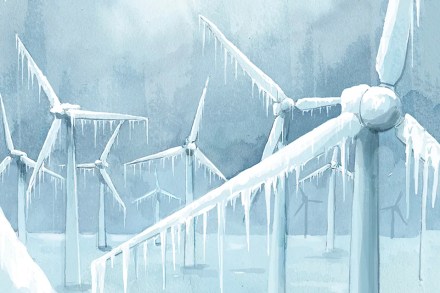
The high price of Britain’s misguided energy policy

Britain’s energy policy is a mess. We have the highest energy prices in the developed world, which is damaging competitiveness, crippling our economy and accelerating the decline of our industries. This is not just economically illiterate, but also environmentally counterproductive and socially regressive. The drive to reduce carbon emissions produced by the UK may seem noble but it is an organised hypocrisy. We import goods produced elsewhere by nations far less scrupulous about their energy sources and end up off-shoring our emissions, and indeed jobs. Our domestic production of carbon looks lower on paper but our overall consumption remains the same – and the impact on global climate is nugatory at best.

The risks of Reform

In 1979, XTC sang: ‘We’re only making plans for Nigel/ We only want what’s best for him.’ The song is from the perspective of two overbearing parents, confident that their son is ‘happy in his world’ and that his future ‘is as good as sealed’. Nigel Farage is making plans for his own future but it’s doubtful it’s as good as sealed. This week, he announced Reform UK’s proposal for mass deportations, ‘Operation Restoring Justice’. Some 600,000 illegal migrants will be removed, he promised, should his party win the next election. Britain will leave the European Convention on Human Rights (ECHR) so we can return people to countries such as Afghanistan and Eritrea, currently deemed too dangerous.

Rachel Reeves’s self-defeating attack on British racing

Few British traditions can claim as long a history as racing. The first races thought to have taken place in these islands were organised by Roman soldiers encamped in Yorkshire, pitting English horses against Arabian. By the 900s, King Athelstan was placing an export ban on English horses due to their superiority over their continental equivalents. The first recorded race meeting took place under Henry II in Smithfield as part of the annual Bartholomew Fair. Nearly 1,000 years later, racing remains the nation’s second most popular spectator sport. Five million people attend more than 1,400 meets throughout the year. The industry is estimated to be worth more than £4 billion, contributing around £300 million to the Exchequer, and supports some 80,000 jobs.