Leading article

Donald Trump is no friend to conservatives

Perhaps P.J. O’Rourke put it best. When explaining, in 2016, why a self-declared ‘Republican Party Reptile’ was voting for Hillary Clinton over Donald Trump, O’Rourke admitted that the former first lady was ‘wrong about absolutely every-thing’. But at least she was ‘wrong within normal parameters’. A decade later, conservatives are paying the price for ignoring O’Rourke’s advice. Donald Trump has weakened the western alliance and undermined America’s constitution; he has demeaned himself, his office, his country and, perhaps most of all, his supporters. With Republicans facing a congressional reckoning next month, it is time for conservatives to dis-avow the President and face up to the damage that he has done.
Kemi Badenoch knows the right way forward

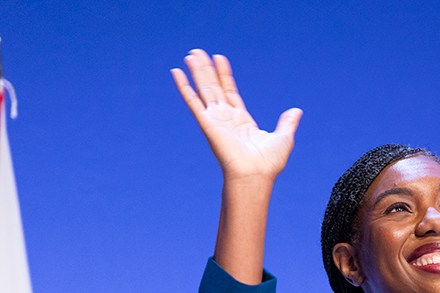
Last year’s Conservative party conference was a difficult one. Reform UK was leading the polls; the local election results had been as painful as the general election the year before; and the story at conference was not Kemi Badenoch’s successes, but speculation over Robert Jenrick’s attempts to replace her. Adversity, however, proved her friend. The past year has seen Badenoch’s leadership blossom, with confident public appearances, a by-election victory in Aberdeen and Jenrick’s fortuitous exit to Reform. This week, she stood up in Birmingham as a leader truly in command of her party – and with a plausible route back into government. There are still a great many obstacles to overcome.

Andy Burnham begins the long march left

When the Social Democratic Party was launched in 1981, its prospectus was dismissed witheringly by the liberal thinker Ralf Dahrendorf as a plan for ‘a better yesterday’. Andy Burnham has gone one better. He plans to rerun Labour’s last term in office. But this time with feeling. The Prime Minister’s address to his party conference was many things – fluent, passionate, moving, politically effective. But one thing it was not: forward-looking. The quality of the delivery invited comparison with Tony Blair but, unlike Blair, our current PM was not promising modernisation. He was instead seeking to revisit the Blair years and pursue the road not taken by Labour in 1997 – the long march left.

burnham

Andy Burnham should call an election now

So far, Andy Burnham’s premiership has been characterised by compromise and obfuscation. When choosing his Chancellor, instead of picking Shabana Mahmood on his party’s right or Ed Miliband on the left, he went with the reassuringly un-ideological John Healey. Rather than committing to spending 3 per cent of GDP on defence, he postponed any decision until a spending review next year. His broader agenda for his premiership will only be revealed in a ‘Ten-Year Plan’ in November. For a country confronted by as many challenges as Britain, this is an appalling lack of clarity. A reckoning with reality is required. https://www.youtube.com/watch?v=XQnfP-jOET8&t=1387s One thing that Burnham has been clear about is an early election – he has ruled it out.

Britain needs to get a grip on AI

We remember the empty hysteria induced by warnings over the millennium bug. We have borne the burden of exaggerated predictions of climate apocalypse from scientists in the grip of confirmation bias. All too recently we endured lurid over-estimations from academics of what the final Covid variants might bring. So it is tempting to dismiss all future warnings of technological Götterdämmerung as the overwrought fever dreams of nerds who have read too much Isaac Asimov. Is artificial intelligence really going to take over the world and kill us all? Are we going to be frozen to death by our smart meters and then incinerated by our microwaves?

Ed Miliband has chosen to make British Jews less safe

On Tuesday, the Foreign Secretary, Ed Miliband, noted that the government is devoting an extra £250 million this year to enhance the security of Britain’s Jewish community. He did so in the context of a statement about British foreign policy and efforts to advance a two-state solution in Israel/Palestine. Mr Miliband is many things, but he is not stupid. He knew what his government was doing. And he knew why the two things were connected. The decision by the British government to sanction anyone associated with what they term ‘illegal settlements’ in the West Bank has heartened every anti-Semite in the world.

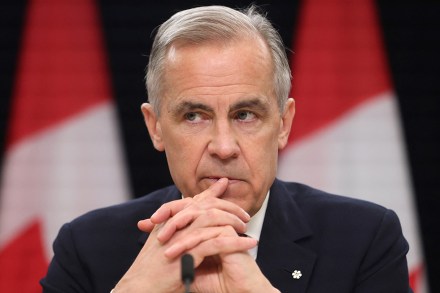
Mark Carney is the true King of the North

Mark Carney never much liked Brexit. As the Bank of England’s governor during the 2016 referendum, Carney was limited in how political he could be but he still managed to brand a Leave vote the ‘biggest domestic risk to financial stability’ Britain faced, one that would leave us relying on the ‘kindness of strangers’. Since returning to Canada as its Prime Minister, he has not become more complimentary. The referendum, he said in May, had been a ‘dangerous bluff’; the UK was still trying to undo what people didn’t think they were voting for, but which they ended up having. Yet for someone so antipathetic, Carney is performing a remarkable Brexiteer tribute act.

Now we need to see your economic plans, Prime Minister

Keir Starmer once promised to ‘tread more lightly’ on voters’ lives. Yet he presided over a government that raised taxes faster than at any point since 1970. The bill has risen by £74.6 billion since the 2024 general election and there are still three years left of this parliament. Upon entering Downing Street, Andy Burnham promised to do politics differently and ‘bring back hope’. Yet no amount of social media spin can wish away the constraints of the market. The new prime minister has so far avoided Liz Truss’s fate of a bond market panic but parliament has been in recess and Burnham’s plans remain vague. When MPs return on 1 September, he will face scrutiny; the countdown to John Healey’s first Budget, on 28 October, has begun.

Jason Arday’s tragic death is no reason to silence the press

Physicians and the Samaritans warn against attributing suicide to a single cause. Doing so simplifies a complex tragedy. Those who take their own lives tend to do so because of an array of biological and social factors; pointing to a single spark, campaigners fear, can lead others experiencing similar pain to see suicide as the only way out. This advice does not seem to have registered with those politicising Jason Arday’s tragic death, which many are assuming was a suicide although that is yet to be confirmed. The pinning of blame for Arday’s death began swiftly after the news broke last Friday. Arday’s supporters have suggested he died because of the press coverage of his case.

Nigel Farage’s hollow victory

Nigel Farage’s victory in the Clacton by-election is a hollow one. The major parties boycotted the contest: of the Reform leader’s 33 opponents, the most prominent was a screenwriter with a bin on his head. This by-election was not forced on Farage by the parliamentary investigation into undeclared donations – this can resume as soon as he returns to the Commons – but called as an attempt to regain momentum after a difficult patch for Reform. That gambit has failed. In August last year, Reform was riding high. Opposing an unpopular Labour government and a Conservative party in disarray, Farage capitalised on historic victories in the local elections and deep public anger at ‘uniparty’ failures over small boats and living standards.

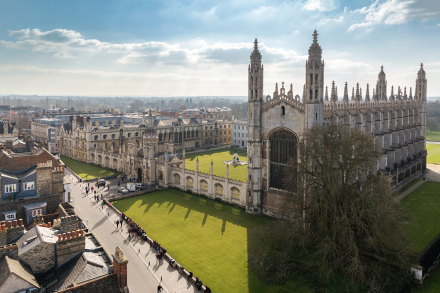
Cambridge has fallen

‘What distinguishes Cambridge from Oxford,’ A.A. Milne said in 1939, ‘is that nobody who has been to Cambridge feels impelled to write about it.’ Four decades later, Tom Sharpe would prove him wrong about Cantabrigian reticence with Porterhouse Blue – his riotous satire of the conflict between an idealistic new master and the stuffed shirts of the senior common room. It’s a shame that Sharpe isn’t around to enjoy the Jason Arday scandal – a farce so absurd that even he may have dismissed it as being too silly. When Arday was announced as Cambridge’s professor of sociology of education, he was lauded as the university’s youngest-ever black professor. His biography had a whiff of Hollywood. Arday had been diagnosed with a developmental disorder at the age of three.

Burnham is boldly going nowhere

‘Space: the final frontier.’ Six decades since Captain James T. Kirk first uttered those words, American enthusiasm for star-trekking is stronger than ever. Artemis II’s voyage presages future Nasa trips to the Moon, Mars and beyond; SpaceX’s successful initial public offering and Starship rocket launches confirm continuing enthusiasm for Elon Musk’s interplanetary initiatives. But, on this side of the Atlantic, our ambitions are far less stellar; rather than reach for the heavens, we fiddle with the price of bus tickets. The potential closure of the Jodrell Bank Observatory – home to the UK’s largest telescope for almost 70 years – for lack of funding is a tragedy. Its annual operational cost is £2.

Burnham is already drifting towards defeat

Nothing so became Keir Starmer’s premiership as his leaving of it. Farewell remarks outside Downing Street, unpunctuated by the odious Steve Bray; a brief goodbye in Buckingham Palace, before the King welcomed his fourth new prime minister in four years; then to the pub to drown his sorrows with Rachel Reeves, leaving Andy Burnham and John Healey to pick up the national tab. There is an irony to Healey’s appointment as Chancellor. Burnham blames Margaret Thatcher for so many of the country’s ills but her time in office was devoted to clearing up the dreadful inheritance left by the last Healey at the Treasury: a top rate of income tax at 98 per cent, untamed inflation, union disarray, socialist sclerosis. Rather than take a wrong turn in the 1980s, Britain flourished.

Let Shabana Mahmood finish the job at the Home Office

We currently know more about what Count Binface would do in power than Andy Burnham. The joke candidate in the Clacton by-election has published a manifesto that goes into considerably greater detail about what the government’s priorities should be than anything we have yet heard from the man who becomes our prime minister on Monday. Those preparing for a new administration, including the Parliamentary Labour Party and the Civil Service, have had to rely on speculation and briefings to the press. There is no better guide to what we might expect than the analysis of our own political editor, Tim Shipman, in his article. He reports that the incoming premier has a high opinion of the Home Secretary, Shabana Mahmood. That reflects well on him.

Beware Andy Burnham’s ‘devolution revolution’

Andy Burnham is a lucky politician. And Nigel Farage has just given him another piece of surprising good fortune. The Reform leader’s decision to call a by-election so his voters can express their preference for him over a comedian in a dustbin is more than just a narcissistic farce: it is a blessing for Project Burnham. Just as attention should be focused on a man with neither a mandate nor a manifesto for running the nation, Westminster’s gaze is directed once more to the dreary beachfronts of Jaywick and Frinton. Burnham’s unscrutinised, unelected, unready administration moves closer to power while Reform achieves a feat hitherto thought impossible: becoming even more of a vehicle for the ego of its leader.

Burnham’s unwillingness to face the media should worry us all

There are so many hopes invested in Andy Burnham’s premiership that disappointment is inevitable. In some cases, it is also desirable. The member for Makerfield has been co-opted by Labour’s soft left and communitarian right for their respective agendas. To govern will be to choose. But a particularly poisoned chalice has been proffered to the next prime minister, one he should dash from his lips. Of all the figures on the left who made the pilgrimage to Makerfield to campaign, the presence of Hugh Grant was most ominous. Perhaps the actor who played the prime minister in Love Actually with such élan was there to school our would-be premier on how to deal with obstreperous American presidents. But Hugh Grant is not just a more metrosexual Cary Grant.

How Burnham can avoid Starmer’s fate

Welcome to the cabaret, Andy Burnham. Last year, the editor of this magazine wrote about ‘Weimar Britain’: the fear that political instability, economic turmoil and rising anti-Semitism was making our country as decadent and dangerous as inter-war Germany. As our sixth prime minister of the post-Brexit decade departs, and our seventh looms into view, we have developed a national addiction to perma-crisis, seemingly trapped in a game of ‘Topple the PM’. We are far from a January 1933 moment. But the joke isn’t funny any more. This turbulence is not inescapable, though. What is needed is a premier able to stay the course, to set out how they want to change Britain and to discover the drive and charisma to bring their party and the country with them.

Trump has been outplayed by Iran

The Founding Fathers may have modelled America on Ancient Rome, but they would have found the ersatz gladiatorial spectacle Donald Trump mounted at the White House to mark his birthday a grotesque perversion of their dreams. An ‘ultimate fighting contest’, staged to pay homage to Trump’s rule (though dressed up as part of the United States’ 250th anniversary celebrations) was exactly the cult of one man the Founding Fathers most dreaded. The President is not an emperor unconstrained, however. A shellacking in November’s midterm elections will show how hemmed in he is. And nowhere is his weakness more apparent than in his so-called ‘peace agreement’ with Iran. It is the latest in a series of humiliations visited on the Great Republic by this tawdry tinsel Caesar.

Securing Britain’s defence should be Starmer’s legacy

Few critiques of British mythmaking have been more astute than that of Correlli Barnett. He argued that 18th-century statesmen were hardheaded industrialists and merchants who understood the basis of military power. Then a new culture emerged, created by Victorian educationalists, one that had a ‘high-minded emphasis on religion and the classics’. By the end of the 19th century, Britain’s elites no longer understood the nation’s military-industrial base. They had become little more than a complacent establishment, rather than men of action. Hampered by inefficiencies and ill-prepared for conflict, Britain emerged from the second world war shrunken, uncompetitive and condemned to further decline.

Henry Nowak and the dangers of ‘anti-racist’ dogma

‘I can’t breathe.’ When those chilling words were uttered by George Floyd in 2020, they provoked global outrage. The combination of the horrific manner of Floyd’s choking by the police officer Derek Chauvin, the pressure cooker of lockdown and the historical tensions around American race relations led to worldwide protests; despite Floyd’s death being 4,000 miles away in Minnesota, Keir Starmer felt compelled to take the knee in solidarity. ‘I can’t breathe.’ These were also the dying words of Henry Nowak, an 18-year-old student in Southampton murdered by the 23-year-old Vickrum Digwa. Nowak was coming back from a night out when he was stabbed by Digwa five times with a ceremonial knife. When the police were called, Digwa accused Nowak of having been racist.