Leading article

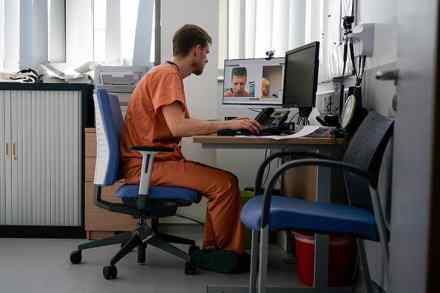
It’s time for NHS GPs to stop hiding behind their telephones

Nye Bevan famously said that he was only able to persuade family doctors to support the creation of the NHS because he ‘stuffed their mouths with gold’. But at least he obtained good service from them — including home visits. Until Tony Blair awarded GPs hefty pay rises while allowing them simultaneously to opt out of night-time and weekend work, they were responsible for their patients’ care 24 hours a day, seven days a week — with practices often pooling resources to provide continuous cover. But the role of GPs has become increasingly unclear: do patients have a right to be seen in person? It was revealed this week that locum GPs are being offered £100 an hour to conduct telephone appointments from their own homes.
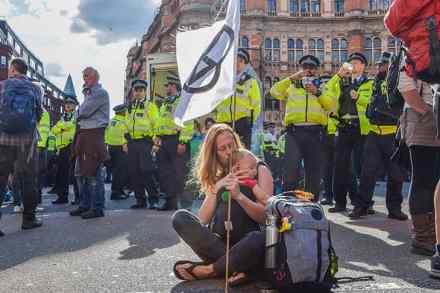
Freedom to protest is not freedom to cause chaos

The concept of normality has been so disrupted over the past 18 months that the Extinction Rebellion protests — usually designed to stop people getting to work — are unlikely to have as much of an impact as they did. Even so, businesses which are trying to recover from the pandemic find themselves once again cut off from their customers. Bus routes are disrupted and commuters are impeded from getting to work — and for far longer periods of time than with traditional protests. The group appears to have acquired a new confidence thanks to a Supreme Court ruling in June which quashed the convictions of four protestors who obstructed the entrance to an arms fair at the Excel Centre in east London in 2017.

It’s time to end furlough – and let the British economy recover

At the start of this year, Britain looked as if it would be the first major country to vaccinate its way out of lockdown. Kate Bingham and her team had secured Britain a supply of effective jabs delivered at the fastest rate in Europe. This opportunity was then squandered as the government was swayed by advice from Sage advisers, who kept underestimating the vaccines’ effectiveness. Sage produced no fewer than nine scenarios for Covid hospital cases by mid-August, all of which have proved vast overestimates. The government’s reliance on such advice has come at a heavy cost. In America, where most states lifted lockdown restrictions months before Britain, the economy has recovered to pre-pandemic levels.

Working from home is a decision for businesses, not government

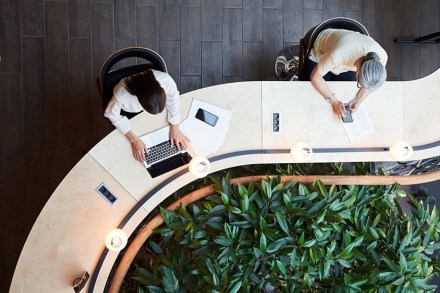
After seizing so much power during the pandemic, Boris Johnson’s government is having trouble working out where its remit now ends. The division used to be fairly simple: the state provided public services but left people and companies free to organise their own affairs. Ministers now talk as if they are in charge of everything — including whether people should or should not work from the office. Lockdown would not have been possible without digital technology, which enabled so many to work from home. For many companies, remote working has opened up all sorts of new possibilities. But the drawbacks are obvious. Younger workers are denied the training that the workplace offers. They also miss out on opportunities for building up working relationships, skills and salaries.

Why is the mild West afraid to promote its democratic values?

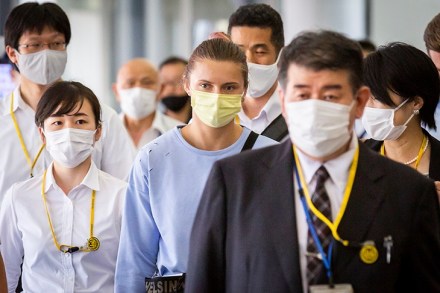
An athlete seeking sanctuary in a foreign embassy after a state--sponsored attempt to spirit her home from the Olympics; a dissident found hanging from a tree in a foreign country that he’d been helping his compatriots escape to; a passenger jet diverted so one of its passengers could be arrested. The fate of critics of Alexander Lukashenko’s regime in Belarus might have been drawn from the depths of the Cold War. Like North Korea, Belarus has become a land that time forgot, still fighting battles we assumed had been lost decades ago. There is, however, a big difference between now and the Cold War. The voice of the West is much fainter when condemning authoritarian regimes.

The dangers of post-Covid isolationism

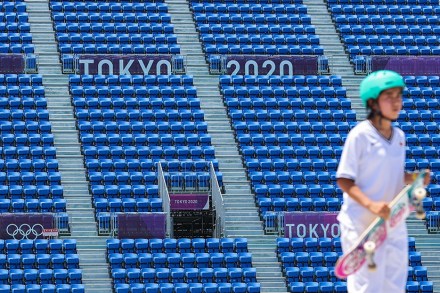
There is something bizarre about a sporting event designed to bring people and nations together but from which spectators have been excluded. Most foreigners are currently forbidden from setting foot inside Japan, let alone inside the Olympic stadium. In many senses, Tokyo 2020 — which like the Uefa Euros retains its original name, despite a year’s delay — encompasses the worst of our pandemic-ridden world: the global elite can attend while the rest of us have to settle for watching it on TV. Yet a successful Olympics — even a week in, it looks as if the Tokyo Games will be judged a kind of success — could provide the impetus the world needs to re-establish normal working relations.

Boris is in danger of becoming the Prime Minister he once warned against

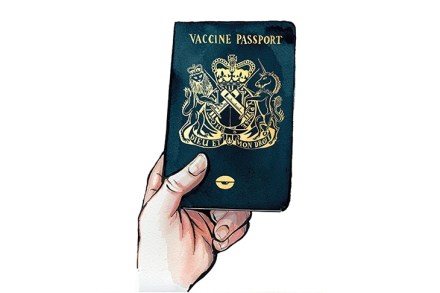
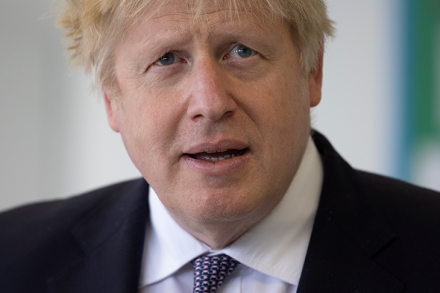
Back when Boris Johnson was on a mission to stop identity cards being used in Britain, he made a very persuasive argument: if parliament allows such expensive technology to come into existence, then the government will cook up excuses to use it. They will start to ‘scarify the population’ by saying there is a threat or an emergency. If they sink millions into an ID card scheme then be in no doubt: our liberty will be threatened. The slippery slope, he said, is one that the government is sure to go down. Boris Johnson is in danger of becoming the Prime Minister he once warned against. At first, we were told that any vaccine identity system would be used only for foreign travel.

Yes, they’re deplorable – but those football tweets don’t prove Britain is racist

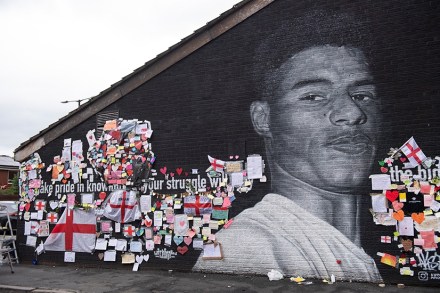
There are two certainties whenever England’s football team plays; one that is long-established and the other a recent phenomenon. Players who never miss a penalty during training sessions will end up fluffing their attempts under the pressure of a shoot-out. And the post-match discussion of football will quickly move on to the issue of racism. England’s first appearance in the final of a major tournament since the 1966 World Cup ought to have been a moment of national celebration. Indeed, that is how it seemed until the three missed penalties. Within hours, though, few seemed to be talking about anything other than the racist abuse directed at the three players who missed the target.

Boris Johnson must hold his nerve over lifting restrictions

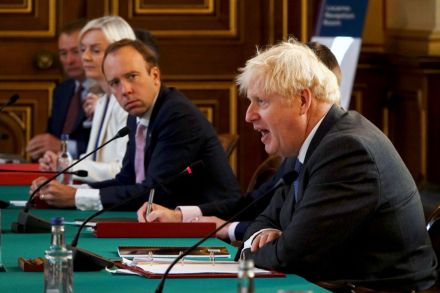
A charge repeatedly made against Boris Johnson over the past 16 months is that he has ‘ignored scientific advice’. But unless he has been in the habit of drumming his fingers on the table and looking out of the window while Professor Chris Whitty and Sir Patrick Vallance have made their presentations, it is a silly accusation. We do not live in a technocracy where scientific advisers have absolute power. In handling the pandemic, it has been the Prime Minister’s job to weigh up advice from many quarters — medical, scientific, economic, legal and political — and then make decisions.

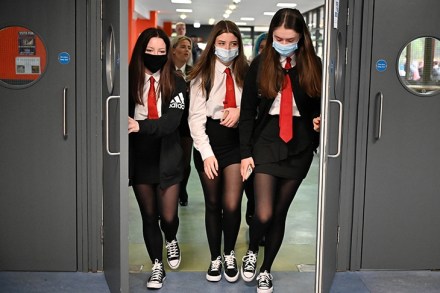
It’s time to repair the damage done to the Covid generation’s education

Aswitch of personnel at the Department of Health this week has brought a welcome change in the government’s tone. No longer, it seems, are ministers looking for reasons to delay the final stage of lifting lockdown restrictions. After 16 months of curtailments on liberty, 19 July is inked in as the day when society and the economy will finally throw off the shackles of Covid restrictions. The vaccines mean that the virus has been downgraded to the status of flu and pneumonia: nasty bugs, sometimes fatal, but not enough to warrant locking down society with all the immense collateral damage that entails. Yet as pubs, theatres and concert halls are allowed to fill again, it is important to remember that recovering from the pandemic is about more than just reopening society.

The virus threat has changed. Now Test and Trace must too

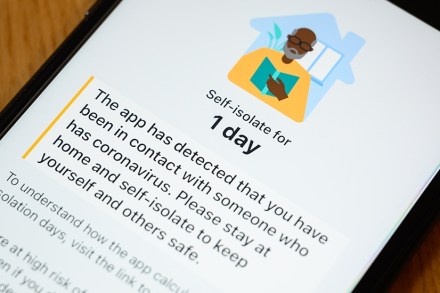
Under what circumstances can a government restrict the liberty of the people? An example was given last year: in a public health emergency, to contain a pandemic which threatens to overrun the health service. Opinions may differ on how close we came to this in March 2020, but the question remains relevant now. Is there any realistic threat, today, of the NHS being overwhelmed? And if not, why is Test and Trace still pinging and confining thousands of people every day? When the Test and Trace system was introduced in May last year, it was supposed to prevent another lockdown.

The real value of the Australia trade deal

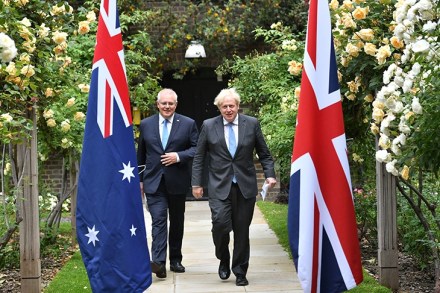
If Britain had been unable to agree a trade deal with Australia, then Brexit really would have been pointless. The country is one of our greatest allies and we have no rational reason to fear its beef, its sugar or its people. A free trade deal, aligned with visa-free travel, ought to have been the easiest deal to do. A deal is now done, phasing in these freedoms over 15 years. But even this sluggish pace is too fast for the protectionists who are popping up. Some have predicted that our beef farmers will be ruined and the countryside laid to waste as our markets are opened to competition. Many of the claims revolve around the fact that just under half of the beef produced in Australia comes from animals treated with growth hormones — a practice banned within the EU.

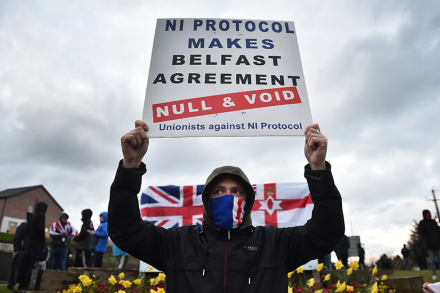
It’s time to revisit the Northern Ireland protocol

Britain has already seen two ‘Brexit days’ — when it formally left the EU on 31 January 2020 and the end of the transition period 11 months later. But given that it has taken less than six months for the Northern Ireland protocol to unravel, it’s horribly clear that our future relationship with the EU is anything but settled. The transport of sausages and other chilled meats from Britain to Northern Irish supermarkets may seem a trivial matter. But the attempt by the EU to enforce a ban on this trade demonstrates what so many people found problematic about the idea of an internal UK border down the Irish Sea. And it is surely a harbinger of battles to come.

The vaccines are a game-changer: Covid is losing its sting

It seems all but impossible to convince government scientists of the wisdom of proceeding with the final lifting of Covid restrictions on 21 June. No matter how much progress is made, officials seem to find a new reason to delay — a new variant or some similar development always pops up. The Indian variant has now become the dominant strain in Britain and our cases are rising. The question is whether that should change things. When the government’s roadmap was agreed, with 21 June as the end date, scientific advisers on the Sage committee drew up five scenarios for hospitalisations. None of them imagined that by this stage the figure would be as low as it stands now. Cases are rising — but cases are not translating into hospitalisations as they once did.

Has No. 10 really solved the problem of Covid groupthink?

It is hard to deny the importance of the issues raised this week by Dominic Cummings. His decision to identify the many mistakes made at the start of the pandemic is not about seeking vengeance; it is a vital process to ensure that errors are identified and not repeated. A vaccine-evading variant or a new virus could come along at any time. Should this happen, ministers must be ready. Some of the world’s finest minds worked on pandemic planning, in Britain and throughout the western world. The UK was once ranked as more prepared for a new virus than any country in Europe. But the failure to provide adequate PPE equipment was the most visible sign of implosion.

Why Britain must unlock on 21 June

The scare over the Indian variant of coronavirus this week is a taste of what to expect over the next few weeks, months or even years. Like all RNA viruses, Covid-19 mutates and has done so thousands of times already. New strains supplant old ones and, for a while, questions will be raised when one mutation comes to dominate. Is it more lethal? Is there a chance it could evade vaccines? Every time so far, there has been no significant reason to doubt the efficacy of the vaccines. So the government’s timetable for lifting Covid restrictions holds firm. How far should Britain go to try to fend off new variants?

What Europe could learn from Britain’s new migration system

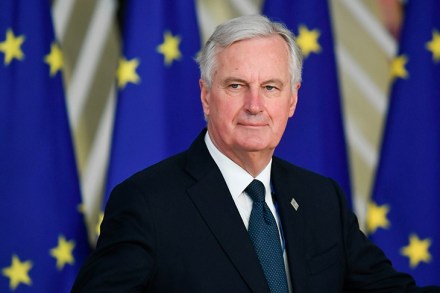
While the EU’s former chief Brexit negotiator Michel Barnier has no formal role in devising the bloc’s immigration policy, his words this week have turned much of the Brexit debate on its head. In an interview on French television, he said that France should suspend non-EU immigration for three to five years — with the exception of students and refugees — and that the EU needed to toughen external borders that have become a ‘sieve’. Had those words come from the mouth of Nigel Farage, he would have been excoriated, not least by Barnier himself. How can any country (let alone a continent) manage in the modern world while shutting itself off to people from, say, India, Australia and America?

Data, not dates: there is no reason to delay a return to normal life

A slogan can come back to haunt you. For Boris Johnson, the words ‘data not dates’ sounded powerful at a time when Covid cases were high and hospitals full. The idea was that the government would be guided by scientific reason, would respond to the figures and would not let rigid targets dictate policy. Since the Prime Minister announced his roadmap at the end of February, however, ‘dates’ seem to have become far more important than ‘data’. How can he claim to be following the data when he will not budge from a timeline which now looks like it was designed for a different phase of the pandemic? Why were people braving the cold and rain outside restaurants on a bank holiday when there is every chance it’s safe to go inside?

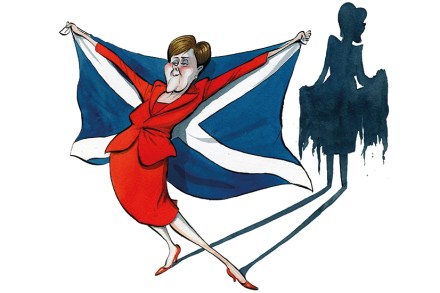
A vote for the SNP would mean another wasted decade in Scotland

Sometimes, Westminster unwittingly makes quite a good case for Scottish independence. Britain’s Covid emergency has ended, but the damage of the last year is enormous: the knock-on effects of lockdown can be seen in NHS waiting lists, the devastated high street, the mental health backlog and the 20,000 pupils who are absent from the school register. There is urgent work to do, yet the government is engaged in a battle to the death over who paid for wallpaper in Downing Street. We see a Prime Minister at war with his ex-adviser, unable to rise above the fray and capitalise on the opportunity of his vaccine success. Then there’s the opposition, unable to oppose.

The public has kept its side of the lockdown bargain. Now it’s the government’s turn

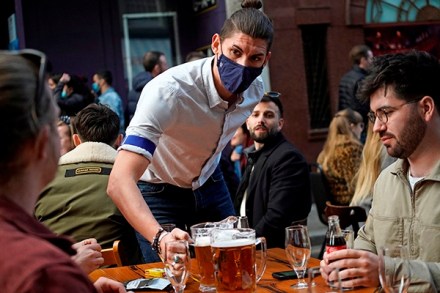
Over the past week, the country has started to spring back to life. Trains and buses are no longer running empty. Bars and restaurants have put out signs proclaiming they are fully booked. Pubs are using school playgrounds as beer gardens and filling every seat. In Soho, people danced in the streets when someone walked through with a stereo. A country that has been locked down for months is finally coming back into the open, with not a penny of government bribery required. There is a palpable sense of both relief and accomplishment. Yet the recent noises from No. 10 have been far from positive. The Prime Minister has claimed, oddly, that the decline in Covid cases has almost everything to do with lockdown and very little to do with vaccination.