Leading article

The enduring power of the monarchy

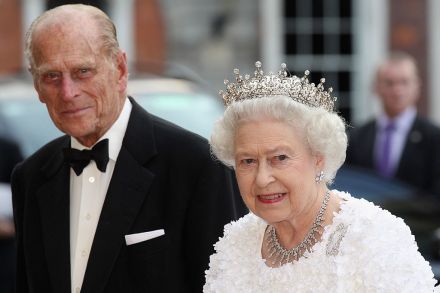
Fourteen prime ministers; 18 general elections; seven changes of government. Even in a stable country like Britain it is remarkable how much political water has flowed under the bridge in the 69 years since the late Duke of Edinburgh became consort to Elizabeth II. Britain has gone from a country of outside lavatories to one of conspicuous wealth, from an independent nation to a member of the EU and back again, from an empire to a champion of global trade. Some see the past seven decades as a period of national decline, yet the quality of life has improved hugely. In 1952, life expectancy at birth for Britons was 69; now it is 81. To have lived for almost a century is still an impressive feat, but is a lot more common now than it was at the beginning of the second Elizabethan age.
Joe Biden has dropped ‘vaccine passports’. Will Boris?

‘The government would love to put issues such as these beyond the bounds of debate by creating an air of national emergency.’ So this magazine declared on 27 November 2004 in response to Tony Blair’s proposal for national identity cards, which had just been announced in the Queen’s speech. Our editor then, Boris Johnson, argued that their very existence would threaten the character and liberty of the country. If you buckle in an emergency, he argued, the principle will be lost for ever. He urged Tory MPs to rebel and crush identity cards which, he later said, he’d abolish if he ever ended up in government. History now repeats itself. Blair is back, advocating identity cards in the form of vaccine passports or ‘Covid status certificates’.

The false narrative of white vs BAME

Almost 20 years ago, Michael Howard spoke about the ‘British dream’: that immigrant families like his could come to this country and find every door open for their children. The same was true for Priti Patel’s parents, both refugees from Idi Amin’s Uganda. Dominic Raab, the Foreign Secretary, has spoken movingly about his father, who was a refugee from the Nazis. Our islands are and have always been a beacon of light for those fleeing darkness, or simply seeking a better life for their families. Over the years, our country’s reputation has drawn millions of people who have settled here in search of the British dream. They have faced headwinds of racism and bigotry, as migrants and their families invariably do.

Britain must help Europe fight a third wave

During the referendum campaign five years ago, the pro-Brexit side argued that by freeing ourselves from the EU’s native protectionism and over-application of the precautionary principle, Britain could revitalise its economy and democracy. The EU wanted to seize more power, they argued, by taking control of ever greater areas of public life. Remainers thought these fears were exaggerated. They saw in the Leave vote an eruption of nativism. The EU’s vaccine war, however, could not have better demonstrated the problem of Brussels overreach. While the vaccine programme rolls on in Britain, with more than half of all adults now inoculated, the EU is being drawn ever further down a blind alley of its own making.

The Crown Office, The Spectator and a fight for a free press

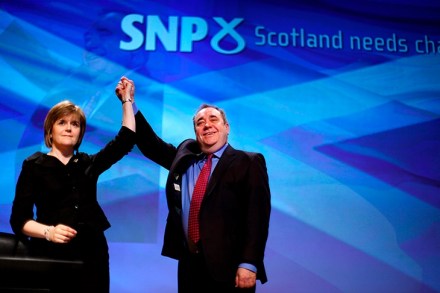
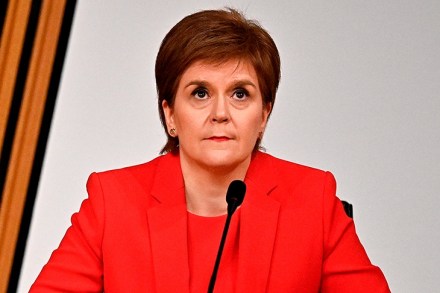
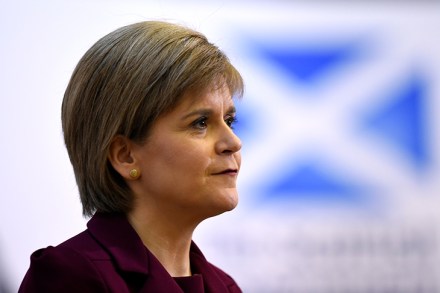
The power wielded by Nicola Sturgeon and her Scottish government means it’s hard to hold her to account for basic policy failures — of which there are many. It’s even harder to investigate accusations that her aides conspired to frame and imprison someone who had become a political problem for her. The Alex Salmond affair has shown the many ways the public prosecutors in the Crown Office, led by a member of Sturgeon’s cabinet, have sought to censor and redact his allegations. The House of Commons is immune to the threats and menaces of government lawyers. The notion of parliamentary privilege, a corner-stone of British democracy, means that anything can be said within the walls of parliament without fear of prosecution.

The policing of lockdown is failing

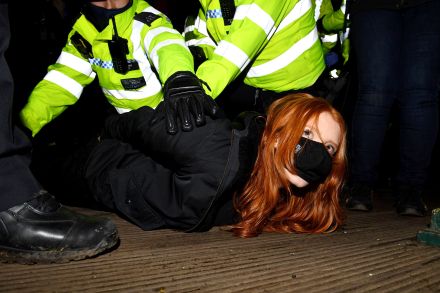
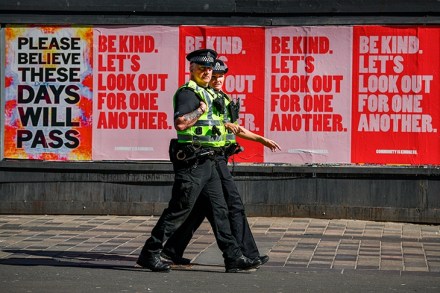
The scenes in Clapham Common have brutally exposed the problem with lockdown rules. People had gathered to mourn Sarah Everard and protest in defence of the right to walk the streets safely. The Metropolitan Police had been asked by the government to stop people going outside for anything other than a handful of allowed reasons: protest is not one of them. Given how many anti-lockdown protesters were arrested at Clapham Common earlier this year, the Met decided it could not be seen to pick and choose causes. Protesters were told it was 'unsafe' for them to be there due to Covid-19. Officers swooped. Chaos ensured. Footage from the protests showed a row of women being dragged away from the bandstand on the common, which has been filled with flowers for Ms Everard.

The Sturgeon case exposes the fatal flaw in Scottish devolution

The campaign for a Scottish parliament was rooted in the notion of a ‘democratic deficit’. Scotland kept voting Labour but the UK kept getting Conservative governments. Devolution, so the logic ran, would give Scotland a more responsive government. Two decades on, a new democratic deficit is emerging: the chasm between the minimum accountability demanded by the parliament and the maximum Nicola Sturgeon’s government is prepared to give. A new establishment has taken root in Edinburgh, more powerful and less accountable than the old one. The Alex Salmond inquiry, which began as a recondite tale about a failed attempt by Sturgeon’s government to probe sexual misconduct claims against the former Scottish National party leader, has narrowed to three stark questions.

The creeping criminalisation of causing offence

At a time when resources are scarce, the Merseyside Constabulary must have thought long and hard about its recent advertising campaign: a stern message to the people of the Wirral. ‘Being offensive,’ it declared, ‘is an offence.’ The slogan was put on a van along with text urging the public to inform on transgressors. Four officers posed beside it for a photograph, as if standing ready to enforce its orders. The police only recognised their error after a public outcry. ‘We would like to clarify,’ said Superintendent Martin Earl, ‘that “being offensive” is not in itself an offence.’ On its own, the incident is merely an embarrassment, but it represents a worrying general trend.

Vaccines are working – so why isn’t society reopening?

When the Prime Minister sets out his ‘roadmap’ for easing Covid restrictions on Monday, it will be against a backdrop that is both better and worse than could have been imagined six months ago. Worse because we have gone on to suffer a second wave of the disease that has seen almost as much excess death as the first wave. But better in the sense that we have vaccines that are in use and more effective than many hoped, with first doses given to 15 million people — almost a third of the adult population. On several occasions last year, Boris Johnson referred to vaccines as the cavalry coming over the hill. The cavalry is here, and most of those at serious risk of dying from Covid are being inoculated.

Universal Credit and the future of the welfare state

Amid the many failures of public policy during the Covid crisis, one success has gone largely unnoticed. The Universal Credit system coped with a huge uplift in applications without breaking down. In February last year 2.6 million households were signed up; six months later that had swelled to 4.6 million. Some 554,000 people made new claims in the first week of lockdown, ten times the normal levels. For a benefit which not so long ago was being damned for the poor execution of its rollout, it is remarkable that the system coped. Its unexpected success offers plenty of lessons for the future of the welfare state. The digitisation of the system, controversial at the time, enabled the service to be delivered to those in urgent need of help.

Sturgeon and the impunity of the SNP

Scottish politics tends to go through long bouts of single-party dominance. In the 19th century, the Liberals were in charge. After the war, Labour reigned unchallenged, which is why, in 1997, it drew up a devolution settlement on the assumption that Scotland would always be its fiefdom. But Scottish Labour then imploded. The Scottish National party is now the only game in town. Yet there are signs Nicola Sturgeon’s party is stumbling into the pitfalls that await all parties who spend too long in office. Incumbency eventually renders even the most alert and focused political practitioners complacent. Like Scottish Labour before it, the SNP has become arrogant, secretive and controlling. Parties are at their strongest when they can see the potential for their own defeat.

Quarantine and the freedom paradox

Who would have thought, this time last year, that the British government would be planning to detain British nationals at the airport and keep them under guard in a hotel room for a ten-day quarantine? It’s quite a departure for a country whose values have always been defined by the defence of liberty. But we’re living in exceptional times, with the Covid death count at more than 100,000 — a bigger hit, as a proportion of population, than almost anywhere else in the world. This requires deep reflection about the mistakes made and the changes needed. When the sick are still dying — at a rate of more than 1,000 a day — it’s hard to have a calm political discussion about what went wrong and how to get it right now.

It’s time to vaccinate teachers – and start planning a great school reopening

At the start of the Covid-19 crisis, Chris Whitty often made the point that a pandemic kills in two ways: directly and indirectly. Locking down society also costs lives — and stymies life chances. Ever since the government moved to embrace lockdown, neither ministers nor the chief medical officer have talked much about the collateral damage it inflicts. This is odd, because it is perfectly defensible to say that lockdown is the least damaging course of action while still acknowledging the harm it causes, particularly for the young. Not since Victorian times have so many children spent so little time in school. As ever, it is the poorest who will be most affected by the lack of education over the past year.

A tighter lockdown risks being a less effective one

When lockdown was first proposed in March, one of the many arguments against it was that people would tolerate being deprived of their liberty only for a few weeks. The idea of criminalising basic community behaviour — welcoming a guest into your home, educating children, going to church to pray — was viewed as an extreme measure with a short shelf-life. One of the big surprises of the pandemic is to see that lockdowns, in fact, are popular in large quarters. People have complied for far longer than was ever envisaged. But it’s a careful balance — and examples of overzealous policing risk upsetting that balance. It does not help that the rules change regularly, with even government ministers saying (in private) that they have given up trying to keep track of them.

Sir David Barclay, 1934-2021

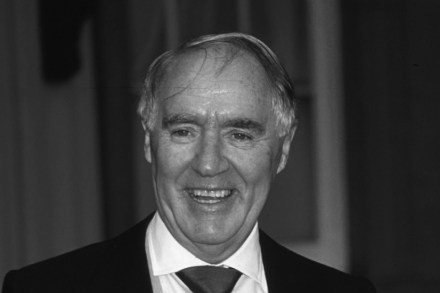
When Sir David Barclay, along with his twin brother Sir Frederick, bought The Spectator in 2004, the magazine came as a side dish with their purchase of the Daily Telegraph. Under their ownership, that quickly changed. The Spectator (1828) became a separate company with no financial cross-entanglements. The Barclay method was to apply the three most valuable commodities any publication could ask for: patience, investment and editorial independence. We will leave readers to judge whether the magazine has improved under their ownership. But our sales have almost doubled, in a market that has more than halved, and we have had the resources to embrace the digital age with relish.

What have we learnt from this pandemic?

So great have been the government’s failures over Covid that it would be easy to forget to give credit where it is due. The fact that Britain was the first country to begin a public vaccination programme — and this week became the first to have two vaccines in use — did not come about by chance. It happened because the government had the foresight to pre-order large quantities of promising vaccines and because Britain’s medicines regulator, the MHRA, worked fast and effectively to assess the data from the trials of those vaccines. The vaccines from Pfizer and AstraZeneca underline the lifesaving role played by an often-maligned pharmaceutical industry. But Britain’s head start will count for little if the momentum cannot be sustained.

Ring out, wild bells: 2021 will be a year of renewal

Save for those old enough to have lived through the second world war and its immediate austere aftermath, it would be hard to remember a Christmas which felt less festive. Or a new year that brings such foreboding. In spite of the severe restraints on our lives, which have been in place for months now, it seems likely that we will see some sort of third coronavirus wave with a third lockdown also on the cards. And at the same time, Britain will be embarking on a Brexit adventure that many people still see as reckless and unwanted. Yet if we look a little beyond the immediate future, things begin to appear brighter.

Why we can be confident in the safety of Covid vaccines

At the beginning of the Covid crisis, some expressed the hope that a pandemic might at least bring a divided country back together. Instead, public discourse descended to new levels of bitterness as a fresh schism replaced that caused by Brexit. On one side were those who thought tens of thousands would die because government action was too slow and half-hearted, and on the other, those who thought lockdown to be an over-reaction that inflicted grave damage on our economy and society. Both sides ought now to be able to agree that this week marks a significant turning point in the pandemic. The first shot of an approved Covid vaccine to be administered in a public programme anywhere in the world was given to Margaret Keenan, a 90-year-old woman in a Coventry hospital.

The government is sending the high street to an early grave

Does it matter that Debenhams and the Arcadia group have gone under this week, taking 25,000 jobs with them and leaving large gaps in the high street? In normal times we would be minded to say no. The failure of businesses — large ones, included — is part of a healthy market economy. It is a routine aspect of the renewal process, whereby good upstart businesses drive out tired and stagnant retailers, to the benefit of consumers and employees alike. If unemployment were as low as it was at the beginning of this year, the redundant staff would not have had to wait long, or search far, for alternative employment.

The Conservatives are losing the fiscal high ground

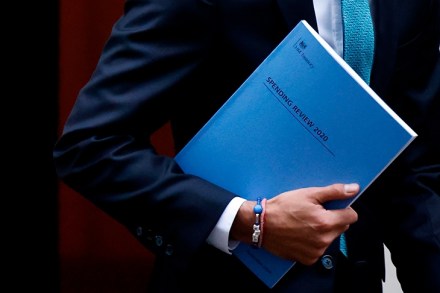
Every country was blindsided by the pandemic; few governments responded to it by borrowing as much as Britain. The figures that Rishi Sunak laid out in his spending review this week boggle the mind. He has been Chancellor barely ten months, yet has already borrowed more than Gordon Brown did in ten years. The upshot of his Commons statement this week is that Sunak will carry on spending money as fast as the Bank of England can print it. But as he knows, debt bubbles have a habit of bursting. The response to this crisis may sow the seeds of the next one. It’s a point which Sunak has a hard time making in Downing Street, let alone with his party. The Prime Minister likes to use the language of low taxes, economic dynamism and fast recoveries.