Leading article

What’s the point of Boris?

The anger against the Prime Minister for failing to observe the rules which he imposed upon the rest of us is justified. Even so, there will come a point at which the public starts to ask: aren’t we spending too much time obsessing about the parties? Johnson’s electoral mandate gives him the chance to redeem himself; to show that he has the ideas to get Britain out of this mess and that although he may make mistakes over more trivial matters, he gets the big decisions right. In defying Sage’s advice in December, Johnson saved Britain from a needless lockdown. He could and should have done this at a far earlier stage last year, but he nonetheless deserves credit.
What Boris must do now to survive

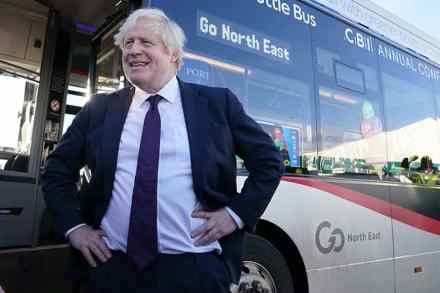
When Omicron struck, Britain was already the most boosted country in Europe. Our programme was so advanced that 80 per cent of pensioners were already triple-jabbed. This helped force the new variant into reverse in the first days of January, with hospitalisations half of the previous peak. A country whose economic recovery had already surpassed almost all expectations can now continue to grow — in contrast to many European countries still dragged down by restrictions and heavy-handed mandates. In such circumstances, the Prime Minister might reasonably expect to be fêted. Instead Boris Johnson is fighting for his political life, unsure of when his mutinous Tory MPs might come for him.

After Omicron: there’s no longer a case for restrictions on liberty

Covid-19 is in decline in Britain, with Omicron cases now falling as fast as they rose. The booster programme — which covers 95 per cent of pensioners — has helped fend off the risk of hospitals being overwhelmed. This gives Boris Johnson the chance to say that his plan worked, that Britain benefited from having the highest booster protection in Europe and that we can now repair the damage of a two-year crisis. The great recovery can begin — or it could if Johnson were able to lead. His bizarre decision to self-isolate last week — he was under no obligation to do so — gave the impression that he was hiding from questions about his parties and staff misbehaviour during lockdown.

Now Boris must make another admission: lockdown was a mistake

On 20 May 2020, the Metropolitan Police issued a statement on social media which summed up the conditions in the country. ‘Have you been enjoying the hottest day of the year so far?’ it asked. ‘You can relax, have a picnic, exercise or play sport, as long as you are: on your own, with people you live with or just you and one other person.’ To do otherwise, it didn’t have to say, would be a criminal offence. In 10 Downing Street, however, Boris Johnson’s principal private secretary sent out a very different message to more than 100 staff members. ‘Make the most of the lovely weather,’ it said, and ‘bring your own booze’ for a party in the back garden.

The cost of living – not Covid – could bring Boris down

Two and a half years into his premiership, Boris Johnson has enjoyed no more than a month of that time unencumbered either by Brexit negotiations or the public health emergency. Once Britain is through the worst of the Omicron wave, it would be understandable if the Prime Minister wanted to pursue some kind of political vision. The danger is that, as normality returns, his premiership will be further imperilled by the cost of living. An economic crisis is expected to hit households in April. In that month, National Insurance contributions (NICs) will go up by 1.25 per cent, a direct violation of Johnson’s manifesto pledge to protect voters from tax rises. The price cap on energy bills will also be raised, possibly doubling some customers’ costs as they come off fixed rates.

It’s not too late for Boris Johnson

It is two years since Boris Johnson achieved one of the most remarkable election victories in modern history. The large Tory majority gave him personal power to a degree rarely seen in British politics, a chance to reshape his country and party. Having stood for office as a ‘liberal Conservative’, he would be able to govern as one. What has he done with that authority? He ends the year with dozens of ‘red wall’ Tory MPs in open rebellion against him, rejecting his vaccine passports. During Tony Blair’s premiership, Johnson crusaded against the principle of identity cards, saying they were not just intrusive and pointless but represented a huge and unacceptable shift in the relationship between the state and the individual.

Boris’s Covid rules are coming back to bite him

In normal circumstances, no one would care if staff in No. 10 held a Christmas party. But last year, Boris Johnson made parties illegal. Throughout most of December, London was under Tier 3 or 4 restrictions. Social gatherings were strictly forbidden and anyone who broke the rules was at risk of a £10,000 fine. The Prime Minister could have issued guidance and asked people to use their judgment. Instead, he criminalised non-compliance and sent the police after those who didn’t follow his rules. This is why it matters very much if a party was held in Downing Street last December. Despite multiple denials from No. 10 that any such event took place, a leaked video clip has revealed aides joking about the alleged party four days later.

The army can’t be deployed for every crisis

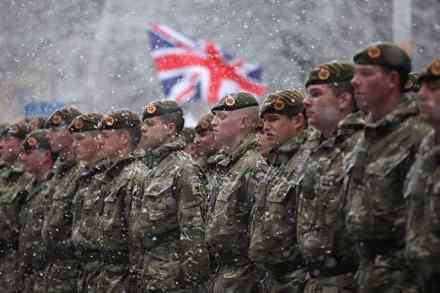
Last week, the government published its blueprint for how it intends to remodel the army. According to the plan, it won’t matter that the number of regular troops is being reduced to the smallest size since the Napoleonic wars because the remaining forces will be more ‘agile, integrated, lethal and expeditionary’. A strange theme is emerging in Boris Johnson’s government: the Prime Minister sees the army as the solution to any given problem — yet he is cutting it back to a record low size. Like Tony Blair before him, Johnson likes to deploy troops — but to help him win battles against his own government machine. He announced this week that the army will be helping out with a speeded-up vaccine booster programme.

The true cost of Boris

Earlier this week, the Conservative party sent an appeal to its registered supporters asking them to become members. ‘We’re delivering what you voted for in 2019,’ it read. ‘So why not help us keep going?’ Unfortunately for Boris Johnson, there are now several answers to that question. Two years ago, the Tories were re-elected on a promise to protect the public from the ever-rising cost of government. One of Johnson’s five pledges, personally signed by him, was not to raise taxation on ‘hard-working people’ and to stop any ‘jobs tax’. He has since changed his mind. In April, the Tory government will take a further 2.5 per cent of the salaries of those workers via National Insurance (i.e. a jobs tax).

Emad Al Swealmeen should not have been in Britain

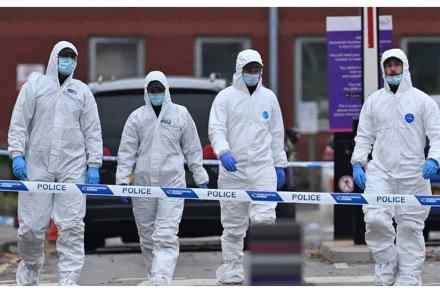
Emad Al Swealmeen, who blew himself up in a taxi outside the Liverpool Women’s Hospital, is not believed to have been identified by security services as a terror suspect. Nevertheless, he should not have been in Britain. He lied about where he had come from, which ought to have been a red flag, enough in and of itself to warrant his return to his home country. Indeed, his application for asylum was rejected in 2014, but he was never removed. Instead, he reinvented himself as a Christian convert, gaining himself time and grounds for appeal and last Sunday, on Remembrance Day, he attempted to commit what could easily have been a devastating attack. Only a closed road, the fact that the bomb partially detonated and the bravery of the taxi driver prevented a dramatic death toll.

The power of remembering

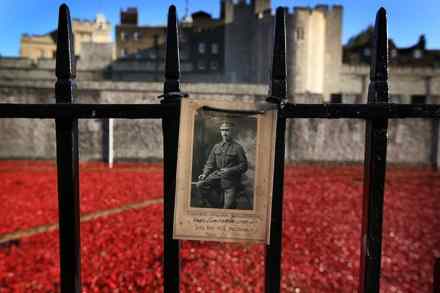
On the advice of doctors, Queen Elizabeth II will not attend this year’s Festival of Remembrance at the Albert Hall. Her absence will be poignant. The Queen was 19 on VE Day in 1945. She served in uniform in the war, in the Auxiliary Territorial Service. She represents the very youngest generation who fought in the second world war. That generation will not be with us much longer. The Queen does still hope to lay a wreath at the Cenotaph on Sunday. But we have to face up to the reality that one day there will be no one left who knew the world at war; there will be no reunions, no one to attend solemn remembrances, no one left to pass on their experiences to relatives. This is the purpose of Remembrance Sunday: to ensure that war does not recede into a distant historical memory.

The flaw in Britain’s net-zero plan

The COP26 summit is unlikely to be an outright flop. There has been no shortage of drama, with speakers seeming to compete with each other to see who could use the most histrionic language. Justin Welby, the Archbishop of Canterbury, went so far as to compare the attending leaders to Nazi appeasers. He later apologised. Some progress, albeit small, is being made. A hundred countries have been persuaded, some on the promise of sweeteners worth £14 billion, to sign a pledge to end deforestation by 2030. Brazil, the most important of all, is among them. India has agreed, for the first time, to set itself a date for achieving net-zero greenhouse gas emissions — although its target, 2070, is two decades beyond what the United Nations would have liked.

Rishi Sunak’s change of direction

The Conservative party has always sold itself to voters as the party of low taxation, but it has now pushed taxes higher than any post-war Labour government dared. High spending was the tool the Prime Minister reached for at every turn in the pandemic, leaving Britain with one of the biggest post-Covid bills in Europe. His recovery plan was to part-nationalise care homes, taxing the working poor to protect the assets of the wealthy. Taxes are now heading to a 70-year high. Not Conservatism, it seems, but its inversion. Rishi Sunak’s Budget this week marks a potential turning point in this narrative.

The government’s net zero strategy doesn’t add up

The commitment to reach ‘net zero’ emissions by 2050 is the most expensive government proposal in modern history. Yet it was rushed through parliament with minimal debate or scrutiny, thanks to a last-minute pledge by Theresa May in 2019, weeks before she left office. She had no credible plan, just a lofty ambition without costings. It has taken the government two-and-a-half years to come up with a proposal — and it is not convincing. The Net Zero Strategy document published this week opens with the Prime Minister’s trademark optimism. ‘We can build back greener, without so much as a hair shirt in sight,’ he writes.

What will history have to say about lockdowns?

Coronavirus may have fallen out of the news cycle but the threat of the virus has certainly not passed. Britain is once again reporting the highest level of infections of any major country. While the back-to-school surge did not materialise in England, the virus continues to spread. Thanks to vaccines, the number of infections does not present nearly the same threat it once did. But the government is nevertheless preparing for ‘Plan B’ if winter takes its toll, with vaccine passports and the reintroduction of restrictions. This makes it essential that we learn what we can from the last 18 months — especially about the decision to lock down.

The real issues facing trans people aren’t pronouns

It’s a strange reflection of our times that with so much else at stake, the leaders of both main parties have been asked, at their party conferences, whether they think that only women have cervixes. Both men prevaricated. Sir Keir Starmer declared this is ‘something that shouldn’t be said’. Boris Johnson avoided the question altogether. It is a straightforward biological fact that only women have cervixes, but simply stating it was more than the Prime Minister and the leader of the opposition were prepared to do. Rosie Duffield, a Labour MP, faced such a ferocious backlash after making this statement that she felt she could not safely go to the Labour party conference.

In blockbuster Britain, the BBC is being left behind

There’s a great revival under way in the British TV and film industry, but it’s not the BBC that’s behind it. Netflix is normally secretive about its figures but this week published a list of its most popular shows and top of the pile is Bridgerton, which imagines Regency London as a racially mixed society. Although funded with US money, it is shot in Yorkshire with a British cast, using British technical know-how, and, thanks to Netflix’s global audience of more than 200 million, this British show has now become the most-watched series in the history of television. Not so long ago, it was argued that subscription television would never work in Britain because we had all the broadcasting we could wish for.

How the Tories have fuelled Britain’s energy crisis

Britain is caught in an energy crisis of the government’s own making. It is true that gas prices have spiked all over the world — but Britain is suffering more than most. Energy suppliers are going out of business, thanks to the government’s price cap. Even fertiliser companies are going bust, with serious knock-on effects for the food industry: the British Meat Processors Association says shortages could hit within a fortnight. The trigger for this crisis has been the sudden surge in demand for gas as the global economy recovers from the Covid lockdowns. Gas prices have doubled in the United States, for example. In Britain, however, prices are five times higher. Why? Because America exploited fracking technology and capitalised on its huge inland gas reserves.

The case for an asylum amnesty

Many feared mass unemployment as a fallout from Covid-19. Instead, we have ended up with the opposite problem: a labour shortage. The lack of lorry drivers has led to some items missing from supermarkets. Pubs, restaurants and many other businesses are struggling to re-open as completely as they would like for want of adequate staff. As Matthew Lynn says in his article, the labour shortage has already had a positive effect on workers’ wages. The situation also presents a rare opportunity for long-overdue reforms elsewhere — particularly when it comes to processing asylum seekers. For years, there was public concern that there were far more immigrants coming to work in Britain than ministers ever expected.

The emergency is over. Now the government must relinquish its emergency powers

For 18 months, the government has held power over us as never before in peacetime. The emergency powers granted by parliament in March last year can cancel our events, separate families and send us back into our homes. The argument for giving politicians this kind of control was that leaders needed to make huge decisions at short notice because an invisible enemy was surging through Britain and posed a deadly threat to our elderly and vulnerable. There was no time for proper democratic debate or scrutiny. That emergency has passed, but the government wishes to keep the powers. What’s the case for doing so? Vaccines have significantly weakened the link between Covid infections and severe illness.