Leading article

Denial is not a strategy, Prime Minister

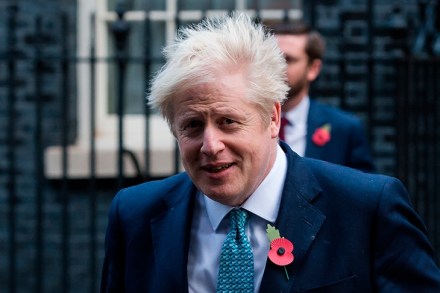
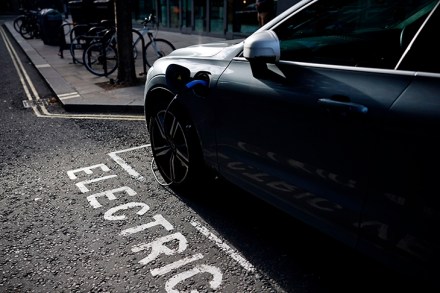
The psychodrama in No. 10 is badly timed. The government has used emergency powers to ban meetings, church services and even family visits. A million jobs have gone since the first lockdown, with at least a million more to follow when the furlough money runs out. Children’s education was so badly set back by school closures that there are calls to cancel summer exams because pupils won’t be ready. Millions are facing financial ruin. A country looks to its Prime Minister for leadership. Yet the big announcement, made on the eve of the Brexit deal Boris Johnson was elected to deliver, is that he will ban the sale of new petrol cars by the end of the decade and hybrids five years later.
Boris won’t be forgiven if his No. 10 chaos makes him cave on Brexit

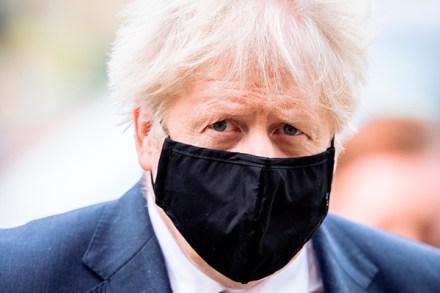
Mayhem has once again engulfed 10 Downing Street with the dramatic resignation of Lee Cain, Boris Johnson's communications chief. He was with the Prime Minister on the Vote Leave campaign — as had Dominic Cummings, Oliver Lewis and others who have formed a band of brothers in No. 10. Cain's departure put a question mark over the future of the others, which comes at an odd time because the Brexit they all campaigned for is weeks away from a conclusion. There are huge issues facing the government: a second lockdown, due to end on 2 December. The procurement and rollout of a potential vaccine. But another deadline, just weeks away, is Brexit. This is the mission Johnson was elected to accomplish, this is the drama that has defined British politics for the past five years.

Whatever the science of this lockdown, the execution has been a disgrace

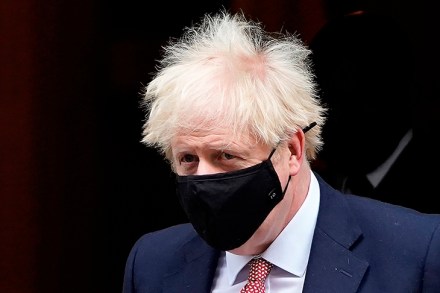
The benefit of having a lockdown announced some days in advance is the ability to savour what is about to be lost. People have been able to visit friends and family, not knowing when it will be legal to meet again. Parishioners have attended church to say their farewells, as have small groups of friends and family. Small shops stayed open until midnight on Wednesday to serve customers, restaurants were booked up. Yes, we face the return of Covid-19. But was also face a government that seems in a flap, unable to decide what to do. Boris Johnson has said that this latest lockdown will last only four weeks, and there is no doubt that he means it.

A Biden victory would be no great boon for Britain

It is remarkably uncommon for a US president to fail to be re-elected. It has happened just twice in the long lifetime of Joe Biden: with Jimmy Carter in 1980 and George H.W. Bush in 1992. On Tuesday, however, it looks likely that it will happen again. It is not just that Donald Trump is trailing badly and consistently in the national polls — he was behind in 2016 but won nonetheless — it is that his support seems to be draining most in his own heartlands. Biden appears to be well ahead in industrial ‘rustbelt’ states like Michigan and Wisconsin where Trump’s protectionist message gave him victory four years ago. There is little question that a Biden victory would be popular in Britain — as it would in many countries.

End the Sage secrecy

At the beginning of the Covid-19 crisis it was easy to see why the Prime Minister was so keen to be seen to ‘follow the science’. He had a pandemic plan, designed by past governments, to be guided by the medical facts and expert judgment. There was to be no role for politics. He held press briefings at which he was flanked by the chief medical officer and chief scientific officer, armed with charts and graphs, making it known that everything he did hinged on their advice. At first, we were not even allowed to know the identity of the 50 men and women who sit on the Scientific Advisory Group for Emergencies (Sage). Now they have become the most influential group of people in the country, whose decisions shape the lives of millions.

The truth about race and pay in modern Britain

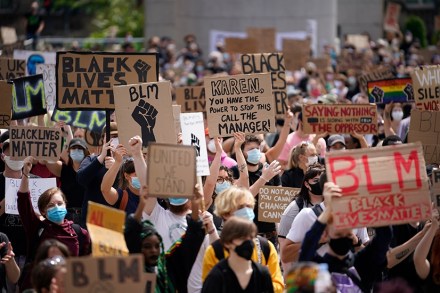
When the Black Lives Matter protests struck London in the same week that Public Health England published a report into the higher death rate from Covid among the black and ethnic minority population, the Prime Minister did not quite know how to react. He did what modern Prime Ministers so often do when presented with a little difficulty: he kicked the matter into touch by appointing a commission — on ‘race and ethnic disparities’. At least the person charged with overseeing the commission, Equalities Minister Kemi Badenoch, was brave enough to challenge those who were lazily trying to make out Britain is a racist hellhole. Britain is, she asserted in the Commons, ‘one of the best countries in the world to be a black person’.

Now the Tories must make it their mission to repair the country

The centrepiece of Boris Johnson’s speech to Tory party conference this year was his Damascene conversion to the merits of wind farms. Some people used to sneer and say wind power wouldn’t pull the skin off a rice pudding, he said — referring, of course, to himself, writing in 2013. Now, his post-Covid plan for Britain is wind farms powering every home by the end of the decade. But the Prime Minister was right first time. When he was dismissing wind power, it was eye-wateringly expensive and was forecast to stay that way for the foreseeable future. No one envisaged, then, how global competition and technology would force prices down.

The lockdown battle of Marseilles is a warning for Boris

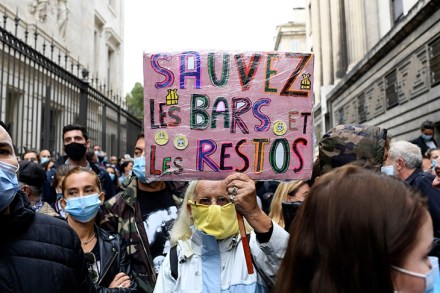
From the vantage point of Downing Street, Boris Johnson may feel reassured that the further measures against Covid-19 he imposed this week, along with the extraordinary fines with which he has decided to enforce restrictions across the country, appear to have public support. Indeed, one poll suggested that upwards of 60 per cent of the population believe the government did not go far enough last week when it ordered pubs to close at 10 p.m. But the Prime Minister should not be fooled by that apparent backing. Before he commits himself to any further action he needs to look to Marseilles, where President Emmanuel Macron has come unstuck after trying to impose similar measures.

Iran hasn’t earned the right to bear arms

Hard though it is to remember now, 2020 began with a very different dark cloud on the horizon. For a week or so it looked as if the West’s cold war with Iran would burst into full-scale conflict. The assassination by US forces of Iran’s revolutionary guard leader Qassem Soleimani on 3 January sent oil prices soaring and raised fears that President Trump’s reputation as a war-monger was finally to be deserved. As we now know, the crisis fizzled into nothing. In retaliation, Iran halfheartedlyfired missiles at a couple of air bases in Iraq where US forces were stationed, killing no one. Donald Trump announced ‘all is well’ and, as he had already done with North Korea, succeeded in de-escalating a crisis which he was widely believed to be escalating.

Labour’s identity crisis

On the face of it, there could scarcely be better conditions for a revival of the Labour party. Even before the Covid crisis, a generation of young people were struggling to earn as much as their parents did at their age. The housing crisis remains unresolved, prices are higher than before the pandemic. The Tories are borrowing far more than they can afford and there will soon be a reckoning — with tax hikes, austerity or both. Unemployment will soar as the furlough scheme is unwound. But much of the left’s energy is being wasted in marching down the cul-de-sac of identity politics. For activists, the summer has been spent in an unseemly competition over who can find offence at the most unlikely people and inanimate objects. This week, they began to turn on their own icons.

Ministers need to defy the instinct to lockdown

One of the many ironies of the past few months is that young people, while least affected by the virus, have paid the heaviest price for lockdown. They have been deprived of education, had their exams thrown into chaos and, as a result, many have been denied the university places they deserved. Apprenticeships and internships have dried up and office closures have kicked away the ladder which allows new arrivals to advance. And now Matt Hancock, the Health Secretary, is accusing ‘affluent younger people’ of dangerously selfish behaviour, of socialising once again in a way that could ‘kill your granny’. We seldom hear from ministers an acknowledgement of the price paid for policies which have had a questionable effect in stemming the advance of the virus.

Boris Johnson’s non-existent get back to work campaign

This week was built up by the Prime Minister to be the moment that would mark the return of economic and social life to robust health. But there was no real attempt by his government to urge people to go back to the office. Even Number 10 has admitted there never was a back to work campaign. In London, the number of Tube journeys made at the beginning of the week — as good an indicator of economic vitality as any — was still far below last year’s levels. In spite of repeated assurances that returning to school is safe and necessary for children’s health, a YouGov poll suggested that nearly one in five parents are still considering keeping their offspring at home. Recent figures from Scotland indicate they are doing precisely that.

Tanking the tanks could be a big mistake

That an abundance of tanks is no guarantee of a happy and secure nation was evident from the Soviet Union’s annual May Day parades through Red Square. A more controversial point is whether Britain can remain a serious military power without any working tanks. The government is reportedly considering, as part of its promised defence review, mothballing the country’s entire fleet of Challenger 2 tanks in order to save money and invest in evolving forms of military technology such as cyber and space warfare. This has raised the ire of some military figures, such as the former chief of the general staff General Lord Dannatt, who this week described the suggestion as ‘very dangerous’ in the face of renewed aggression from Moscow.

The Democrats’ complacency is Trump’s greatest weapon

There is a great mystery lying behind the 2020 US presidential election: how come a country of 350 million, which leads the world in academia, science and more, is unable to find two more inspiring candidates than Donald Trump and Joe Biden? Where is the voice of hope, or even just a reassuring voice of calmness and competence? Instead, come November, citizens of the most powerful nation on earth will be forced to choose between a narcissist and a man whose claim to his party’s candidature appears to be based on the principle of Buggins’ turn.

Inflated exam grades let the government ignore its own failures

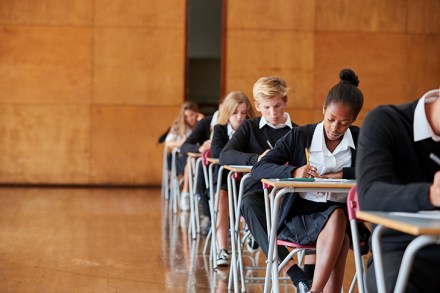
It was obvious that closing schools would hit the poorest hardest, inflicting permanent damage and deepening inequality. While many private schools and the best state schools maintained a full timetable of lessons throughout lockdown, a study by UCL in June found that 2.3 million pupils — one in five of the total — did virtually no schoolwork at all during the weeks of lockdown. The official response has been to turn a blind eye, and imagine that the damage can be covered up by simply awarding decent exam results. This year’s students are right to protest about the injustice of the system. From the moment the decision was taken to cancel exams, rather than carry out exams with social distancing, this year’s mess was guaranteed.

Economies run on confidence – the government mustn’t undermine it

Throughout the past few months the government has appeared to face an unenviable choice between saving lives and saving livelihoods. Nevertheless, a fortnight ago the path seemed clear. The numbers of Covid infections were falling, but the economic news was dire — hence Boris Johnson was engaged in a drive to reopen the economy as quickly as he could without prompting objections from his scientific advisers. Now things feel rather different. Economic figures from recent days have surprised on the upside: the CBI’s figures for retail sales in July show a sharp V-shaped recovery. Sales of cars and houses were running ahead of last year — during July at least. At the same time, though, the outlook on Covid-19 has darkened.

How Boris should pick his peers

It is no credit to British democracy that we have the second largest legislative chamber in the world. The only one larger than the 792-strong House of Lords is the 2,980-member Chinese National People’s Congress. In the coming days the House of Lords will grow even bigger as the Prime Minister announces another batch of peerages. We can expect a bad-tempered reaction if, as expected, a slew of Brexit campaigners such as Ian Botham are included while former speaker John Bercow is left out. But no one should be too surprised. Prime ministers have always used their patronage to appoint likeminded peers, as have leaders of the opposition.

New fault lines are appearing in the EU

Anyone who imagined that the departure of Britain would make for more harmonious EU summits in future will have been disabused of this belief by the four days of meetings to establish an EU coronavirus recovery fund, which came within an hour of being the longest on record. Agreement was reached on a €750 billion package — just over half of which will be made up of grants and the rest loans — but not before the French President, Emmanuel Macron, had reportedly thumped the table and accused a group of countries of putting the entire European project at risk through their refusal to sign for an even higher sum. Even now, the deal might still run into trouble: the European parliament is already voicing objections.

The confusion in government goes beyond face masks

When Michael Gove delivered the Ditchley Annual Lecture last month he spoke about why citizens feel that the political system has failed them. ‘The compact leaders offered — trust that we are the best, trust that we have your best interests at heart, and trust that we will deliver — was broken.’ It was a powerful message. Voters have a right to expect honesty and competence from their leaders, not just decisiveness. So Mr Gove will have thought carefully before saying on television last weekend that face masks should not be mandatory, and people should instead be left to use their own judgment.

At last, we have a foreign secretary who’s not shy to make a stand

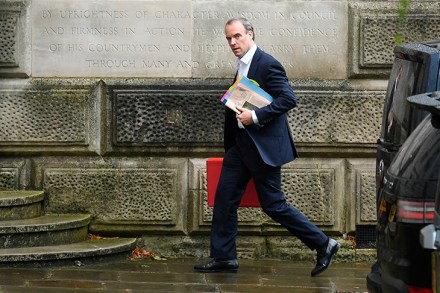
It is hardly a profound observation to say that the government has not functioned as well as it might have done for the past few months. Yet there is one important exception to the general picture of confused and counterproductive activity. Britain, for the first time in years, is developing a logical and — to use the words of Robin Cook — an ethical foreign policy. In the Commons this week, the Foreign Secretary, Dominic Raab, listed the first 49 individuals to fall foul of Britain’s ‘Magnitsky law’ — a provision to freeze the assets of, and impose travel bans on, foreign citizens who have been implicated in human rights abuses.