Leading article

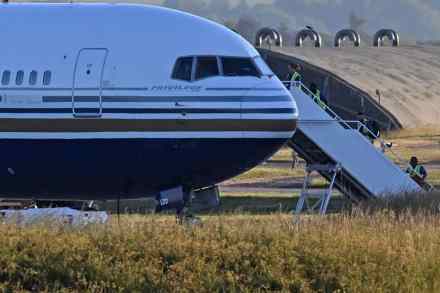
Politicians caused the Rwanda deportation debacle

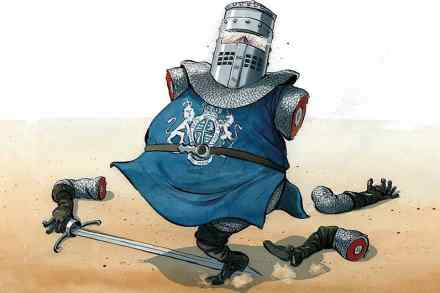
The problem with the bishops in the upper chamber is not that they speak too much, but too little. The attack on the government for sending migrants to Rwanda was a rare example of clerical intervention, but where were the bishops during the discussions about the evils of people-smuggling and the problem of migrants risking their lives in shoddy boats? The reason we have religious leaders in the House of Lords is so that they can add thoughtful insights into important political issues of the day. Illegal immigration and the great dangers faced by migrants in their struggle to come here are just the sort of moral dilemmas that needs their attention, but they have for the most part been silent. It is clear that our politicians are in urgent need of good advice.
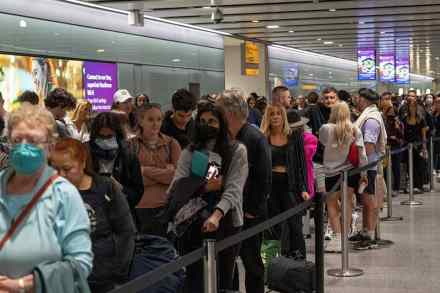
Airlines must accept the blame for the travel chaos

If you have a flight booked in the next few months, it’s time to worry. A new era of air travel has arrived, in which reliability has been replaced with roulette. Airlines take bookings for flights they know might not take off. If staff shortages mean the flight is cancelled, passengers aren’t told until the last minute and are often denied compensation. And good luck finding a more reliable carrier. EasyJet, Wizz Air, British Airways: they’re all at it. Heathrow airport says the disruption may last until the end of next year. There is no doubt that lockdowns were crippling for the air industry. Even when foreign travel was permitted again, it was under intimidating regulations.

God save the Queen: the monarchy has become more valuable than ever

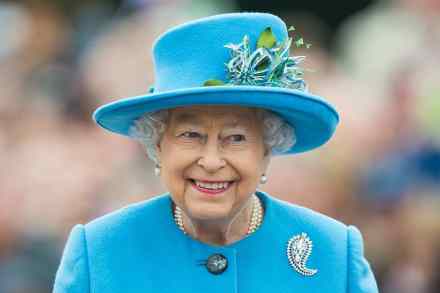
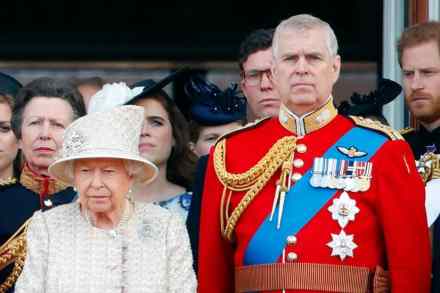
Rarely has a public figure taken a promise so seriously as the vow that Her Majesty the Queen made on her 21st birthday in 1947: ‘I declare before you all that my whole life – whether it be long or short – shall be devoted to your service.’ Predictions that she would take the occasion of her 60th, 70th, 80th or 90th birthdays to retire and enjoy an easier life have proved laughably wide of the mark. The celebrations this weekend are a reminder that the Queen has, as she pledged, given her life to her country. There would be no disgrace if the Queen did retire in the manner of the much younger Queen Beatrix of the Netherlands, who abdicated in favour of her son nine years ago.

Boris Johnson’s guilt

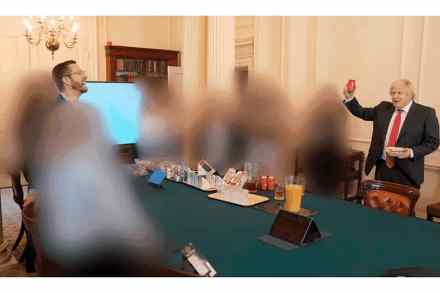
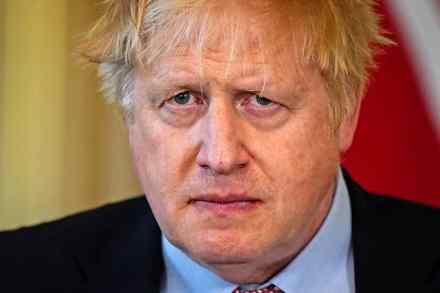
An ability to survive narrow scrapes has been one of Boris Johnson’s defining qualities. The pictures of Downing Street’s lockdown social events included in the Sue Gray report were so dull as to be almost exculpatory: staid gatherings of half a dozen people around a long table with sandwiches still in their boxes, apple juice poured into a whisky glass. Far worse happened in No. 10 but Gray did not publish those photos or look into (for example) the ‘Abba’ party in the No. 10 flat, saying she felt it inappropriate to do so while police were investigating. Luckily for Johnson. The more damaging material came from the emails intercepted, with No.

Sanction Gerhard Schröder

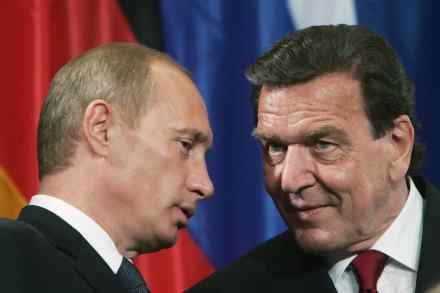
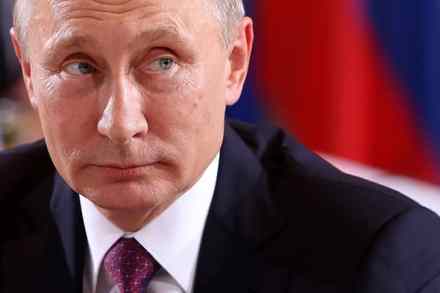
From the start of the war in Ukraine, the democratic world has shown striking unity in the economic boycott of Russia. But sanctions are always a blunt instrument: aimed at the regime, they end up harming the whole population. Ordinary Russians, too, are victims of Vladimir Putin’s corruption and misrule. Far better to target the Kremlin and those close to it. The system of targeted sanctions on named individuals is one way of doing this. Action has now been taken against 1,086 people, with assets suspended and travel bans imposed. To go after the rich and powerful is always a test for democracies, especially if such people are generous in their donations to political parties or have close political connections.

The problem with Macron’s vision for Europe

The Ukraine crisis has transformed international affairs, forcing countries the world over to rethink their alliances and interests. New patterns are forming that will probably stay in place for many years – and one outcome is that global deals are being seen as more effective than regional ones. Sweden and Finland look set to join Nato, and Britain has agreed a defence deal with Japan. In theory, EU countries are required to come to the help of any member that is attacked, but Sweden and Finland feel that only Nato membership (which offers a place under America’s nuclear umbrella) can afford them true protection. As they wait for the applications to go through, they have signed a defence deal with Britain which promises them interim protection.

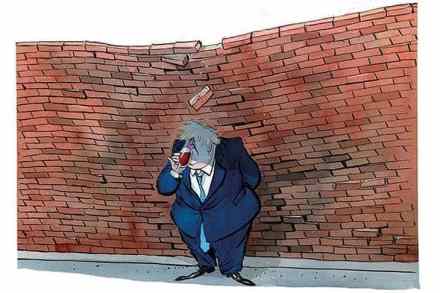
Can anything save Boris Johnson?

As Boris Johnson faced the possibility of a no-confidence motion earlier this year, a large number of Tory MPs decided they would neither back him nor sack him. ‘Wait until the local elections,’ they said. The Prime Minister was chosen as party leader not because of popularity among his political peers (he has never commanded much loyalty in the Commons) but because he was seen to be the best at winning elections. If he lost his touch with voters, surely that would be proof it was time for a change? There is an obvious problem with this reasoning. Local election results in the United Kingdom have always been a poor gauge of confidence in the prime minister.

Brexit’s potential is beginning to be realised

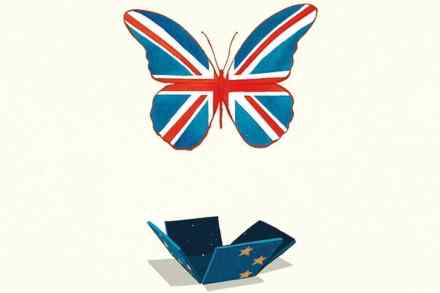
The purpose of Brexit was to strengthen Britain’s ties with both the world beyond Europe and with Europe itself, but in a more democratic way that carries popular support. It was clear to Boris Johnson and to the Leave campaign that the EU ideal of free movement of people, an idea forged in the 1990s, had become difficult to reconcile with the reality of the contemporary world. High-skilled immigration made more sense than low-skilled, they thought, and a new system was needed to deal with 21st-century challenges while strengthening national cohesion. Johnson’s critics, naturally, portrayed the supporters of Brexit as xenophobes and knuckle-draggers who were afraid of the modern world and sought to return the country to the 1950s.

Britain and the West must step up support to Ukraine

The first few weeks of Russia’s invasion of Ukraine went so badly that it was tempting to see the withdrawal of troops from around Kyiv as the beginning of the end. The loss of the battleship Moskva has humiliated Vladimir Putin further, undermining any lingering hope he may have had of being able to claim total victory in time for Russia’s military celebrations on 9 May. But it would be a dangerous delusion to think that Russia’s invasion of Ukraine is destined to be a failure. Heroic though Ukraine has been so far, its struggle could yet be lost. As the conflict enters a critical new phase, it is vital that Britain does not relax military support for the country. Indeed, it is time to step it up.

To survive, Boris Johnson must do more than pose as a war leader

Attending an impromptu birthday party in the office is not the most heinous of crimes, and of course Britain’s fixation on Downing Street’s breaches of lockdown rules looks rather perverse against the crimes being committed by Vladimir Putin’s troops in Ukraine. But there is little point in the Prime Minister or any member of his government attempting to argue that point. It is very clear that there is considerable anger among the British public that a government which imposed highly prescriptive Covid rules failed to live by the letter of those rules itself.

The French election should be a warning for Boris

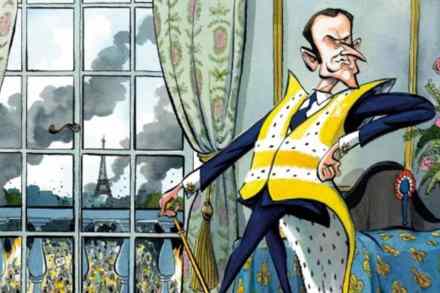
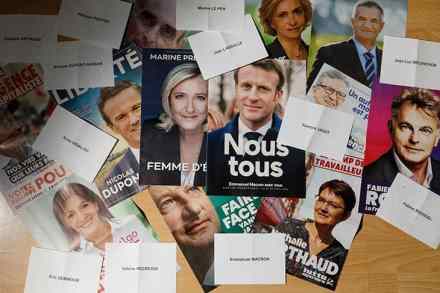
In just over a week’s time, Emmanuel Macron will most likely win a second term. He has the opponent he wants in Marine Le Pen, whom he believes will be too unpalatable for the French people. He hopes voters will fear that, unlike in 2017, she has a reasonable chance of victory – polls show just a few percentage points between the two candidates – and be persuaded to vote for him instead. If Macron’s strategy succeeds and he returns to power, it may seem as if nothing has changed in French, and indeed European, politics. But even if Macron sees off a populist challenger for the second time, a strong showing by Le Pen threatens to destabilise his administration. He may not keep his majority in the parliamentary elections.

What happened to Tory radicalism?

Whatever advantages money may have brought Rishi Sunak as he rose to become Chancellor of the Exchequer, his wealth has now become a serious hindrance to his career. Whatever decisions he takes, everything is seen through the prism of his personal financial situation. If he rejects demands for greater public spending, he will be accused of throwing the poor to the lions. If he raises taxes, he will be accused of failing to understand how ordinary people are struggling. If he cuts them, he will be accused of pandering to his rich friends. Even acts of private generosity by Sunak seem to arouse suspicion when made public.

Why Boris Johnson should not resign over partygate

Afew weeks ago it seemed that the issue of Downing Street parties over lockdown had been usurped by a more serious matter: what to do about the invasion by a nuclear power of a neighbouring European state. But now partygate is back, fuelled by the news that the Metropolitan Police has issued 20 fixed penalty notices and may announce another tranche of fines at a later date. Some of the heat has left the whole affair. Several of the letters written to Sir Graham Brady, chairman of the 1922 Committee, demanding a Conservative leadership election were withdrawn at the beginning of the war in Ukraine. The leader of the Scottish Conservatives has withdrawn his own call for the Prime Minister to resign. Nevertheless, partygate continues to present an acute difficulty for Boris Johnson.

The return of fiscal conservatism

Next month, Rishi Sunak will break a Tory manifesto pledge by increasing National Insurance as the tax burden heads to a 77-year high. By declining to increase departmental spending for inflation – and using the saved money to cut the basic rate of income tax – the Chancellor has started a cautious fightback against Big Government conservatism. Much has changed in the two years since Sunak took over as Chancellor. Back then, inflation appeared dead and buried: long-term forecasts did not envisage it going above 2 per cent. Sajid Javid, Sunak’s predecessor, said he expected rates to be ‘low for long’ – and planned to borrow and spend on that basis. The Tories had quite simply lost their fear of inflation.

The soft censorship of the Online Safety Bill

The arrest of a reporter who held up a poster during a Russian news broadcast criticising the war in Ukraine reminds us how dictatorships operate. One of Vladimir Putin’s first acts on the home front, after sending his tanks over the Ukrainian border, was to pass a law specifying jail terms of up to 15 years for anyone who dares to disseminate ‘fake news’ – i.e. anything which contradicts his government’s lies – about the Russian war effort. Britain is a very long way from that kind of suppression of speech. If a publication wishes to condemn Boris Johnson for his handling of the Ukraine war, Covid or for anything else, its writers and editors will not be ‘disappeared’. But the stories themselves might be.

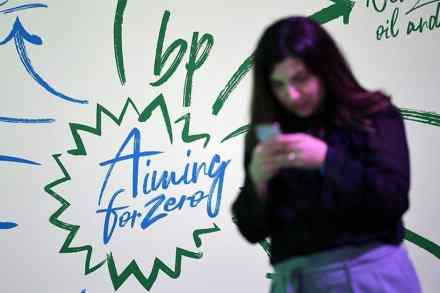
It’s time to drop the net zero agenda

For years British energy policy has been an exercise in wishful thinking. We’ve been living in a fantasy world in which Britain can somehow achieve ‘net zero’ by 2050 without paying any serious economic price, and with no one significantly poorer as a result. ‘Not a hair-shirt in sight,’ said the Prime Minister, though most independent assessments said net zero would cost between £36,000 and £50,000 per household. Reality, now, is biting. Reducing emissions is important but security of supply is vital, and Europe has been forced to come to terms with its dependence on Russian oil and gas. The dependence is so entrenched that it is possible Vladimir Putin thought that Europe would rather leave Ukraine undefended than impose sanctions.

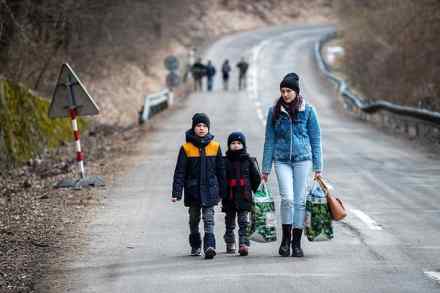
Britain must give Ukrainians an unconditional right to asylum

During the Cold War, any citizen of a Soviet bloc country who made it to Britain and claimed asylum was welcomed with open arms. The fact people wished to take great risks to move westwards for safety and shelter, while hardly anyone wanted to move in the opposite direction, settled the question of which system was better. Besides, the numbers who made it out were tiny – the brutality of border guards patrolling the Iron Curtain saw to that. In recent years, the concept of asylum has been complicated by the debate on how to handle the much larger flow of migrants who are prepared to risk their lives fleeing poverty. One of Boris Johnson’s biggest headaches before the Ukraine crisis was his inability to stop the new wave of small-boat crossings to the UK.

Abolishing Covid restrictions now is bold, brave – and necessary

Shortly after Covid emerged, our civil liberties were suspended. The government took control of when and for how long we could leave our houses, and children’s right to classroom education was abolished. The idea was that lockdown would prevent catastrophic loss of life and the collapse of the NHS. But when that was no longer a serious prospect, the justification for restrictions vanished. The big question was whether governments would hold on to the emergency powers anyway — with identity cards, testing regimes and ‘no-jab, no-job’ policies. In Britain, the answer is — thankfully — now clear. We have become, along with Denmark, the first country to draw a line underneath the pandemic and return government to its proper relationship with the public.

Andrew, Harry and the enduring prudence of the Queen

Prince Andrew’s decision to settle his case with Virginia Giuffre means he will be spared the potentially humiliating ordeal of a jury trial. It also means that, in the public’s opinion, he will forever occupy a no-man’s land between guilt and exoneration. Even though he has accepted no liability in the case, a return to royal life is surely impossible. As he celebrates his 62nd birthday this weekend, he must contemplate life as a retired royal. However Andrew might feel about his fate, it will bring relief for the monarchy. The darkest of clouds is clearing and the Queen can mark her 70th year on the throne without the reputational damage that would inevitably have accompanied a trial.

Why Putin wins

Does Vladimir Putin intend to invade Ukraine? Or are his troop manoeuvres just a game — another test of the West’s resolve? If the former, he will win: British troops (and citizens) have been told to leave Ukraine in the event of conflict and no one doubts that the estimated 130,000 Russian forces could succeed in their objective. So the first major land war in Europe since World War II would end in an easy victory for Russia.  “My guess is he will move in,” Joe Biden said last week, as if he were a casual observer. Families of US diplomats in Ukraine have been ordered to leave the country But even if it's a bluff, Putin can count the past few weeks a success.