Exhibitions

The master of living, breathing landscapes

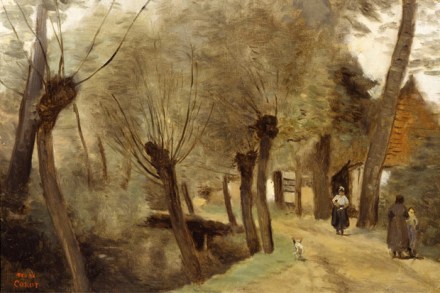
One sometimes forgets when looking at French 19th-century art that the painting revolution that produced Impressionism coincided with a political one. This is because most French painters, Delacroix and Manet excepted, chose to ignore it — none more completely than Camille Corot, who, as a travelling view painter, had every excuse to get out of Paris when the musket balls started to fly. The July Revolution of 1830 found the 34-year-old artist heading north to Pas de Calais, where he painted a ‘Windmill near St Omer’ and two foreground cows with a bucolic breeziness worthy of Cuyp; the Paris Commune of 1871 found him back in the north, painting the peaceful countryside around Arras.
Braque in full flight

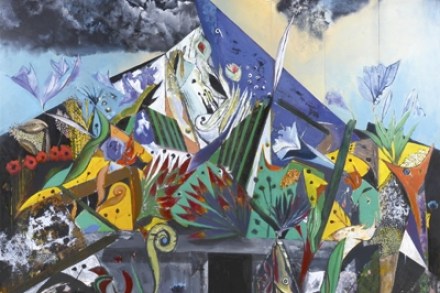
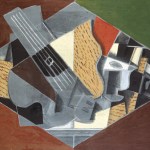
Towards the end of his life, Georges Braque described his vision in the following terms: ‘No object can be tied down to any one sort of reality; a stone may be part of a wall, a piece of sculpture, a lethal weapon, a pebble on a beach… Everything is subject to metamorphoses.’ Since then, set ideas of Braque’s oeuvre have crusted over like dry impasto: Braque the cubist, Braque the inventor of the papier-collé, Braque whose blue birds soar on the ceiling of the Louvre. The Grand Palais now hosts the first retrospective of the artist’s work to be held in Paris for 40 years, setting those metamorphoses back in flux. A retrospective demands a narrative of progression.

The big tease

Perhaps the greatest irony of many in this first solo London show of Sarah Lucas is that it is sponsored by Louis Vuitton. ‘Symbolising French elegance and joie de vivre, the Maison LV has always collaborated with the best engineers, decorators and artists,’ it claims. Well, welcome to a new world. Soiled mattresses provocatively pierced by fruit’n’veg, two dessicated hams shoved into a pair of knickers, a mechanical ‘wanking’ machine, a primeval soup of penises — you get the drift. It is of course vintage Lucas, a retrospective of work drawn from two decades of artistic confrontation, and the site she has chosen for this engagement is the human body. And how cleverly she articulates it.

Andrew Lambirth: Emilio Greco’s early work is undeniably his best

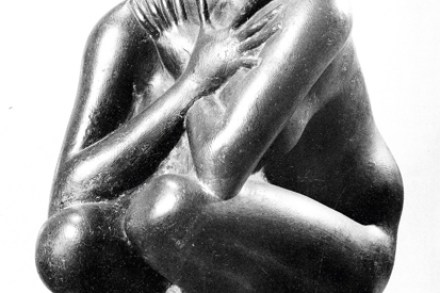
Emilio Greco (1913–95) is considered to be one of Italy’s most important modern sculptors, and certainly he was a successful one, enjoying considerable popularity and renown with his deliberately mannered re-interpretations of classical subjects. A figurative sculptor, Greco went in for elongated limbs and awkward yet dynamic poses that often have a surprising elegance and no little wit. His most celebrated work is ‘Monument to Pinocchio’ (1953) in the Tuscan hill town of Collodi, and one of the highlights of this new exhibition at the Estorick — no doubt intended to revive Greco’s reputation (on the wane since the 1970s) — is a bronze study for it.

Frank Holl: a forgotten talent much admired by van Gogh

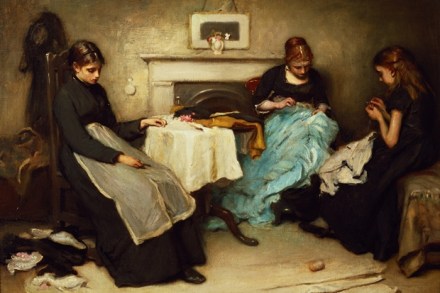
The Watts Gallery, just outside Guildford off the Hog’s Back, is a delightful place to visit at any season, with its permanent collection of work by G.F. Watts, whose studio it once was, and an ambitious programme of exhibitions on related subjects. But as autumn reaches over the hills a sense of the Victorian past may be even more closely felt and appreciated, and particularly a life of promise cut short, as was the case with Frank Holl (1845–88). Until this exhibition began to gather a fresh audience, few had heard of Holl or were able to summon an image by him to mind. This show brings together some 30 of his most famous works and offers us the chance to reassess an unfairly forgotten talent.

Is the best Australian art yet to come?

Astonishingly, the last major survey show of Australian art in this country was mounted more than half-a-century ago. Then it was the innovative writer, critic and museum director Bryan Robertson who staged Recent Australian Painting at the Whitechapel Art Gallery in 1961, a show he consolidated by monographic exhibitions of Sidney Nolan, Roy de Maistre and Arthur Boyd, also at the Whitechapel. Later Robertson also wrote extensively about Brett Whiteley, but his one-man Australian project was not taken up by other curators. Although Nolan and Boyd have had their supporters here (particularly Nolan), Australian art has for far too long remained not just a closed book but an unknown quantity in the UK, too.

Henry van de Velde — the man who invented modernism

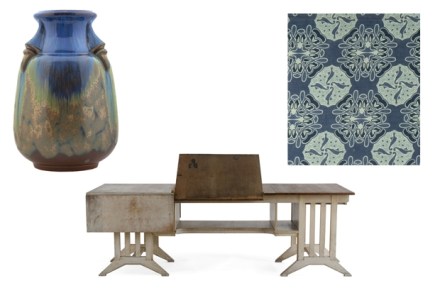
In the Musée du Cinquantenaire, a grand gallery on the green edge of Brussels, those bureaucratic Belgians are welcoming home a prodigal son. Henry van de Velde — Passion, Function, Beauty is a celebration of the 150th birthday of Belgium’s most prolific polymath, yet a lot of people here in Brussels scarcely seem to know his name. While Victor Horta is fêted as the father of Art Nouveau, his great rival, van de Velde, is frequently forgotten. It’s ironic that this prophet of modern design wasn’t honoured in his own country until he’d made his name in Germany, the nation that invaded his homeland twice in the course of his long career.

David Tress: an artist of independent spirit

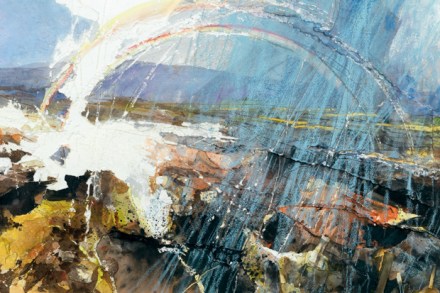
Like all artists of independent spirit, David Tress (born 1955) resists categorisation. He has been called a Romantic and a Neo-Romantic, a mixture of Impressionist and Expressionist, a traditionalist and a modernist, yet not one of these labels quite fits. He is all and none, drawing his inspiration from the great traditions of western art but principally from the British landscape that continues to evoke a response in him that can only find outlet through drawing and painting. Tress is a landscape painter and draughtsman of great poignancy, imbuing his dramatically coloured and vigorously constructed works with an emotional intensity that makes them difficult to ignore.

Under the Greenwood Tree – an exhibition worth travelling for

A mixed exhibition of paintings, drawings and prints devoted to the subject of the tree might sound an unexciting event, filled with what Johnny Cash memorably described as ‘hopeful stars of flickering magnitude’, but actually in this case the reverse is true. The show has been divided into two halves, the first of which deals with a historical survey of the tree in past art, the section which is herewith under review. The sequel, focusing on the tree in contemporary art, will be at the museum from 12 October – 23 November. Readers who have to travel any distance, and may thus be limited to a single visit, should choose with care which portion of the show they think they’d most like to see.

Laura Knight was an artist skilled in the ways of the world

The popular conception of Dame Laura Knight is of an energetic woman piling on the paint in the back of a huge and antiquated Rolls-Royce at Epsom Derby, the door propped open to the view, or charging off in pursuit of gypsies, clowns or ballerinas. A widely popular and successful artist, she painted people in action in a robust, realistic style, and was able to compete with men on their own terms, managing to get herself elected to that hitherto almost entirely masculine preserve, the Royal Academy. But wasn’t there something slightly mannish about her?

At last Alfred Munnings is being taken seriously again

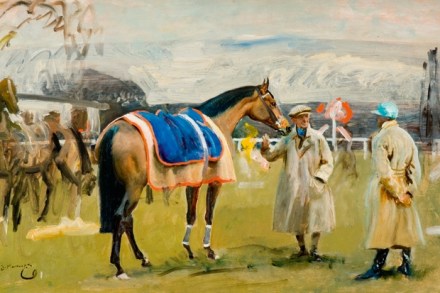
Sir Alfred Munnings (1878–1959) did himself a grave and lasting disservice when he publicly attacked modern art in a bibulous after-dinner speech at the Royal Academy in 1949. He had been president of the RA for five years, pipping Augustus John to the post, but the controversy he stirred up (he called Picasso and Matisse ‘foolish daubers’) led to his resignation. The echoes of his rant linger on more than half-a-century later, constituting for many the most memorable thing about him. Like Canute, Munnings could not stem the tide, and Modernism for a time swamped and eroded his reputation.

The whizz stirrer-up

‘Professor’ Bruce Lacey (born 1927) is one of those figures who has existed effectively on the periphery of the art world for more than half a century. Part licensed jester, part society’s conscience, Lacey operates best on the fringes, stirring things up, provoking thought and challenging preconceptions, a lightning conductor for comment and criticism. Before this exhibition, I associated him principally with the Kitchen Sink painters (John Bratby used to describe him as ‘a whizz’) and the type of idiosyncratic humour best exemplified by the Bonzo Dog Doo-Dah Band.

The problem with self-portraits: Ruth Borchard competition and Stranger reviewed

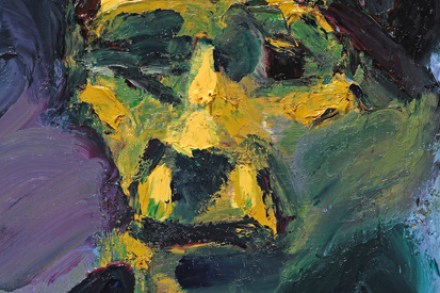
My wife says you can always tell a self-portrait by the quality of its self-regard. There’s something about the eyes and mouth (though not invariably flattering or admiring) or the set of the chin that give the artist away. Perhaps it’s simply that the artist is more interested in depicting the self than anyone else; or that the degree of self-awareness is inevitably deeper. Some of the great paintings have been self-portraits, from Rembrandt to van Gogh, and when they’re good they’re always worth looking at. So it was with optimism in my heart that I made my way to Kings Place to view the results of the second bi-annual Ruth Borchard Self-Portrait Competition.

State-sponsored cultural renaissance in revolutionary Mexico

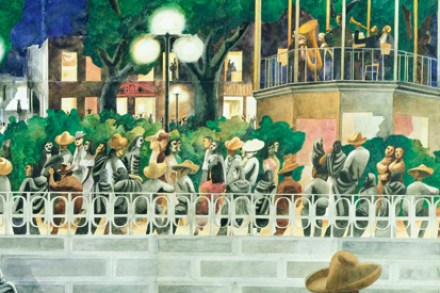
Revolution shook Mexico between 1910 and 1920, but radical political change was not mirrored in the art of the period. In this exhibition, we do not see avant-garde extremes, but witness instead a deepening humanism, as if for once art was interlocking with human need. The cultural renaissance that followed was state-sponsored, and artists were employed by the Ministry of Education to promote the revolution. This was political art at its best, and three artists were active at its heart: los tres grandes, Diego Rivera, José Clemente Orozco and David Alfaro Siqueiros. Their most significant achievements were murals, which remain firmly in place on Mexican buildings and thus are difficult to make an exhibition about.

Samuel Courtauld’s great collection

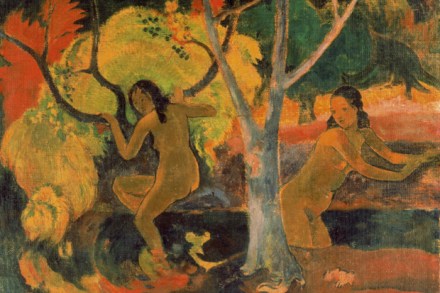
In 1929, Samuel Courtauld owned the most important collection of works by Paul Gauguin in England: five paintings, ten woodcuts and a sculpture. He subsequently sold two of the paintings, but for this show the gallery that bears Courtauld’s name has borrowed them back. One of them is the very beautiful ‘Martinique Landscape’ (1887), now owned by the National Galleries of Scotland, in which colour and pattern lock together in the most subtle and satisfying way. Even the rather startling turquoise with which the gallery’s walls have been painted cannot distract from its powerful presence. The other great painting here is supposedly ‘The Dream’, which Roger Fry declared was ‘the masterpiece of Gauguin’.

Compare and contrast Rodin and Moore

One generation is usually so busy reacting against its predecessors that it can take years for a balanced appreciation of real and relative merits to emerge. Henry Moore was born in 1898, and Rodin didn’t die until 1917, but they never met. All his life Moore was aware of Rodin’s work, and although early on he made apprentice works influenced by Rodin, it was only when he had established his own territory as an artist that he could afford to look long and admiringly at the senior artist. Indeed, Moore came to value his work so highly that he included four sculptures and three drawings by Rodin in his own collection and was happy to be consulted over the installation of the great Rodin exhibition at the Hayward Gallery in 1970.

Modernist Marxists skew the Lowry exhibition

There has been much positive comment about the rehang of the Tate’s permanent collection, which sees a welcome return to the great tradition of the chronological hang and thus gives the visitor a chance to see the development of British art from 1545 to today. At last we are permitted a rest from themed displays and given a proper educational arrangement that maps out our artistic heritage — at least in part. (Most of the larger movements are covered.) This is not a conservative stratagem: there is still plenty of room for discussion and controversy in the various inclusions and omissions (particularly noticeable when we reach the 20th century).

A Crisis of Brilliance makes the trek to Dulwich worthwhile

This exhibition was dreamt up by David Boyd Haycock, a freelance writer and curator, following the success of a book he published with a similar title in 2009. The Crisis of Brilliance book focused on the early career of five Slade-trained artists and their relationship with the first world war. When I reviewed it at the time, I felt that Dr Haycock was simply retreading rather familiar ground, however agreeable his text, as all of the artists he chose to highlight had already been extensively written about. To the five artists of the book a sixth has been added for the exhibition: David Bomberg. This enables the show to include two large canvases by Bomberg that contribute considerably to the impressiveness of the display.

Exhibition: What really goes on in a royal bedchamber

What exactly are the ‘secrets of the royal bedchamber’? That the actual bed was seldom if ever slept in let alone used for romping sex (the latter took place in private bedchambers, often barred off by an ingenious system of locks). But the royal bedchamber was, as the organisers of this exhibition state, ‘the equivalent of the modern-day boardroom’, where government decisions were made and private access to the monarch gained. Those who controlled that access were the most important members of the court. They may have been awarded earldoms, but they vied for jobs that involved serving the monarch at the most intimate (and demeaning) level. The point of the royal state bed was to emphasise the pomp and splendour of the room where you met the monarch in person.

Exhibitions: Why can’t the critical fraternity make up its mind?

As more time elapses since the regrettable fracas over Kitaj’s 1994 Tate exhibition and his tragic suicide in 2007, he comes more and more into his own as a great but still underrated artist. When I last wrote about him in this column, back in April, I had not yet seen the portion of his Berlin-originated retrospective which was shown at Pallant House in Chichester. Happily I managed to get there before it closed and was once again deeply impressed by the range and painterly intelligence of this extraordinary artist. Now another couple of shows pay justified tribute to his genius, this time as manifested through his printed work.