Drink

Wines of the times

The other day, I had lunch with the grandest person I know. Forget 1066: Adrian Ziani de Ferranti can trace his Venetian ancestors to the time when St Theodore was the city’s patron saint and St Mark’s corpse still reposed in Alexandria. Ziani Doges were buried under the crypt of San Zaccaria centuries before Bellini painted that church’s sublime altarpiece. John Julius Norwich believes that it is the finest painting in Venice. Were I entitled to an opinion, it might go in favour of the Titian Assumption in the Frari, but we are talking about works which transcend mere admiration: works of mastery, glory and joy. Anyway, the Zianis were part of the fabric of la Serenissima.

Bottle shots

This is something to be said for starting to celebrate Christmas before the end of the grouse season. It provides a good excuse for opening the odd bottle. Apropos bottles, the club of that name has not featured on this page for some time. That is not because of idleness. One Bottle is single-handedly defending the criminal justice system. Others are editing and writing for Reaction, an online journal which, though not (quite) as right-wing as it sounds, is waging the culture wars. There may be further members, but if so, they were elected late in the evening, and no one can remember who they were. But it is pleasing to report that the two junior Bottles are in fine form. Even if they are still too young for full participation, Charlie and Florrie are Bottledom’s military wing.

Autumn riches

A few days ago, on the Dorset/Somerset marches, autumn was still in orderly retreat. Although a pear tree’s leaves had turned sere and yellow, the last fruit was still peeping through. Across the lawn, a horse chestnut was undressing, festooning the lawn with bronze. Out of a cloudless sky, a mild seasonal sun blessed the scene with a gentle glow, as if it were pouring Sauternes. Along the Ladies’ Walk, the yellows and greens were reinforced by bushes in russet mantles and by the triumphant redness of acers and liquidambar. We could have almost been in the New England fall, at least for a few yards. Autumn, fall: the two have profound resonances from different histories. As one might expect from its French name, autumn is full of good eating.

From Bordeaux to Nato

An aeon ago, when I was first invited to the odd City lunch, there was a standard formula: G&T, white, red, port, brandy, cigars, with stumps drawn at around a Test match tea interval. But there was a problem. By 8 a.m. local time, when Manhattan was champing at the telephone, London would be at lunch. By the time the call was returned, it would be apparent that lunching had taken place. ‘My Dear Cyrus, how nice to hear your voice. Are you planning to cross the big pond? If so, we’ll have a jolly good lunch.’ Cyrus thought to himself: ‘Is that all those Limeys ever do: have lunch?’ Within a few years, post-Big Bang, the Cyruses did cross the big pond, but not to enjoy lunch.

Whisky galore | 20 October 2016

A long-standing friend of mine is a lucky fellow. He has spent his career doing exactly what he was born to do: befriending the human race. An inspired philanthropist, he has done more to help mankind than most aid agencies and NGOs put together. His name is Andrew Smith and he has devoted his career to selling whisky. Whisky and freedom gang the gither: whisky and all good things go together. Andrew spent many years working for Brown-Forman, an admirably well-run American family company. Family members who wish to join the firm have to possess two degrees and to have proved themselves working for another outfit. Brown-Forman is probably best known for Jack Daniel’s, a Tennessee whisky which sells very well, all across the world. That is helpful.

Eat, drink and be worried

We were surpassing Sydney Smith. His idea of heaven was pâté de foie gras to the sound of trumpets. Our version was an un pâtéd foie: even more delicious. Though no one had laid on Jeremiah Clarke, there was music: a bottle of Doisy Daëne ’75. In most of the Bordeaux area, 1975 was an austere year, and the fear was that the wines would live and die as sleeping beauties. Well, the Dozy Dean had awakened, to a harmony of structure and sweetness. There seems only one sensible response to such pleasures: ‘God’s in his heaven and all’s right with the world.’ Instead, however, the conversation took a melancholy tone. We started with that unendingly paradoxical figure, W.B. Yeats.

Winemaking with convictions

Any Australian who admits to not having convict ancestors loses caste. When granted a coat of arms, the smart ones always include fetters. It is the Oz equivalent of claiming that your ancestors came over with William the Conqueror. But it was not always thus. In the Adelaide of the 1890s, there was a family called Strangways Wigley, who had paid for their tickets and never stopped swanking about it. But they had a blot on the escutcheon in the form of young Robert. He was determined to rectify the lack of criminal blood. In those days, a pieman — as opposed to a swagman — used to sell his wares in the town centre. He was especially popular towards the end of the evening, when the ockers needed ballast to soak up the grog.

Grouse rules

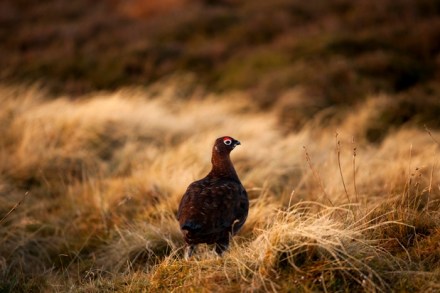
The autumn bank holiday is like the five-minute bell at the opera. The shades of the prison house loom. All over the country, kids are looking for missing kit while mothers are trying to remember where they put the Cash’s name tapes — after they have made sure that the grindstone is in working order. Interrogation is certain to reveal holiday tasks incomplete: holiday reading well short of the final page. But there are compensations. The last chores of summer can be palliated by the first fruits of autumn. On Holland Park Avenue — I suppose you could call it South-West Notting Hill — there is a delightful enclave with a bookshop, a boozer and a butcher. The bookshop is Daunt’s, scene of many a book-launch party.

A toast to Provence

Friends have a house in Provence, near the foot of Mont Ventoux. Even in a region so full of charm and grace, it is an exceptional spot. Although nothing visible dates from earlier than the 18th century, the house is in the midst of olive groves and there has been a farm dwelling for centuries. I suspect that one would find medieval masonry in the foundations. Beginning life as a simple farmhouse, it has been bashed about, added to and poshed up. On the western side, the exterior has pretensions to grandeur. The other elevation is more feminine; you expect to find Fragonard painting a girl on a swing. At this season, the parasols act as the drawing room. There is a pool, and there were expeditions to Nîmes, Orange and Avignon.

Character study

Will Lyons, a delightful companion, is not only a friend of mine. He has one of the finest palates in these islands, and has already been immortalised by Alexander McCall Smith in the 44 Scotland Street series. Those books feature another character, an appalling man called Bruce Anderson, who in no way resembles this columnist. For one thing, he is less than half my age. He also spends much of his time breaking girls’ hearts throughout the New Town. Chance would be a fine thing. Anyway, Sandy McCall Smith’s fictional Bruce Anderson decides at one stage that he might like to become a wine merchant, so consults the real Will Lyons, who remains as courteous as ever — almost implausibly so — while the no-resemblance Anderson makes a complete pillock of himself.

Felines and Figaro

I know little about human medicine: still less about the animal equivalent. So I had always assumed that vets were failed doctors, who had to make their living in muddy byres at 4 a.m., managing the cow through a difficult pregnancy while trying to avoid her hooves. The other evening, at a dinner party full of cat owners, I heard an entirely different version. Everyone had horror stories about the cost of cat medicine. The winner was a girl whose moggy’s treatment had cost over £1,000, including the price of three days in a cat hospital. There had been an uncovenanted benefit. When Daphne came home, she displayed gratitude, or at least catitude. If that became known in feline circles, she would be in trouble.

From Hegel to Riesling

John Stuart Mill did not describe the Conservatives as the stupid party. He merely said that although not all Tories were stupid, most stupid people voted for them (cf. Brexit). But at any level above automatic loyalty at the polling box — not to be deprecated — Conservatism is no creed for the intellectually limited. It requires hard thinking. The socialists have an easier life. First, they have a secular teleology: socialism. Second, assuming that history is on their side, many lefties feel entitled to lapse into a complacent assumption of moral superiority. That helps to explain why there has been no serious left-wing thinking in the UK since Tony Crosland in the 1950s. Though Tories may envy the complacency, they are condemned to stress.

A summer evening with Cameron

Journalists are chronic exaggerators. Strong words are always being thrown away on trivial events. ‘Whitehall was shocked last night as a bitter new row broke out…’ Translation into truth-speak: ‘There was a certain amount of interest in some quarters of Whitehall yesterday as an exchange of memoranda between the department of string and the ministry of candle-ends revealed…’ Now we truly are in shock and bitterness. Nation divided, party divided, Union in peril, City under threat, entire economy under threat. Europe weakened, the West weakened: Putin delighted, Trump delighted. A great nation has turned itself into a music-hall act for the gratification of domestic and global cretinism.

Gossip from the top table

In the 1970s, when there were many fewer restaurants in London, Locket’s was much the best place to eat around Westminster. The IRA once paid it a compliment by -trying to bomb it. If a lobbyist -invited one to lunch there, it meant that a) his firm had a large budget, b) he was hoping for important information — or c) he was feeling like a good lunch. The food was a pre-nouvelle cuisine London version of sophisticated French food: dishes such as Tournedos Rossini or Steak Diane; you get the picture (the upper-middle-class version of prawn cocktail and Black Forest gateau). Locket’s catered for trenchermen’s appetites, and I remember a couple of proper sessions there with Denis -Healey.

A hell-cat in heaven

Over the weekend I officiated at a funeral. Earlier in the morning there had been lowering rain clouds, but by the time we dug the grave there were blue skies to salute Albert’s passing. He deserved them. It was also appropriate that he died just before the anniversary of Jutland, for this was a feline dreadnought. Black as the darkest night and a prodigious slaughterer of vermin, he also ranged well beyond his owners’ policies in search of tabby-cats on heat or toms up for a fight. No one knew exactly how old he was. He had arrived 20 years ago as a young stray, to a family who were not sure whether they liked cats — always an irresistible challenge to any self-respecting moggin — and set about earning his keep by massacring rats and mice.

Nicholas the miraculous

Miracles are not ceased. A few years ago, a kindly educational therapist took pity on John Prescott and set out to devise a way to reconcile the Mouth of the Humber and his native tongue. He came up with Twitter. That explains the restriction to 140 characters, barely room for Lord Prescott to commit more than three brutal assaults on the English language. A hundred and forty was too much. Twitter did not cure John Prescott. But it did gain pace among the young — and, the miracle, with Nicholas Soames. Nick is one of the funniest men of this age. With Falstaff, he could say (he could say a lot with Falstaff): ‘I am not only witty in myself but the cause that wit is in other men.’ Even so, he is not new-fashioned.

White mischief | 5 May 2016

I promised a return to Burgundy and the 2014 vintage, which becomes no less impressive when recollected in tranquillity. We started at Marc Morey, where Sabine Mollard presented her Bourgogne Blanc. How did it compare with Pierre Bourée’s similar wine, often praised in this column? (We had sampled his ’15 the previous evening.) There is a simple answer: I would prefer the one I had tasted most recently. We are dealing with village wines, along the foothills of greatness. But in their delightful harmonies of butter, lemon, hay and spring flowers, there are hints of the grandeurs of Montrachet. Shall I compare thee to a summer’s day? Not quite, but a charming spring day, certainly.

Riders and diners

Not quite nil humanum a me alienum, but I have always been interested in other people’s trades and worlds. That was one reason why I enjoyed the late Woodrow Wyatt’s invitations to the annual Tote board lunch. I always found myself on a table with racehorse owners and trainers. When they realised that I barely knew the difference between a fetlock and a bridle, they became politely distant, until they discovered that I was a political journalist, which made them barely politely suspicious. Politicians they disdained. As for hacks, they only took notice of the ones that they could ride. That said, I am sure that they would have paid attention to Marcus Armytage, a delightful fellow who writes about equine matters in the Telegraph.

A gentleman of Bordeaux

There was a moment during the war when De Gaulle was being more than usually impossible. Roosevelt, furious, asked Churchill to convey his feelings. The PM summoned the Frenchman, who arrived, took off his kepi and sat down. Churchill launched into him. Unfortunately, the tirade was not recorded. By all accounts, few prosecution cases have been expounded more forcefully. It was a masterpiece of eloquence which lasted for 45 minutes. Throughout, de Gaulle was impassive: not a flicker of facial muscle, let alone emotion. Churchill came to a final flourish, then stopped and glared. In response, de Gaulle rose to his feet, put on his kepi, saluted, turned and left. Churchill’s comment: ‘Magnificent.

On the trail of a Holy Grail

It was a scene evoking the first movement of the Pastoral Symphony. The evening sunshine was caressing the verdant woods at the top of a hill. It was only a low hill; there seemed nothing especial about this sweet rural scene. But just below the woods, the upper slopes contain some of the most valuable agricultural land in the world, producing magnificent wine. We were looking up from Gevrey-Chambertin towards the domain of the grands crus. Not everything was as joyous in recent years, Dijon has expanded. France, with the same population, is two and a half times as large as the UK, so land is cheap. There is nothing to discourage the shapeless sprawl that disfigures the surroundings of many US cities: garages, car showrooms and — worst of all — fast-food outlets.