Drink

A thirst for Justice

Justice Oliver Wendell Holmes, a great common lawyer, was an adornment to the American Supreme Court. His wisdom is still cited in common-law jurisdictions throughout the world. Any English lawyer who would prefer to exchange Holmes’s incisive rulings — which usually amount to common sense elevated to a Platonic idea — for some European mush based on supposed human rights, reveals himself as a legal numbskull who so hates his own country that he cannot bear its successes, not least of which is the principle of freedom under the rule of law. Holmes’s long life was a chronicle of American evolution. He would have been entitled to call his memoirs ‘The history of the United States in my own times’.

The grim irony of Walsingham

As you came from the Holy land Of Walsingham Met you not with my true love By the way as you came? The Walsingham poem used to be attributed to Walter Raleigh, which must be an error. ‘True love’ had a different meaning in his gallantries, most famously when he pleasured a maid of honour against a tree. She began by pretending to resist, but within brief minutes ‘Nay, sweet Sir Walter’ turned into ‘swisser swasser, swisser swasser’. The carnal and the spiritual can co-exist: see Dr Donne. But in its structure of feeling, the Walsingham poem is a couple of generations earlier than Raleigh: either immediately pre-Reformation or at the very latest just before Henry VIII had unleashed the full malign rapacity of his robbers and iconoclasts.

Game show

A few years ago, a distinguished cove in the diplomatic service was made High Commissioner to Australia. To prepare himself for the penal colony, he invited three predecessors to lunch, for advice. The first said that he should make contact with the Billabong institute in Sydney. They were experts on the transportees’ economy. The second advised him to befriend Ned Kelly, editor of the Convict Chronicle, who knew where the political bodies were buried, having often handled the shovel. Then it was Peter Carrington’s turn; Peter had held the post in the mid-1950s. ‘Watch out in late January,’ he warned. ‘When the shooting season ends, all your friends will try to invite themselves to stay.

Border spirit

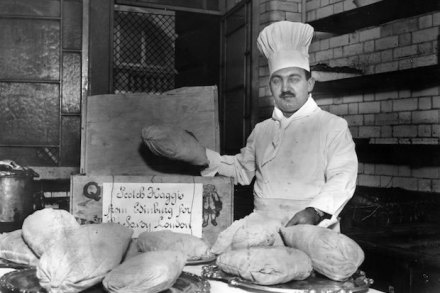
There has been a gastronomic revolution in London. For some years, the Boisdale restaurants, often mentioned here, have featured Macsween’s haggis, made in Edinburgh. It is a good drop of haggis, and the various Boisdales were using around four-and-a-half tons a year. Ranald Macdonald decided that it was time to review the competition. There was a blind tasting, and Blackface haggis won easily. Made from Dumfriesshire Blackfaces, slightly less granular than Macsween’s but somewhat more sheepy and peppery, it excited the judges in a way that Macsween’s failed to do. With it, we drank various varieties of St Cosme. The most eccentric and indeed truculent winemakers in Gigondas, they may well also be the best. Their wines can stand up to haggis.

The Battle of Brussels

My friends divide into three groups. There are those who are determined to anticipate Lent. There is a larger number whose January diet barely made it until Twelfth Night. There is a third group, whose dietary plans are indeed based on Twelfth Night: the characters of Toby Belch and Andrew Aguecheek. To which set do I belong? That depends whom I am talking to, and whether they will believe me. Whether or not Christmas is the greatest Feast — the truth appears to be that there is no hierarchy in Feasts — we had a great feast down in Somerset. The centrepiece was goose. There is a family called Zebedee, famous for geese, whose headquarters is Lower Daggon farm. Shades of Tolkien’s Farmer Maggot: I bet they also harvest mushrooms.

Commanding vintages

As the bottles flowed, the talk ranged, to a serious vineyard, an awesome Field Marshal and a delightful restauranteur. For years, the late Tom Benham ran Monkeys as a club. He cooked game especially well and his game pudding, made of course with suet, was one of the best dishes that I have eaten. As Tom charged a fixed mark-up for wine, the better the bottle, the better the value. He always found space for his friends, although his way of doing so was often ruthless. One would telephone: ‘Completely full — but wait: there’s a name here I don’t recognise. You can have that table.’ I never actually saw him bar the door to the dispossessed, but I suppose I should have felt guilty. It was unfair. So is life.

Even great wine can’t quite give me hope for Lebanon

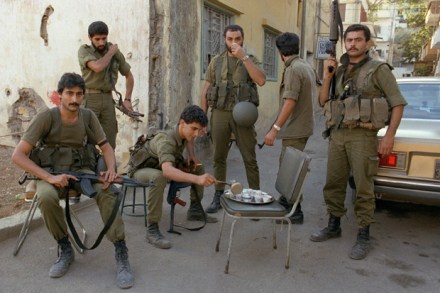
Housman had a point. If men could be drunk for ever, the human condition would be tolerable. But thought always forces its way on to the agenda. ‘And when men think, they fasten/ Their hands upon their hearts.’ This occurred to me in the context of Lebanon. That is a country designed to be a paradise where the nymphs dance to Pan’s pipes. An Arabic-French cultural coalition, modern Lebanon should be an entrancing amalgam of sophistication, religious influences and sensuous delights. Lapped by the Mediterranean, it could draw on 5,000 years of that great sea’s civilisation. There is also the landscape and the climate. For much of the year, you can ski in the morning and swim in the afternoon. All Lebanon needs is peace.

An overflow of bookshelves, a huge kitchen, a cellar, music, dogs, hens, donkeys children . . . all the ingredients for civilised life

In the later 1850s, Palmerston was Prime Minister: Gladstone, his Chancellor. It was a successful partnership between two very different characters. As Roy Jenkins used to say, Palmerston’s willingness to put up with Gladstone — never an easy subordinate — proves that he was more that a bombastic Regency rake. At different times, the pair made the two wisest comments ever to emerge from a Liberal (the only two wise comments?). Gladstone: ‘Money is best left to fructify in the pockets of the people.’ Palmerston: ‘Change, change, change: aren’t things bad enough already?’ If modern Liberals talked like that, their party might have some hope of survival.

Guinness and oysters — or beef and Haut-Brion — in deepest Ireland

We were talking about the West of Ireland and agreed that there were few greater gastronomic pleasures than a slowly and lovingly poured pint of Guinness accompanied by a generous helping of oysters, in a village restaurant overlooking the sea where peace comes dropping slow: where exertion is left to the bee-loud glade and anyone with any get up and go, got up and went several decades ago. ‘Beware too much glib romanticism,’ said one of our number. ‘You might be talking about some charming little place in Kerry, which could turn out to be a significant recruiting station for the IRA, sending plenty of young men with get up and go to go out and kill. Forget Innisfree: what about “As though to die by gunshot were/ the best play under the sun.

We celebrated a birth with a wine that will last decades

Good Saturday, 2015, stepping westward. Autumn sunshine: autumn leaves, almost comparable to New England: pumpkins everywhere, very New England. We were in Sherborne, a town famous for its abbey and castle, but well worth a proper Pevsner-guided exploration. There were obvious questions. When and how did the pumpkin take over from the turnip, ‘trick or treat’ from guising? Why is Halloween, All Souls’ Night, both holy names, associated with witchcraft and other emanations of the dark? As with Walpurgisnacht, we are in the spirit-haunted marches between early Christianity and paganism. After nightfall, we walk in deep shadow. Is that light a -turnip-bogle, as they used to say in Scotland before the era of the pumpkin?

Thanks to the rugby the Scots have a real grievance at last

The Scots do not know what to do. For once, they have a justified grievance. In recent years, this once-proud nation has been bawling and belly-aching and girning over fictitious complaints to such an extent that Wodehouse’s crack about the ray of sunshine and the Scotsman with a grievance was out of date. It seemed as if all Scotsmen had a grievance at all times. Tam o’ Shanter’s beldame nursed her wrath to keep it warm. But poor Kate could be forgiven, knowing that her blethering, blustering, drunken blellum of a husband would be getting fou with Souter Johnny. The Scottish Nationalists have neither the justification nor the fun. Now, everything is different, thanks to Craig Joubert. The match was all but won.

Manchester has marvellous wines, and it’s not finished yet

It will seem an ungrateful comment after the lunch which I am about to describe, but Manchester has some way to go. In the Midland Hotel, the principal Tory conference hotel and a grand edifice redolent of civic self-confidence from an earlier era, the northern powerhouse could sometimes be mistaken for a 40-watt light bulb. The business centre had been closed for the duration of the conference. The management person who told me this had enough nous to wilt under my incredulous stare. But it remained closed. At a bar, two girls struggled to do half of one girl’s work. Whenever anyone tried to pay by plastic, inaccuracy and chaos reigned. The girls were not to blame. Increasingly panic-stricken, they looked sweet and were obviously under-educated and under-trained.

Club mischief

When it comes to nightclubs, many have written, but none has surpassed the Perroquet in Debra Dowa. Le tout Debra Dowa was present, including Madame ‘Fifi’ Fatim Bey, the town courtesan; Prince Fyodor Krononin, the manager; and Seth, the Emperor of Azania. Tension is caused by the arrival of the Earl of Ngumo, six and a half foot of savage aristocracy, demanding raw camel’s meat for his men, some women and a bottle of gin for himself. But once he does obeisance to the Emperor, every-one relaxes. I thought about Black Mischief while giving dinner to delightful young Alex in a more conventional club in London. Youth has many enviable aspects, including the pleasure of reading Evelyn Waugh for the first time.

Stewed Siena

The Indian summer was still fending off the mists and mellow fruitfulness. But the autumn term was about to begin; the season’s changes would soon be manifest. So it was a day for anecdote and recapitulation; for telling amusing August tales, behind which lurked deeper meanings. A couple of friends had been to the Palio, as everyone should, once. I remember being surprised that several hours of mediaeval pageantry could hold one’s attention, which it certainly did: but more than once? No one would watch Psycho twice. I also remember being surprised that the young of Siena would spend weeks rehearsing: hard to imagine that happening here. The spectacle ends with a horse race: several circuits of the Piazza del Campo. It is excitable viewing.

A secluded paradise

Do-orzaat. Dorset is part of L’Angleterre profonde. It is possible to find evidence of modernity, but only in limited areas. Around 120 miles from London, west Dorset and the Somerset marches are around the same distance from the 21st century, let alone the 20th. It helps that no motorway runs through the county and mobile phone reception is delightfully bad. A lot of locals believe that the great proprietors have risen up and taken counsel together against the networks: thus far, successfully. On every side, there are fine trees and calming woodland. These are not Wagner’s God-haunted woods or Tolkien’s fearsome forests. In Dorset, trees have a sweet sylvan charm, while every kitchen garden is bounteous.

In search of the platonic gazpacho

We were eating tapas and talking about Spain. Leaving caviar on one side, when jamón ibérico is at its best, there is nothing better to eat. In the Hispania restaurant, it is always at its best. Nothing could match it, although Hispania’s cured leg of beef, the anchovies, the black pudding and the blood pudding all gave their uttermost. But there was one marginal disappointment. Gazpacho is one of the world’s great dishes, and like several others — haggis is the obvious comparison — it began as a food for the poor, only using cheap and readily available ingredients. Early recipes call for only stale bread, water, olive oil — and garlic. Most modern gazpachos would include tomato, peppers and onion, but the garlic is essential.

Young guns

The Honourable Society of Odd Bottles began proceedings with a report on the activities of our junior branch. These youngsters are not yet eligible to become drinking members, but they are chosen because of their unremitting hostility to vermin and their burgeoning enthusiasm for killing game. Young Charlie, the Nimrod of his generation, has been prodigiously active. It is surprising that there is a single grey squirrel still alive in Somerset. Any rat that comes his way goes no further. He is also mightily effective against rabbits and pigeons, which he enjoys scoffing, after he has skinned or plucked them. Charlie has inherited a .410: the fifth generation of his family to use it. It is a notoriously fickle calibre, the excuse I always use when I miss with one.

Banking on wine

Great matters were trembling in the balance. The prime minister needed cash to achieve his objective and as Parliament was not sitting to vote for supply, there would have to be a loan. The PM summoned his cabinet colleagues to seek their agreement. His private secretary waited outside the cabinet room. Suddenly the door half-opened. Instead of the agreed signal, the prime minister himself said ‘Yes’. The official raced off to New Court, to see the Baron Rothschild. ‘The prime minister wants to borrow £4 million.’ ‘When?’ ‘Tomorrow.’ Rothschild picked up a muscatel grape and, after ejecting the skin, ate it. ‘What is the security?’ ‘The British government.’ ‘You can have it.

Deep Burgundy

‘There lies the dearest freshness deep down things’ — and also the dearest Frenchness. It is easy to be rude about the French governing elite; indeed, it is impossible to be polite about them. But there is a France profonde, with a deep-rooted identity, like gnarled, ancient vines. There are said to be nearly 400 French cheeses; la France profonde has at least as many capitals, where things are done in the old way, with a combination of commercial realism, ancestral piety and devotion to the terroir. You will find all that in Gevrey-Chambertin, a modest, confident and enchanting little town, in which history is now, and Burgundy.

The claret of the gods

I cannot remember a jollier lunch. There are two brothers, Sebastian and Nicholas Payne, both practical epicureans. They have made a profession out of their pleasures. For many years, Sebastian was the chief buyer for the Wine Society. As he has a superb palate and is relentless in the search for good value, he is entitled to undying gratitude from tens of thousands of British wine drinkers. Nicholas has spent his career running opera companies. Sebastian knows a lot about opera, Nicholas about wine: the brothers share a cellar. We had assembled to taste some 2001 clarets, which required concentration, and rewarded it. But there was also time for opera talk. Nicholas’s vocation must require diplomatic skills.