Drink

All’s fair in love and Waugh

I was reminded of Wild West films from boyhood. Then, the beleaguered garrison scanned the horizon; would the US cavalry arrive in time to save them from being scalped? (John Wayne always did.) Now, one was hoping for relief, not from the Injuns, but in the form of an Indian summer. This is of especial interest to those who have a tendresse for Somerset cricket. Its paladins usually have a charmingly amateur quality. As Cardus wrote of an earlier cricketing vintage: ‘[They are] children of the sun and wind and grass. Nature fashioned them rather than artifice.’ Somerset needs a match or two in order to gain points and avoid relegation. That said, the way we were playing earlier in the season, being rained off was the best hope.

Thank Evans for good wine

There was an entirely forgotten leftist called Allen Ginsberg, a so-called beat poet (surely an oxymoron) who once produced a work entitled ‘Howl’. That was appropriate. It reads like a wolf on hallucinogens. The author whined that he had seen the best minds of his generation destroyed. ‘Best minds’: how would he have known? This was hardly Dunbar lamenting the makars of his era. Such of their verse that survives may now be an unyielding read. But in their day they were names to conjure with. Nor did they put their minds up their noses, or inject their hopes into ravaged veins.

The countryside’s eternal youth

I once witnessed a rarer spectacle than Halley’s Comet. I heard Ted Heath tell a funny story. It related to the mid-fifties. Le grand épicier, then chief whip, found himself bear-leading Field Marshal Montgomery on a visit to a racecourse. Pol Roger, a horse belonging to Churchill, was expected to win. The principles of betting were explained to Montgomery, who declared he would wager sixpence on Winston’s horse. Intakes of breath all round. Someone suggested sixpence would not quite do. Monty then agreed to hazard half a crown. There was only one problem. The nag did not oblige. In the face of defeat, some losers would have taken the war to the bookies — and become compulsive gamblers. Not the Field Marshal.

The romantic king of clubs

We were discussing romanticism, with me arguing that it should be confined to the boudoir, the bedroom, the library or the stage. When it escapes into public affairs, disaster often ensues. This led to us reminiscing about romantics we had known, and one of our number denounced the late John Aspinall, who, he said, would have liked to pass as a romantic but was really a society card-sharp. The animus was understandable. This chap would have been significantly richer if his great-uncle had never found his way to Aspers’s gaming tables. Aspers led on to Jimmy Goldsmith, undoubtedly a romantic and charismatic figure, but a consistent political menace — and thus to Jimmy’s nephew by marriage, Robin Birley.

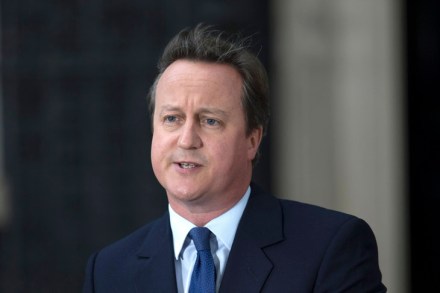
My beef with David Cameron

Insufficient attention has been paid to the history of naughty girls, who deployed allure to prosper in a male-dominated world. Moralists insisted that they would all come to a bad end. From Jezebel to Cleopatra, Lady Hamilton to Becky Sharp, many did so. But not all. Salomé died a queen; Pamela Harriman, an ambassador. There are also fates which transcend earthly glory. Mary Magdalene is often conflated with the woman taken in adultery. In a wooden sculpture, Donatello depicted her in old age, a pitiless portrayal of the ravages the flesh is heir to. Yet she rises above suffering. The expression on her face is beatific. ‘I know that I have been a wicked woman,’ she seems to be saying. ‘I also know that my Redeemer liveth.

I nourish my dream of a fat pill

As good conversation should, the talk meandered from the serious to the playful. One of the serious topics was overseas aid. A generation ago, Peter Bauer, as fine a scholar as ever, addressing himself to that subject, produced a lapidary dictum: ‘Much overseas aid is a subsidy from poor people in rich countries to rich people in poor countries.’ Recent DFID ministers such as Alan Duncan and Andrew Mitchell insist that there have been improvements. Others are sceptical. Announcing that we will spend 0.7 per cent of GDP on aid can create a moral hazard. There is pressure to spend the money: less pressure to ensure that it is wisely spent. A few years ago, someone in London decided that Kenyan schoolchildren did not have enough textbooks and that something ought to be done.

A toast to the new Scottish dawn

‘Stands Scotland where it did?’ As the bottles circulated, we were able to answer Macduff’s question in much more optimistic terms than would have seemed possible even a month earlier, thanks to Ruth Davidson, the Malcolm Canmore of our age. It is extraordinary. Scottish Tories spent almost 20 years on the fringes of politics, marginalised and derided. During that black period, it was clear no other force in Scotland could be relied on to defend the Union. After the Nats’ triumph in 2015, an unpleasant version of Rousseau’s general will seem to have triumphed with it. If you did not support the SNP, you were not a proper Scot. If you were actually a Tory, you were a disgrace to Scotland. This was the darkest hour, with no apparent prospect of dawn.

Uncorking the past

I have been thinking about the Dark Ages. This has nothing to do with Theresa May or Jeremy Corbyn. A friend of mine, Chase Coffin-Roggeveen, has a doctoral thesis in mind about the increasing use of wine for liturgical purposes during the English Dark Ages. Like all scholars who address that period, he has to wrestle with slender sources. Those who do not leave documents tend to be written out of history: think of the Wends. There are revisionists, such as Sally Harvey, who contrast the surviving beauties of Saxon civilisation — consider the manuscripts — with the Normans’ brutality. There is an obvious three-hour essay question: ‘How dark were the Dark Ages?’ Chase is well qualified to address such topics.

Rosé-tinted glasses

It was a typical bank holiday. Usual English weather: glorious, until you leave home without a brolly. Then fickleness supervenes — just like the opinion polls. I was pressed by anxious enquiries. ‘You’re supposed to know about these things. There’s no chance of Corbyn winning, surely?’ On the assumption that enough of the sovereign people are still in their right wits, I was able to sound reassuring. But as I did so, a memory came back: Quintin Hogg in 1964, proclaiming that anyone who voted Labour was stark, staring bonkers. These days, that would be called a gaffe. The once and future Lord Hailsham was famous for gaffes. As he would now be called a national treasure, it is unlikely that any harm was done. But Harold Wilson still won.

French fancies

‘That sweet enemy, France.’ It takes a poet to summarise centuries of military and diplomatic history. On a prosaic level, if we consider Anglo-French relations over many centuries, all the evidence vindicates Sidney’s judgment. Although there is much that each nation admires and respects in the other, we have never been natural allies. For hundreds of years, we fought each other, which never prevented Britain from thriving and prospering. Then we started going to war together. Crimea: a pointless venture. The two world wars: there was probably no alternative to shoring up French weakness in order to resist German domination. But it cost us blood, treasure, an Empire, and it meant lasting genetic impoverishment.

A very British bildung

Over the long weekend I read a couple of bildungs-romans; one a revisit after many years, the other a recent work. In Hemingway’s words, A Moveable Feast was about living in Paris ‘when we were very poor and very happy’. The poverty was relative. Hemingway did occasionally have to skip lunch, but there was always enough to drink, even if some of it, from Corsica or Cahors — rough in those days — was better mixed with water. Fishermen still plied the banks of the Seine. Simple restaurants sold the catch, delicious with Muscadet, and our author does not mention ill effects. Nor does he inflict any on his readers. Yet there is an obvious question. How good a writer was Hemingway?

A glimmer of hope

I argued that it was unnecessary to have made sacrifices during Lent in order to celebrate its conclusion. It is the thought that counts. Others were less sure, though none of them exhibited the stigmata of austerity. Anyway, we ate some magnificent Pascal pig, plus a delicious lamb which would have been scampering around a neighbouring field during last year’s Lent. The one which we were feasting on and its cohorts have been replaced by some sweet little spring lambs, now playing regardless of their doom. They have all been earmarked for the next phase of their education: in local deep freezes. I pointed out that there was no reason for sentimentality. Left to nature, a lamb would decline into sheephood. Sunday lunch for an appreciative table is a much more dignified fate.

A toast to unsung heroes

We were talking about war, the desert and God. In the early Seventies, one of our number, Christopher James, had been involved in serious fighting in the struggles to stop Yemeni-backed communist insurgents from destabilising Oman. Christopher was happy to pay tribute to everyone else, but evasive about his own service in the SAS. That savage little war of peace witnessed much unsung gallantry, not least by one of the most under-decorated soldiers in military history: Sgt Talaiasi Labalaba, also SAS. In 1972, he won a battle by firing a 25 pounder as if it had been a rifle (it normally needs a crew of three or four). Hit repeatedly, he persevered as if he had struck a deal with the god of battles: do not take me until the day is won. It was a clear VC.

The fall of Paris

Paris used to be the most self-confident city in the world. Brash, assertive, boastful: Manhattan claimed to be the best. Cool, elegant, sophisticated, supercilious: Paris knew that it was the best. This is no longer true. Paris has lost its élan, and that has created a love-hate relationship with the UK. Everyone seems to know someone who is working in London. The ones left in Paris cannot decide whether to punish us or join us: to hope that Brexit fails — or to fear that Brexit might fail, and keep able young Frenchmen from job opportunities in London. Flics everywhere, tattiness, tension: one is reluctant to acknowledge the successes of evil, but terrorism is at the core of Paris’s problems.

A vintage that tastes of Old Possum

Eliot. After 50 years trying to make sense of his verse, and at the risk of admitting to rampant philistinism, I propose three conclusions. At his best, he is one of the finest poets in the language. Partly because he is straining language and thought to the uttermost — an analogy with the final Beethoven piano sonatas — he is sometimes incomprehensible: sometimes, indeed, falls into arrant pseudery. Finally, his anti--Semitism before the war, his rejection of Animal Farm after it: this great man and devout Christian was not exempt from original sin. Gerontion. ‘The Jew squats on the window sill, spawned in some estaminet of Antwerp.’ We turn our eye from the page in revulsion and pity.

Cats and clarets

Call me a sentimental old whatever, but watching a four-year old hearing The Tale of Samuel Whiskers for the first time, read by someone who could do the police in different voices, took one as far from the Waste Land as is possible. It also made me think about moggies, which brought back memories of a trip to Kabul. Outside the Portakabin where we were billeted, there was a notice: ‘Please do not bring cats into the living quarters.’ No one puts up an instruction like that without the expectation that it will be disobeyed. One can imagine why, and how very British. It is to the credit of the brutal and licentious, living in cramped conditions, exposed to constant danger, that they had sentimentality left for local felines.

Bloody Marys and glorious Jean

To the Western Isles, or at least to its embassy in Belgravia. Boisdale restaurant always claims to be extra-territorial. There was an awards ceremony, and the principal recipient was a remarkable old girl. Ninety-four years into an extraordinarily diverse life, Jean Trumpington is one of the funniest people I have ever met. She is also one of the bravest. She was born in easy circumstances, a child of the affluent upper middle classes, and the first disruption occurred when her mother lost a lot of money in the Great Crash. Her family did not exactly become poor, but she had her first lesson in adversity, and on the unwisdom of taking anything for granted. At the beginning of the war, she set off to be a land-girl on David Lloyd George’s farm.

Cold War collation

I know an immensely grand aristocratic lady, impeccably mannered, with a regal grace and presence, who cannot be trusted near a tin of caviar. Apart from scoffing far more than her share, she will eventually make off with the tin itself, to lick it clean. Those of us from lesser social milieux should not only treat this as a lesson in etiquette. There are sound environmental arguments for her behaviour. Caviar is so precious, so rare, that it is an ecological crime to waste a single egg. When her ladyship is on the prowl, there is no danger of that. Such thoughts came to me over the weekend, while musing on large themes over a small tin. It brought back memories and also made one think about the unforeseen consequences of political change.

Sherry to start

Someone came up with a century-old quotation plangent with irony and sadness: ‘The year 1916 was cursed: 1917 will surely be better.’ That was Tsar Nicholas II. Poor fellow: tragedy for him and his family, tragedy down the decades for tens of millions of his subjects. Its spectre is still haunting Russia. Although we raised a toast to the tsar’s memory, tragedy was far from our minds as we welcomed the latest New Year in a mood best described as eupeptic pessimism. Not hard to do: Dorset is one of the least dyspeptic places on earth. My friends who live there sometimes try to discourage me from praising their sweet especial rural scene.

Harry, Jeffrey and Benoit

I first ate at the London version of Harry’s Bar in the early 1990s. Back then, Jeffrey Archer and I would give each other dinner about three times a year. It was my turn and he suggested Harry’s, where he was a member but I could pay (on expenses, needless to say). I remember the meal vividly because it was awful. Choosing the same dishes, we started with a risotto, which was just rice plus ingredients. Then there was a leg of lamb for two, grossly over-salted. Had I been the nominal host as well as the real one, it would have gone back to the kitchen with a flea in its ear. Two glasses of competent champagne were followed by a nothing-special Chianti: bill, £208 — to repeat, at early 1990s prices.