Drink

Given up hope? Join the club

During the Middle Ages, some of the monastic halls which evolved into Oxbridge colleges allowed their younger inmates to indulge in jocundus honestus after the evening meal. There is nothing monastic about the clubs around St James’s, least of all at their dining tables. But there is still plenty of jocund. Honestus? That is another matter. The other evening, in a gathering well-equipped with bottles and glasses, someone remarked that we were still in the last lap of Lent and then asked an improbable and unexpected question: ‘So what have you given up, Anderson?’ I was pleased with my reply: ‘Hope.

A toast to independent Dorset

There was a shrewd old Tory MP called John Stokes. He was not on the left of the party. Indeed, I once told him that he was the right pole. He chuckled at the compliment. Others — including some Conservatives — would not have regarded that as a favourable assessment, and often found his views dismaying. He enjoyed that and, to encourage it, would play the role of caricature reactionary. This rarely failed to get a rise. There is a comparison with that consummate ironist Jacob Rees-Mogg, though Jacob is also a serious Tory philosopher. John’s many friends could not have alleged that of him. He once aroused derision in the House by saying that things had come to a pretty pass: people were talking about politics in the pubs.

Three Tories in search of solace

Three tribal Tories had gathered for a convivial glass, and also a consolatory one. One quoted Huskisson’s verdict after Goderich’s brief and worthless premiership. ‘Never surely was there a man at the head of affairs so weak, undecided and utterly helpless.’ Well, the female sex has now caught up. I said that at least she had refuted Hopkins. ‘No worst, there is none.’ As long as Theresa May is in charge, there could always be a worst. The terrible premier has out-gloomed the Terrible Sonnets. We were hiding away in a club, hoping not to meet any foreigners. Not that any of us is in the least xenophobic. One chap has a house in France; another regularly takes a place in Italy. Our affection for abroad goes well beyond its food and its bottles.

A perfect Sunday in Lent

Life is far too important to be taken seriously. At least, that was the conclusion which we meandered towards as a Sunday lunch party eased into a symposium. Chaps had opinions to draft, articles to write, books to review. But no one was minded to defer to conscientiousness — especially as we had all made a solemn pledge not to discuss Brexit. Our host had consulted me about the bill of fare. Should it be lamb and Burgundy or beef and claret? I declared myself ready to settle for either, though both might be inadvisable. Beef it was, and grass-fed Aberdeen Angus at that. As I often remind vegetarians (too damned numerous these days, even if they are cheap to feed), in view of the vegan diet and intelligence level, grass-fed cattle should be regarded as mooing vegetables.

Glyndebourne in the City

Early last century, an impoverished youth emerged from the East End. Able and hard-working, he discovered — as many had before him — that the City offered an open route to opportunity and riches. By the early 1950s, Rudolph Palumbo decided he could afford a family office. So he commissioned a Queen Anne building on Walbrook. Although it could not compensate for the City’s grievous architectural losses during the war, it was a reassertion of old values: of a long tradition that finance and the fine arts could march together. Forty years on, Rudolph’s son Peter was having lunch with Mark Birley at the Connaught. Mark, son of Oswald, a much underrated painter, had as much taste as any Englishman in the 20th century.

No small beer

We were discussing beer. It is a cheerful subject so I made an appropriate point. In recent years, the quality of civic life in Britain has steadily deteriorated. Change has become synonymous with decay. But there is one delightful exception. In southern England these days, it is almost impossible to find a bad pint of beer. Matters may be different in other parts of the United Kingdom. From my limited experience, we Scots are not good at beer. It is something that is only drunk to eke out the whisky. North of the Tweed, bitter is known as ‘heavy’, which is a fair description and not an encouraging one. In the north of England, too, beer is often excessively sweet.

Brexit and cru bourgeois

Acouple of lawyers were disagreeing about a matter which could become increasingly relevant. Could a sitting president pardon himself? But there was a further aspect to this question. A friend of mine who has known Mr Trump for 20 years and who likes him detects a weakening in his mental powers. One of our number was a distinguished neurologist. Pressed to overcome his intellectual scrupulousness about television diagnosis, he thought it not impossible. So are we dealing with dementia, or is the President of the United States just demented? Might it be early stage Alzheimer’s, or merely chronic Trump-heimer’s?

Happiness is a convivial bottle

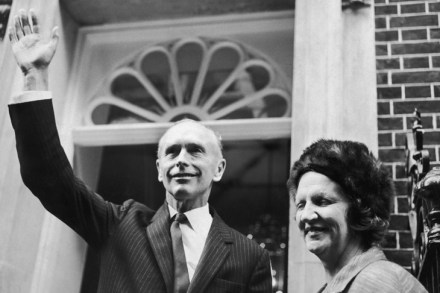
January really is the cruellest month. No wonder some fortunate friends have dodged the column of dreary weather and short days, seeking asylum in the Southern Hemisphere, or at least the Southern Mediterranean. Not that the British winter climate is all bad. Brisk clear days promote mental rigour. Barry Smith, a historian from New Zealand and an early evangelist for that nation’s serious wine, once wrote that Prime Minister Lord Salisbury had a mind like a clear blue winter day. That is not indispensable for statecraft; it could never be said of either Churchill or Thatcher. But it helps to promote an unillusioned realpolitik: the wisest approach to human affairs. Some readers might be surprised when I cite another statesman who lived up to the Smith description: Alec Douglas-Home.

Comfort in chaos

It appeared to be an uneven contest. A few friends were meeting for a festive wine-tasting, to compare and contrast some interesting bottles. The clarets opened with an Angelus ’98, a superb wine from an outstanding year. In response, the Palmer ’04 seemed to be outgunned. But, gaining strength from a bit more time in the decanter, it became increasingly formidable. Words and wine: there is an unceasing struggle to translate wine into language without falling into euphuism or pseudery. This time, I felt drawn to a naval image. In its growing power, the Palmer reminded me of that early scene from Sink the Bismarck!

Either fish or fowl

It is enough to drive a fellow to the bottle. I am not given to agnosticism. My view is that if the evidence seems to sustain a conclusion, weigh it and arrive at one. On Brexit, I find that impossible. Most of my friends have no problem. From Remoaners to rejoicers, they all deal in certainties. I cannot emulate them. My intellect seems to have turned into a cushion, bearing the imprint of the last person I spoke to. I refuse to believe that the Bank of England has turned into the equivalent of an M.R. James ghost story, a delightful way of giving everyone a good scare on a wintry evening. But friends of mine argue equally forcefully to the contrary. Roger Bootle, David Howell, Nigel Lawson, Peter Lilley, Jacob Rees-Mogg, Matt Ridley: these are serious men, making a cogent case.

Commanding presence

One of the pleasures of journalism is the opportunity to meet eminent persons: bankers, businessmen, civil servants, diplomats, politicians, vignerons. Although there are occasional exceptions, such as Theresa May and around one-third of the current cabinet, it is usually easy to see why these characters attained their eminence. That is especially true when it comes to the ablest group of them all, the soldiers. There is a good reason for this. It is hard to believe that any large organisation on earth devotes as much effort to training as the British army takes for granted. (I am sure that the same is true of the navy and the RAF, but I do not know them as well). Army officers are rigorously assessed. To rise in the profession of arms, they must prove that they can fight, lead and think.

The paradox of Burgundy

I was trying to remember what I once knew about the theology of the Reformation and especially the various factions’ arguments about good works. Some of them thought that good works were a testimony to Grace. To others, they were a route to Grace. To the Calvinists, they were a mere irrelevance. All that mattered was the inexorable, terrifying verdict of predestination. That at least is my recollection. Choosing a via media, if not necessarily Anglicana, I prefer a phrase from the 1990s, ‘the active citizen’. Whatever its relationship to Divine Grace, that sounds a useful goal, and I occasionally try to pursue it, especially in relation to a club of which I am a member. We spend a lot of time worrying about the problems of ageing.

Birth of a dynasty

Darkness, but not the blanket of the dark. This was a sinister darkness, beset by smoke and flames, by the clash of steel, by screams, by terror, by horror. The victims were Huguenots on the quayside at La Rochelle in 1688. They had heard the good news. James II had been overthrown, so it was safe for French Protestants to seek refuge in England. Others wished to violate their safety. For the previous three years, since the revocation of the Edict of Nantes (which had helped to cost King James his throne), the Huguenots had been persecuted. Swaggering, bullying dragoons had been billeted in their homes. Now, as the oppressed waited for a sea passage to asylum, their tormentors had a final opportunity to inflict pain. They wielded a branding iron.

Searching for God in the twilight

My friend Jonathan Gaisman recently gave rise to a profound philosophical question concerning wine. Jonathan is formidably clever. He has a tremendous reputation at the Commercial Bar. Although he brushes aside any compliments from the unqualified, there was a recent case — Excalibur — where his performance won the awed approval of lawyers to whom even he might concede quasi-peer status. They aver that his preparation was exemplary, his cross-examination ruthless and relentless; his triumph total. That said, he is anything but a monoglot lawyer. Not only a music lover but a musicologist, modesty alone would prevent him from claiming that Nihil artium a me alienum. Among the minor arts, he is a practised oenologist.

Disloyal toast

Drink and democracy have one important point in common: an ambivalent relationship with discord. They can mitigate it. They can also exacerbate it. Events at last week’s Tory conference led me to ruminate on that theme, as a little good wine did indeed mitigate political depression: these bottles I have stored against my ruin. In a modern society, by giving legitimacy to governments, democracy can underpin political authority. But that depends on two related outcomes. The government must be worthy of authority, and those who lose an election must accept the result. By transforming pluralities into sizeable majorities, the British voting system has encouraged all that.

Right as rain

‘The doors clap to, the pane is blind with showers / Pass me the bottle, old lad, there’s an end of summer.’ The paraphrase was justified, for the weather was doing its best to reinforce Housmanic gloom — although the scene through the windowpanes was best described in Scottish, not Shropshire. There is a Scots word, dreich. It may not be quite onomatopoeic, but roll it round your mouth and you will get the message. We certainly did. Before us was a sodden lawn festooned with dead leaves. A few weeks ago, they would have been resplendent in dancing verdancy. More recently, it would have been a stately golden brown, the colour of mature Rieussec.

The depths of tranquillity

Peace came dropping slow. I have never regarded west Flanders as part of la France profonde, but here we were, only a few miles from Lille, in the depths of tranquillity. Earlier in the summer, there had been an excitement. An enormous wild boar had erupted into the garden. Our host shot him, and excited littlies promptly renamed their grand-père: Obelix. I had entertained Yves at a club table. His reciprocity was embarrassingly more generous than his excuse for it. Inevitably, the conversation meandered into politics. The house had a complex history. Vauban is said to have billeted himself there before fortifying Lille. It suffered some damage in both world wars. The family lost relatives during that cruel necessity, the Allied bombing of Normandy to expedite D-Day.

Animal magic | 30 August 2018

Roy Hattersley once wrote a plangent passage about a painful aspect of the human condition: the short span of animals’ lives. The owner who commits his affections condemns himself to the pain of bereavement. This thought has come to my mind recently. Roxy Beaujolais, that glorious ale-wife, has already been celebrated in this column. Her public house, the Seven Stars, is just behind the Law Courts and has almost acquired the status of a fifth Inn. I popped in the other day and found to my delight that it was as good as ever. Cured herring followed by rare cold roast beef: Roxy would be horrified if you described the Stars as a gastropub, but it could easily pass muster as one.

Wine, women and willow

The first time I went to Lord’s was in 1970, just before the unofficial Test series which replaced the cancelled South African one. I was in the Long Room, discussing Barry Richards, one of the most elegant batsmen of all time. He did not seem to hit the ball. It was as if he had caressed it, after which it would rocket to the boundary. Has there ever been an opener whose stroke-play gave such aesthetic pleasure? An incredibly old buffer joined in our conversation: ‘I always knew young Richards would be good. Came over here as a 16-year-old schoolboy and hit a six off me.’ Who was this pompous so-and-so? Someone of a similar vintage promptly clapped him on the shoulder: ‘Morning, Alec.’ Er, yes: when Barry Richards was 16, Alec Bedser would have been 43.

Mindful drinking

When I was at school, some time before the last ice age, the final day of term was a quasi-holiday. There might be slide shows, and I remember my housemaster introducing me to Klee and Mondrian (I am still unconvinced about Mondrian). Today, it is all very different. I gather that once the exams are over, the brats are sent on trips or expeditions. The fear is that if they were confined to barracks, they would wreck the place. The Tory high command (if there is one) clearly needs to consult a cunning modern schoolmaster. In the final days of the last term, Conservative MPs came close to sabotage and mutiny. Much the most formidable political machine of the past two centuries departed for the summer with all the dignity of an overturned ant hill. Against that background, some Tories met.